If the inside of your lower eyelid looks much lighter than usual, many people describe it as a white inner eyelid or an inside bottom eyelid white appearance. This can be a clue to anemia, especially iron-deficiency anemia, but it is not a diagnosis by itself. A healthy inner eyelid is usually pink because the tissue is rich in small blood vessels. If you also feel tired, dizzy, short of breath, or have heavy periods, you should arrange a medical checkup and blood tests.
White Inner Eyelid Self Check Guide: What Pale Eyelids Can Mean
Many patients tell me they noticed something unusual while looking in the mirror. They gently pulled down the lower lid and saw that the tissue inside did not look pink. It looked pale, washed out, or almost white. That is why people often search for terms like white inner eyelid, inside bottom eyelid white, or pale eyelids meaning. In eye care, we call this area the conjunctiva, the thin membrane lining the inside of the eyelids and covering the white of the eye. It is normally well supplied with blood vessels, so it usually looks pink rather than white.
When that pink color fades, it can sometimes be a sign of anemia. Anemia means your blood does not have enough healthy red blood cells or hemoglobin to carry oxygen efficiently. Iron deficiency is the most common cause, but it is not the only one. Blood loss, poor iron intake, poor absorption, pregnancy, chronic illness, and vitamin deficiencies can all play a role.
At the same time, I want to be very clear: a pale inner eyelid is a clue, not a final answer. Clinical studies show that conjunctival pallor can help raise suspicion for anemia, but its accuracy varies widely, which is why doctors confirm anemia with blood tests rather than appearance alone.
Anemic eyelids vs normal: a simple visual comparison
Below is a simple WordPress-friendly visual block you can paste into the editor. It is an illustration, not a diagnostic chart, but it helps readers understand anemic eyelids vs normal at a glance.
What a normal inner eyelid should look like
A normal lower inner eyelid usually appears pink, sometimes deeper pink and sometimes lighter pink, depending on lighting and the person. It should not look inflamed, crusted, or extremely pale. Because this tissue is thin and vascular, it can sometimes reveal changes in blood color or blood volume earlier than the skin does. That is why clinicians have long used the lower eyelid as one of the places to look for pallor.
If the tissue looks unusually pale on both sides, especially compared with older photos or what you remember as your normal, that is worth paying attention to. If it looks bright red, swollen, or irritated instead, that points more toward an eye-surface problem such as conjunctival irritation or inflammation, not anemia.
Pale eyelids meaning: why anemia changes the color
The pink color of the inner eyelid comes from tiny blood vessels in the conjunctiva. Hemoglobin inside red blood cells helps carry oxygen and gives blood its red color. When hemoglobin is low, tissues can look paler. This is why anemia can show up as pallor of the skin, nail beds, tongue, or inner eyelids.
In plain language, if the blood has less hemoglobin, the inside of the eyelid may no longer look richly pink. Instead, it may appear light pink, beige, or nearly white. That is the visual change behind many searches for white inner eyelid or inside bottom eyelid white.
Still, not every pale eyelid means iron deficiency, and not every person with anemia will notice obvious eyelid pallor. That is why the best way to use this sign is as a prompt to ask, “Do I also have symptoms or risk factors?” rather than to assume you already know the diagnosis.
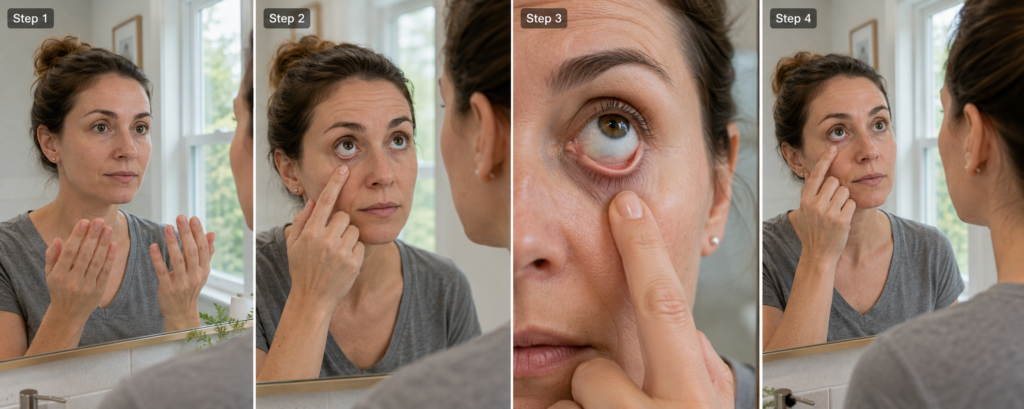
How to check your lower eyelid at home
Stand in good natural light. Wash your hands. Look slightly upward in a mirror and gently pull down the lower lid just enough to see the moist inner surface. Compare both eyes. You are looking for overall color, not tiny details. A healthy look is usually pink. A concerning look is unusually pale on both sides, especially when it is paired with symptoms like fatigue or breathlessness. This kind of self-check is reasonable as a screening clue, but it should never replace a medical exam or blood work.
Self-check warning list for iron deficiency
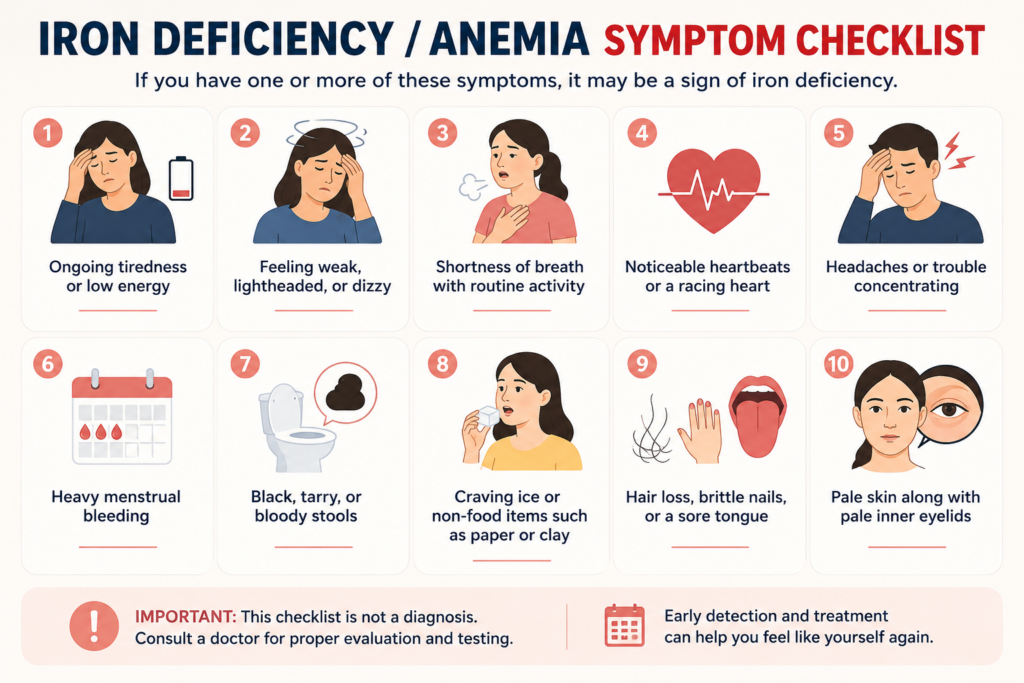
If your inner eyelid looks pale, ask yourself whether any of these are happening too:
- Ongoing tiredness or low energy
- Feeling weak, lightheaded, or dizzy
- Shortness of breath with routine activity
- Noticeable heartbeats or a racing heart
- Headaches or trouble concentrating
- Heavy menstrual bleeding
- Black, tarry, or bloody stools
- Craving ice or non-food items such as paper or clay
- Hair loss, brittle nails, or a sore tongue
- Pale skin along with pale inner eyelids
The more of these boxes you tick, the stronger the case for getting tested soon. Heavy periods and digestive tract bleeding are especially important because they are common causes of iron-deficiency anemia.
The most common reasons a lower eyelid may look pale
In day-to-day practice, the biggest cause I worry about is iron-deficiency anemia. This happens when the body does not have enough iron to make hemoglobin properly. Common reasons include heavy periods, pregnancy, bleeding from the stomach or intestines, ulcers, inflammatory bowel disease, celiac disease, surgery, or not getting enough iron in the diet.
Other forms of anemia also matter. Some people become anemic because of vitamin B12 deficiency, chronic kidney disease, inflammation, inherited blood conditions, or other long-term medical illnesses. That means the phrase pale eyelids meaning does not equal “iron deficiency” every time. It means you need proper evaluation.
When the eye finding matters most
A pale lower lid matters more when it is persistent, seen in both eyes, and accompanied by body symptoms. For example, if a teenager or adult says, “My inside bottom eyelid is white, I feel exhausted, and my periods have been very heavy,” that is a classic pattern that deserves blood testing. If someone says, “My lower lid looks pale and I also get breathless on stairs,” I would not ignore that either.
By contrast, if the eye is red, itchy, watery, or uncomfortable, the problem may be more local to the eye surface. That does not rule out anemia, but it changes the first suspicion. This is why context matters more than one sign viewed in isolation.
How doctors confirm whether pale eyelids really mean anemia
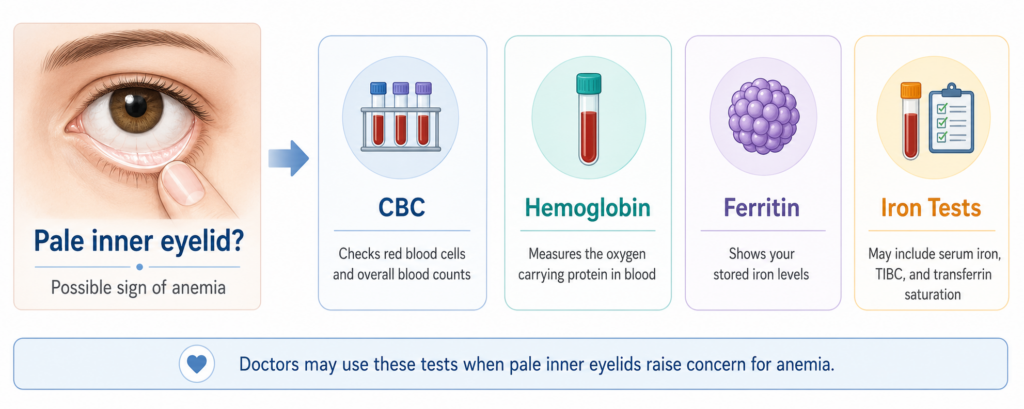
Diagnosis starts with a history, symptoms, and physical exam, but it does not end there. Doctors confirm anemia with blood tests. The most common starting test is a complete blood count, often called a CBC, which checks hemoglobin and related blood values. Iron studies may include ferritin and other iron measurements to see whether iron stores are low.
If iron deficiency is confirmed, the next step is to ask why it happened. In some patients, the explanation is straightforward, such as heavy periods or pregnancy. In others, doctors may look for hidden bleeding, stomach or bowel disease, poor absorption, or another medical condition. This part is important because treating the number alone is not enough if the root cause remains untreated.
What treatment usually involves
Treatment depends on the cause. If the problem is iron-deficiency anemia, many patients are treated with iron tablets and follow-up blood tests. Doctors may also advise eating more iron-rich foods and addressing the source of blood loss or poor absorption. Monitoring matters, because the goal is not only to raise hemoglobin but also to rebuild iron stores.
Iron tablets can cause stomach upset, nausea, constipation, diarrhea, heartburn, and darker stools. Some clinicians suggest taking iron with vitamin C or a vitamin C-rich drink because it can help absorption. If side effects are a problem, do not simply stop treatment on your own; ask your doctor about timing, food, dose changes, or alternative forms of iron.
Many people begin to feel better as the anemia improves, and the pink color of the inner eyelid may gradually return. MedlinePlus notes that blood counts often return to normal after about two months of iron therapy for many people, although treatment may continue longer to rebuild stores fully.
When to seek urgent medical care
A pale inner eyelid is usually not an emergency by itself. What makes it urgent is the company it keeps. Seek prompt medical care if you have chest pain, fainting, severe shortness of breath, a very fast heartbeat, black or bloody stools, or heavy ongoing bleeding. These can point to significant anemia or active blood loss.
Pregnant patients, very young children, older adults, and anyone with chronic illness should also avoid delay if they suspect anemia. In these groups, even “mild” symptoms can have a bigger impact.
Final word from the eye clinic
The lower inner eyelid can be a surprisingly helpful place to notice a health problem. If you compare anemic eyelids vs normal, the big difference is usually simple: normal looks pink, while anemia may make the area look pale or almost white. But a mirror is only a starting point. The correct next step is not guesswork. It is a proper medical assessment and blood testing.
If you have noticed a white inner eyelid, persistent fatigue, or other warning signs of low iron, book an appointment with our ophthalmologist or your primary care doctor. We can examine the eye surface, look for conjunctival pallor, and guide you toward the blood tests and treatment you may need. Early detection is simple, and treatment is often very effective once the cause is identified.
References
- National Heart, Lung, and Blood Institute. What Is Anemia?
- National Heart, Lung, and Blood Institute. Iron-Deficiency Anemia.
- MedlinePlus. Iron Deficiency Anemia and Hemoglobin Test.
- NHS. Iron deficiency anaemia.
- Vyas N, et al. The Accuracy of Physical Examination to Diagnose Anemia and Sheth TN, et al. The Relation of Conjunctival Pallor to the Presence of Anemia.