If you are choosing between AR coated glasses and blue light glasses, most people get more real-world value from anti-reflective coating. AR coating reduces reflections, improves comfort in bright light, and is especially useful for night driving, office work, and video calls. Blue light glasses are optional, not essential. Current evidence does not show that blue-light filtering lenses meaningfully reduce digital eye strain for most people, and the American Academy of Ophthalmology does not routinely recommend them. Hydrophobic and oleophobic coatings are convenience upgrades that make lenses easier to clean.
Anti-Reflective (AR) Coating vs Blue Light Glasses – A Complete Guide
Buying glasses should be simple. But once you start looking at lens options, the jargon begins. AR coated glasses. Anti reflective coating glasses. Blue cut lenses. Anti glare glasses. Hydrophobic. Oleophobic. UV. Scratch-resistant. Very quickly, a basic purchase starts sounding like a complicated upgrade ladder.
As an eye doctor, this is the simplest way I explain it to patients: if you are choosing only one coating for everyday use, anti-reflective coating is usually the most useful one. Blue light glasses are more optional. They are not useless for every person, but they are often oversold, especially for screen users who are really dealing with dryness, reduced blinking, glare, long hours of near focus, or an outdated prescription rather than “blue light damage.”
This matters because many people searching for blue light glasses are actually looking for relief from headaches, tired eyes, reflections on lenses, trouble with computer work, or discomfort while driving at night. The best coating depends on the problem you are trying to solve.
First, what does anti-reflective coating actually do?
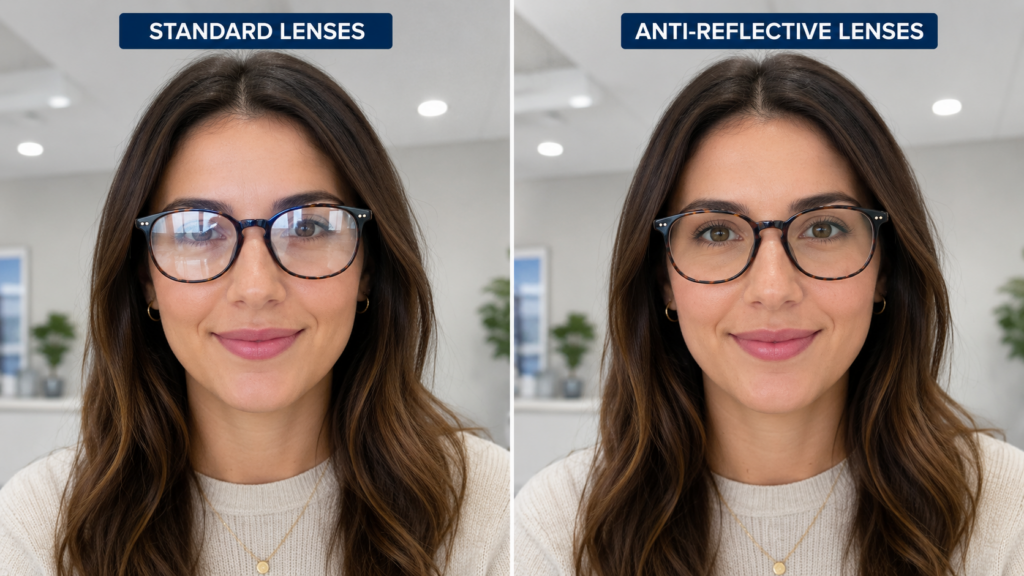
Anti-reflective coating, also called AR coating or anti-glare coating, is a thin coating added to spectacle lenses to reduce reflections from the front and back surfaces. In practical terms, this means less annoying glare from headlights, overhead lights, bright office lighting, and screen reflections. In India, “anti-glare glasses” usually refers to this same anti-reflective type of coating.
That is why AR coated glasses are one of the easiest lens upgrades to appreciate in daily life. Your lenses look clearer. Other people can see your eyes more easily in conversation and on video calls. Bright lights feel less harsh. Many wearers also find night driving more comfortable because the lens itself is not throwing back as much reflected light.
AR coating is not magic. It will not cure dry eye, fix a wrong prescription, or erase every halo you see on the road. But it does something very concrete: it reduces reflections on the lens surface. That is why anti reflective coating glasses remain one of the most practical recommendations in routine eyewear.
Then what are blue light glasses?
Blue light glasses are lenses designed to filter part of the blue-violet light spectrum. Some are almost clear. Others have a slight tint or more noticeable reflective hue. Many commercial products combine blue-light filtering with AR coating, scratch resistance, and smudge-resistant layers, which is one reason people often confuse “blue cut” and “anti-glare” as if they were the same thing. They are not the same, although they are often sold together.
This bundling matters. If someone buys blue light glasses and feels more comfortable, the improvement may come from the anti-reflective component, the cleaner lens surface, a slightly lower perceived brightness, or even simple preference, rather than from blue-light filtering alone. That is an inference, but it is a reasonable one because many branded “computer glasses” packages pair blue filtering with anti-glare and other premium coatings.
The big myth: do blue light glasses really reduce eye strain?
This is where marketing and evidence part ways.
The American Academy of Ophthalmology says it does not recommend blue light-blocking glasses routinely because there is not good scientific evidence that blue light from digital screens damages the eyes or that blue-blocking glasses meaningfully reduce digital eye strain. AAO also states there is no scientific evidence that blue light from digital devices causes eye damage.
The 2023 Cochrane systematic review reached a very similar conclusion. It found that blue-light filtering spectacle lenses may not reduce short-term eye strain from computer use compared with non-blue-light filtering lenses, and it did not show meaningful improvements in visual performance. Mayo Clinic Health System has also summarized the evidence by noting that no significant improvement in vision performance or sleep quality has been found from blue-blocking lenses.
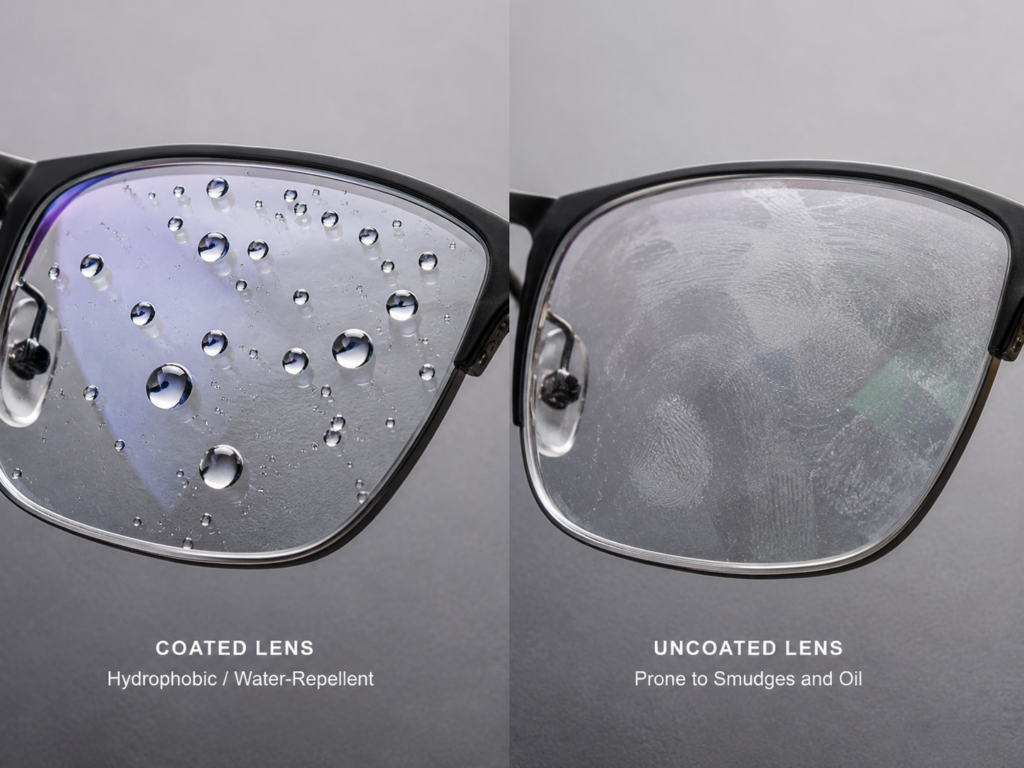
That does not mean your symptoms are imaginary. Digital eye strain is very real. It simply means blue light is probably not the main reason your eyes feel tired after a long day on a laptop. Research reviews and clinical guidance point much more strongly toward reduced blinking, dryness, prolonged close work, poor screen ergonomics, and uncorrected or under-corrected vision as the usual culprits. A large review in the NIH archive notes that blink rate can drop markedly during computer use, and both AAO and Mayo Clinic advise frequent blinking and breaks because screens commonly cause temporary discomfort rather than permanent damage.
This is the heart of the controversy around blue light glasses. The product category became popular because it offers a simple story: screens emit blue light, blue light must be harmful, therefore blue-cut lenses must protect you. But the science has not supported that clean marketing narrative for routine day-to-day screen use.
Why do some people still like blue light glasses?
There are a few honest reasons.
First, some people simply prefer how they feel in certain lighting environments. Comfort is personal. Second, many blue-light products also include AR coating, which genuinely can improve comfort by reducing reflections. Third, some people who work late at night are less interested in eye strain and more interested in sleep or light sensitivity. Even there, the evidence for glasses is mixed and far less convincing than the advertisements suggest.
So, blue light glasses are best understood as an optional comfort feature, not an essential eye-health purchase. If you wear them and like them, that is perfectly reasonable. But they should not be sold as protection against screen-related retinal damage, and they should not be the first or only solution for tired, dry, or painful eyes.
What about hydrophobic and oleophobic coatings?
These two are much less controversial.
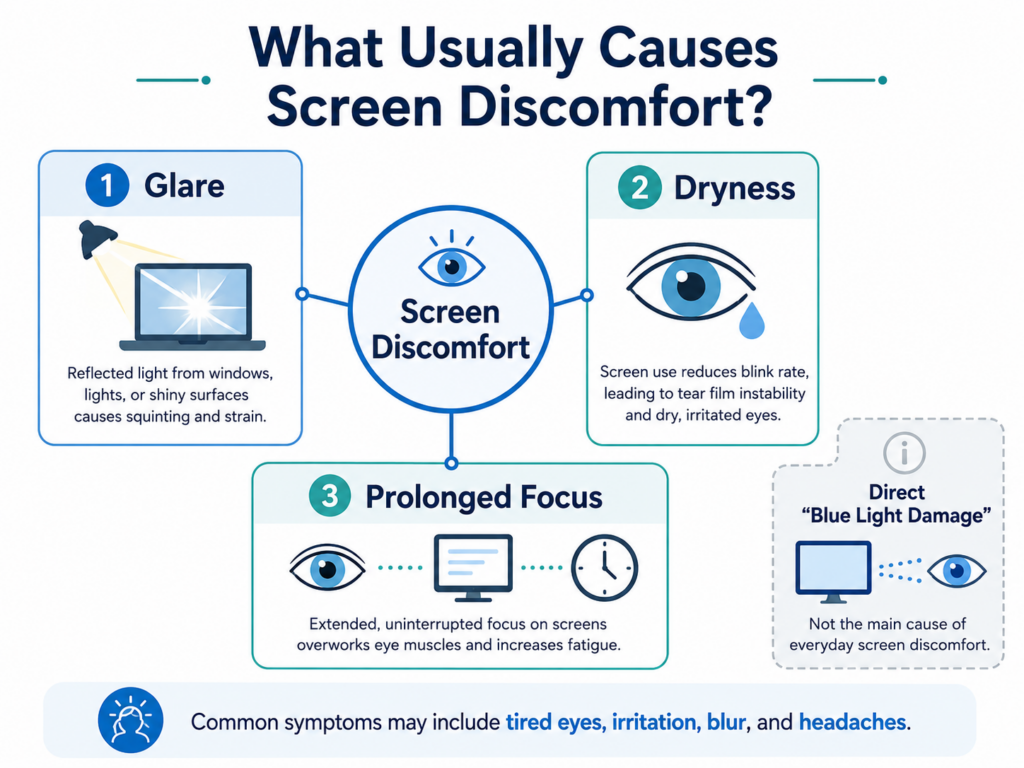
Hydrophobic coating makes the lens more water-repellent. Oleophobic coating makes it more resistant to oils, fingerprints, and smudges. Premium coating systems may also include anti-static properties so dust sticks less easily. ZEISS describes these coatings as making lenses more water- and oil-repellent and easier to clean, while some Indian retail lens packages describe hydrophobic anti-glare combinations, anti-smudge finishes, and water-repellent surfaces.
These are not medical necessities in the way a prescription is. They are convenience upgrades. But they can be genuinely useful, especially if you live in a humid climate, commute often, are tired of constantly wiping your glasses, or have children handling the lenses all day. In real life, many people appreciate these coatings more than they expect because cleaner lenses are simply more pleasant to wear.
The important point is that hydrophobic and oleophobic features are usually best viewed as “maintenance and cleaning” upgrades, whereas AR coating is the “visual comfort and glare” upgrade.
So which coating do you actually need?
For most adults buying everyday glasses, my answer is straightforward: start with anti-reflective coating. If your budget allows, get AR first. It is the coating most people notice in normal life because it reduces reflections and improves comfort in bright environments.
If you drive at night, AR coating becomes even more worthwhile. It will not solve every cause of night glare, but reducing lens reflections is useful when you are dealing with headlights, streetlights, and bright signs.
If you work in front of a computer all day, AR is still usually the first upgrade I would choose. Most screen users complain of dryness, blur, and fatigue. Better reflection control, correct prescription, frequent blinking, and regular visual breaks usually matter more than blue-light filtering.
If you hate smudges, raindrops, and constant cleaning, add hydrophobic and oleophobic features next. They do not transform vision in the same way AR does, but they make daily maintenance much easier.
Where do blue light glasses fit? They fit last, not first. Consider them if you personally prefer them, if you work long hours in LED-heavy environments, or if you have tried them before and feel more comfortable in them. But buy them with realistic expectations. Think of them as a personal preference upgrade, not as an evidence-backed necessity for eye protection.
Blue cut lens price and anti glare glasses India: what should you expect?
As of July 6, 2026, pricing in India varies a lot depending on frame, lens material, prescription power, offers, and whether the coating is sold as an add-on or bundled into a package. On major Indian retailer listings, blue-cut or computer glasses are advertised from roughly ₹800 to around ₹999, while some zero-power sale listings appear lower, around ₹500 to ₹800. On the anti-glare side, single-vision lens packages list regular anti-glare and hydrophobic anti-glare add-ons at +₹999
That is why the search terms “blue cut lens price” and “anti glare glasses India” can be confusing. The market often mixes these features together. Some offers include free BLU lenses with frames. Some “computer glasses” already include AR. Some hydrophobic packages come with standard anti-reflective coating built in. So when you compare prices, do not ask only, “What is the cheapest blue-cut lens?” Ask, “What exact coatings are included, and what problem am I solving?”
How to avoid getting upsold at the optical store
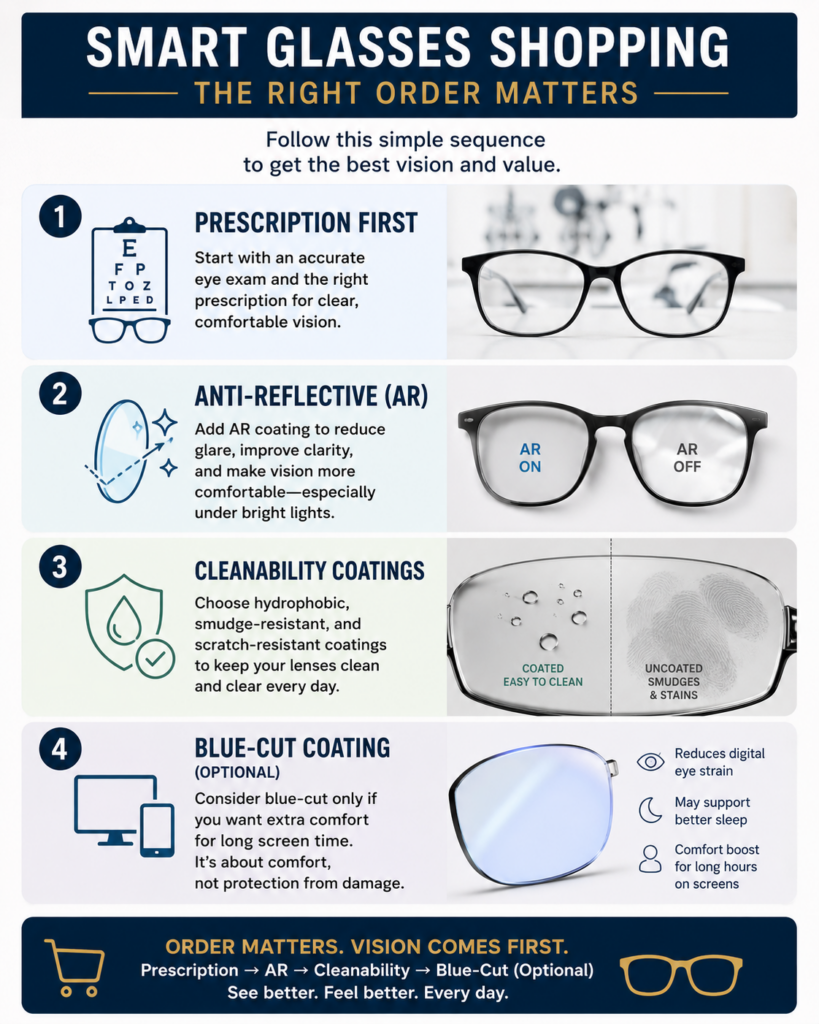
The easiest way to buy wisely is to decide in this order.
First, make sure the prescription is right. If your number is off, no coating will fully rescue comfort. Mayo Clinic notes that some people with eyestrain benefit more from task-specific glasses or an updated prescription than from gadget-style lens promises.
Second, choose AR coating if you want the best all-round improvement in visual comfort. This is the upgrade I would prioritize for most patients.
Third, add hydrophobic or oleophobic features if easy cleaning matters to you. These are sensible quality-of-life upgrades, especially for daily wearers.
Fourth, consider blue-cut only after that. Not because it is forbidden, but because it should be a preference-based choice, not a fear-based one.
And before you choose the frame-lens combination, it is worth reading our related guide on common mistakes people make when buying glasses. That internal link fits naturally here because many lens-coating problems begin with the wrong assumptions at the time of purchase.
When should you see an eye doctor instead of just changing coatings?
If your main complaint is persistent blur, burning, headaches, double vision, light sensitivity, or eye discomfort that keeps returning, do not assume a coating is the answer. Mayo Clinic lists dry eyes, blurred or double vision, headaches, and light sensitivity among common eyestrain symptoms, and recommends seeing an eye specialist if self-care does not help. AAO also notes that heavy digital-device use can cause blurred vision and achy, tired eyes.
Sometimes the real problem is dry eye disease. Sometimes it is the wrong prescription. Sometimes it is poor workstation setup. And sometimes a person who thinks they need blue light glasses actually needs a proper eye exam, lubricating drops, screen-break habits, or dedicated computer glasses designed for their working distance.
Final verdict
If you want the honest answer to “AR coated glasses vs blue light glasses: which coating do you actually need?” it is this:
For most people, you need anti-reflective coating more than you need blue-light filtering. AR coating solves a common, visible, everyday problem: reflections. It helps with comfort, appearance, and general usability. Blue light glasses may still be chosen as a personal preference, but the current evidence does not support treating them as essential for routine screen use or eye protection. Hydrophobic and oleophobic layers are worthwhile add-ons when you want cleaner, lower-maintenance lenses.
So if your budget is limited, do this: get the right prescription, choose a good AR coating, and improve your screen habits. Then add blue-cut only if you still want it. That order serves most patients better than buying into the latest lens marketing trend.
Call to Action
If your eyes feel tired after screen use, or if you are unsure whether you need anti reflective coating glasses, blue light glasses, or a different prescription altogether, book a comprehensive eye exam with our ophthalmologist. A quick check can tell us whether the issue is glare, dryness, focusing strain, or simply the wrong glasses.
References
American Academy of Ophthalmology: Are Blue Light-Blocking Glasses Worth It?
American Academy of Ophthalmology: Should You Be Worried About Blue Light?
Mayo Clinic Health System: Are blue light-blocking glasses a must-have?
NIH/PMC Review: Digital Eye Strain – A Comprehensive Review