Conjunctivitis, or pink eye, is inflammation of the thin clear lining over the white part of the eye. The three common types are viral, bacterial, and allergic. Viral pink eye is usually watery and very contagious. Bacterial pink eye is more likely to cause thick sticky discharge. Allergic conjunctivitis usually causes intense itching and often affects both eyes. Many mild cases improve with supportive care, but eye pain, light sensitivity, blurred vision, contact lens use, or severe redness mean you should see an eye doctor promptly.
Conjunctivitis (Pink Eye) – Types, Symptoms, Treatment & When to See a Doctor
If you have ever woken up with a red eye, watering, irritation, or sticky lashes, you have probably wondered the same thing most patients ask me: “Is this just pink eye, or is it something more serious?” That is an important question. Conjunctivitis is common and often mild, but not every red eye is harmless. Some eye problems that look like pink eye at first can threaten vision and need urgent care.
In India, many people also use the term “eye flu” when contagious conjunctivitis starts spreading in families, schools, or offices. Public health advisories have used that phrase during outbreaks, but the medical name is still conjunctivitis.
As an ophthalmologist, I usually tell patients to focus on three questions. Is the eye watery or sticky? Is it itchy? And is there pain, light sensitivity, or blur in vision? Those answers do not make a perfect diagnosis on their own, but they help us sort viral, bacterial, and allergic conjunctivitis from more serious causes of a red eye.
What exactly is conjunctivitis?
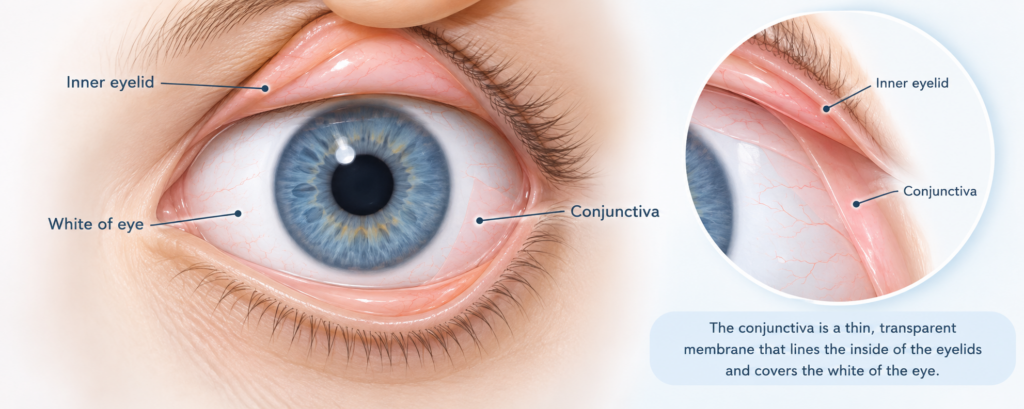
Conjunctivitis means inflammation of the conjunctiva, the thin transparent tissue that covers the white of the eye and lines the inside of the eyelids. When this tissue becomes inflamed, the tiny blood vessels inside it swell and become more visible, making the eye look pink or red. The most common causes are viruses, bacteria, and allergens, although chemicals, contact lens problems, and foreign material in the eye can also trigger a red, irritated eye.
That is why pink eye is really a description, not a single disease. Different problems can make the eye look red, but the treatment depends on the cause. This is also why using any random eye drop from a pharmacy shelf, or a leftover drop from a relative, can be a mistake.
Why this topic matters so much
Pink eye is one of the most common eye complaints worldwide. It spreads easily when the cause is viral or bacterial, especially through hand-to-eye contact, shared towels, eye cosmetics, or contaminated items. Viral conjunctivitis can also occur along with a cold or other respiratory infection, which is one reason it spreads so easily in homes and crowded public spaces.
The good news is that many cases are mild and improve without lasting damage. The better news is that simple habits such as handwashing, not rubbing the eyes, and not sharing personal items can make a real difference in preventing spread.
Viral, bacterial, and allergic conjunctivitis: how they differ
Viral conjunctivitis
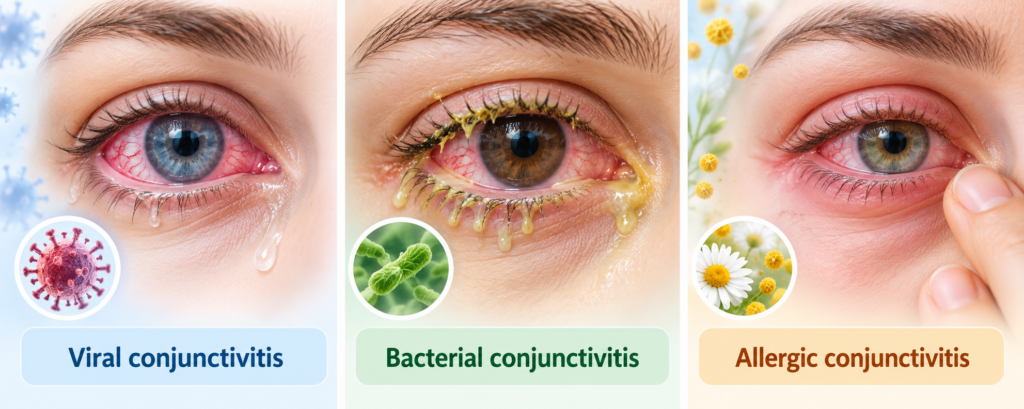
Viral conjunctivitis is the most common form of pink eye, and it is usually the type behind community “eye flu” scares. It often causes a red eye with watery discharge rather than thick pus. Many patients describe a burning, gritty, or sandy feeling. It commonly starts in one eye and then spreads to the other within a few days. It may happen during or just after a cold, cough, sore throat, or other viral illness. Viral conjunctivitis is very contagious, but in adults it is often self-limited, meaning it usually settles on its own with time and supportive care.
Antibiotic eye drops do not treat viral conjunctivitis. That is an important point, because many people assume every red eye needs an antibiotic. It does not. Viral pink eye will not respond to antibacterial drops, and overusing antibiotic drops is not good practice.
Bacterial conjunctivitis
Bacterial conjunctivitis is more likely to cause thicker yellow, white, or green discharge. The lids may stick together, especially on waking up in the morning. Some patients describe it as “glue” on the eyelashes. Bacterial conjunctivitis can overlap with viral symptoms, so the distinction is not always perfect from symptoms alone. Still, thick purulent discharge and matted eyelids push us more toward bacterial infection.
The important nuance is this: many mild bacterial cases also improve on their own. Doctors may prescribe antibiotic drops in selected cases, especially when the discharge is significant, the patient is at higher risk, or contact lens use raises concern for a more serious infection. Contact lens wearers deserve special caution because a painful red eye in a contact lens wearer can sometimes be keratitis, an infection of the cornea, rather than simple conjunctivitis.
Allergic conjunctivitis
Allergic conjunctivitis usually behaves differently. The hallmark symptom is itching. Not mild irritation. Real itching that makes you want to rub your eyes. It commonly affects both eyes and often comes with watery eyes, puffiness, sneezing, or a runny nose. Unlike viral and bacterial conjunctivitis, allergic conjunctivitis is not contagious.
This type tends to flare when the eyes are exposed to allergens such as pollen, dust mites, mold, pet dander, cosmetics, or even contact lens solution in some people. For some patients it is seasonal. For others, it is a year-round problem.
Can you tell the type just by looking?
Sometimes you can make a good guess. But you cannot always be sure. Even specialists know that symptoms overlap. A watery eye is often viral, but not always. Thick discharge suggests bacteria, but can sometimes appear in mixed or advanced cases. Both allergy and viral infection can make the eye watery and red. That is why persistent or severe cases should be examined properly rather than self-treated for too long.
A simple practical rule is this. Watery plus recent cold points more toward viral. Thick sticky discharge points more toward bacterial. Intense itching in both eyes points more toward allergy. But if there is pain, strong light sensitivity, reduced vision, marked swelling, or symptoms that are not improving, do not rely on guesswork.
A simple self-care vs doctor-visit decision tree
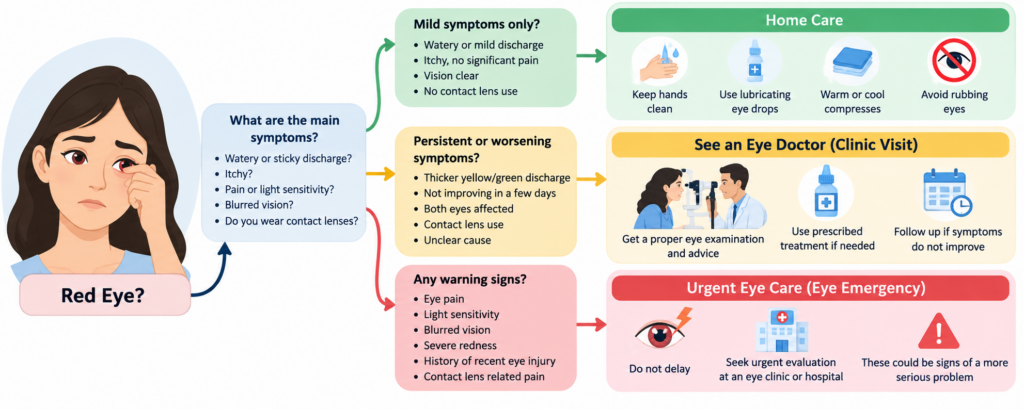
1) Mild redness, watering, itching, or discharge, but vision is normal and there is no real pain
It is reasonable to begin simple supportive care for a short period. Use preservative-free artificial tears, avoid rubbing the eyes, use a clean cool compress, and stop contact lenses until the eye is fully settled. Many mild viral and allergic cases improve this way. Infective conjunctivitis often gets better within about one to two weeks.
2) Thick discharge, sticky lids, or one eye that rapidly infects the other
You may still be dealing with uncomplicated conjunctivitis, but it is sensible to get checked if discharge is significant, symptoms are worsening, or you need help deciding whether antibiotic drops are appropriate. A clinician can usually diagnose conjunctivitis from your history, symptoms, and an eye exam.
3) Contact lens wearer with a red eye
This is a higher-risk situation. Remove the contact lenses immediately and arrange prompt ophthalmic review. Contact lens wearers are at higher risk of bacterial keratitis, which can threaten vision and should not be dismissed as routine pink eye.
4) Pain, light sensitivity, blurred vision, intense redness, or worsening symptoms
This is not a “wait and watch” situation. These are warning signs that need same-day medical attention because more serious eye disease can look similar to conjunctivitis in the beginning. Newborns with symptoms of pink eye should also be examined right away.
How doctors diagnose conjunctivitis
In most cases, diagnosis comes from the story and the exam. We ask when it started, whether one eye or both eyes are involved, whether the discharge is watery or thick, whether there is itching, and whether there are cold symptoms, allergies, or contact lens use. Then we examine the eye, often using a slit lamp, which is the microscope eye doctors use to look closely at the front of the eye.
Only occasionally are laboratory tests or cultures needed. That is usually when symptoms are severe, unusual, recurrent, or suspicious for a high-risk infection such as gonococcal disease, chlamydia, or herpes.
Treatment: what actually helps
Treatment for viral conjunctivitis
For most viral conjunctivitis, treatment is supportive. Artificial tears can reduce irritation. Cool compresses can soothe swelling and discomfort. Good hand hygiene matters because viral conjunctivitis spreads very easily. Antibiotic drops do not help routine viral conjunctivitis. Antiviral treatment is reserved for certain more serious viral infections, such as some herpes-related eye infections, and those cases need medical supervision.
Treatment for bacterial conjunctivitis
Some bacterial infections are mild and self-limited, but doctors may prescribe antibiotic eye drops or ointment when the history and exam suggest bacterial disease, when discharge is substantial, or when there are special risk factors. Contact lens wearers with bacterial conjunctivitis should be seen promptly and treated carefully because of the higher risk of corneal infection.
One of the biggest mistakes I see is patients buying antibiotic-steroid combination eye drops without a proper diagnosis. That is not safe. The American Academy of Ophthalmology specifically advises that indiscriminate use of topical antibiotics or corticosteroids should be avoided. Steroid drops can worsen or mask certain infections and delay the right diagnosis. Delhi authorities also warned the public during eye-flu outbreaks not to buy antibiotic-steroid ophthalmic drops casually.
Treatment for allergic conjunctivitis
Treatment here focuses on reducing the allergic response and limiting exposure to the trigger. Cold compresses and artificial tears can help. Antihistamine or anti-allergy eye drops are often useful. Just as important, do not rub the eyes. Rubbing releases more inflammatory chemicals and usually makes symptoms worse. Severe allergic eye disease sometimes needs prescription treatment under an ophthalmologist’s supervision.
Safe home care that is worth trying
The home measures that make sense are simple. Use clean artificial tears. Apply a cool compress to closed eyelids. Clean away discharge gently with a clean wet cloth. Stop using contact lenses until symptoms are fully gone or your eye doctor tells you it is safe to restart. If you wore disposable lenses, cases, or old eye makeup during the infection, those items may need to be discarded or cleaned properly.
What should you avoid? Do not rub your eyes. Do not share towels, pillows, eye drops, or makeup. Do not use someone else’s medication. Do not wear contact lenses through the infection. And do not put things into your eye that were never designed for eye use. The AAO has specifically warned against internet-style remedies such as breast milk or honey in the eye, and also reminds patients not to put non-eye products in the eye.
That point matters because many people search for a “pink eye home remedy.” Supportive care is fine. Homemade eye treatments are not. The safest “home remedy” is lubrication, cold compresses, rest, and hygiene.
Prevention and hygiene tips
If the conjunctivitis is infectious, prevention is not complicated, but it does need discipline. Wash your hands often with soap and water. Avoid touching or rubbing the eyes. Use separate towels and washcloths. Wash pillowcases, sheets, and face cloths regularly in hot water and detergent. Do not share makeup, eye drops, contact lens cases, or eyeglasses. These steps matter because viral and bacterial conjunctivitis spread through hands, shared items, and contaminated surfaces.
Many patients ask whether they need to stay off work or keep a child home from school. The answer depends partly on how unwell the person feels, how much close contact they will have with others, and local rules. NHS guidance says people do not usually need to stay away from work or school unless they are very unwell, while CDC guidance notes that people with viral or bacterial conjunctivitis and systemic symptoms should remain home if they cannot avoid close contact with others.
When to see a doctor urgently
Please do not self-diagnose a red eye for too long if any of these are present: significant pain, light sensitivity, blurred vision that does not clear after wiping the eye, intense redness, marked swelling, symptoms getting worse instead of better, weakened immunity, or contact lens use. These features can point to problems beyond routine conjunctivitis, including corneal infection or inflammation that deserves urgent care.
Newborns always deserve prompt medical review. Pink eye in a newborn is not something to manage at home without guidance.
A final word from your eye doctor
Most cases of conjunctivitis are not dangerous, and that is reassuring. But the type matters. Viral pink eye is usually watery and contagious. Bacterial conjunctivitis is more likely to be sticky and may need drops in selected cases. Allergic conjunctivitis is usually itchy, watery, and not contagious. When patients understand those patterns, they make better choices and avoid unnecessary medicines.
If your symptoms are mild, simple supportive care may be enough. If you have warning signs, are a contact lens wearer, or are unsure what type of conjunctivitis you have, book an appointment with our ophthalmologist for a proper eye examination. A slit-lamp exam can quickly tell us whether this is routine pink eye or something that needs more urgent treatment.
References
- American Academy of Ophthalmology. Conjunctivitis: What Is Pink Eye?
- Centers for Disease Control and Prevention (CDC). Conjunctivitis (Pink Eye)
- Mayo Clinic. Pink eye (conjunctivitis): Symptoms and causes
- Mayo Clinic. Pink eye (conjunctivitis): Diagnosis and treatment
- NHS. Conjunctivitis
- American Academy of Ophthalmology. Conjunctivitis Preferred Practice Pattern