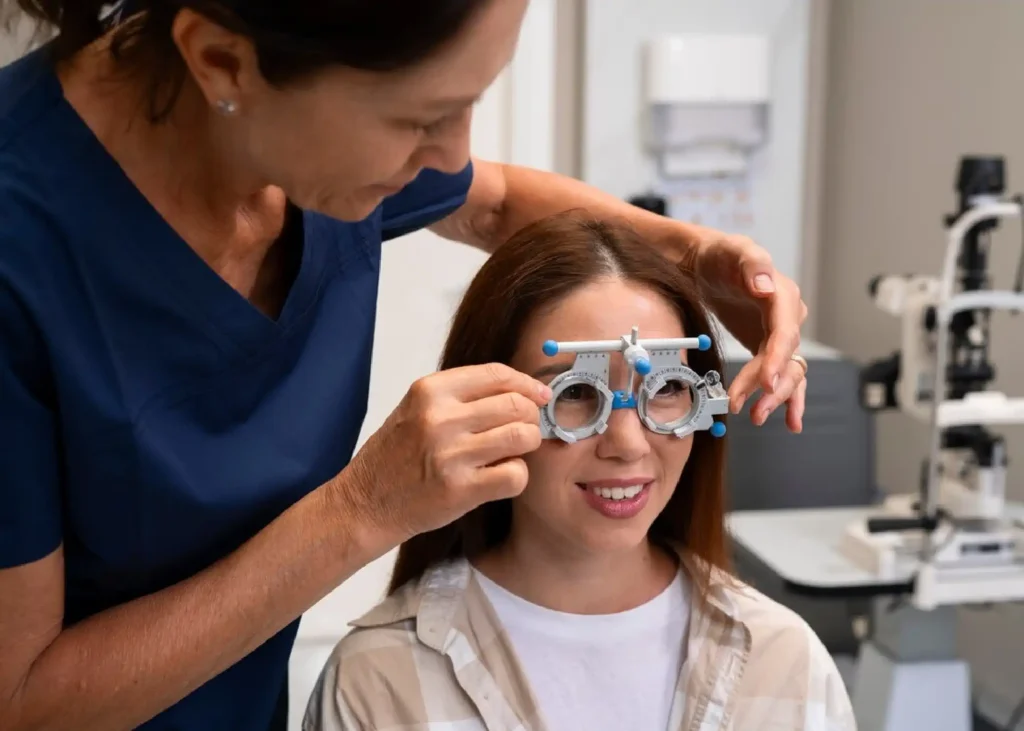
Choosing the right surgeon and hospital for cataract surgery is as important as the procedure itself. In India — especially in Delhi/NCR — you’ll find hundreds of clinics offering cataract surgery, but the best choice depends on more than price. Look for an experienced surgeon, modern technology (phaco or femto-laser), transparent communication, and a hospital that prioritizes patient safety and follow-up care. This guide explains how to evaluate your options confidently and avoid common pitfalls before booking surgery.
Surgeon & Hospital: How to Pick a Good Cataract Surgery Provider in Hyderabad
“Any recommendations for cataract surgery hospitals in Delhi NCR?”
“How do I know which doctor to trust — everyone claims to be the best?”
— Common posts on Reddit’s r/india and local health forums
Cataract surgery is one of the most successful operations worldwide — but the quality of your outcome depends greatly on your surgeon and the facility.
The difference between an average experience and an excellent one often lies in attention to detail, communication, and technology — not just the lens or the fee.
Let’s walk through how to make an informed, confident choice for your eyes.
Why Choosing the Right Provider Matters
Your eyes are unique — their shape, corneal curvature, and health history determine which surgical technique and lens suit you best.
A skilled surgeon doesn’t just remove a cloudy lens; they restore your quality of life. In the right hands, cataract surgery is quick, painless, and highly predictable. In the wrong hands, even minor oversights can affect clarity or comfort.
Online, you’ll find posts from people thrilled with their results — and others frustrated because they felt rushed or uninformed. The goal is to find a team that treats you like a person, not a number.
Step 1: Evaluate the Surgeon’s Experience
In India, many ophthalmologists perform cataract surgery, but expertise varies.

What to Look For
- Credentials: MS/MD in Ophthalmology or DO (Diploma in Ophthalmology) with further fellowship in cataract or anterior segment surgery.
- Experience: At least 1,000+ surgeries performed independently is a reassuring benchmark.
- Subspecialty training: Surgeons specializing in phacoemulsification or laser cataract surgery tend to handle complex cases more confidently.
- Reputation: Patient reviews, word-of-mouth recommendations, or referrals from trusted optometrists are valuable.
Ask directly:
“How many cataract surgeries have you performed?”
“Which surgical techniques do you use — phaco or femto-laser?”
“Can I speak to a few patients who had similar lenses implanted?”
Tip: Confident, ethical surgeons welcome these questions.
Step 2: Assess the Hospital or Eye Centre
The hospital’s environment plays a key role in comfort and safety.
Key Points to Check
- Accreditation and Hygiene Standards
- Look for NABH-accredited centres (National Accreditation Board for Hospitals & Healthcare Providers).
- The operating rooms should maintain sterile, temperature-controlled environments.
- Ask about their infection-control protocols and surgical audit rates.
- Technology & Equipment
Modern cataract surgery uses advanced tools such as:- Phacoemulsification systems (Alcon Centurion, Zeiss VISALIS)
- Femtosecond laser platforms (LenSx, Catalys)
- Optical biometry for precise lens power calculations (IOL Master, Lenstar)
Hospitals that invest in these ensure greater accuracy and faster recovery.
- Support Staff & Post-Op Care
Good centres have trained technicians, nurses, and optometrists who manage pre- and post-surgery care seamlessly. - Emergency Backup
Even though cataract surgery is low-risk, the hospital should have access to emergency facilities and retinal specialists for rare complications.

Step 3: Compare Surgical Techniques
In India today, three main cataract surgery methods are available:
| Technique | Description | Key Benefit | Typical Cost (approx., per eye) |
|---|---|---|---|
| Phacoemulsification (Phaco) | Uses ultrasound to break and remove the lens through a 2–3 mm incision | Quick recovery, minimal stitches | ₹20,000–₹45,000 |
| Femtosecond Laser-Assisted Cataract Surgery (FLACS) | Adds laser precision for incision and lens fragmentation | Enhanced accuracy, less energy used | ₹1,50,000–₹2,00,000 |
| Manual Small-Incision Cataract Surgery (MSICS) | Larger incision, manual extraction | Lower cost, useful in dense cataracts | ₹10,000–₹25,000 |
Most urban hospitals in Delhi/NCR now use phaco or laser-assisted techniques. The choice depends on cataract density, eye health, and your budget — not just marketing claims.
Step 4: Understand Lens Options (Briefly)
While choosing your surgeon and hospital, you’ll also be offered different intraocular lens (IOL) types:
- Monofocal: Standard, good for one distance (usually far)
- Toric: Corrects astigmatism
- Multifocal/Trifocal: For near and far vision without glasses
- EDOF (Extended Depth of Focus): Balanced middle ground
Your surgeon should discuss why a specific lens suits your eyes — not just quote prices.
Red flag: If a hospital pushes one brand for every patient, ask why. Lens choice should be individualized, not one-size-fits-all.
Step 5: Read Real Patient Experiences
On Reddit and local forums, many patients share honest experiences:
“I chose a hospital because it had laser technology, but what really mattered was how calmly the doctor explained everything.”
“My dad’s surgeon gave his phone number for any post-op issues — that kind of reassurance matters more than fancy ads.”
What these stories reveal: patients value communication and trust over glitzy equipment.
Look for consistent reviews mentioning:
- Clear explanations
- Smooth pre-surgery coordination
- Good follow-up care
- Reasonable transparency in billing
Avoid centres with repeated complaints about rushed consultations or poor post-op support.
Step 6: Visit or Call Before You Decide
Nothing replaces seeing the facility yourself. When you visit:
- Observe cleanliness and how staff treat patients.
- Ask how long the surgeon spends in consultations.
- Inquire about average waiting time and follow-up frequency.
- Check if they provide written informed consent forms and cost breakdowns.
Tip: A responsible hospital won’t push you to “book immediately.” They’ll encourage you to think and come back with questions.
Step 7: Transparency in Costs
Cataract surgery prices in India can vary widely depending on lens type, surgeon, and hospital tier.
Approximate price ranges (per eye):
| Technology / Lens Type | Typical Range (Per Eye, INR) | Benefits |
| Standard Phaco + Monofocal IOLPhaco + Advanced Monofocal IOL | ₹20,000–₹45,000₹50,000–₹75,000 | Reliable, affordable, clear distance visionClear distance vision, Minimal Intermediate vision, Preloaded IOLs |
| Phaco + monofocal Toric IOL | ₹50,000–₹85,000 | Sharp vision, astigmatism correction |
| Phaco + Multifocal/Trifocal /EDoF IOLPhaco+Trifocal toric/EDof Toric IOL | ₹80,000–₹1,30,0001,30,000-1,60,000 | Freedom from glasses |
| Laser-Assisted (FLACS) + Premium IOL | ₹1,50,000–₹200000+ | Maximum precision, comfort, fastest recovery |
Ask if the cost includes:
- Pre-operative tests and counselling
- Post-surgery check-ups and medications
- Both eyes or one at a time
Patient insight: “Some clinics quote low prices, then add lens or anesthesia charges later. Get an itemized quote.”
Step 8: Watch for Red Flags
Avoid providers who:
- Offer “discount surgery packages” with no consultation
- Refuse to show their accreditation or infection-control reports
- Insist on a particular lens brand without examining you
- Guarantee “perfect vision” — outcomes vary slightly per eye
- Rush you through pre-surgery explanations
Good eye hospitals earn trust through information, not pressure.
Step 9: Location and Convenience
In a city like Hyderabad, consider accessibility. You’ll need at least 2–3 post-operative visits, so pick a centre that’s reachable without strain.
Many reputable options cluster in areas like Madhapur, Hitec city, Gachibowli, each offering both budget and premium tiers.
Tip: The “best” hospital isn’t necessarily the biggest — smaller specialty eye centres often provide more personalized care.
Step 10: Trust Your Instinct
During your consultation, notice how you feel. A good doctor:
- Listens patiently to your questions
- Explains lens options clearly
- Does not rush or interrupt
- Encourages a second opinion if you’re unsure
If you leave the clinic feeling confident and informed, you’ve likely found the right place.
What Good Care Looks Like — Patient Stories
“My surgeon walked me through each step, even showing my scan results on screen. The surgery took 15 minutes, and I could read messages the next day.”
“I compared three hospitals. The one I chose wasn’t the cheapest, but their post-surgery follow-up was excellent.”
“The hospital gave me a booklet with all medication timings — that level of organization made recovery easy.”
These stories show that communication, organization, and follow-up define good care more than advertisements or discounts.
Checklist Before Booking Your Cataract Surgery

- ✅ Verify surgeon’s credentials and experience
- ✅ Confirm hospital accreditation
- ✅ Check available surgical technologies
- ✅ Ask for a detailed written cost estimate
- ✅ Clarify which IOLs are available and why they’re recommended
- ✅ Confirm follow-up schedule and emergency contact
- ✅ Read independent patient reviews
- ✅ Trust your comfort level with the surgeon
When to Get a Second Opinion
If you feel rushed, uncertain about lens options, or sense inconsistent advice, seek a second opinion from another senior ophthalmologist. Most reputable surgeons support this — it’s part of good medical practice.
If you’re exploring cataract surgery in Hyderabad or elsewhere in India, start by booking a comprehensive pre-surgery evaluation with a trusted ophthalmologist.
Bring your questions about lens types, costs, and recovery — the right team will answer clearly and patiently.
Your eyesight deserves expertise, transparency, and care — not compromise.
References