
Low-Level Light Therapy (LLLT) & Radiofrequency Therapy in Hyderabad: Cost, Procedure & Recovery
Low-Level Light Therapy (LLLT) and Radiofrequency (RF) Therapy are advanced, non-invasive treatments designed to bring relief to those suffering from chronic dry eyes and related conditions. These therapies work together to improve the health and function of your eyelid glands, helping your eyes produce better quality tears naturally.
QUICK FACTS
- Procedure Duration: 15-30 minutes
- Anesthesia Type: Topical numbing eye drops
- Recovery Time: 24-48 hours
- Hospital Stay: Daycare / No overnight admission required
UNDERSTANDING THE BASICS
What is Low-Level Light Therapy (LLLT) & Radiofrequency Therapy?
Imagine your eyelids have tiny, special oil glands called Meibomian glands, like tiny oil factories. These glands are crucial because they produce the oily layer of your tears, which stops them from evaporating too quickly. When these glands get blocked or inflamed, they don’t work properly, leading to dry, irritated eyes – a condition often called Meibomian Gland Dysfunction (MGD) or blepharitis.
Low-Level Light Therapy (LLLT) uses gentle, non-thermal light to stimulate these glands, reducing inflammation and encouraging them to produce healthy oils again. Radiofrequency (RF) Therapy, on the other hand, uses controlled heat to gently melt away blockages in the Meibomian glands, allowing the trapped oils to flow freely. Together, these treatments help restore the natural balance of your tear film, making your eyes feel more comfortable and hydrated.
CONDITIONS AND SYMPTOMS
Why is Low-Level Light Therapy (LLLT) & Radiofrequency Therapy performed?
Eye Conditions Treated
- Dry Eye Syndrome (especially evaporative dry eye)
- Meibomian Gland Dysfunction (MGD)
- Blepharitis (eyelid inflammation)
- Chalazion (stye prevention/management)
Symptoms You Might Be Experiencing
- Persistent dryness or a gritty sensation in your eyes
- Burning or stinging eyes
- Redness or irritation
- Blurred vision that improves with blinking
- Sensitivity to light
- Watery eyes (paradoxically, as a response to dryness)
- Feeling like something is in your eye
SURGICAL JOURNEY STEP-BY-STEP
How is the Low-Level Light Therapy (LLLT) & Radiofrequency Therapy Procedure Performed?
1. How to Prepare Before the Procedure
Preparing for your LLLT & RF therapy is generally straightforward. Your eye doctor will first conduct a thorough eye examination to assess your condition and determine if this treatment is right for you. You might be asked to stop wearing contact lenses for a short period before the procedure. It’s important to inform your doctor about any medications you are taking, especially blood thinners, and any allergies you may have. On the day of the procedure, arrive with a clean face, free of makeup or lotions around the eyes.
2. What Happens During the Procedure?
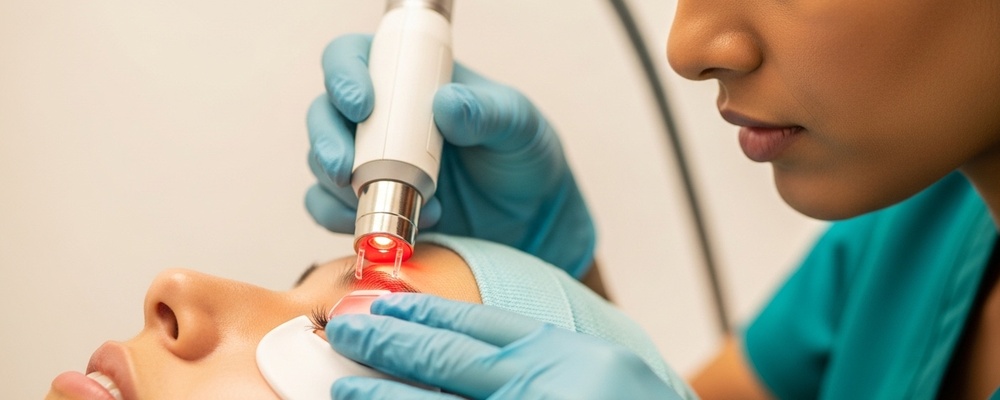
When you arrive for your treatment, you’ll be made comfortable in a reclining chair. First, topical numbing eye drops may be applied to ensure your comfort, though the procedure is generally well-tolerated. For LLLT, a special mask or pad emitting gentle red light will be placed over your closed eyelids for a set period, typically 15-20 minutes. You’ll simply relax while the light works its magic. For RF therapy, a small, smooth handpiece will be gently glided over your eyelids and surrounding skin. This device delivers controlled, therapeutic heat, which feels like a warm massage. The doctor will carefully monitor the temperature to ensure your safety and comfort throughout the 5-10 minute RF session. Both therapies are non-invasive, and you can relax during the entire process.
3. What to Expect Immediately After the Procedure
Immediately after your LLLT & RF therapy, you might notice a slight warmth around your eyes, but there’s typically no pain. Your vision should remain clear, and you can usually resume most normal activities right away. Your doctor might recommend avoiding makeup around the eyes for the rest of the day and protecting your eyes from direct sunlight with sunglasses. You’ll receive specific instructions on any eye drops or post-care routines. Most patients report feeling an immediate sense of relief or improved comfort, though the full benefits often become more apparent over a few weeks as the glands continue to heal and function better.
POST-OPERATIVE CARE AND TIMELINE
Recovery and Post-Operative Care
Recovery from LLLT & RF therapy is generally quick and easy, with minimal downtime.
Do’s:
- Continue to use any prescribed eye drops as directed by your doctor.
- Wear sunglasses when outdoors to protect your eyes from bright light.
- Maintain good eyelid hygiene as recommended by your ophthalmologist.
- Attend all follow-up appointments to monitor your progress.
Don’ts:
- Avoid rubbing your eyes vigorously.
- Refrain from applying eye makeup for at least 24 hours, or as advised.
- Avoid swimming or hot tubs for a few days to prevent infection.
- Do not use over-the-counter eye drops without consulting your doctor.
Recovery Timeline:
- Day 1: You might experience mild warmth or slight redness around the treated areas, which should subside quickly. You can typically resume most daily activities.
- Week 1: You should start to notice a reduction in dry eye symptoms like grittiness, burning, and irritation. Your eyes may feel more comfortable and less fatigued.
- Month 1: The full benefits of the therapy will become more evident as your Meibomian glands continue to improve their function. Your tear film quality should be significantly enhanced, leading to sustained relief from dry eye symptoms. Your doctor may recommend a series of treatments for optimal, long-lasting results.
COST AND INSURANCE COVERAGE IN HYDERABAD
Cost of Low-Level Light Therapy (LLLT) & Radiofrequency Therapy in Hyderabad & Insurance Options
- Estimated Local Investment: ₹40000 – ₹100000
- Cost Determinants: The total cost for Low-Level Light Therapy (LLLT) & Radiofrequency Therapy in Hyderabad can vary based on several factors:
- Number of Sessions: Often, a series of treatments (e.g., 3-4 sessions) is recommended for optimal and lasting results, influencing the overall cost.
- Clinic Reputation and Technology: Advanced clinics with state-of-the-art equipment and highly experienced specialists may have different pricing structures.
- Severity of Condition: More severe or complex cases of dry eye or MGD might require more intensive treatment plans.
- Additional Treatments: The cost may also vary if the therapy is combined with other dry eye management strategies or specific medications.
- Insurance Protocol: Low-Level Light Therapy (LLLT) & Radiofrequency Therapy for dry eye and Meibomian Gland Dysfunction are generally considered therapeutic treatments for a medical condition. Therefore, they are often covered under major TPA networks and health insurance schemes, depending on your specific policy and the medical necessity determined by your ophthalmologist. It is crucial to verify your insurance coverage directly with your provider before starting treatment, as policies can vary. Our hospital’s billing department can assist you with the necessary documentation and pre-authorization processes.
FREQUENTLY ASKED QUESTIONS
Frequently Asked Questions About Low-Level Light Therapy (LLLT) & Radiofrequency Therapy
Q: Is LLLT & RF Therapy painful?
A: No, the procedure is generally not painful. LLLT involves gentle light, and RF therapy feels like a warm, comfortable massage around the eyelids. Topical numbing drops can be used for added comfort.
Q: How many sessions of LLLT & RF Therapy are needed?
A: The number of sessions varies by individual, but typically, a series of 3-4 treatments spaced a few weeks apart is recommended for optimal and long-lasting results. Your doctor will create a personalized treatment plan.
Q: How long do the results of LLLT & RF Therapy last?
A: Many patients experience significant relief for several months to over a year. Maintenance treatments may be recommended periodically to sustain the benefits, depending on your condition.
Q: Are there any side effects of LLLT & RF Therapy?
A: Side effects are rare and usually mild, such as temporary redness or slight swelling around the treated area, which typically resolves within a few hours. The procedures are considered very safe.
DISCLAIMER
Disclaimer: This content is curated using artificial intelligence and may contain inaccuracies. It is provided for informational and educational purposes only and should not be considered professional medical advice. Please consult your ophthalmologist for personalized clinical care. The prices listed in this article are indicative only and may vary based on the patient’s specific condition, procedural techniques, surgical complexity, and materials used. We strongly advise discussing actual costs directly with your healthcare provider.