
Deep Anterior Lamellar Keratoplasty (DALK) in Hyderabad: Cost, Procedure & Recovery
Deep Anterior Lamellar Keratoplasty (DALK) is a specialized corneal transplant procedure designed to restore clear vision by replacing only the diseased front layers of your cornea. This advanced surgery helps improve eyesight for those with specific corneal conditions, offering a quicker recovery compared to full corneal transplants.
QUICK FACTS
- Procedure Duration: 60-90 minutes
- Anesthesia Type: Local / General
- Recovery Time: Initial visual recovery in weeks, full stabilization over months
- Hospital Stay: Daycare or 1-2 days overnight admission
UNDERSTANDING THE BASICS
What is Deep Anterior Lamellar Keratoplasty (DALK)?
Imagine your eye’s front window, the cornea, as a clear, multi-layered shield that helps you see. Sometimes, only the outer and middle layers of this shield become cloudy or misshapen due to conditions like keratoconus. Deep Anterior Lamellar Keratoplasty (DALK) is a sophisticated surgery where your surgeon carefully removes only these damaged front layers of your cornea, leaving the healthy inner layer intact. A healthy donor cornea’s front layers are then precisely stitched into place, effectively replacing the diseased part and restoring a smooth, clear ‘window’ for light to pass through, improving your vision.
CONDITIONS AND SYMPTOMS
Why is Deep Anterior Lamellar Keratoplasty (DALK) performed?
Eye Conditions Treated
- Keratoconus (a progressive thinning and bulging of the cornea)
- Corneal scarring affecting the anterior (front) layers
- Certain corneal dystrophies (inherited conditions causing cloudiness)
- Corneal infections or injuries that have damaged the superficial layers
Symptoms You Might Be Experiencing
- Blurred or distorted vision that glasses or contact lenses can’t fully correct
- Increased sensitivity to light (photophobia)
- Seeing halos or glares around lights
- Difficulty seeing clearly at night
- A noticeable decrease in overall vision quality
SURGICAL JOURNEY STEP-BY-STEP
How is the Deep Anterior Lamellar Keratoplasty (DALK) Procedure Performed?
1. How to Prepare Before the Procedure
- Undergo a comprehensive eye examination and review of your medical history.
- Complete any required blood tests and a general health check-up to ensure you are fit for surgery.
- Stop wearing contact lenses for a specified period before your surgery, as advised by your doctor.
- Discuss all medications you are taking, especially blood thinners, with your surgeon.
- Arrange for someone to drive you home after the procedure and assist you during the initial recovery.
- Follow any specific fasting instructions provided by your surgical team on the day before and of the surgery.
2. What Happens During the Procedure?
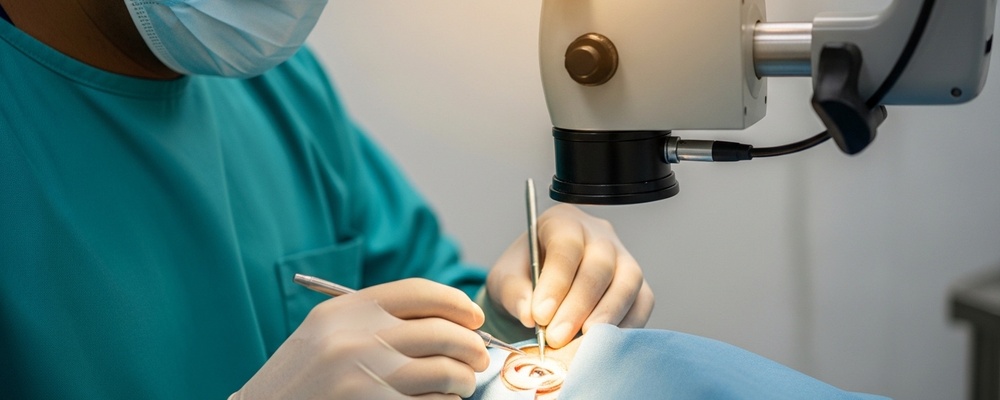
You will be given either local anesthesia (an injection around your eye to numb it completely) or general anesthesia (where you are fully asleep) to ensure you feel no pain. Your surgeon will use specialized instruments to carefully remove the diseased front layers of your cornea, leaving the innermost, healthy layer (Descemet’s membrane and endothelium) untouched. A precisely prepared donor cornea, consisting of only its front layers, is then meticulously placed and secured with very fine stitches. The entire procedure is performed with extreme precision under a high-powered microscope.
3. What to Expect Immediately After the Procedure
After the surgery, you’ll rest in a recovery area while the anesthesia wears off. Your eye will likely be covered with a protective shield or patch to prevent accidental rubbing and protect it from light. You might experience mild discomfort, a gritty sensation, or some blurry vision, which is normal. You’ll receive detailed instructions on prescribed eye drops to use and how to care for your eye at home. You will be able to go home the same day or after an overnight stay, depending on your surgeon’s recommendation.
POST-OPERATIVE CARE AND TIMELINE
Recovery and Post-Operative Care
Your recovery from Deep Anterior Lamellar Keratoplasty (DALK) is a gradual process that requires careful adherence to your doctor’s instructions.
- Do’s:
- Use all prescribed eye drops diligently to prevent infection and reduce inflammation.
- Wear your protective eye shield, especially while sleeping, for the recommended period.
- Attend all scheduled follow-up appointments with your ophthalmologist.
- Rest adequately and protect your eye from any accidental injury or impact.
- Don’ts:
- Do not rub, press, or touch your operated eye.
- Avoid strenuous activities, heavy lifting, and bending over for several weeks.
- Do not swim or use hot tubs for at least a month to prevent infection.
- Avoid getting water directly into your eye while showering; keep your eye dry.
- Day 1: You may experience mild discomfort, light sensitivity, and blurry vision. The protective shield should remain on. Your doctor will check your eye.
- Week 1: Vision may start to gradually improve, though it will still be blurry. Continue using eye drops as prescribed. Stitches are still in place.
- Month 1: Significant healing has occurred. Your vision will continue to stabilize, but full visual recovery can take several months as the cornea reshapes and stitches settle. Your doctor will assess the need for stitch removal, which can happen months later.
COST AND INSURANCE COVERAGE IN HYDERABAD
Cost of Deep Anterior Lamellar Keratoplasty (DALK) in Hyderabad & Insurance Options
- Estimated Local Investment: ₹60000 – ₹140000
- Cost Determinants:
- Surgeon’s Expertise and Hospital Facilities: The fees may vary based on the experience of the surgeon and the advanced technology available at the hospital.
- Type of Anesthesia: General anesthesia typically adds to the overall cost compared to local anesthesia.
- Pre-operative Tests and Post-operative Medications: Comprehensive diagnostic tests and necessary medications contribute to the total expense.
- Corneal Tissue Bank Charges: The cost associated with acquiring the high-quality donor corneal tissue.
- Length of Hospital Stay: If an overnight stay or extended monitoring is required, it will impact the final bill.
- Insurance Protocol:
Deep Anterior Lamellar Keratoplasty (DALK) is generally considered a therapeutic ‘Medical Necessity’ when performed to treat conditions like keratoconus or corneal scarring that significantly impair vision. As such, it is typically covered by major Third-Party Administrator (TPA) networks and most health insurance schemes in India. However, it is crucial to verify your specific policy details with your insurance provider or corporate HR department beforehand, as coverage terms and co-pays can vary. Our hospital’s billing department can assist you with the pre-authorization process.
FREQUENTLY ASKED QUESTIONS
Frequently Asked Questions About Deep Anterior Lamellar Keratoplasty (DALK)
- Q: Is DALK painful?
A: No, the procedure is performed under local or general anesthesia, so you will not feel any pain during the surgery. Mild discomfort may be experienced during recovery.
- Q: How long does it take to see clearly after DALK?
A: Initial vision improvement can be noticed within weeks, but full visual recovery and stabilization can take several months as the eye heals and adapts.
- Q: What are the main advantages of DALK over a full corneal transplant?
A: DALK preserves your own healthy inner corneal layers, leading to a lower risk of rejection, faster visual recovery, and stronger eye integrity compared to a full-thickness transplant.
- Q: Will I still need glasses or contact lenses after DALK?
A: Many patients still require glasses or contact lenses after DALK to achieve their best possible vision, as the surgery corrects the corneal shape but may not eliminate all refractive errors.
DISCLAIMER
Disclaimer: This content is curated using artificial intelligence and may contain inaccuracies. It is provided for informational and educational purposes only and should not be considered professional medical advice. Please consult your ophthalmologist for personalized clinical care. The prices listed in this article are indicative only and may vary based on the patient’s specific condition, procedural techniques, surgical complexity, and materials used. We strongly advise discussing actual costs directly with your healthcare provider.