
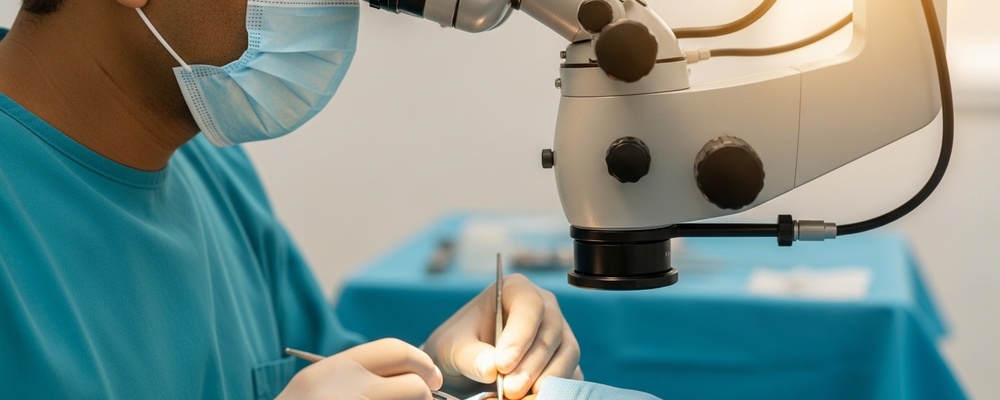
Pre-Descemet Endothelial Keratoplasty (PDEK) in Hyderabad: Cost, Procedure & Recovery
Pre-Descemet Endothelial Keratoplasty (PDEK) is an advanced eye surgery designed to restore clear vision by replacing only the thinnest, innermost layer of your cornea. This delicate procedure helps treat specific conditions where this vital layer is damaged, often causing blurry vision and discomfort. It’s a precise way to improve your sight with a quicker recovery compared to older transplant methods.
QUICK FACTS
- Procedure Duration: 30-60 minutes
- Anesthesia Type: Local numbing injection / Topical eye drops with sedation
- Recovery Time: 24-48 hours (initial visual recovery)
- Hospital Stay: Daycare / No overnight admission required
UNDERSTANDING THE BASICS
What is Pre-Descemet Endothelial Keratoplasty (PDEK)?
Your cornea is the clear, dome-shaped front “window” of your eye, allowing light to enter and focus. It has several layers, and the innermost layer, called the endothelium, acts like a tiny pump, keeping the cornea clear by removing excess fluid. Just in front of this pump is a very thin layer called Descemet’s membrane. In Pre-Descemet Endothelial Keratoplasty (PDEK), surgeons precisely replace this damaged innermost layer (the endothelium and Descemet’s membrane) with a healthy, new layer from a donor eye. This targeted approach helps restore your cornea’s natural clarity and function, much like replacing a faulty, fogged-up pane of glass in a window with a new, clear one.
CONDITIONS AND SYMPTOMS
Why is Pre-Descemet Endothelial Keratoplasty (PDEK) performed?
Eye Conditions Treated
- Fuchs’ Endothelial Dystrophy: A common genetic condition where the endothelial cells gradually stop working, leading to corneal swelling and blurry vision.
- Pseudophakic Bullous Keratopathy: Corneal swelling that can occur after cataract surgery due to damage to the endothelial cells.
- Other Endothelial Failures: Various conditions where the cornea’s innermost layer is no longer functioning correctly, causing fluid buildup and cloudiness.
Symptoms You Might Be Experiencing
- Blurry or Hazy Vision: Especially noticeable in the mornings, improving slightly throughout the day.
- Glare and Halos: Increased sensitivity to light, with bright lights appearing to have rings or streaks around them.
- Light Sensitivity (Photophobia): Discomfort or pain when exposed to bright light.
- Feeling of Grit or Foreign Body: A sensation that something is in your eye, even when nothing is present.
- Eye Discomfort: General irritation or a dull ache in the eye.
SURGICAL JOURNEY STEP-BY-STEP
How is the Pre-Descemet Endothelial Keratoplasty (PDEK) Procedure Performed?
1. How to Prepare Before the Procedure
- Comprehensive Eye Exam: Your ophthalmologist will conduct thorough tests, including vision checks, corneal mapping, and overall eye health assessment, to ensure PDEK is the right treatment for you.
- Medical Clearance: You’ll undergo general health checks like blood tests and an ECG to confirm you are fit for surgery.
- Medication Review: Discuss all your current medications with your doctor. You may need to stop certain blood thinners or other drugs a few days before the procedure.
- Fasting Instructions: You will typically be asked to fast (no food or drink) for several hours before your surgery.
- Arrange Transportation: Since you’ll receive anesthesia, you must arrange for someone to drive you home after the procedure.
- Avoid Makeup and Lotions: On the day of surgery, avoid wearing eye makeup, lotions, or perfumes.
2. What Happens During the Procedure?
The PDEK procedure is performed in a sterile operating room, usually under local anesthesia, which numbs your eye completely so you won’t feel any pain. You might also receive a mild sedative to help you relax.
- Numbing the Eye: Numbing eye drops or a gentle injection around the eye will ensure you are comfortable throughout.
- Small Incision: Your surgeon will make a very tiny incision in your cornea, often just a few millimeters wide.
- Removing the Damaged Layer: Using specialized instruments, the damaged innermost layer of your cornea (Descemet’s membrane and endothelium) is carefully peeled away and removed through the small incision.
- Inserting the New Layer: A healthy, ultra-thin donor corneal layer, prepared with extreme precision, is then gently folded and inserted into your eye through the same small incision.
- Positioning and Securing: An air bubble is injected into your eye to gently push the new donor layer against the back of your cornea, helping it adhere naturally without the need for stitches.
- Pain Minimization: Throughout the procedure, the anesthesia ensures you remain comfortable and pain-free. You may feel some pressure, but no sharp pain.
3. What to Expect Immediately After the Procedure
- Eye Protection: Immediately after surgery, an eye shield or patch will be placed over your treated eye to protect it.
- Recovery Lounge: You’ll rest in a recovery area for a short period while the anesthesia wears off and your medical team monitors you.
- Initial Vision: Your vision will be blurry, hazy, or dim due to the air bubble and the healing process. This is normal.
- Mild Discomfort: You might experience mild discomfort, a gritty sensation, or a feeling of pressure in your eye. Pain medication can be prescribed if needed.
- Positioning Instructions: You will likely be instructed to lie flat on your back for several hours (or as advised by your surgeon) to help the air bubble keep the new corneal layer in place.
- Eye Drops: You’ll receive prescriptions for eye drops (antibiotics and anti-inflammatory) to prevent infection and reduce swelling.
- Discharge: Once stable, you will be discharged with detailed post-operative instructions and a schedule for your follow-up appointments.
POST-OPERATIVE CARE AND TIMELINE
Recovery and Post-Operative Care
Following your PDEK procedure, careful adherence to post-operative instructions is crucial for a successful outcome and optimal vision recovery.
Do’s:
- Use Eye Drops: Administer all prescribed eye drops exactly as directed by your surgeon to prevent infection and control inflammation.
- Wear Eye Shield: Wear the protective eye shield, especially while sleeping or in situations where your eye might be accidentally touched, for the recommended period.
- Maintain Head Position: Follow your surgeon’s instructions regarding head positioning, such as lying flat on your back, to help the air bubble secure the new corneal layer.
- Attend Follow-ups: Keep all scheduled follow-up appointments with your ophthalmologist to monitor your healing progress.
- Gentle Activities: Resume light, non-strenuous activities as advised by your doctor.
Don’ts:
- Rub Your Eye: Absolutely avoid rubbing or pressing on your treated eye.
- Lift Heavy Objects: Refrain from heavy lifting, strenuous exercise, or any activities that significantly increase eye pressure for several weeks.
- Bend Over: Avoid bending over at the waist, as this can increase pressure in your eye.
- Get Water in Eye: Be careful to prevent water, soap, or shampoo from entering your eye while bathing or showering.
- Wear Eye Makeup: Avoid using eye makeup until your doctor gives you clearance.
Recovery Timeline:
- Day 1: You will have your first follow-up appointment. Your vision will still be quite blurry, and you may feel some discomfort. The air bubble will likely still be present. You must continue to follow positioning instructions.
- Week 1: Your vision will begin to show signs of improvement as the air bubble gradually dissipates. You’ll continue with your eye drops. Most patients can resume light daily activities, but strenuous tasks and heavy lifting should still be avoided.
- Month 1: Significant improvement in vision is typically observed. Your eye will feel much more comfortable, and you can gradually return to most normal activities, though caution is still advised. Your doctor will continue to monitor your progress and adjust eye drop regimens as needed. Full visual stabilization can take several months.
COST AND INSURANCE COVERAGE IN HYDERABAD
Cost of Pre-Descemet Endothelial Keratoplasty (PDEK) in Hyderabad & Insurance Options
- Estimated Local Investment: ₹80000 – ₹140000
- Cost Determinants: The total cost for Pre-Descemet Endothelial Keratoplasty (PDEK) in Hyderabad can vary based on several factors:
- Hospital Choice: The reputation and facilities of the hospital (e.g., private corporate hospitals vs. smaller clinics) can influence pricing.
- Surgeon’s Experience: Highly experienced and renowned surgeons may have higher consultation and procedural fees.
- Donor Tissue Cost: The cost of the donor corneal tissue itself, which is sourced from eye banks, is a significant component.
- Pre-operative Diagnostics: The extent of diagnostic tests required before surgery can add to the overall cost.
- Post-operative Care: The cost may include follow-up consultations and prescribed medications.
- Complexity of the Case: Any underlying eye conditions or surgical complexities can affect the procedure’s duration and resources needed.
- Insurance Protocol: Pre-Descemet Endothelial Keratoplasty (PDEK) is considered a therapeutic procedure for a medical necessity, aiming to restore vision and treat specific corneal diseases. As such, it is generally covered by major health insurance providers and Third-Party Administrator (TPA) networks in India. Government health schemes like Arogyasri may also cover the procedure. Patients are typically required to obtain pre-authorization from their insurance company before the surgery. It’s important to clarify your specific policy details, including deductibles, co-pays, and any exclusions, directly with your insurance provider or the hospital’s insurance desk.
FREQUENTLY ASKED QUESTIONS
Frequently Asked Questions About Pre-Descemet Endothelial Keratoplasty (PDEK)
Q1: Is Pre-Descemet Endothelial Keratoplasty (PDEK) a painful procedure?
A1: No, PDEK is performed under local anesthesia, which completely numbs your eye. You may feel some pressure or a mild sensation, but you should not experience any pain during the surgery.
Q2: How long does it take for vision to improve after PDEK?
A2: Vision typically starts to improve within the first week after PDEK as the air bubble dissipates. Significant improvement is often noticed by one month, with full visual stabilization continuing over several months.
Q3: What is the success rate of Pre-Descemet Endothelial Keratoplasty (PDEK)?
A3: PDEK has a very high success rate, with excellent visual outcomes and a low risk of complications. It is known for its rapid visual recovery and strong graft survival compared to older corneal transplant techniques.
Q4: Are there any risks associated with PDEK surgery?
A4: Like any surgical procedure, PDEK carries some minor risks, such as infection, inflammation, or the need for repositioning the donor tissue. However, serious complications are rare, and your surgeon will discuss all potential risks with you.
DISCLAIMER
Disclaimer: This content is curated using artificial intelligence and may contain inaccuracies. It is provided for informational and educational purposes only and should not be considered professional medical advice. Please consult your ophthalmologist for personalized clinical care. The prices listed in this article are indicative only and may vary based on the patient’s specific condition, procedural techniques, surgical complexity, and materials used. We strongly advise discussing actual costs directly with your healthcare provider.