
Descemet Membrane Endothelial Keratoplasty (DMEK) in Hyderabad: Cost, Procedure & Recovery
Descemet Membrane Endothelial Keratoplasty (DMEK) is a modern corneal transplant that replaces only the thinnest, innermost layer of the cornea. It’s a highly precise surgery designed to restore clear vision for those suffering from specific corneal diseases, offering a quicker recovery compared to older methods. This advanced procedure helps improve your eyesight by replacing damaged cells with healthy ones, allowing light to pass through your eye clearly again.
QUICK FACTS
- Procedure Duration: 30-60 minutes
- Anesthesia Type: Local Anesthesia with Sedation
- Recovery Time: Initial visual recovery in 24-48 hours, full stabilization over weeks
- Hospital Stay: Daycare / No overnight admission required
UNDERSTANDING THE BASICS
What is Descemet Membrane Endothelial Keratoplasty (DMEK)?
The cornea is the clear, dome-shaped front window of your eye. It has several layers, and the innermost layer, called the Descemet membrane and endothelium, is crucial for keeping the cornea clear by pumping out fluid. When this layer is damaged, the cornea swells and becomes cloudy, blurring your vision. DMEK is a highly advanced type of corneal transplant where only this very thin, damaged inner layer is carefully removed and replaced with a healthy, ultra-thin donor layer. Think of it like replacing a damaged inner lining of a clear glass pane, rather than the whole pane, to restore its transparency.
CONDITIONS AND SYMPTOMS
Why is Descemet Membrane Endothelial Keratoplasty (DMEK) performed?
Eye Conditions Treated
- Fuchs’ Endothelial Dystrophy: A genetic condition where the cells that keep your cornea clear slowly die off, leading to swelling and cloudy vision.
- Pseudophakic Bullous Keratopathy: Corneal swelling that can occur after cataract surgery, causing blurry vision.
- Failed Previous Corneal Transplants: When an earlier corneal transplant (like a full-thickness or partial-thickness graft) starts to fail.
- Posterior Polymorphous Corneal Dystrophy: Another genetic condition affecting the innermost corneal layer, leading to cloudiness.
Symptoms You Might Be Experiencing
- Cloudy or Hazy Vision: Especially noticeable in the mornings, which might improve slightly throughout the day.
- Glare and Halos: Seeing rings or streaks around lights, making night driving difficult.
- Sensitivity to Light (Photophobia): Discomfort or pain when exposed to bright light.
- Decreased Vision: Your vision may become progressively worse and not improve with new glasses.
SURGICAL JOURNEY STEP-BY-STEP
How is the Descemet Membrane Endothelial Keratoplasty (DMEK) Procedure Performed?
1. How to Prepare Before the Procedure
- Medical Clearance: You’ll undergo a thorough general health check-up, including blood tests and an ECG, to ensure you are fit for surgery.
- Detailed Eye Checks: Your ophthalmologist will perform precise measurements of your eye and cornea, including an endothelial cell count, to plan your surgery.
- Medication Review: You may be asked to stop certain medications, like blood thinners, for a few days before the procedure. Always follow your doctor’s specific instructions.
- Fasting: You will need to fast from food and drink for several hours before your scheduled surgery time.
- Logistics: Arrange for someone to drive you home after the procedure, as you won’t be able to drive yourself. Wear comfortable, loose-fitting clothing on the day of surgery.
2. What Happens During the Procedure?
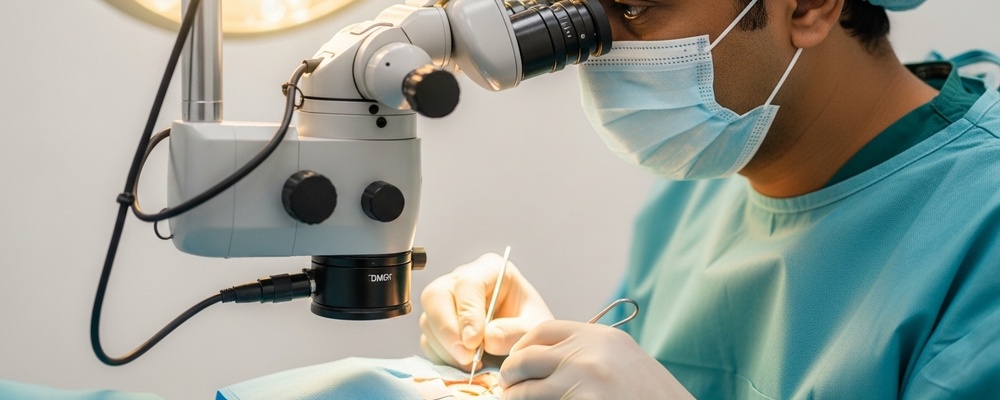
The DMEK procedure takes place in a sterile operating room. You will receive local anesthesia to numb your eye, often combined with a mild sedative to help you relax and stay comfortable. While you will be awake, you won’t feel any pain. A tiny incision is made in your eye, through which the damaged innermost corneal layer is gently removed. A new, ultra-thin donor layer (the Descemet membrane with healthy endothelial cells) is then carefully prepared and inserted into your eye through this small opening. Finally, an air bubble is placed inside your eye to gently press the new donor tissue against your own cornea, helping it to adhere properly.
3. What to Expect Immediately After the Procedure
After your DMEK surgery, you will rest in a recovery area while the effects of the sedation wear off. An eye shield or patch will be placed over your treated eye to protect it from accidental rubbing or injury. Your vision will be quite blurry immediately after the procedure, primarily due to the air bubble inside your eye. You might experience some mild discomfort, pressure, or a gritty sensation. It is crucial to follow your surgeon’s instructions precisely, especially regarding lying on your back for several hours, as this helps the air bubble keep the new tissue in the correct position.
POST-OPERATIVE CARE AND TIMELINE
Recovery and Post-Operative Care
Following your DMEK procedure, diligent post-operative care is essential for successful healing and optimal vision.
Do’s:
- Follow Eye Drop Schedule: Use all prescribed eye drops (antibiotics, anti-inflammatory, etc.) exactly as directed by your surgeon. These are vital for preventing infection and managing inflammation.
- Maintain Head Position: Lie on your back as advised by your doctor, especially during the first few days, to help the air bubble properly position the new graft.
- Wear Eye Shield: Always wear your protective eye shield, particularly while sleeping or in situations where your eye might be accidentally touched.
- Attend Follow-ups: Keep all your scheduled follow-up appointments with your ophthalmologist. These visits are crucial for monitoring your healing and vision.
- Protect Your Eye: Avoid rubbing or pressing on your eye. Be gentle when cleaning around the eye.
Don’ts:
- Avoid Eye Rubbing: Do not rub, press, or apply any pressure to your operated eye.
- Limit Strenuous Activity: Do not lift heavy objects, bend over excessively, or engage in strenuous exercise or activities that could increase pressure in your eye.
- Prevent Water Entry: Avoid getting water directly into your eye. Be cautious when showering or washing your hair, and refrain from swimming for several weeks.
- Miss Medications: Do not skip or stop your eye drops or other prescribed medications without consulting your doctor.
Recovery Timeline:
- Day 1: You will have your first follow-up appointment. Your vision will be very blurry due to the air bubble, and mild discomfort is normal. You’ll receive detailed instructions on eye drops and specific head positioning.
- Week 1: The air bubble will gradually dissipate, and you may notice your vision starting to clear, though it will still fluctuate. Continue with your eye drops and avoid any strenuous activities.
- Month 1: Significant visual improvement is often observed. Your eye drop regimen will likely be tapered down. You can typically resume most light daily activities, but heavy lifting and contact sports should still be avoided. Full visual recovery and stabilization can take several months.
COST AND INSURANCE COVERAGE IN HYDERABAD
Cost of Descemet Membrane Endothelial Keratoplasty (DMEK) in Hyderabad & Insurance Options
- Estimated Local Investment: ₹80000 – ₹140000
- Cost Determinants: The total cost for Descemet Membrane Endothelial Keratoplasty (DMEK) in Hyderabad can vary based on several factors:
- Hospital Choice: The type of hospital (e.g., private specialty eye hospital, corporate hospital, or trust hospital) and its facilities.
- Surgeon’s Expertise: The experience and reputation of your operating surgeon.
- Donor Tissue: The cost associated with acquiring and processing the high-quality donor corneal tissue from an eye bank.
- Pre-operative & Post-operative Care: The extent of diagnostic tests before surgery and the cost of post-operative medications and follow-up visits.
- Complexity: Any unique challenges or additional procedures required due to your specific eye condition.
- Hospital Stay: While typically a daycare procedure, any extended stay due to unforeseen circumstances could affect the cost.
- Insurance Protocol: Descemet Membrane Endothelial Keratoplasty (DMEK) is generally considered a therapeutic ‘Medical Necessity’ because it treats a disease that causes significant vision impairment. Therefore, it is typically covered by major Third-Party Administrator (TPA) networks and health insurance schemes in India. However, it is absolutely crucial to verify your specific policy details, understand your coverage limits, and complete any necessary pre-authorization requirements with your insurance provider or the hospital’s insurance desk well in advance of your scheduled surgery.
FREQUENTLY ASKED QUESTIONS
Frequently Asked Questions About Descemet Membrane Endothelial Keratoplasty (DMEK)
Q: Is DMEK a painful procedure?
A: No, DMEK is performed under local anesthesia with sedation, so you will not feel any pain during the surgery. You might experience mild discomfort or a gritty sensation during the initial recovery period, which can be managed with prescribed medications.
Q: How long does it take to see clearly after DMEK?
A: Your vision will be blurry immediately after surgery due to an air bubble in your eye. As the bubble dissipates over a few days to a week, your vision will gradually improve. Significant improvement is often seen within a month, with full stabilization taking several months.
Q: What are the main advantages of DMEK over other corneal transplants?
A: DMEK offers several advantages, including faster visual recovery, a lower risk of rejection, and a stronger eye structure compared to older, full-thickness corneal transplants (PKP) or even partial-thickness transplants like DSAEK, as it replaces only the thinnest affected layer.
Q: Is the donor cornea always available for DMEK?
A: Donor corneas are sourced from accredited eye banks. While efforts are made to ensure availability, there can sometimes be a waiting period depending on the availability of suitable donor tissue that matches the required specifications. Your surgeon will discuss this with you.
DISCLAIMER
Disclaimer: This content is curated using artificial intelligence and may contain inaccuracies. It is provided for informational and educational purposes only and should not be considered professional medical advice. Please consult your ophthalmologist for personalized clinical care. The prices listed in this article are indicative only and may vary based on the patient’s specific condition, procedural techniques, surgical complexity, and materials used. We strongly advise discussing actual costs directly with your healthcare provider.