
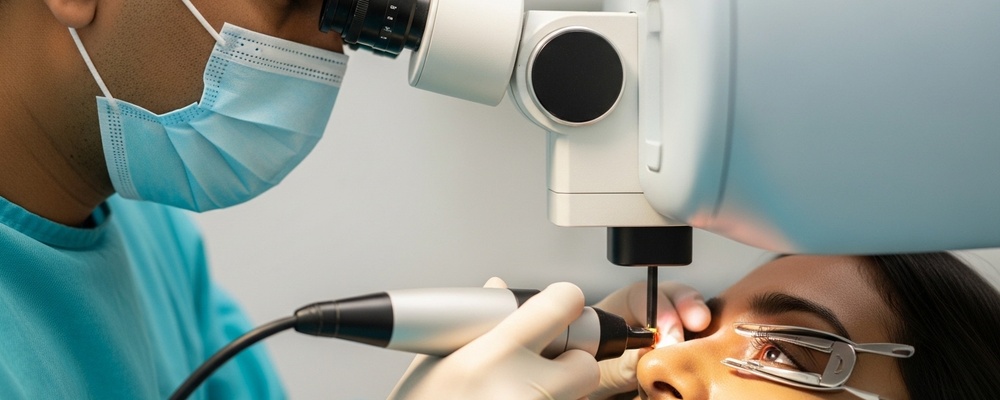
Panretinal Photocoagulation (PRP Laser) / Focal Macular Laser Treatment in Hyderabad: Cost, Procedure & Recovery
Panretinal Photocoagulation (PRP Laser) and Focal Macular Laser Treatment are specialized, non-incisional eye procedures designed to protect your vision. These local therapies use a precise laser to treat specific areas of your retina, often to prevent vision loss caused by conditions like diabetic retinopathy. They aim to safeguard your sight by addressing damaged blood vessels or abnormal growths at the back of your eye.
QUICK FACTS
- Procedure Duration: 15-30 minutes per eye
- Anesthesia Type: Topical numbing eye drops
- Recovery Time: 24-48 hours for initial visual recovery
- Hospital Stay: Daycare / No overnight admission required
UNDERSTANDING THE BASICS
What is Panretinal Photocoagulation (PRP Laser) / Focal Macular Laser Treatment?
Your eye contains a light-sensitive layer at the back called the retina, which acts like the film in a camera, capturing images and sending them to your brain. A small, central part of the retina, called the macula, is responsible for your sharp, detailed central vision.
Panretinal Photocoagulation (PRP Laser) is a treatment where a laser creates tiny, controlled “spot welds” on the peripheral (outer) parts of your retina. This is done to reduce the oxygen demand of these areas, which in turn discourages the growth of abnormal, fragile blood vessels that can bleed and cause severe vision loss. Think of it as strategically turning off less critical lights to save power for the main ones.
Focal Macular Laser Treatment is a more targeted approach, where the laser is used to seal off specific leaking blood vessels in or near the macula. This helps to reduce swelling (edema) in the macula, which can blur your central vision. It’s like precisely patching a tiny leak to prevent water damage in a crucial area. Both procedures are Non-Incisional & Local Therapy within the broader field of Vitreoretinal Procedures, meaning no cuts are made, and the treatment is focused solely on the eye.
CONDITIONS AND SYMPTOMS
Why is Panretinal Photocoagulation (PRP Laser) / Focal Macular Laser Treatment performed?
These laser treatments are crucial for preserving vision, especially in conditions where blood vessels in the retina are damaged or growing abnormally.
Eye Conditions Treated
- Diabetic Retinopathy: A complication of diabetes that damages blood vessels in the retina.
- Proliferative Diabetic Retinopathy (PDR): Where new, fragile blood vessels grow on the retina and into the vitreous gel, often treated with PRP.
- Diabetic Macular Edema (DME): Swelling in the macula due to leaking blood vessels, often treated with Focal Laser.
- Retinal Vein Occlusion: Blockage of a vein in the retina, leading to fluid leakage and swelling.
- Other Retinal Vascular Diseases: Conditions involving abnormal blood vessel growth or leakage in the retina.
Symptoms You Might Be Experiencing
If you need this treatment, you might notice:
- Blurry or distorted vision, especially in your central sight.
- Dark spots or “floaters” that drift across your vision.
- Difficulty seeing at night or adapting to changes in light.
- Sudden loss of vision in one eye.
- A “curtain” or shadow blocking part of your vision.
SURGICAL JOURNEY STEP-BY-STEP
How is the Panretinal Photocoagulation (PRP Laser) / Focal Macular Laser Treatment Procedure Performed?
This is an outpatient procedure, meaning you go home the same day. Here’s what to expect:
1. How to Prepare Before the Procedure
- Medical History Review: Your ophthalmologist will review your full medical history and current medications.
- Comprehensive Eye Exam: Your eyes will be thoroughly examined, including dilation, to assess your retinal condition.
- Discuss Medications: Inform your doctor about all medications, especially blood thinners, as adjustments might be needed.
- Arrange for a Ride: Your vision will be blurry after the procedure, so you’ll need someone to drive you home.
- Avoid Eye Makeup: On the day of the procedure, avoid wearing any eye makeup.
2. What Happens During the Procedure?
- You will be seated comfortably in a specialized chair, similar to an eye exam chair.
- Numbing eye drops will be applied to your eye to ensure you feel minimal discomfort. Your eye will also be dilated.
- A special contact lens will be placed on your eye. This lens helps the doctor focus the laser beam precisely onto your retina.
- The ophthalmologist will then use a laser to deliver quick, brief flashes of light to the targeted areas of your retina. You might see bright flashes of light and feel a mild stinging or pressure sensation, but it should not be painful.
- The entire procedure is typically quick, lasting about 15-30 minutes per eye.
3. What to Expect Immediately After the Procedure
- Your vision will likely be blurry and sensitive to light due to the dilating drops and the laser treatment.
- You might experience some mild discomfort or a scratchy feeling in your eye.
- You will be given protective eyewear (like sunglasses) to wear home.
- Your doctor will provide specific post-procedure instructions and schedule your follow-up appointment.
- You will be able to go home shortly after the procedure, but remember, you cannot drive yourself.
POST-OPERATIVE CARE AND TIMELINE
Recovery and Post-Operative Care
Following your laser treatment, proper care is essential for the best possible outcome.
Do’s:
- Use Prescribed Eye Drops: Follow your doctor’s instructions precisely for any eye drops given.
- Wear Sunglasses: Protect your eyes from bright light and glare, especially outdoors.
- Attend Follow-up Appointments: These are crucial for monitoring your healing and vision.
- Rest Your Eyes: Avoid prolonged screen time or activities that strain your eyes for the first 24-48 hours.
- Maintain Good Hygiene: Keep the area around your eyes clean.
Don’ts:
- Rub Your Eyes: This can irritate the treated area and increase the risk of infection.
- Lift Heavy Objects or Engage in Strenuous Activity: Avoid activities that increase pressure in your head for a few days.
- Swim or Use Hot Tubs: Avoid exposing your eyes to potential contaminants.
- Wear Eye Makeup: Refrain from using eye makeup for at least a week to prevent irritation or infection.
Recovery Timeline:
- Day 1: Your vision will be blurry, and you might experience light sensitivity and mild irritation. These effects are temporary.
- Week 1: Initial blurriness and discomfort should significantly subside. You’ll have a follow-up appointment to check your progress. Your vision may still fluctuate as your eyes heal.
- Month 1: Your vision should stabilize, and any initial side effects from the laser treatment should have resolved. Continued management of the underlying condition (like diabetes) is vital for long-term retinal health.
COST AND INSURANCE COVERAGE IN HYDERABAD
Cost of Panretinal Photocoagulation (PRP Laser) / Focal Macular Laser Treatment in Hyderabad & Insurance Options
- Estimated Local Investment: ₹8000 – ₹15000
- Cost Determinants: The final cost for your Panretinal Photocoagulation (PRP Laser) or Focal Macular Laser Treatment in Hyderabad can vary based on several factors:
- Severity of your condition: More extensive treatment or multiple sessions may increase the cost.
- Type of laser used: While both are laser treatments, specific advanced laser systems might have different pricing.
- Hospital or clinic facility: Costs can differ between standalone clinics and larger hospital settings.
- Surgeon’s fees: The experience and reputation of your ophthalmologist can influence the overall price.
- Pre- and post-procedure tests: Diagnostic tests and follow-up examinations are part of the overall treatment plan.
- Insurance Protocol: Panretinal Photocoagulation (PRP Laser) and Focal Macular Laser Treatment are generally considered a ‘Medical Necessity’ when performed to treat conditions like diabetic retinopathy or retinal vein occlusion that threaten vision. As such, these procedures are typically covered by major Third-Party Administrator (TPA) networks and health insurance schemes in India. However, it is crucial to verify your specific policy details and coverage limits with your insurance provider or the hospital’s billing department before your procedure. Always confirm pre-authorization requirements to ensure a smooth claim process.
FREQUENTLY ASKED QUESTIONS
Frequently Asked Questions About Panretinal Photocoagulation (PRP Laser) / Focal Macular Laser Treatment
Q: Is the Panretinal Photocoagulation (PRP Laser) / Focal Macular Laser Treatment painful?
A: No, the procedure is generally not painful. Numbing eye drops are applied before the treatment to ensure your comfort. You might feel a mild pressure or stinging sensation and see bright flashes of light, but significant pain is rare.
Q: How long does the effect of the laser treatment last?
A: The laser treatment itself creates permanent changes in the treated areas of the retina. However, the underlying eye condition (like diabetes) needs ongoing management. The treatment aims to preserve your existing vision and prevent further damage, but it doesn’t cure the underlying disease.
Q: Will my vision be completely normal after the laser treatment?
A: The primary goal of PRP and Focal Macular Laser is to prevent further vision loss or stabilize existing vision. While some patients may experience an improvement in vision, especially if swelling is reduced, it’s important to understand that the treatment may not restore vision that has already been lost.
Q: Are there any risks or side effects associated with the laser treatment?
A: Like any medical procedure, there are minor risks, though serious complications are rare. Common temporary side effects include blurred vision, light sensitivity, and mild discomfort immediately after the procedure. Your doctor will discuss all potential risks with you.
DISCLAIMER
Disclaimer: This content is curated using artificial intelligence and may contain inaccuracies. It is provided for informational and educational purposes only and should not be considered professional medical advice. Please consult your ophthalmologist for personalized clinical care. The prices listed in this article are indicative only and may vary based on the patient’s specific condition, procedural techniques, surgical complexity, and materials used. We strongly advise discussing actual costs directly with your healthcare provider.