
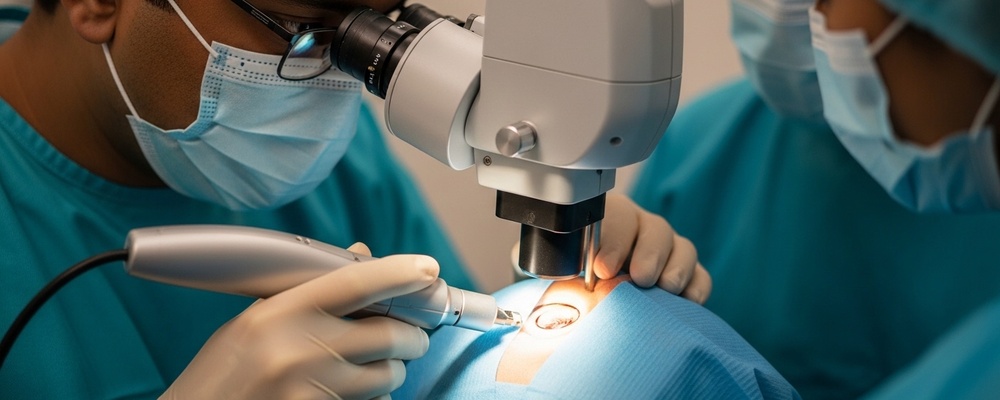
Femtosecond Laser-Assisted Cataract Surgery (FLACS) in Hyderabad: Cost, Procedure & Recovery
Femtosecond Laser-Assisted Cataract Surgery (FLACS) is an advanced, blade-free method to remove cataracts and restore clear vision. This precise laser technology helps your surgeon perform key steps of cataract removal with greater accuracy and gentleness. It’s designed to offer a highly customized and effective treatment for blurry vision caused by cataracts.
QUICK FACTS
- Procedure Duration: 15-30 minutes
- Anesthesia Type: Topical numbing eye drops / Local
- Recovery Time: 24-48 hours
- Hospital Stay: Daycare / No overnight admission required
UNDERSTANDING THE BASICS
What is Femtosecond Laser-Assisted Cataract Surgery (FLACS)?
Imagine your eye as a camera, and the lens inside is like the camera’s lens, focusing light onto the film (your retina). A cataract is when this natural lens becomes cloudy, much like a smudged or frosted camera lens, making your vision blurry and dull. Femtosecond Laser-Assisted Cataract Surgery (FLACS) uses a special, highly precise laser to gently break up this cloudy lens into tiny pieces and make a tiny opening for its removal. After the cloudy lens is removed, a clear artificial lens (called an Intraocular Lens or IOL) is carefully placed inside your eye to restore sharp, clear vision.
CONDITIONS AND SYMPTOMS
Why is Femtosecond Laser-Assisted Cataract Surgery (FLACS) performed?
Eye Conditions Treated
- Cataracts (clouding of the natural eye lens)
- Presbyopia (age-related farsightedness, when combined with specific IOLs)
- Astigmatism (irregular curvature of the cornea, when combined with toric IOLs)
Symptoms You Might Be Experiencing
- Blurry, hazy, or cloudy vision
- Difficulty seeing at night or in low light
- Increased sensitivity to glare from lights (like headlights)
- Halos around lights
- Fading or yellowing of colors
- Frequent changes in eyeglass prescription
SURGICAL JOURNEY STEP-BY-STEP
How is the Femtosecond Laser-Assisted Cataract Surgery (FLACS) Procedure Performed?
1. How to Prepare Before the Procedure
Before your FLACS procedure, your ophthalmologist will conduct a thorough eye examination and medical history review. You’ll undergo diagnostic tests, including precise measurements of your eye, to select the best artificial lens (IOL) for you. You might be asked to stop certain medications, like blood thinners, for a few days before surgery. On the day of the procedure, you’ll need to fast for a few hours as instructed by your doctor. Arrange for someone to drive you home after the surgery.
2. What Happens During the Procedure?
On the day of surgery, numbing eye drops or a local anesthetic will be applied to ensure you feel no pain. You’ll be awake but comfortable. The femtosecond laser then creates a perfectly circular opening in the front of the cataract and gently softens the cloudy lens. This precise, blade-free step replaces traditional manual incisions. Your surgeon then uses a tiny instrument to remove the softened cataract pieces through a small incision. Finally, a new, clear artificial lens (IOL) is carefully inserted and positioned in your eye. The entire procedure is typically quick and efficient.
3. What to Expect Immediately After the Procedure
Immediately after your FLACS procedure, you’ll rest in a recovery area for a short period. Your eye might feel a little gritty or sensitive, and your vision may be blurry or hazy at first, which is normal. You’ll be given protective eye drops and a shield to wear, especially while sleeping, to protect your eye. You’ll receive detailed instructions on how to care for your eye and when to use your prescribed eye drops. You will need someone to drive you home, and it’s best to rest for the remainder of the day.
POST-OPERATIVE CARE AND TIMELINE
Recovery and Post-Operative Care
Following your Femtosecond Laser-Assisted Cataract Surgery (FLACS), proper care is crucial for a smooth recovery and optimal vision.
- Do’s:
- Use prescribed eye drops exactly as directed to prevent infection and reduce inflammation.
- Wear your protective eye shield, especially at night, for the first week.
- Attend all follow-up appointments with your ophthalmologist.
- Gently clean around your eye with a clean, damp cloth.
- Rest and allow your eye to heal.
- Don’ts:
- Rub or press on your operated eye.
- Lift heavy objects or engage in strenuous activities for several weeks.
- Swim or use hot tubs for at least a month to avoid infection.
- Wear eye makeup for the first few weeks.
- Allow soap or water to get directly into your eye while showering.
- Day 1: Your vision will likely be clearer than before, though some blurriness or mild discomfort is common. You’ll have your first follow-up appointment.
- Week 1: Vision continues to improve. Most discomfort should subside. You can typically resume light activities, but avoid bending, straining, or heavy lifting.
- Month 1: Your eye should be largely healed, and your vision stabilized. Your doctor will assess your final vision and determine if new glasses are needed for specific tasks.
COST AND INSURANCE COVERAGE IN HYDERABAD
Cost of Femtosecond Laser-Assisted Cataract Surgery (FLACS) in Hyderabad & Insurance Options
- Estimated Local Investment: ₹40000 – ₹60000
- Cost Determinants: The final cost of Femtosecond Laser-Assisted Cataract Surgery (FLACS) in Hyderabad can vary based on several factors:
- Type of Intraocular Lens (IOL): Standard monofocal lenses are typically less expensive than advanced premium lenses like toric (for astigmatism) or multifocal/extended depth of focus (for reducing reliance on glasses for near and far vision).
- Technology Used: While FLACS itself is advanced, the specific laser platform and associated technologies can influence the price.
- Surgeon’s Experience: Highly experienced surgeons or those with specialized expertise may have different fees.
- Hospital Facilities: The choice of hospital or clinic, including its infrastructure and amenities, can affect the overall cost.
- Pre-operative Tests & Post-operative Care: Comprehensive diagnostic tests and the extent of follow-up care can also be factors.
- Insurance Protocol: Cataract surgery, including Femtosecond Laser-Assisted Cataract Surgery (FLACS), is generally considered a ‘Medical Necessity’ when performed to restore vision impaired by cataracts. As such, it is typically covered by major health insurance providers and Third-Party Administrator (TPA) networks in India. However, the extent of coverage can vary significantly based on your specific policy. While the basic procedure and standard monofocal IOLs are often covered, premium IOLs (like toric or multifocal lenses) or the advanced laser technology component might require out-of-pocket payment or may be covered only partially, depending on your plan. It is crucial to verify your specific policy details and coverage limits with your insurance provider or the hospital’s billing department before the procedure.
FREQUENTLY ASKED QUESTIONS
Frequently Asked Questions About Femtosecond Laser-Assisted Cataract Surgery (FLACS)
- Q: Is FLACS painful?
- A: No, FLACS is performed under topical numbing eye drops or local anesthesia, so you will not feel any pain during the procedure. You might feel a mild pressure sensation.
- Q: How long does the FLACS procedure take?
- A: The actual laser and surgical steps for FLACS are very quick, typically lasting about 15-30 minutes per eye.
- Q: What is the recovery time after FLACS?
- A: Most patients experience significant vision improvement within 24-48 hours. Full visual recovery and stabilization usually occur within a few weeks.
- Q: Can cataracts return after FLACS?
- A: No, once the natural cloudy lens is removed and replaced with an artificial IOL, a cataract cannot return. However, a secondary clouding behind the new lens can sometimes occur, which is easily treated with a quick laser procedure (YAG capsulotomy).
DISCLAIMER
Disclaimer: This content is curated using artificial intelligence and may contain inaccuracies. It is provided for informational and educational purposes only and should not be considered professional medical advice. Please consult your ophthalmologist for personalized clinical care. The prices listed in this article are indicative only and may vary based on the patient’s specific condition, procedural techniques, surgical complexity, and materials used. We strongly advise discussing actual costs directly with your healthcare provider.