
Scleral-Fixated IOL Implantation (SFIOL) in Hyderabad: Cost, Procedure & Recovery
Scleral-Fixated IOL Implantation (SFIOL) is a specialized eye surgery designed to restore clear vision when the natural lens or a previously implanted artificial lens is missing or cannot be supported. This procedure involves carefully placing a new artificial lens (IOL) and securely attaching it to the white part of your eye (sclera), helping you see clearly again.
QUICK FACTS
- Procedure Duration: 60-90 minutes
- Anesthesia Type: Local (with sedation)
- Recovery Time: Several weeks for full visual recovery
- Hospital Stay: Daycare / No overnight admission required
UNDERSTANDING THE BASICS
What is Scleral-Fixated IOL Implantation (SFIOL)?
Your eye works much like a camera, with a natural lens focusing light onto the retina at the back. Sometimes, this natural lens is absent (a condition called aphakia), or a previously implanted artificial lens (IOL) becomes dislocated or cannot be supported within the eye. In such cases, Scleral-Fixated IOL Implantation (SFIOL) becomes necessary. This procedure involves implanting a new, tiny artificial lens into your eye. Unlike standard IOLs that rest within the eye’s natural capsule, an SFIOL is carefully secured to the sclera—the tough, white outer wall of your eyeball—using fine sutures or a special adhesive. This provides stable support for the new lens, allowing it to properly focus light and restore clear vision.
CONDITIONS AND SYMPTOMS
Why is Scleral-Fixated IOL Implantation (SFIOL) performed?
Eye Conditions Treated
- Aphakia: The absence of the eye’s natural lens, often due to complicated cataract surgery or trauma.
- Dislocated Intraocular Lens (IOL): When a previously implanted artificial lens shifts out of its proper position.
- Lack of Capsular Support: After cataract surgery, if the delicate bag (capsule) that normally holds the IOL is damaged or missing.
- Ocular Trauma: Injuries to the eye that result in lens damage or loss.
Symptoms You Might Be Experiencing
- Severe Blurry Vision: Persistent haziness or cloudiness that significantly impairs daily activities.
- Double Vision (Diplopia): Seeing two images of a single object.
- Glare and Light Sensitivity: Increased discomfort from bright lights or halos around light sources.
- Distorted Vision: Objects appearing wavy, stretched, or unusually shaped.
- Significant Vision Loss: A noticeable decrease in visual acuity, especially after previous eye surgery or an injury.
SURGICAL JOURNEY STEP-BY-STEP
How is the Scleral-Fixated IOL Implantation (SFIOL) Procedure Performed?
1. How to Prepare Before the Procedure
Before your SFIOL procedure, you’ll undergo a thorough medical evaluation, including comprehensive eye exams, ultrasound, and biometry to measure your eye and select the correct IOL. You may be advised to stop certain medications, like blood thinners, for a few days. You’ll need to fast for several hours before surgery and arrange for someone to drive you home afterward, as you won’t be able to drive yourself.
2. What Happens During the Procedure?
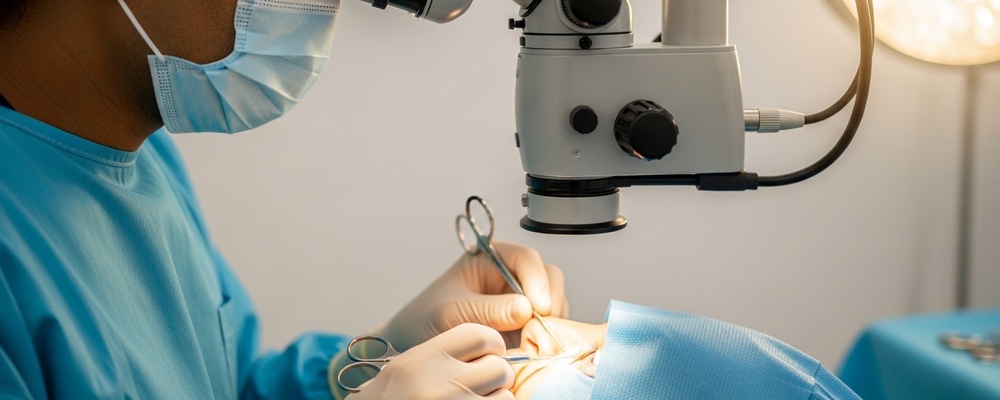
The surgery is performed in a sterile operating room. You’ll receive local anesthesia, often combined with a mild sedative, to ensure you are comfortable and feel no pain. Your surgeon will make a small incision in your eye. If a dislocated IOL is present, it will be carefully removed. Then, the new artificial lens (IOL) is precisely inserted and secured to the sclera (the white part of your eye) using very fine sutures or a special biological glue. The incision is then closed, often without stitches. Throughout the procedure, your comfort and safety are continuously monitored.
3. What to Expect Immediately After the Procedure
After the SFIOL procedure, you’ll rest in a recovery area for a short period. Your eye will likely be covered with a protective shield or patch. It’s normal to experience some blurry vision, mild discomfort, or a gritty sensation. You’ll receive detailed instructions on how to care for your eye, including prescribed eye drops, and a follow-up appointment will be scheduled for the next day. You will be discharged the same day, but remember, you cannot drive yourself home.
POST-OPERATIVE CARE AND TIMELINE
Recovery and Post-Operative Care
Following your SFIOL procedure, adhering to post-operative instructions is crucial for optimal healing and vision recovery.
Do’s:
- Use Eye Drops: Administer prescribed eye drops exactly as directed to prevent infection and reduce inflammation.
- Wear Protective Shield: Wear the eye shield, especially while sleeping, for the first week to prevent accidental rubbing or pressure.
- Rest: Allow your eyes to rest and avoid strenuous activities.
- Attend Follow-ups: Keep all scheduled follow-up appointments with your ophthalmologist.
Don’ts:
- Rub Your Eye: Avoid touching or rubbing your operated eye.
- Lift Heavy Objects: Refrain from heavy lifting or bending over, which can increase eye pressure.
- Swim or Use Hot Tubs: Avoid water entering your eye, including swimming pools, hot tubs, and saunas, for several weeks.
- Wear Eye Makeup: Do not apply eye makeup until cleared by your doctor.
Recovery Timeline:
- Day 1: Your vision will likely be blurry, and you may experience mild irritation. The protective shield should be worn. Your first follow-up appointment will assess immediate healing.
- Week 1: Vision will gradually start to improve, and discomfort should lessen. Continue using eye drops diligently and avoid any strenuous activities. You’ll have another check-up to monitor progress.
- Month 1: Significant vision improvement is typically observed. Most restrictions are usually lifted, though some activities may still require caution. A final check-up will confirm the stability of the IOL and your visual acuity. Full visual stabilization can take several months.
COST AND INSURANCE COVERAGE IN HYDERABAD
Cost of Scleral-Fixated IOL Implantation (SFIOL) in Hyderabad & Insurance Options
- Estimated Local Investment: ₹40000 – ₹80000
- Cost Determinants: The total cost for Scleral-Fixated IOL Implantation (SFIOL) in Hyderabad can vary based on several factors. These include the type of intraocular lens chosen (standard monofocal versus premium multifocal or toric lenses), the surgeon’s fees and experience, the hospital facility charges, the complexity of your specific case, the need for additional diagnostic tests, and the extent of post-operative care required. Utilizing advanced surgical techniques or specialized equipment may also influence the final price.
- Insurance Protocol: Scleral-Fixated IOL Implantation (SFIOL) is generally considered a therapeutic procedure for a medical necessity, especially for conditions like aphakia or dislocated IOLs that severely impair vision. As such, it is typically covered by major TPA networks and health insurance schemes in India. However, it is crucial for patients to verify the specifics of their policy coverage directly with their insurance provider prior to the procedure to understand any deductibles, co-pays, or exclusions.
FREQUENTLY ASKED QUESTIONS
Frequently Asked Questions About Scleral-Fixated IOL Implantation (SFIOL)
Q: Is Scleral-Fixated IOL Implantation painful?
A: No, the procedure is performed under local anesthesia, so you won’t feel pain during surgery. Mild discomfort or a gritty sensation may occur during the initial recovery period.
Q: How long does it take to recover full vision after SFIOL?
A: While initial vision improvement is often noticeable within days, full visual recovery and stabilization can take several weeks to a few months as your eye completely heals and adjusts to the new lens.
Q: What are the risks associated with SFIOL?
A: As with any surgical procedure, there are potential risks such as infection, bleeding, retinal detachment, or IOL dislocation. However, these complications are rare, and your surgeon takes extensive precautions to minimize them.
Q: Can SFIOL correct astigmatism?
A: Yes, in some cases, specialized toric SFIOLs can be used to correct pre-existing astigmatism, offering even clearer and more comprehensive vision correction. Your surgeon will discuss if this option is suitable for you.
DISCLAIMER
Disclaimer: This content is curated using artificial intelligence and may contain inaccuracies. It is provided for informational and educational purposes only and should not be considered professional medical advice. Please consult your ophthalmologist for personalized clinical care. The prices listed in this article are indicative only and may vary based on the patient’s specific condition, procedural techniques, surgical complexity, and materials used. We strongly advise discussing actual costs directly with your healthcare provider.