
Refractive Lens Exchange (RLE) / Clear Lens Extraction (CLE) in Hyderabad: Cost, Procedure & Recovery
Refractive Lens Exchange (RLE), also known as Clear Lens Extraction (CLE), is a modern eye surgery that replaces your eye’s natural lens with an artificial one to correct various vision problems. It’s a safe and effective way to achieve clearer vision, often reducing or eliminating the need for glasses or contact lenses, especially for those with presbyopia or high refractive errors.
QUICK FACTS
- Procedure Duration: 15-30 minutes per eye
- Anesthesia Type: Topical numbing eye drops / Local
- Recovery Time: 24-48 hours for initial vision, full stabilization over weeks
- Hospital Stay: Daycare / No overnight admission required
UNDERSTANDING THE BASICS
What is Refractive Lens Exchange (RLE) / Clear Lens Extraction (CLE)?
Your eye has a natural lens, much like the lens in a camera, which helps focus light onto the retina at the back of your eye, allowing you to see clearly. Over time, or due to certain conditions, this natural lens can lose its flexibility or have focusing errors, leading to blurry vision. Refractive Lens Exchange (RLE) is a type of Refractive Surgery & Vision Correction, specifically a Lens-Based Refractive Procedure, where your eye’s natural lens is carefully removed and replaced with a tiny, artificial intraocular lens (IOL). This new lens is chosen specifically for you to correct your vision, helping light focus properly and giving you clear sight without relying on glasses or contact lenses.
CONDITIONS AND SYMPTOMS
Why is Refractive Lens Exchange (RLE) / Clear Lens Extraction (CLE) performed?
Refractive Lens Exchange (RLE) is performed to correct a range of vision problems, offering a permanent solution for clearer sight.
Eye Conditions Treated
- Presbyopia: Age-related farsightedness, making it hard to see close-up objects clearly.
- High Hyperopia: Severe farsightedness, where distant objects are clear but close-up objects are blurry.
- High Myopia: Severe nearsightedness, where distant objects appear blurry.
- Astigmatism: An irregularly shaped cornea or lens, causing blurred or distorted vision at all distances (can be corrected with special IOLs).
- Early Cataracts: While primarily a vision correction procedure, RLE can be an option if early cataracts are present and vision correction is also desired, as it prevents future cataract development.
Symptoms You Might Be Experiencing
- Difficulty reading small print or seeing objects up close.
- Blurry vision at various distances, requiring you to constantly adjust your focus.
- Frequent eye strain or headaches, especially after reading or computer use.
- Needing brighter light to perform tasks that require clear vision.
- Experiencing glare or halos around lights, particularly at night.
- Your glasses or contact lens prescription changing frequently.
SURGICAL JOURNEY STEP-BY-STEP
How is the Refractive Lens Exchange (RLE) / Clear Lens Extraction (CLE) Procedure Performed?
The Refractive Lens Exchange (RLE) procedure is a precise and generally comfortable experience, designed with your safety and clear vision in mind.
1. How to Prepare Before the Procedure
Before your RLE/CLE, you’ll have a thorough eye examination and medical clearance to ensure you’re a good candidate. Detailed measurements of your eye will be taken to select the perfect artificial lens (IOL) for your vision needs. You might be asked to stop wearing contact lenses for a period before your appointment. On the day of surgery, you’ll receive specific instructions, which usually include fasting for a few hours and arranging for someone to drive you home.
2. What Happens During the Procedure?
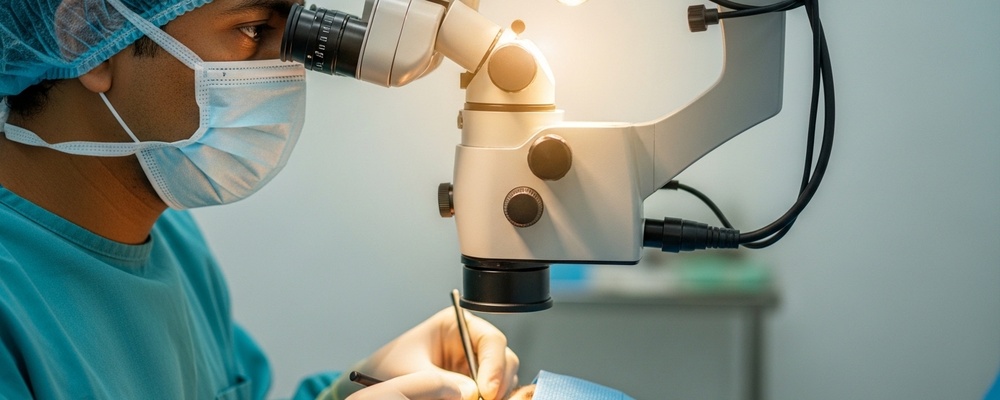
When you arrive for your procedure, numbing eye drops will be applied to ensure your eye is completely comfortable and pain-free. You may also receive a mild sedative to help you relax. A small, self-sealing incision (usually less than 3mm) is made in your cornea. Through this tiny opening, your natural lens is gently broken up and removed using advanced ultrasound technology (phacoemulsification). Then, the carefully selected artificial intraocular lens (IOL) is inserted and positioned precisely within your eye. The entire process is quick, typically taking 15-30 minutes per eye, and you won’t feel any pain.
3. What to Expect Immediately After the Procedure
Immediately after your RLE/CLE, you’ll rest in a recovery area for a short period. Your eye might be covered with a protective shield or patch. It’s normal to experience some mild discomfort, grittiness, or a sensation of a foreign body in your eye, along with initial blurry vision. You’ll receive detailed instructions on how to care for your eye, including prescribed eye drops, and a follow-up appointment will be scheduled for the next day. You must have someone drive you home, as your vision will not be clear enough for driving.
POST-OPERATIVE CARE AND TIMELINE
Recovery and Post-Operative Care
Your recovery from Refractive Lens Exchange (RLE) is typically quick, but following your post-operative care instructions is crucial for optimal results.
Do’s and Don’ts:
- Do: Use all prescribed eye drops exactly as directed to prevent infection and reduce inflammation. Wear the protective eye shield, especially while sleeping, for the first few days. Rest and avoid strenuous activities. Attend all scheduled follow-up appointments.
- Don’t: Rub or press on your eyes. Avoid heavy lifting, bending over excessively, or any activities that might increase pressure on your eyes for at least a week. Do not swim, use hot tubs, or expose your eyes to dusty or dirty environments. Refrain from wearing eye makeup for several weeks.
Recovery Timeline:
- Day 1: Your vision will be noticeably clearer than before, though it may still be adjusting and slightly blurry. You might experience mild irritation, light sensitivity, or a feeling of grittiness.
- Week 1: Vision continues to improve significantly, and any discomfort typically subsides. You can usually resume light daily activities, but continue to avoid strenuous exercise and follow eye drop regimen.
- Month 1: Your vision should be largely stabilized, and your eye will be well into the healing process. Most patients can resume all normal activities, including exercise and swimming (with doctor’s approval), and enjoy their new, clear vision. Full visual acuity may continue to refine over several months.
COST AND INSURANCE COVERAGE IN HYDERABAD
Cost of Refractive Lens Exchange (RLE) / Clear Lens Extraction (CLE) in Hyderabad & Insurance Options
- Estimated Local Investment: ₹130000 – ₹200000
- Cost Determinants: The total cost for Refractive Lens Exchange (RLE) in Hyderabad can vary based on several factors. A significant determinant is the type of intraocular lens (IOL) chosen; premium lenses like multifocal, trifocal, or toric IOLs (for astigmatism correction) are more expensive than standard monofocal lenses. The technology used, such as advanced automated blade-free laser platforms for lens removal, can also impact the price. Additionally, the surgeon’s experience, the reputation of the clinic, and the comprehensiveness of the pre-operative diagnostic tests and post-operative care package will influence the final investment.
- Insurance Protocol: Refractive Lens Exchange (RLE) is generally considered an “Elective” procedure for vision correction, similar to LASIK. This means it is typically not covered by standard health insurance plans or major Third-Party Administrator (TPA) networks in India, as it’s not deemed a therapeutic “Medical Necessity” unless there’s a specific underlying medical condition like a rapidly progressing cataract significantly impairing daily life. Some corporate health policies or specialized add-on plans might offer partial coverage, but it’s crucial to verify your specific policy details directly with your insurance provider before proceeding. Out-of-pocket payment is common for RLE.
FREQUENTLY ASKED QUESTIONS
Frequently Asked Questions About Refractive Lens Exchange (RLE) / Clear Lens Extraction (CLE)
Q: Is RLE/CLE painful?
A: No, the procedure is performed under local anesthesia using numbing eye drops, so you won’t feel any pain during the surgery. You might experience mild pressure or a sensation of touch.
Q: How long does the vision improvement last?
A: The artificial intraocular lens (IOL) implanted during Refractive Lens Exchange (RLE) is designed to last a lifetime, providing permanent vision correction and preventing future cataract formation.
Q: What are the risks of RLE/CLE?
A: Like any surgical procedure, RLE/CLE carries minor risks such as infection, inflammation, or retinal detachment, but these are rare. Your ophthalmologist will discuss all potential risks and benefits with you.
Q: Can RLE/CLE correct astigmatism?
A: Yes, with the use of special toric intraocular lenses (IOLs), Refractive Lens Exchange (RLE) can effectively correct astigmatism along with other refractive errors like nearsightedness or farsightedness.
DISCLAIMER
Disclaimer: This content is curated using artificial intelligence and may contain inaccuracies. It is provided for informational and educational purposes only and should not be considered professional medical advice. Please consult your ophthalmologist for personalized clinical care. The prices listed in this article are indicative only and may vary based on the patient’s specific condition, procedural techniques, surgical complexity, and materials used. We strongly advise discussing actual costs directly with your healthcare provider.