
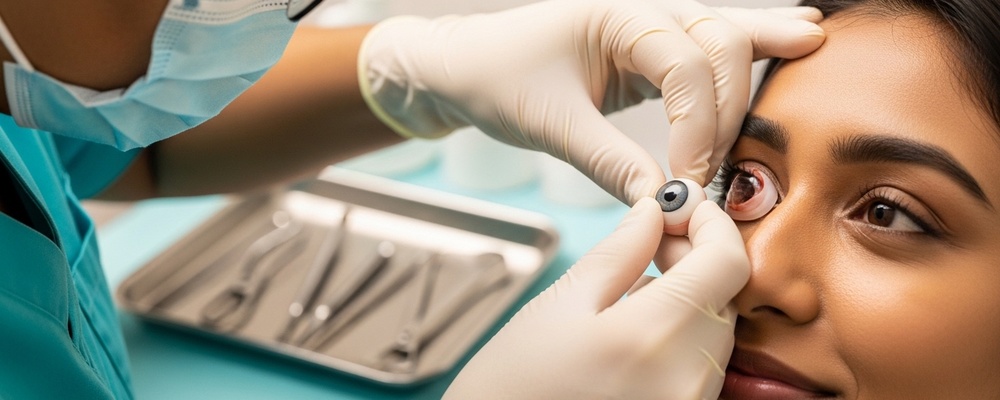
Ocular Prosthesis / Custom Artificial Eye Fitting in Hyderabad: Cost, Procedure & Recovery
An ocular prosthesis, or custom artificial eye, is a lifelike replacement for an eye that has been surgically removed or is congenitally missing. It helps restore a natural appearance to the face, boosting confidence and improving quality of life for individuals in Hyderabad. This custom-fitted eye is carefully crafted to match your remaining eye in color, size, and shape.
QUICK FACTS
- Procedure Duration: 1-2 hours (for initial fitting)
- Anesthesia Type: None (for fitting)
- Recovery Time: Immediate (adjustment period varies)
- Hospital Stay: Outpatient Clinic Visit / No hospital stay required
UNDERSTANDING THE BASICS
What is Ocular Prosthesis / Custom Artificial Eye Fitting?
An ocular prosthesis is essentially a custom-made artificial eye designed to fit into the eye socket after an eye has been surgically removed (a procedure called enucleation or evisceration) or if an eye is congenitally absent or severely disfigured. Unlike a “glass eye” of old, modern prostheses are crafted from medical-grade acrylic, meticulously painted to match the healthy eye’s iris, pupil, and sclera (the white part). It doesn’t restore vision but fills the empty socket, supports the eyelids, and helps maintain the natural shape of the face, preventing the eyelids from sinking in. The fitting process involves taking precise measurements and impressions of your unique eye socket to create a comfortable and natural-looking replacement.
CONDITIONS AND SYMPTOMS
Why is Ocular Prosthesis / Custom Artificial Eye Fitting performed?
Eye Conditions Treated
- Severe eye trauma or injury leading to eye removal
- Uncontrolled eye cancer (e.g., retinoblastoma, melanoma) requiring enucleation
- Painful, blind eye (phthisis bulbi)
- Congenital eye defects (anophthalmia, microphthalmia)
- Severe infection or disease necessitating eye removal
Symptoms You Might Be Experiencing
- An empty eye socket after surgery
- A disfigured or shrunken eye
- Noticeable asymmetry in facial appearance
- Lack of confidence due to the appearance of your eye
- Difficulty with social interaction or self-consciousness related to your eye
SURGICAL JOURNEY STEP-BY-STEP
How is the Ocular Prosthesis / Custom Artificial Eye Fitting Procedure Performed?
1. How to Prepare Before the Procedure
- Consultation with an Ocularist or Ophthalmologist: You will meet with a specialist to discuss your medical history, expectations, and any concerns you may have about the artificial eye.
- Socket Examination: The specialist will carefully examine your eye socket to ensure it is healthy, healed, and ready for a prosthesis.
- Medical Records: Bring any previous medical records related to your eye condition or the surgery that led to eye removal.
- No Special Preparations: Typically, no specific fasting, dietary changes, or major lifestyle adjustments are required before the fitting itself.
2. What Happens During the Procedure?
- Impression Taking: A gentle, non-toxic material is used to take a precise mold of your eye socket. This ensures the artificial eye will have a perfect, comfortable fit.
- Color Matching: The ocularist meticulously matches the color of your healthy eye’s iris, pupil, and sclera (the white part) using specialized paints and pigments to achieve a lifelike appearance.
- Sculpting and Shaping: Based on the impression and color matching, a custom acrylic shell is sculpted and polished to achieve a natural appearance and comfortable fit within your socket.
- Trial Fitting: The ocularist will place the initial prosthesis in your socket, making careful adjustments for comfort, natural movement, and proper alignment with your eyelids.
- Final Adjustments: Multiple visits may be needed to fine-tune the prosthesis until it looks and feels just right, ensuring optimal aesthetics and comfort.
3. What to Expect Immediately After the Procedure
- Immediate Comfort: You will immediately feel the prosthesis in your socket. It should feel comfortable, though a period of adjustment as you get used to it is normal.
- Restored Appearance: The new artificial eye will instantly restore a natural, symmetrical appearance to your face.
- Instructions for Care: You will receive detailed instructions on how to properly insert, remove, and clean your new artificial eye to maintain its hygiene and longevity.
- Follow-up Appointments: Schedule follow-up visits for any further adjustments, polishing, and to ensure long-term comfort and appearance of the prosthesis.
POST-OPERATIVE CARE AND TIMELINE
Recovery and Post-Operative Care
Caring for your ocular prosthesis is crucial for its longevity and your comfort. Your ocularist will provide specific instructions, but here are general guidelines:
Do’s:
- Clean your prosthesis regularly as instructed by your ocularist, typically with mild soap and water.
- Keep your eye socket moist with lubricating drops if recommended to prevent dryness.
- Handle your prosthesis with clean hands to prevent the introduction of germs and infection.
- Attend all follow-up appointments for professional polishing and any necessary adjustments.
Don’ts:
- Do not use harsh chemicals, abrasive materials, or alcohol to clean your prosthesis, as this can damage it.
- Avoid rubbing your eye vigorously, which could dislodge or irritate the prosthesis.
- Do not sleep with the prosthesis out unless specifically advised by your ocularist.
- Do not attempt to modify or repair the prosthesis yourself.
Day 1: You will be getting used to the feel of the prosthesis in your socket. It might feel a bit foreign, but it should not be painful. You’ll begin practicing insertion and removal techniques.
Week 1: You should be more comfortable with the daily handling and cleaning of your artificial eye. Any initial mild irritation or tearing should subside. The appearance will be well-established.
Month 1: The prosthesis should feel like a natural part of you, and you’ll be fully accustomed to its care and wearing. Regular check-ups with your ocularist are important for polishing and potential adjustments over time to ensure continued comfort and a natural look.
COST AND INSURANCE COVERAGE IN HYDERABAD
Cost of Ocular Prosthesis / Custom Artificial Eye Fitting in Hyderabad & Insurance Options
- Estimated Local Investment: ₹40000 – ₹80000
- Cost Determinants: The final cost of an Ocular Prosthesis / Custom Artificial Eye Fitting in Hyderabad can vary based on several factors:
- Level of Customization: Highly detailed, hand-painted prostheses that perfectly match the unique features of your natural eye will be at the higher end of the price range.
- Material Quality: The type of medical-grade acrylic used can influence the durability, comfort, and aesthetic quality of the prosthesis.
- Ocularist’s Experience: The expertise, reputation, and artistic skill of the ocularist performing the fitting and crafting the artificial eye can affect the cost.
- Number of Follow-up Adjustments: Some packages might include a certain number of adjustment visits, while others may charge separately for additional follow-ups or polishing.
- Complexity of the Socket: If the eye socket requires special considerations, such as a custom-made conformer or a more intricate fitting process, it might influence the overall cost.
- Insurance Protocol: An ocular prosthesis is generally considered a ‘Medical Necessity’ when it replaces an eye lost due to disease, trauma, or congenital defect, as it restores facial symmetry, supports eyelid function, and prevents complications like eyelid drooping. Therefore, it is often covered by major TPA networks and health insurance schemes in India. However, it is crucial to verify your specific policy details with your insurance provider or corporate policy add-ons, as coverage can vary. Always confirm pre-authorization requirements with your insurer before proceeding.
FREQUENTLY ASKED QUESTIONS
Frequently Asked Questions About Ocular Prosthesis / Custom Artificial Eye Fitting
- Q: Will my artificial eye move like my natural eye?
- A: While an artificial eye won’t move exactly like your natural eye, modern prostheses are designed to have good movement, especially if an orbital implant was placed during the initial eye removal surgery.
- Q: How long does an ocular prosthesis last?
- A: With proper care, an ocular prosthesis can last 5-10 years or even longer. However, it may need polishing every 1-2 years and occasional adjustments as your eye socket changes over time.
- Q: Can I participate in sports or swim with an artificial eye?
- A: Yes, most daily activities, including swimming and non-contact sports, are safe with an artificial eye. It’s generally recommended to wear protective eyewear for contact sports.
- Q: Is the fitting process painful?
- A: No, the fitting process for an ocular prosthesis is generally not painful. It involves gentle measurements and impressions of your eye socket, with comfort being a primary concern throughout.
DISCLAIMER
Disclaimer: This content is curated using artificial intelligence and may contain inaccuracies. It is provided for informational and educational purposes only and should not be considered professional medical advice. Please consult your ophthalmologist for personalized clinical care. The prices listed in this article are indicative only and may vary based on the patient’s specific condition, procedural techniques, surgical complexity, and materials used. We strongly advise discussing actual costs directly with your healthcare provider.