
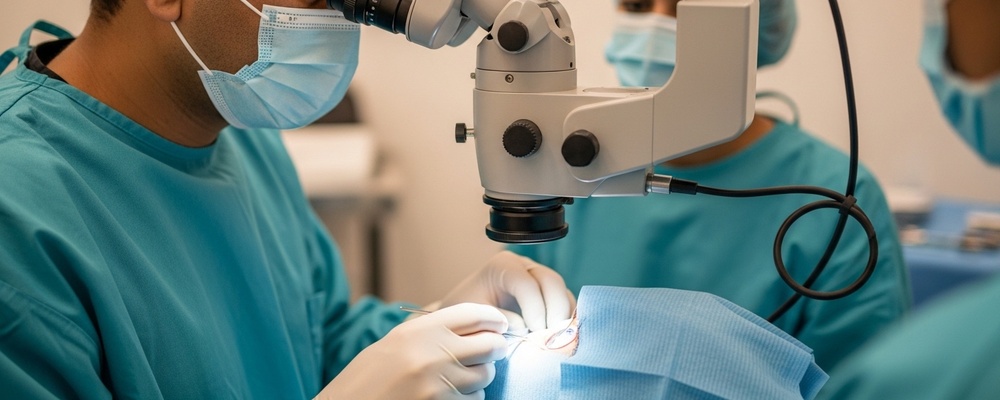
Glued IOL Surgery in Hyderabad: Cost, Procedure & Recovery
Glued IOL Surgery is a specialized eye procedure designed to implant or reposition an artificial lens (IOL) when it cannot be placed in the usual position, or if a previously implanted lens has dislocated. This advanced technique helps restore clear vision for individuals who have lost their natural lens or experienced complications with a prior IOL.
QUICK FACTS
- Procedure Duration: 45-90 minutes
- Anesthesia Type: Local anesthesia with sedation
- Recovery Time: 2-4 weeks for full visual recovery
- Hospital Stay: Daycare / No overnight admission required
UNDERSTANDING THE BASICS
What is Glued IOL Surgery?
Glued IOL Surgery is a sophisticated technique used when the eye’s natural lens is missing (a condition called aphakia) or when a previously implanted artificial lens (IOL) has moved out of place. Unlike standard cataract surgery where the IOL is placed within the eye’s natural lens capsule, this procedure involves carefully attaching a new IOL to the white part of your eye (sclera) using a special biological glue. This method provides a stable and long-lasting solution, allowing light to focus correctly on your retina and restoring clear vision.
CONDITIONS AND SYMPTOMS
Why is Glued IOL Surgery performed?
Eye Conditions Treated
- Aphakia (absence of the eye’s natural lens, often after complicated cataract surgery)
- Dislocated or subluxated intraocular lens (IOL)
- Traumatic rupture of the lens capsule
- Lack of capsular support for standard IOL implantation
- Certain genetic conditions affecting lens stability
Symptoms You Might Be Experiencing
- Significant blurring or haziness of vision
- Double vision or ghosting
- Difficulty seeing clearly, especially at night
- Glare or halos around lights
- A feeling of something “shifting” in your eye
- Reduced overall visual quality after previous eye surgery
SURGICAL JOURNEY STEP-BY-STEP
How is the Glued IOL Surgery Procedure Performed?
1. How to Prepare Before the Procedure
- Medical Evaluation: You will undergo a thorough eye examination, including detailed measurements of your eye, to determine the correct IOL power. Your general health will also be assessed to ensure you are fit for surgery.
- Medication Review: Discuss all your current medications with your surgeon. You may need to stop certain blood-thinning medications for a few days before surgery.
- Fasting: You will typically be asked to fast (no food or drink) for at least 6-8 hours before the procedure.
- Arranged Transport: Arrange for someone to drive you home after the surgery, as your vision will be blurry, and you won’t be able to drive.
- Hygiene: Clean your face and hair thoroughly on the day of surgery, avoiding makeup, lotions, or perfumes.
2. What Happens During the Procedure?
- Anesthesia: You will receive local anesthesia to numb your eye, often combined with a mild sedative to help you relax. You will be awake but comfortable and won’t feel any pain.
- Incision: The surgeon makes tiny, precise incisions in the white part of your eye (sclera).
- IOL Implantation: If a new IOL is being implanted, it is carefully folded and inserted into the eye. If an existing IOL is dislocated, it will be repositioned.
- “Gluing” the Lens: The IOL is then secured to the sclera using a special biological glue, which helps create a stable and permanent fixation.
- Closure: The small incisions are typically self-sealing or closed with very fine sutures, which often dissolve on their own.
3. What to Expect Immediately After the Procedure
- Recovery Lounge: After the surgery, you will rest in a recovery area for a short period while the effects of sedation wear off.
- Eye Shield: A protective eye shield or patch will be placed over your treated eye to prevent accidental rubbing or injury.
- Initial Vision: Your vision will likely be blurry and hazy immediately after surgery. This is normal and will gradually improve.
- Mild Discomfort: You might experience mild discomfort, grittiness, or a foreign body sensation, which can be managed with prescribed eye drops.
- Discharge Instructions: You will receive detailed instructions on how to care for your eye, including medication schedules and activity restrictions, before being discharged.
POST-OPERATIVE CARE AND TIMELINE
Recovery and Post-Operative Care
- Do’s:
- Use prescribed eye drops exactly as directed to prevent infection and reduce inflammation.
- Wear your protective eye shield, especially while sleeping, for the first week.
- Keep your eye clean and avoid rubbing or pressing on it.
- Attend all follow-up appointments with your surgeon.
- Rest adequately and allow your eye to heal.
- Don’ts:
- Avoid strenuous activities, heavy lifting, and bending over for several weeks.
- Do not swim or use hot tubs for at least a month to prevent infection.
- Avoid getting water or soap directly into your eye while showering.
- Do not wear eye makeup for at least 2-4 weeks.
- Refrain from driving until your surgeon confirms it is safe.
- Day 1: Your vision will be blurry, and you may experience mild discomfort. The protective shield will be in place. You’ll have your first follow-up appointment.
- Week 1: Vision will start to improve, though some blurriness and light sensitivity may persist. Continue using eye drops and avoiding strenuous activities.
- Month 1: Most of the initial healing will be complete, and your vision should be significantly clearer. Your surgeon will assess your progress and advise on resuming normal activities. Full visual stabilization may take a few months.
COST AND INSURANCE COVERAGE IN HYDERABAD
Cost of Glued IOL Surgery in Hyderabad & Insurance Options
- Estimated Local Investment: ₹50000 – ₹100000
- Cost Determinants: The total cost can vary based on several factors:
- Type of IOL: While Glued IOLs are specialized, the specific material and design can influence cost.
- Surgeon’s Expertise: Highly experienced surgeons or those with specialized training in complex IOL procedures may charge higher fees.
- Hospital Facility: The choice of hospital or eye clinic, including its infrastructure and technology, can impact the overall price.
- Pre-operative Tests: Extensive diagnostic tests required to plan the surgery.
- Post-operative Care: The number of follow-up visits and required medications.
- Complexity of the Case: More challenging cases, such as those with significant trauma or previous surgical complications, may incur higher costs.
- Insurance Protocol: Glued IOL Surgery is generally considered a therapeutic ‘Medical Necessity’ as it addresses significant vision impairment due to aphakia or IOL dislocation. Therefore, it is typically covered by major TPA networks and health insurance schemes in India. However, it is crucial to verify your specific policy details with your insurance provider or the hospital’s billing department to understand the extent of coverage, any co-pays, deductibles, or pre-authorization requirements.
FREQUENTLY ASKED QUESTIONS
Frequently Asked Questions About Glued IOL Surgery
- Q: Is Glued IOL Surgery painful?
A: No, the procedure is performed under local anesthesia with sedation, so you will not feel any pain during the surgery. You might experience mild discomfort or a gritty sensation during recovery.
- Q: How long does it take to recover fully?
A: While initial vision improvement is quick, full visual recovery and stabilization typically take 2-4 weeks, with complete healing potentially extending to a few months.
- Q: What are the risks associated with this surgery?
A: As with any surgery, there are risks, including infection, bleeding, retinal detachment, or the need for further surgery. Your surgeon will discuss these thoroughly with you.
- Q: Can Glued IOL Surgery restore perfect vision?
A: Glued IOL Surgery aims to significantly improve vision and quality of life. While it can restore excellent functional vision, the outcome depends on the individual’s eye health and the complexity of their condition.
DISCLAIMER
Disclaimer: This content is curated using artificial intelligence and may contain inaccuracies. It is provided for informational and educational purposes only and should not be considered professional medical advice. Please consult your ophthalmologist for personalized clinical care. The prices listed in this article are indicative only and may vary based on the patient’s specific condition, procedural techniques, surgical complexity, and materials used. We strongly advise discussing actual costs directly with your healthcare provider.