
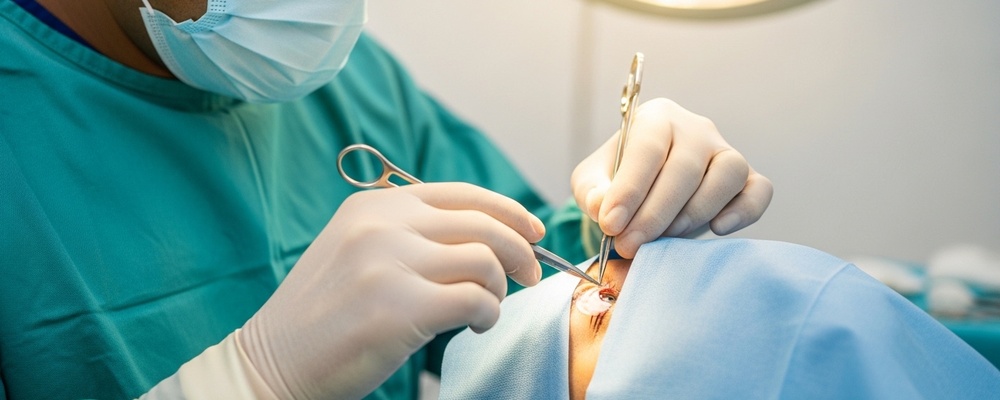
Adjustable Suture Strabismus Surgery in Hyderabad: Cost, Procedure & Recovery
Adjustable Suture Strabismus Surgery is a specialized eye procedure designed to correct misaligned eyes, commonly known as a squint. This surgery helps to straighten the eyes by carefully adjusting the muscles that control eye movement, improving both vision and appearance. It offers a unique advantage by allowing fine-tuning of the eye’s position shortly after the initial surgery for optimal results.
QUICK FACTS
- Procedure Duration: 45-90 minutes per eye
- Anesthesia Type: General Anesthesia (especially for children) or Local Anesthesia with sedation
- Recovery Time: Several days to a few weeks for full visual comfort
- Hospital Stay: Daycare / No overnight admission required
UNDERSTANDING THE BASICS
What is Adjustable Suture Strabismus Surgery?
Our eyes are moved by six small muscles on the outside of each eyeball, like tiny reins guiding a horse. In strabismus, or a squint, these muscles don’t work together perfectly, causing one eye to turn inward, outward, upward, or downward. Adjustable Suture Strabismus Surgery is a precise technique where an eye surgeon repositions one or more of these extraocular muscles. The unique aspect is that the sutures (stitches) holding the muscle in its new position are tied with a slip knot, allowing the surgeon to fine-tune the eye’s alignment a few hours or a day after the initial surgery, once the patient is awake and can cooperate. This ‘adjustment’ ensures the best possible straightness and visual outcome.
CONDITIONS AND SYMPTOMS
Why is Adjustable Suture Strabismus Surgery performed?
Eye Conditions Treated
- Strabismus (Squint) in adults and children
- Esotropia (eyes turn inward)
- Exotropia (eyes turn outward)
- Hypertropia (one eye turns upward)
- Hypotropia (one eye turns downward)
- Diplopia (double vision) caused by eye misalignment
Symptoms You Might Be Experiencing
- Visible misalignment of one or both eyes
- Double vision (diplopia)
- Eye strain or fatigue
- Difficulty with depth perception
- Head tilting to see clearly
- Reduced self-confidence due to cosmetic appearance of misaligned eyes
SURGICAL JOURNEY STEP-BY-STEP
How is the Adjustable Suture Strabismus Surgery Procedure Performed?
1. How to Prepare Before the Procedure
1. Comprehensive Eye Exam: Your ophthalmologist will perform a thorough examination, including vision tests, eye muscle measurements, and possibly photographs, to plan the surgery precisely.
2. Medical Clearance: You’ll undergo general health checks, blood tests, and an ECG to ensure you are fit for anesthesia. Children will also need a pediatric evaluation.
3. Medication Review: Discuss all current medications, supplements, and allergies with your doctor. You may need to stop certain blood-thinning medications before surgery.
4. Fasting Instructions: You will be advised to fast (no food or drink) for a specific period, usually 6-8 hours, before the surgery, especially if general anesthesia is used.
5. Arrange for Support: Plan for someone to drive you home after the surgery and assist you during the initial recovery period.
2. What Happens During the Procedure?
1. Anesthesia: You will receive either general anesthesia (you’ll be completely asleep) or local anesthesia with sedation (your eye will be numb, and you’ll be relaxed).
2. Eye Preparation: Your eye area will be cleaned, and sterile drapes will be placed around your eye. An eyelid speculum will gently hold your eyelids open.
3. Muscle Access: The surgeon makes a small incision in the conjunctiva (the clear membrane covering the white of your eye) to access the underlying eye muscles.
4. Muscle Repositioning: The specific eye muscle(s) identified during planning are carefully detached from their original position and reattached to a new, precise location on the eyeball using fine sutures.
5. Adjustable Sutures: For adjustable suture surgery, these sutures are tied with a special slip knot, allowing for post-operative adjustment. The conjunctiva is then closed.
6. Pain Minimization: Throughout the procedure, your comfort is prioritized, and you will not feel pain due to the anesthesia.
3. What to Expect Immediately After the Procedure
1. Recovery Room: You’ll be monitored in a recovery area as the anesthesia wears off. You might feel groggy or experience mild discomfort.
2. Eye Patch/Shield: A protective eye patch or shield may be placed over the operated eye to prevent rubbing and protect it.
3. Initial Discomfort: It’s normal to experience mild pain, soreness, redness, or a gritty sensation in the eye. Pain medication can be prescribed.
4. Vision: Your vision might be blurry or double immediately after surgery. This is temporary and often improves as the eye heals and adjusts.
5. Suture Adjustment (if applicable): If adjustable sutures were used, the surgeon might perform the fine-tuning adjustment a few hours later or the next day, once you are fully awake and can follow instructions. This is a quick, painless procedure done with numbing drops.
6. Discharge: Once stable and after receiving post-operative instructions, you will be discharged to go home with your escort.
POST-OPERATIVE CARE AND TIMELINE
Recovery and Post-Operative Care
Do’s:
- Use prescribed eye drops exactly as directed to prevent infection and reduce inflammation.
- Wear protective eyewear (like sunglasses) outdoors to shield your eyes from dust and bright light.
- Rest adequately and avoid strenuous activities.
- Attend all follow-up appointments with your ophthalmologist.
- Keep your hands clean before touching your eyes or applying drops.
Don’ts:
- Do not rub or press on your operated eye.
- Avoid swimming, hot tubs, or saunas for at least 2-4 weeks.
- Do not wear eye makeup for several weeks.
- Avoid heavy lifting or bending over, which can increase eye pressure.
- Do not drive until your vision has stabilized and your doctor approves.
Day 1: You will likely experience redness, mild discomfort, and possibly double vision. The surgeon may perform the suture adjustment if planned. You’ll have your first follow-up appointment.
Week 1: Redness and swelling will start to subside. Discomfort should lessen significantly. You can gradually resume light activities, but avoid anything that could strain your eyes. Vision may still fluctuate.
Month 1: Most of the redness and swelling should be gone. Your eye alignment will be much more stable, and vision should be clearer. You can typically resume most normal activities, including exercise, as advised by your doctor. Full healing and final alignment can take several months.
COST AND INSURANCE COVERAGE IN HYDERABAD
Cost of Adjustable Suture Strabismus Surgery in Hyderabad & Insurance Options
- Estimated Local Investment: ₹20000 – ₹40000
- Cost Determinants:
- Surgeon’s Fees: The experience and reputation of the ophthalmologist.
- Hospital Charges: The type of hospital (e.g., private specialty hospital vs. general hospital), room category, and facilities.
- Anesthesia Type: General anesthesia, especially for children, can add to the cost compared to local anesthesia.
- Number of Muscles Involved: The complexity of the surgery, including how many eye muscles need adjustment.
- Diagnostic Tests: Pre-operative evaluations and post-operative care.
- Medications: Cost of prescribed eye drops and pain relievers.
- Adjustable Sutures: The specialized materials used for the adjustable technique.
- Insurance Protocol: Adjustable Suture Strabismus Surgery is generally considered a therapeutic ‘Medical Necessity’ when performed to correct functional vision problems like double vision, improve depth perception, or address significant eye misalignment that impacts daily life. It is often covered by major Third-Party Administrator (TPA) networks and health insurance schemes. However, coverage can vary based on your specific policy terms, the severity of the condition, and whether it’s deemed primarily for cosmetic improvement. It is crucial to verify your insurance policy details and obtain pre-authorization from your provider before the procedure to understand your coverage, co-pays, and deductibles.
FREQUENTLY ASKED QUESTIONS
Frequently Asked Questions About Adjustable Suture Strabismus Surgery
Q1: Is Adjustable Suture Strabismus Surgery painful?
A: No, the surgery is performed under anesthesia, so you won’t feel pain during the procedure. Mild discomfort or soreness is common during recovery, managed with prescribed medication.
Q2: How long does the adjustment process take?
A: If adjustable sutures are used, the fine-tuning adjustment typically takes only a few minutes and is performed a few hours or the day after the main surgery, using numbing eye drops.
Q3: Will my eyes be perfectly straight after the surgery?
A: The goal is to achieve the best possible eye alignment. While significant improvement is expected, perfect alignment isn’t always guaranteed. The adjustable sutures help optimize the outcome.
Q4: How soon can I return to daily activities?
A: Most patients can resume light, non-strenuous activities within a few days. Full recovery and return to all normal activities, including swimming or contact sports, usually take 2-4 weeks, as advised by your surgeon.
DISCLAIMER
Disclaimer: This content is curated using artificial intelligence and may contain inaccuracies. It is provided for informational and educational purposes only and should not be considered professional medical advice. Please consult your ophthalmologist for personalized clinical care. The prices listed in this article are indicative only and may vary based on the patient’s specific condition, procedural techniques, surgical complexity, and materials used. We strongly advise discussing actual costs directly with your healthcare provider.