Squint, also called strabismus, means the eyes are not pointing in the same direction. In children, early treatment matters because a squint can lead to lazy eye (amblyopia) and poor depth perception if ignored. Treatment may include glasses, patching, eye drops, exercises in selected cases, Botox, or strabismus surgery. Not every child needs surgery, and surgery is not only cosmetic. It can improve alignment, teamwork between the eyes, confidence, and sometimes double vision symptoms in older children and adults.
Squint Eye (Strabismus) – A Parent’s Guide to Diagnosis & Treatment
When a parent notices that one eye seems to turn in, drift out, or sit higher than the other, the first feeling is usually worry. That reaction is understandable. A squint, also called strabismus, is not just a cosmetic issue. It can affect how a child’s vision develops, how both eyes work together, and sometimes how confident a child feels socially as they grow. The good news is that squint eye treatment is often very effective, especially when the problem is assessed early and the treatment plan matches the child’s age and type of squint.
Parents also often hear several confusing terms at once: squint, crossed eyes, lazy eye, amblyopia, patching, exercises, glasses, surgery. These are related, but they are not the same thing. In this guide, I will explain what squint really means, why it happens, how doctors diagnose it, and how to think clearly about therapy versus strabismus surgery. I will also cover squint in adults, recovery after surgery, and what families in Hyderabad should know when they search for squint surgery cost Hyderabad online.
What is a squint?
A squint means the eyes are misaligned. One eye may look straight ahead while the other turns inward, outward, upward, or downward. The turn may be constant, or it may come and go. Squint is especially common in children, but it can happen at any age. Doctors may describe it by direction: esotropia means the eye turns inward, exotropia means it turns outward, hypertropia means it turns upward, and hypotropia means it turns downward.
To understand why this matters, think of normal vision as teamwork. For clear binocular vision, both eyes need to point at the same target at the same time so the brain can combine the two images into one. If the eyes are not lined up, the brain receives mismatched signals. In a small child, the brain may start ignoring the image from one eye to avoid confusion. That is how a squint can lead to amblyopia, also called lazy eye.
True squint vs a false appearance of squint
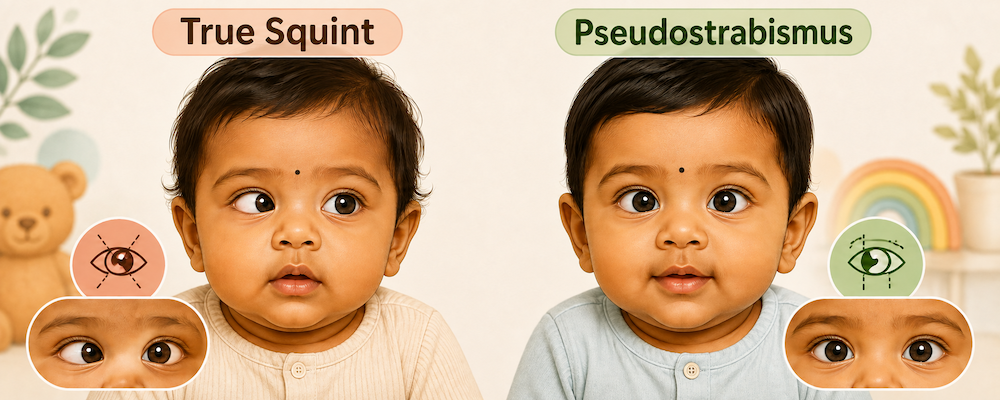
One helpful point for parents is that not every “cross-eyed” appearance is true strabismus. Some babies have a flat nasal bridge or skin folds near the inner corners of the eyes, which can create the false impression that the eyes are crossing. This is called pseudostrabismus. In pseudostrabismus, the eyes only look misaligned; they are actually straight. But because true strabismus can affect vision, a doctor’s examination is still important whenever there is doubt.
A simple rule is useful here. A squint that is present all the time, or a squint that continues after about 3 months of age, deserves proper evaluation. Babies younger than 3 months can sometimes have brief wandering that settles as visual control develops, but persistent or frequent misalignment should not be dismissed.
The main types of squint parents should know
The most familiar type is esotropia, where one or both eyes turn inward toward the nose. This is what many families mean by “cross eyes.” Another common type is exotropia, where an eye drifts outward, often more noticeably when the child is tired, daydreaming, or looking at distance. Some children have a vertical squint, where one eye is higher or lower than the other.
There is also an important childhood type called accommodative esotropia. In this form, the inward crossing is linked to focusing effort, usually in children who are more farsighted than expected. Because the child has to focus hard to see clearly, the eyes may cross at the same time. In many of these children, properly prescribed glasses are the first and most important treatment. Surgery is only considered if the eyes are still not straight enough even with the correct glasses on.
Some squints are intermittent, which means they appear only some of the time. This is common with intermittent exotropia. In selected young children who have good control and good binocular function, careful follow-up without immediate surgery can be reasonable. In other words, cross eye correction is not always a race to the operating room. The timing depends on the child’s control, symptoms, vision, and examination findings.
Why does a squint happen?
Parents often ask, “What caused this?” The honest answer is that there is not always one single reason. In children, squint is often related to refractive errors such as long-sightedness, short-sightedness, or astigmatism. Sometimes it runs in families. In other children, it may be associated with developmental or neurological conditions. Rarely, a new squint can be a sign of a more serious eye or nerve problem, which is why proper assessment matters.
In adults, the story can be different. Some adults have a childhood squint that was never fully corrected or becomes more noticeable later. Others develop a new squint because of cranial nerve palsy, thyroid eye disease, trauma, stroke, myasthenia gravis, or changes after other eye surgery. A sudden squint in adults very often causes double vision and should be checked promptly.
Signs and symptoms parents may notice
Sometimes the squint is obvious in photographs or when the child looks at a near object. At other times, the clues are indirect. A child may tilt the head, close one eye in bright light, turn the face to one side, rub the eyes, or seem clumsy when catching a ball. Some children have trouble with depth perception. Others do not complain at all, especially if one eye sees well and the brain is suppressing the image from the weaker eye.
Older children and adults may report double vision, eye strain, headaches, or difficulty reading. If double vision goes away when one eye is closed, eye misalignment is one possible cause. Adults with strabismus may also notice problems with confidence, social interaction, or work-related comfort. That is why squint in adults should never be brushed off as “just cosmetic.”
Lazy eye vs squint: they are not the same
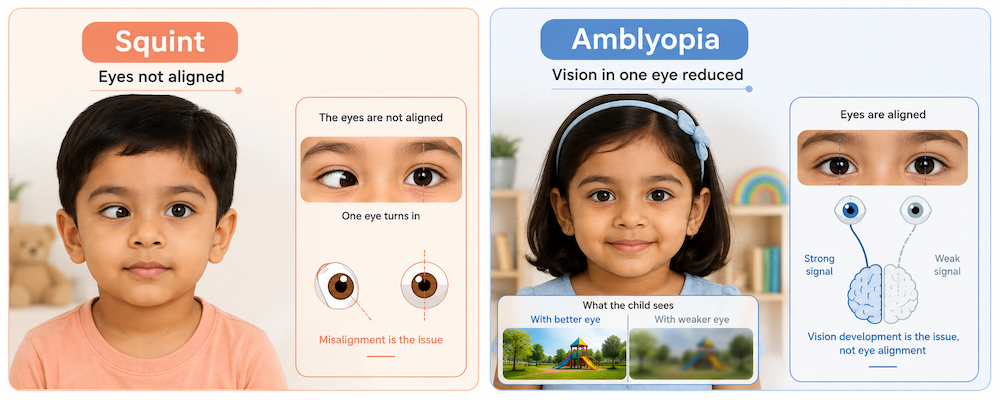
This is one of the most important points for parents to understand. Squint means the eyes are not aligned. Lazy eye, or amblyopia, means vision has not developed properly in one or both eyes, even when glasses are used. A child can have a squint without amblyopia, amblyopia without a visible squint, or both together.
Strabismus is one of the common causes of amblyopia because the brain may start ignoring the turned eye. When this happens early in life, the weaker eye may fail to develop normal vision. That is why early treatment is so important. Parents sometimes think that once the eye looks straight, the vision problem is solved. Unfortunately, that is not always true. The eye alignment and the eye’s visual development are related, but they are separate treatment goals.
This is also why “lazy eye vs squint” should never be treated as a choice between two labels. Many children need treatment for both. Glasses may help the alignment. Patching or atropine drops may help the weaker eye learn to see better. Surgery may straighten the eyes, but surgery alone does not directly improve amblyopia. NHS guidance states clearly that squint surgery can help the eyes work together better, but it does not itself improve the vision loss of lazy eye.
How do doctors diagnose a squint?
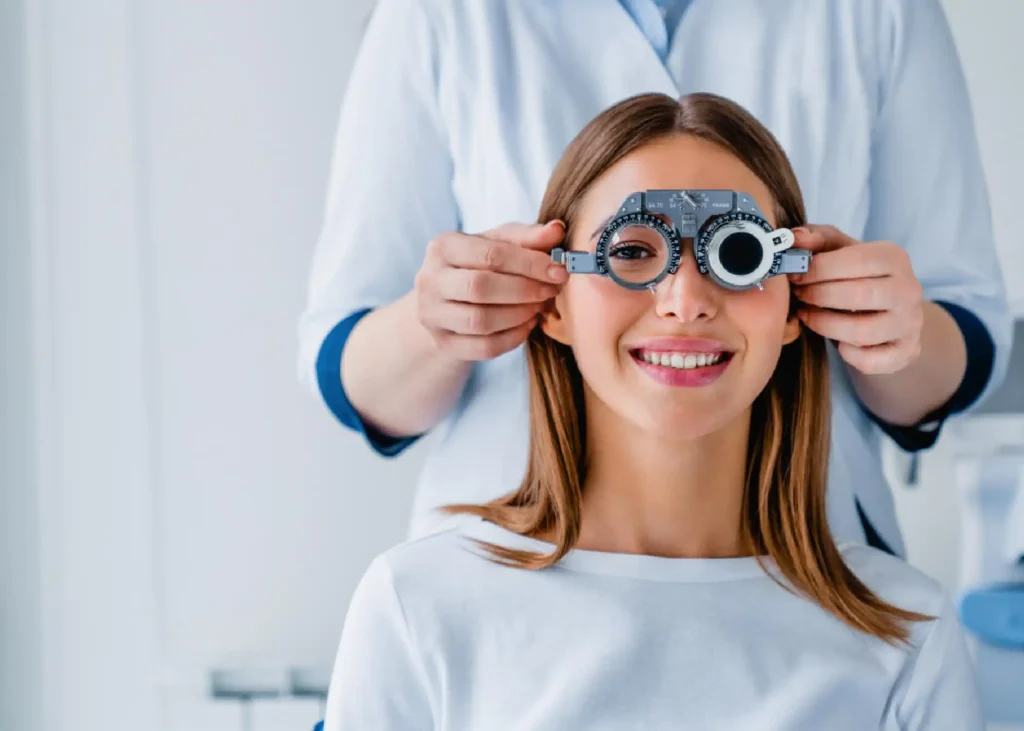
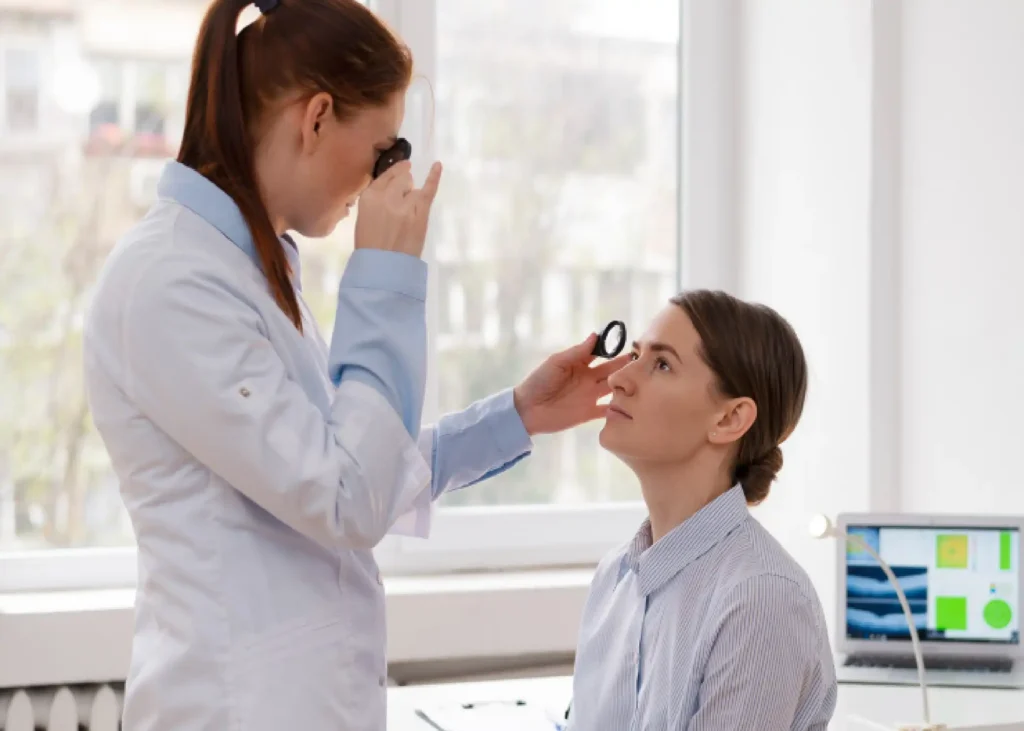
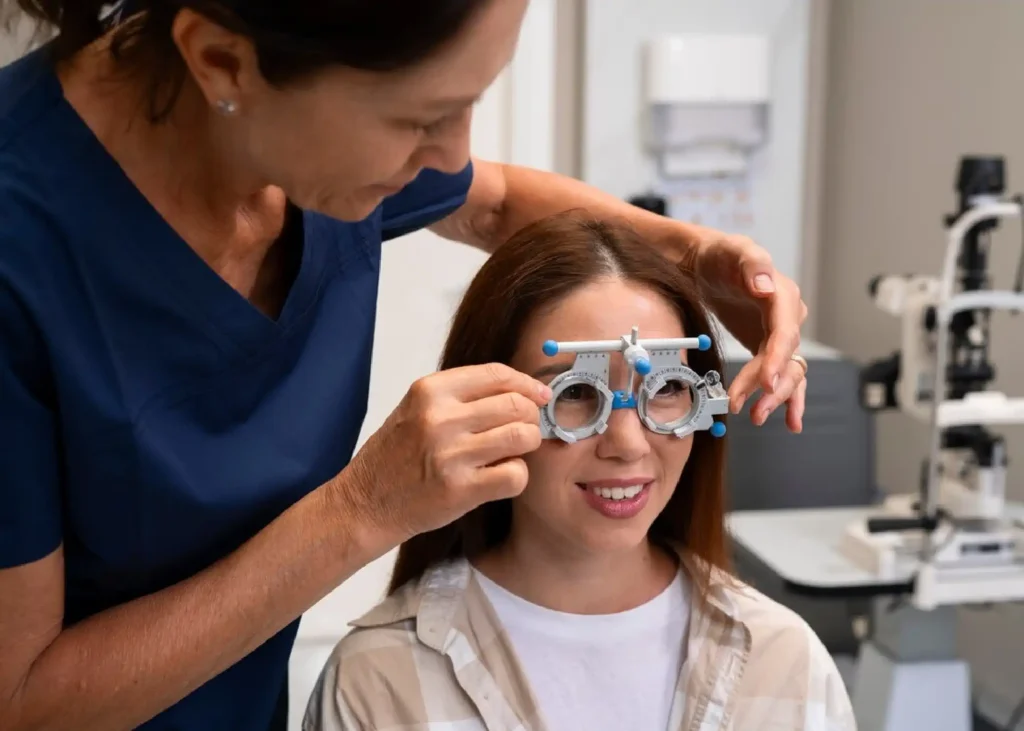
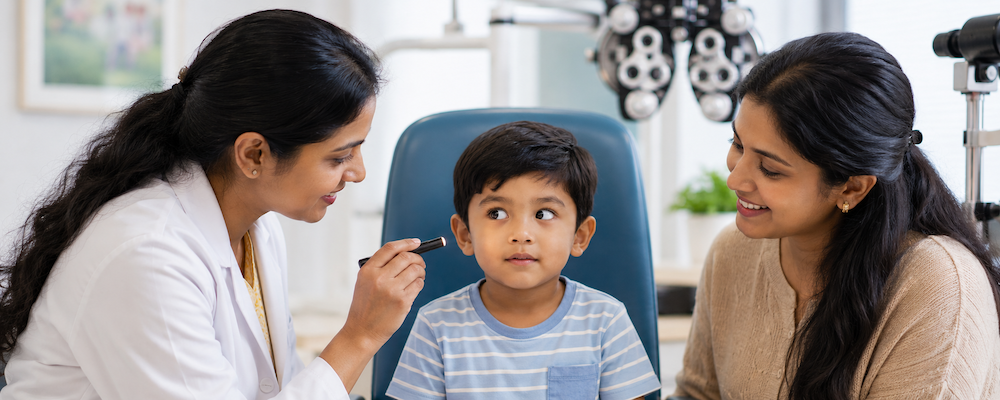
A proper diagnosis starts with a full eye examination, ideally by a pediatric ophthalmologist or a strabismus specialist. The doctor will not only look at whether the eyes appear straight. They will also assess vision in each eye, how the eyes move, whether the child needs glasses, whether amblyopia is present, and whether the pattern of misalignment suggests a simple or more complex cause.
During the examination, the doctor may use a light reflex test and a cover test to see whether the eyes are truly aligned. These are standard ways to tell true strabismus from pseudostrabismus. In children old enough to cooperate, vision is checked with age-appropriate charts or symbols. Eye drops are often used to relax focusing so the true glasses power can be measured accurately.
Parents sometimes feel nervous when drops are advised, but this step is often essential. A child with accommodative esotropia, for example, may only be diagnosed properly once the full long-sightedness is revealed after dilation. Missing that step can delay the right treatment.
Age-specific guidance for families
In infants, the biggest question is whether the eye turn is real and whether it is persistent. A constant squint or a squint that continues after 3 months should be examined. Early assessment matters because infant visual development is rapid, and untreated strabismus can affect how the brain learns to use the eyes together.
In toddlers and preschool children, the priority is twofold: make sure each eye is seeing well and make sure the eyes are aligned as well as possible. This is the age group where refractive correction, amblyopia treatment, and follow-up visits are especially important. Many cases of amblyopia are first discovered because of screening or an eye test rather than because the child complains.
In school-age children, intermittent outward drifting, reading discomfort, poor concentration, or social awareness of the eye position may become more noticeable. Some children do very well with glasses and observation, while others need surgery to improve alignment and binocular vision.
In teenagers and adults, treatment still matters. Adults can benefit from prism glasses, exercises in selected cases, botulinum toxin, or surgery. Surgery in adults is not “too late.” AAPOS notes that eyes can be straightened at any age if it is likely to improve symptoms and quality of life.
Squint eye treatment: therapy first, surgery when needed
The right treatment depends on the type of squint, the child’s age, whether the misalignment is constant or intermittent, whether the child needs glasses, and whether amblyopia is present. Good squint eye treatment is individualized. There is no single best option for every child.
Glasses
For many children, glasses are the starting point. If the squint is driven by long-sightedness or another refractive error, correcting the focus can reduce or even control the eye turn. This is especially true in accommodative esotropia. Families should know that if glasses help, they need to be worn consistently. It is not a “sometimes” treatment.
Amblyopia treatment
If one eye is weaker, amblyopia treatment often comes before surgery or alongside it. This may include glasses, patching the stronger eye for a prescribed number of hours, or atropine drops to blur the stronger eye and encourage the weaker eye to work. AAPOS notes that treatment works best when started early, although even older children and younger teenagers can still improve.
Exercises, prisms, and Botox
Parents often ask about eye exercises. Exercises can help in selected situations, but they are not a cure for every squint. In older children and adults, exercises may help certain coordination problems. Prism glasses can reduce double vision in some adults. Botulinum toxin injections can also be used in selected cases to temporarily change eye muscle balance.
When is surgery the better option?
Surgery becomes more important when glasses do not fully correct the deviation, when the squint is large or constant, when binocular function is not developing well, when the child adopts an abnormal head posture, or when an adult has troubling double vision or functional symptoms. In accommodative esotropia, surgery may be recommended only for the residual crossing that remains even with the right glasses on.
For adults, the benefits are often functional as well as cosmetic. AAPOS notes that strabismus surgery can improve double vision, depth perception, and sometimes side vision, while also improving psychosocial function. So when families ask whether surgery is “worth it,” the answer is often yes when the indication is clear and the expectations are realistic.
What happens during strabismus surgery?
Strabismus surgery works by changing the pull of one or more eye muscles. The surgeon may weaken a muscle by moving its attachment backward, called a recession, or strengthen it by shortening or folding it, called resection or plication. These changes help the eyes line up better.
In children, squint surgery is usually done under general anesthesia. It typically takes less than an hour, and most children go home the same day. Sometimes one eye is operated on, and sometimes both eyes need surgery to achieve good alignment. There are no skin cuts on the face; the surgery is done on the eye muscles through the surface tissues of the eye.
In older teenagers and adults, some surgeons use adjustable sutures. This allows the final muscle position to be fine-tuned shortly after the operation, which can be helpful in selected cooperative patients.
Image suggestion: Simple diagram showing recession and resection in strabismus surgery.
Recovery after squint surgery: what parents should expect
One of the most practical questions parents ask is, “How hard is the recovery?” In most cases, recovery is manageable. The eye is often red after surgery, and that redness can take several weeks, and sometimes longer, to fully settle. A scratchy or gritty feeling and soreness with eye movement are common for the first few days.
NHS guidance notes that the eye may be sore for at least a few days, tears may be blood-stained for a while, and temporary double vision can happen, usually improving after about a week. Most children can return to school after about a week, although full recovery takes several weeks. Swimming is often restricted for around 4 weeks, and contact sports may need to wait longer depending on the surgeon’s advice.
It is also important to set expectations correctly. Surgery may improve alignment very well, but some children will still need glasses afterward. Some will still need amblyopia treatment. And some, especially if the squint is severe or long-standing, may need another operation later to fine-tune the result.
What are the risks?
Like any surgery, strabismus surgery has risks. The most common concern is that the eyes may still not be perfectly aligned afterward, or that the alignment may change over time. Some patients need further surgery. Persistent double vision can happen, especially in adults, though doctors plan carefully to reduce this risk. More serious problems such as infection, scarring, droopy eyelid, bleeding, or vision loss are uncommon, and vision loss is described as very rare.
That said, families should not let the word “surgery” create unnecessary fear. In appropriate hands, strabismus surgery is a standard and well-established procedure. The most important part is choosing the right indication and making sure the pre-operative evaluation is complete.
Squint surgery cost Hyderabad: what should families expect?
This is one of the most searched phrases online, and understandably so. The problem is that a single number can be misleading. Published online estimates from Hyderabad providers and health portals vary widely, roughly from about ₹20,000 to ₹1,00,000 or more, depending on the hospital, the complexity of the squint, whether one or both eyes need surgery, the surgeon’s experience, anesthesia, investigations, and follow-up care. These should be treated as rough public estimates, not final quotations.
For parents comparing centers, the smarter question is not only “What is the price?” but also “What is included?” Ask whether the quote includes pre-operative tests, anesthesia fees, day-care charges, medicines, follow-up visits, and whether both eyes are being treated if required. The best-value option is the one that provides accurate diagnosis, safe surgery, proper amblyopia treatment, and reliable follow-up. Local tertiary pediatric ophthalmology services are available in Hyderabad, including dedicated pediatric eye care programs.
When should you see a doctor?
Please do not wait if your child has a squint all the time, if a squint continues beyond 3 months of age, or if your child keeps turning the head, closing one eye, or seems to have visual difficulty. Older children and adults who develop a new squint or double vision should also be checked promptly. NHS guidance notes that a squint later in life deserves medical advice, and AAPOS emphasizes that sudden adult misalignment is a warning sign that should be evaluated.
A final word for parents
Most parents worry that a squint means something has gone badly wrong. In reality, many cases can be treated successfully. The key is not to delay. A child with a squint needs more than a quick glance. They need a proper eye examination to answer four questions clearly: Is it a true squint? Does the child need glasses? Is there amblyopia? And would therapy alone be enough, or is strabismus surgery likely to help?
If you are searching for squint eye treatment, amblyopia treatment, or cross eye correction in Hyderabad, look for a center that can manage the full picture, not just the visible turn. Good strabismus care is not only about straightening the eyes. It is about helping the eyes and brain work together as well as possible, at the right age, with the right plan.
Book a comprehensive squint evaluation with a pediatric ophthalmologist or strabismus specialist if you have concerns about your child’s eye alignment. Early diagnosis gives the best chance to protect vision, build binocular function, and choose the least invasive treatment that will actually work.
References
- American Association for Pediatric Ophthalmology and Strabismus: Strabismus Surgery
- American Association for Pediatric Ophthalmology and Strabismus: Amblyopia
- American Association for Pediatric Ophthalmology and Strabismus: Adult Strabismus
- National Eye Institute: Amblyopia (Lazy Eye)
- NHS: Squint and Squint Surgery