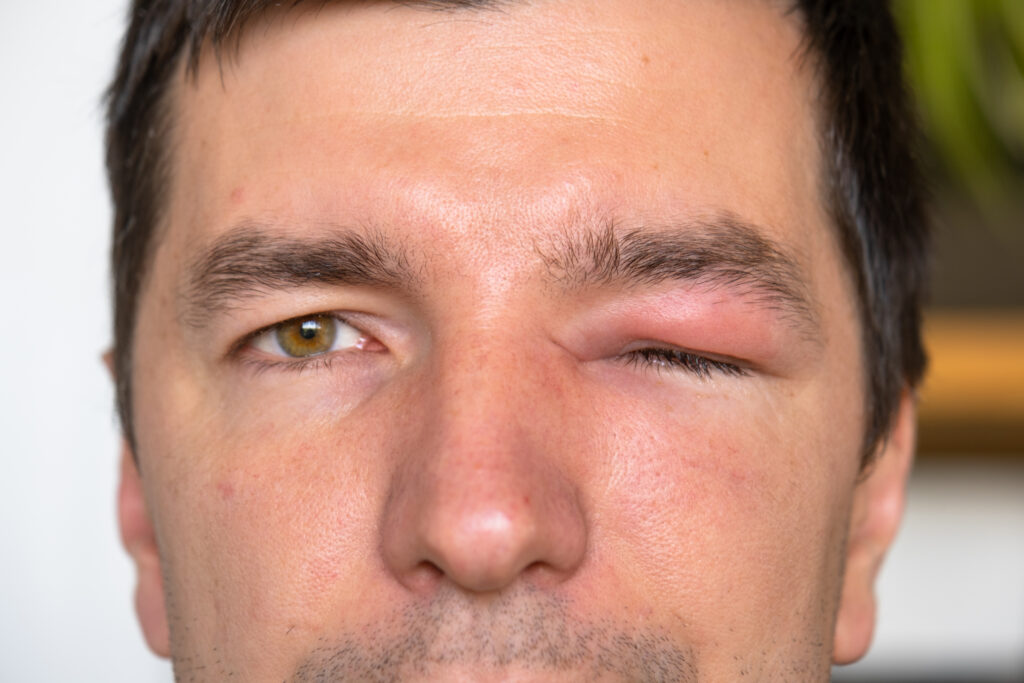
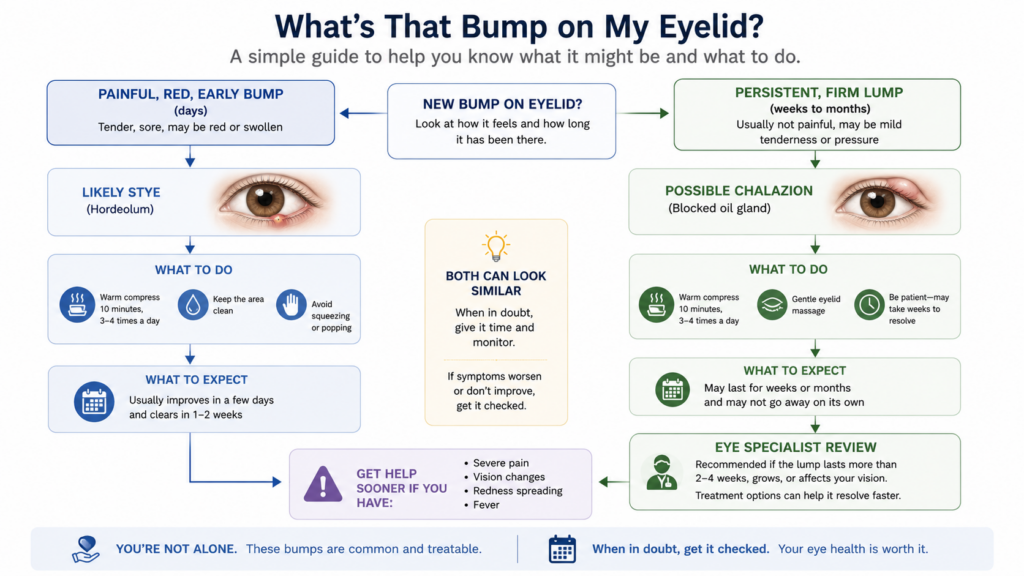
A stye is usually an acute, painful infection near the eyelash line. A chalazion is usually a slower, firmer, often less painful lump caused by a blocked oil gland. A stye can sometimes turn into a chalazion after the early infection settles. Warm compresses still help at first, but if a lump lasts for weeks, keeps coming back, affects vision, or no longer feels like an inflamed bump, it is time for an eye examination. Some persistent chalazia need a minor procedure to drain them.
Chalazion vs Stye: When Months of Home Remedies Stop Working
If you have had a lump on your eyelid for weeks or even months, you are not alone. Many people keep treating these eyelid bumps as “just a stye” for far too long. They try warm compresses, over-the-counter ointments, home remedies, and advice from family or the local chemist. Sometimes that is reasonable in the beginning. But sometimes the problem is no longer a stye at all. It has become a chalazion, and that changes what treatment is likely to work.
This matters because a stye and a chalazion can look similar at first, yet they are not the same condition. A stye is usually an acute infection. A chalazion is usually a blocked oil gland with chronic inflammation, not an active infection. That difference explains why antibiotics may help in selected stye cases, while a persistent chalazion often does not improve much with repeated antibiotic drops or ointments alone.
As ophthalmologists, one of the most common stories we hear is this: “Doctor, it started like a painful pimple, then the pain reduced, but the lump never really went away.” That story strongly suggests a stye may have settled down and left behind a chalazion. This is exactly why months of home treatment can become frustrating. The problem has changed, but the treatment has not. (NCBI)
What Is a Stye?
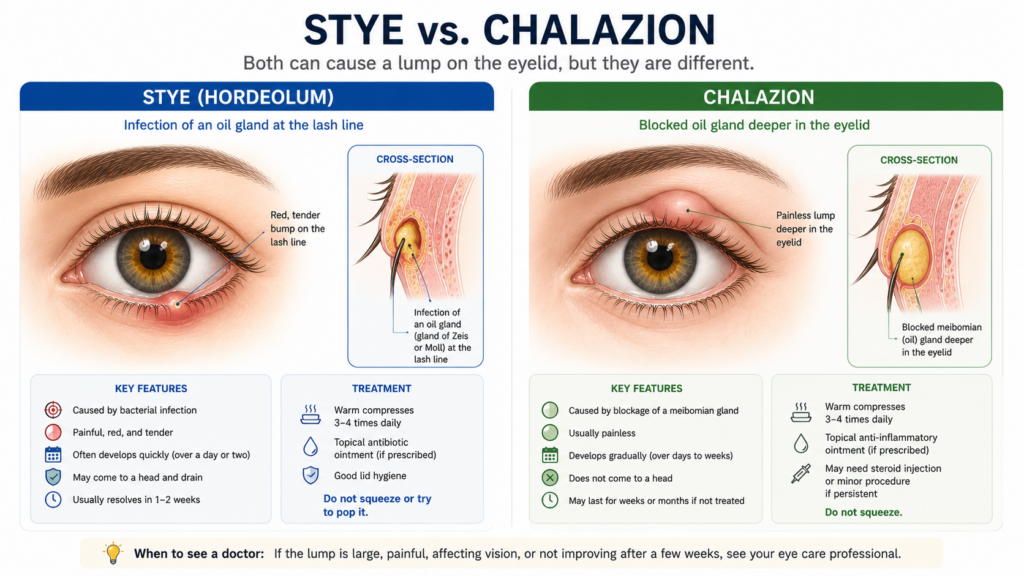
A stye, also called a hordeolum, is a red, tender, painful lump that usually appears near the edge of the eyelid. It often starts because of a bacterial infection involving an eyelash follicle or an eyelid gland. Some styes sit right at the lash root. Others are deeper inside the eyelid. In the early stage, the lid can feel sore, swollen, scratchy, and irritated. Tearing and light sensitivity may also occur.
Because a stye is an acute inflammatory infection, it tends to come on over a few days. The eyelid may swell quite noticeably. Some people can even see a tiny pus point in the center of the bump. In uncomplicated cases, it often improves with warm compresses and simple eyelid care.
What Is a Chalazion?
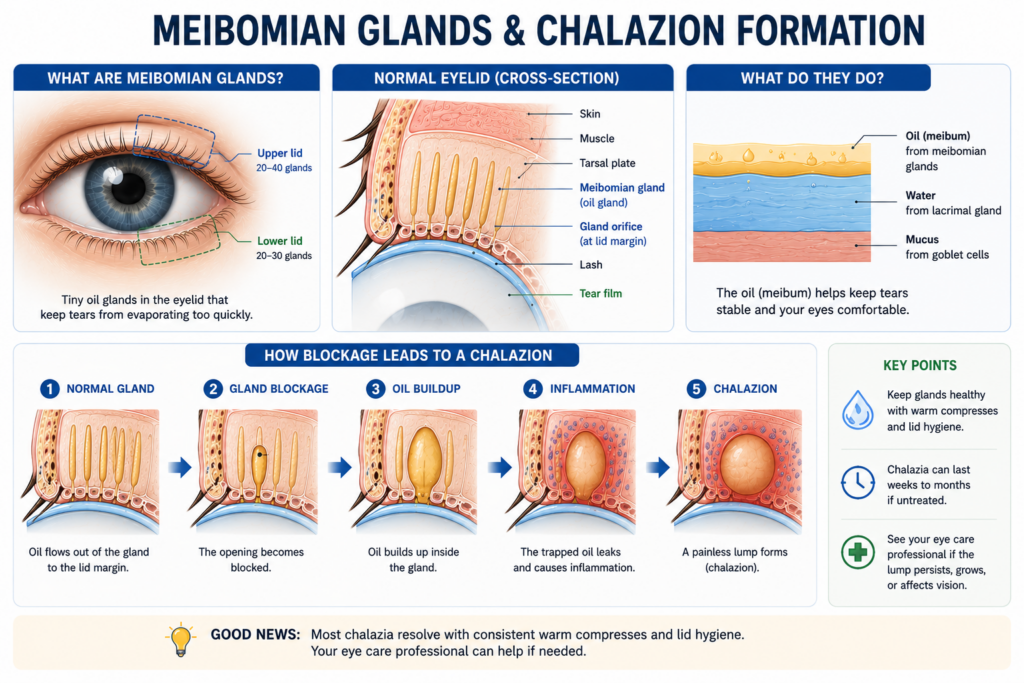
A chalazion is different. It is usually a blocked meibomian gland, the oil gland inside the eyelid that helps keep the eye surface comfortable and the tear film stable. When that gland gets blocked, oil builds up and triggers inflammation. The result is a firm lump in the eyelid. Unlike a fresh stye, a chalazion is usually less painful or not painful at all. It often grows more slowly and can sit there for weeks or months. (NCBI)
Many chalazia start after an internal stye. In other words, the early painful stage fades, but the blocked gland remains. The redness settles, the tenderness improves, and what remains is a stubborn lump. That is why patients often say, “It was painful before, but now it is just a hard bump.”
A chalazion is usually harmless, but it can still be troublesome. If it becomes large enough, it may press on the surface of the eye and cause blurry vision. Large upper-lid chalazia can even change the corneal surface and create temporary visual disturbance.
How to Tell the Difference
The easiest way to think about it is this: a stye is usually painful and active; a chalazion is usually firmer, quieter, and longer-lasting. A stye commonly sits near the eyelid edge. A chalazion often feels deeper in the lid and not necessarily right on the lash line. A stye often makes the whole lid feel inflamed. A chalazion may simply feel like a pea-sized lump that refuses to go away.
That said, the two can overlap. A fresh chalazion may still look a bit red and tender. A deep internal stye can look more like a swollen eyelid lump than a classic pimple. This is why self-diagnosis is not always reliable, especially after the first few days.
A practical clue is time. If the pain decreases but the lump stays, especially beyond a few weeks, chalazion becomes more likely. If the lump keeps recurring in the same spot, or if it looks unusual, it deserves an ophthalmology review rather than endless home treatment. (NCBI)
Why Home Remedies Sometimes Stop Working
Warm compresses are not wrong. In fact, they are part of standard early care for both styes and chalazia. The usual advice is to apply a warm compress for about 5 to 15 minutes, several times a day. Gentle lid massage after the compress may help open the blocked gland. (nhs.uk)
The problem is not that warm compresses are useless. The problem is that they have limits. A fresh stye may settle. A small chalazion may gradually soften and clear. But once a chalazion becomes well formed and persists, especially beyond about one month, conservative treatment becomes less likely to solve the whole problem. At that point, an ophthalmologist may suggest another option, such as a steroid injection or a small drainage procedure. (NCBI)
Another common issue is that people keep using antibiotics as though every eyelid lump is an infection. That is not true. A chalazion is mainly an inflammatory blockage, not a bacterial process. So repeated antibiotic drops, ointments, or tablets may not do much unless there is clear evidence of infection or associated eyelid disease that needs treatment. (NCBI)
Some home fixes can also irritate the skin around the eye. Squeezing, rubbing hard, using very hot cloths, or trying to pop the lump is risky. Eye authorities specifically advise against squeezing or bursting a stye or chalazion yourself because that can worsen inflammation and may spread infection into the eyelid tissues.
Who Gets Chalazia and Styes More Often?
Anyone can get them, but some people are more prone. Recurrent eyelid margin inflammation called blepharitis is a major risk factor. Rosacea and seborrheic skin disease can also contribute. Diabetes is another associated condition. A past history of styes or chalazia increases the chance of getting them again.
This is important because treating the bump alone is not always enough. If the lid margins stay oily, crusty, or inflamed, the same blocked-gland problem can return again and again. In those patients, long-term lid hygiene matters just as much as treating the current lump. (moorfields.nhs.uk)
When Should You Stop Waiting?
A good rule is to stop waiting when the story no longer fits a simple stye. If the bump lasts more than a few weeks, becomes firm and painless, keeps recurring, causes blurred vision, or does not improve after proper warm compresses, you should get it examined. NHS guidance advises medical review if a stye does not get better within a few weeks, and chalazion guidance recommends ophthalmology referral if symptoms persist beyond about a month of conservative care. (nhs.uk)
You should seek faster attention if the eyelid is very painful, very swollen, producing pus, affecting vision, or the redness seems to be spreading. Severe eyelid pain, a very hot swollen lid, fever, inability to open the eye, or pain in the eyeball rather than the eyelid can point to a more serious problem such as cellulitis and should not be managed at home. (nhs.uk)
What Happens at the Eye Clinic?
In most cases, diagnosis is clinical. That means your ophthalmologist usually does not need a scan or blood test. A careful look at the eyelid is often enough. The doctor may evert the lid, meaning gently turn it to inspect the inner surface, and check your vision if the lump is large or your symptoms suggest pressure on the eye. (NCBI)
The main question is usually not “What fancy test do I need?” but “Is this still a stye, or is it now a chalazion?” and “Is there an underlying condition like blepharitis or rosacea keeping this going?” Once that is clear, treatment becomes much more logical. (moorfields.nhs.uk)
Chalazion Treatment Options After Home Remedies
If the lump is still in an early stage, your doctor may continue warm compresses and lid hygiene. That advice is still useful, especially if the gland is not fully blocked or there is associated blepharitis. In some selected cases, medicines are used if infection is suspected. But for a straightforward chalazion, antibiotics are not routinely needed. (NCBI)
For some persistent chalazia, a steroid injection into the lump can reduce inflammation and shrink it. This is one office-based option ophthalmologists may use, especially when the lesion is inflamed or when avoiding a small surgical incision is desirable.
When the lump is longstanding, obvious, bothersome, or affecting vision, a minor procedure is often the most effective next step. This is commonly called incision and curettage, or simply drainage of the chalazion. In plain language, the eyelid is numbed with local anesthesia, a small opening is made, and the trapped inflammatory material is removed. AAO patient guidance notes that surgery to drain a persistent stye or chalazion is usually done in the doctor’s office using local anesthesia.
This sounds frightening when patients first hear the word “surgery,” but it is usually a short minor procedure, not major eye surgery. The goal is not cosmetic only. It is also to remove the blocked material that has failed to clear on its own. When the lump has been there for months, this can be far more effective than continuing the same home remedy that has already failed.
Will It Come Back?
It can. Recurrence is more likely if the underlying eyelid environment stays unhealthy. Blepharitis, meibomian gland dysfunction, rosacea, poor eyelid hygiene, and repeated blockage of the oil glands all raise the chance of another stye or chalazion later. That is why follow-up advice often includes lid cleaning, regular warm compresses for maintenance, and treatment of any associated eyelid disease. (NCBI)
This is also why some people say, “It was removed once, but another one formed later.” The procedure may have fixed that particular lump, but it does not automatically cure the tendency of the glands to block again. Long-term prevention matters. (NCBI)
A Very Important Warning About Recurrent Lumps
Most eyelid lumps are benign. But persistent, atypical, or repeatedly recurring chalazia should not be dismissed forever. Authoritative sources recommend that recurrent chalazia, especially in older adults or when the appearance is unusual, may need biopsy to rule out more serious conditions such as sebaceous gland carcinoma.
That does not mean every lingering eyelid bump is cancer. It does mean that “it keeps coming back in the same spot” is a reason to stop guessing and get a proper eye examination. (NCBI)
What You Can Do at Home Right Now
If the bump is still early, use a clean warm compress for several minutes, several times a day. Keep the eyelid clean. Avoid squeezing it. Avoid eye makeup and contact lenses until the area settles. These steps are supported by patient guidance from NHS and AAO sources. (nhs.uk)
But also be honest with yourself. If you have already done this properly for weeks and the lump is still sitting there, you are not “failing” home treatment. You may simply be treating a chalazion that has reached the stage where clinic treatment is more appropriate. (NCBI)
When to See an Ophthalmologist
See an ophthalmologist if the eyelid lump lasts longer than a few weeks, keeps coming back, becomes firm and persistent, affects vision, or you are not sure whether it is a chalazion or something else. Seek urgent care sooner if there is severe pain, spreading redness, marked swelling, pus, fever, worsening vision, or pain in the eye itself. (nhs.uk)
The goal is not to rush every small stye into surgery. The goal is to recognize when time and symptoms suggest that the diagnosis has changed. Early styes deserve conservative care. Persistent chalazia deserve a proper eye examination and, sometimes, a minor procedure that finally solves the problem.
Final Word
When months of warm compresses and home fixes stop working, the answer is often not “try harder.” The answer is “recheck the diagnosis.” A painful stye can evolve into a persistent chalazion. Once that happens, minor office-based treatment may be the most sensible next step. That is not a failure. It is simply the right treatment for the stage your eyelid lump has reached. (NCBI)
If you have an eyelid lump that has lasted for weeks, keeps returning, or is beginning to affect your comfort or vision, book an appointment with an ophthalmologist for a proper eyelid examination. Timely diagnosis can save you months of frustration and help you avoid unnecessary medicines or ineffective home remedies. (nhs.uk)
References
- American Academy of Ophthalmology, What Is the Difference Between a Stye and a Chalazion? and patient handout on stye/chalazion. (American Academy of Ophthalmology)
- NCBI Bookshelf, StatPearls, Chalazion. (NCBI)
- NCBI Bookshelf, StatPearls, Hordeolum (Stye). (NCBI)
- NHS, Stye and Eyelid problems. (nhs.uk)
- Moorfields Eye Hospital, Chalazion. (moorfields.nhs.uk)