Single-vision lenses correct vision at one distance, while progressive lenses correct near, intermediate, and distance vision in one pair of glasses. Single-vision lenses are simpler, thinner, and ideal for people who need help at only one range, such as distance or reading. Progressive lenses are best for people over 40 who need help seeing clearly at multiple distances and want to avoid visible lines on glasses. The best choice depends on your age, eye condition, daily activities, and comfort needs.
Progressive vs Single-Vision Lenses: Which Is Best for You?
If you wear glasses or are considering them for the first time, you may have come across the terms single-vision lenses and progressive lenses. Many patients ask me this question in clinic: Which one is better for my lifestyle?
The answer is not the same for everyone. The right lens depends on how your eyes work, how old you are, what symptoms you notice, and how you use your eyes during the day. As an eye doctor, my goal is always to match the lens to the person—not the other way around.
In this article, I will explain both lens types in simple terms, compare their advantages and limitations, and help you understand which option may suit you best.
Why This Topic Matters
Glasses are not just about seeing clearly. They affect how comfortable your eyes feel, how confident you look, and how easily you move through your day. Choosing the wrong type of lens can lead to headaches, eye strain, blurred vision, or frustration—especially for people who use digital screens or switch often between reading and distance tasks.
With people living longer, working on screens more, and remaining active well into their 40s, 50s, and beyond, lens choice has become more important than ever.
Understanding Single-Vision Lenses
What Are Single-Vision Lenses?
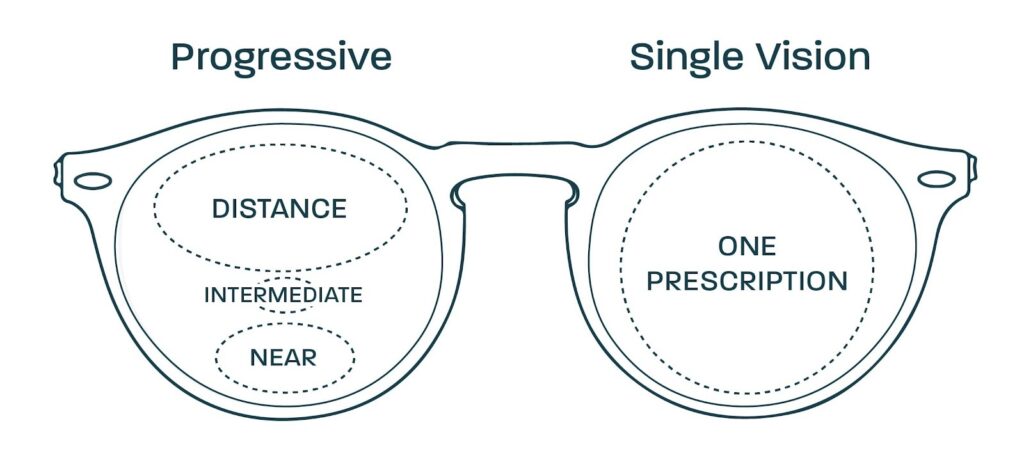
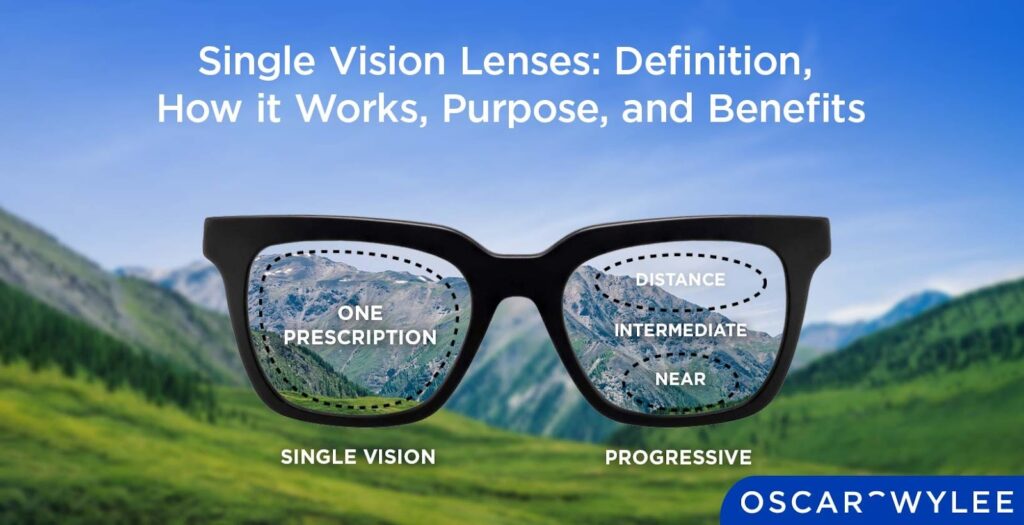
Single-vision lenses are the simplest and most commonly prescribed type of glasses. They correct vision at one distance only.
That distance can be:
- Far (for driving or watching TV)
- Near (for reading or mobile use)
- Intermediate (for computer work)
The lens power is the same across the entire surface of the lens.
Who Typically Needs Single-Vision Lenses?
Single-vision lenses are commonly prescribed for:
- Children and teenagers
- Young adults
- Adults with only one type of vision problem
They are used to correct:
- Nearsightedness (difficulty seeing far)
- Farsightedness (difficulty seeing near)
- Astigmatism (blurred or distorted vision)
If you only need glasses for driving or only for reading, single-vision lenses are often the best and simplest choice.
Benefits of Single-Vision Lenses
Single-vision lenses are popular for several reasons. They are easy to adapt to because there is no variation in lens power. They are also thinner, lighter, and usually more affordable than multifocal lenses.
Patients often tell me they feel very natural from the first day, with no learning curve. For many people, especially those under 40, single-vision lenses meet all visual needs comfortably.
Limitations of Single-Vision Lenses
The main limitation is that they correct only one distance. If you need help with both near and far vision, you may end up switching between two pairs of glasses.
For example, a person might need one pair for driving and another for reading. This can be inconvenient and easy to forget or misplace.
Understanding Progressive Lenses
What Are Progressive Lenses?
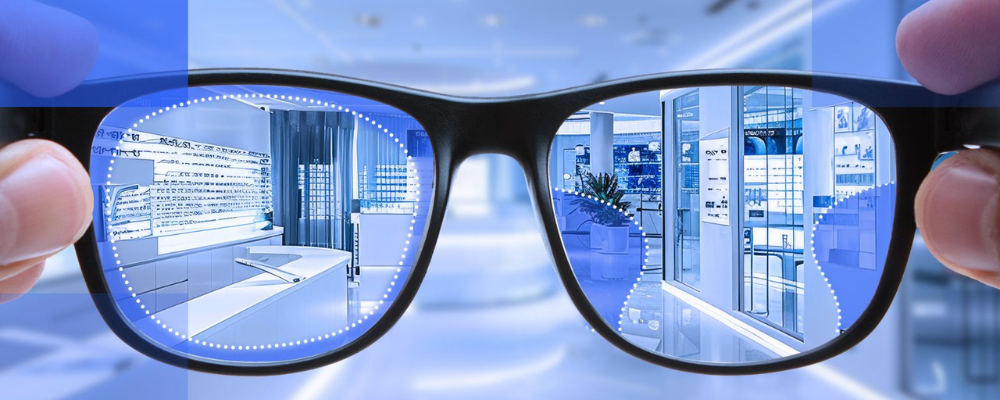
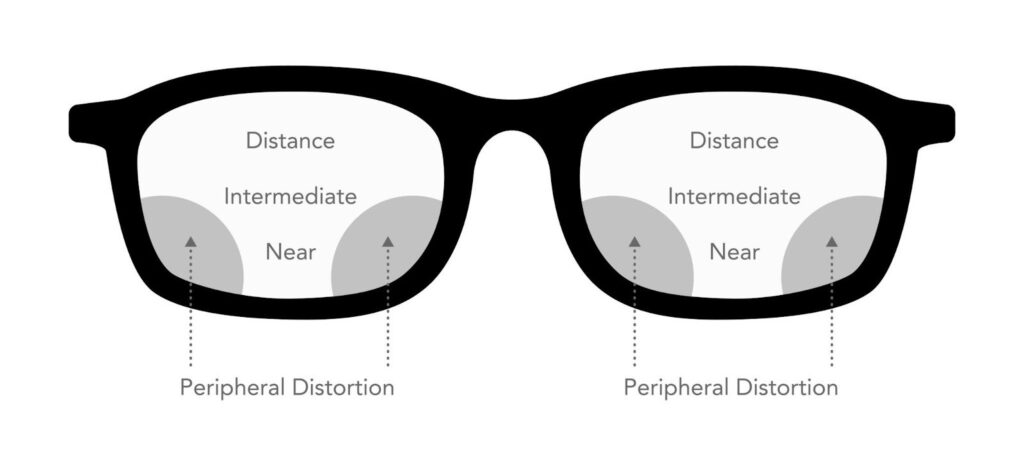
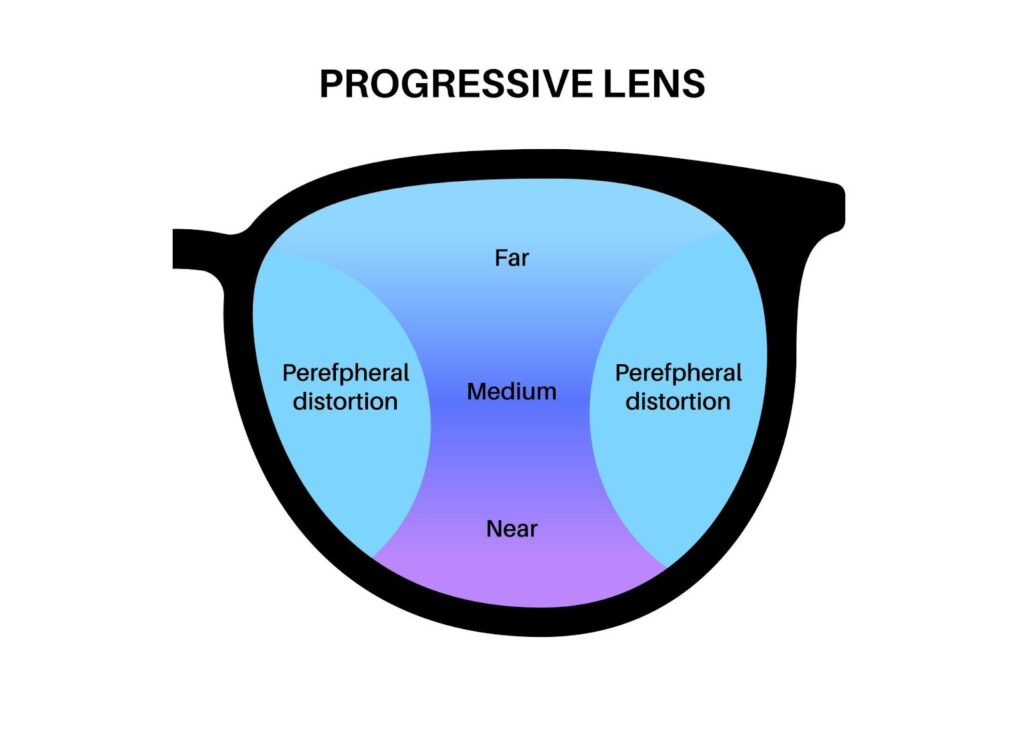
Progressive lenses are a type of multifocal lens that correct multiple distances in one lens. They provide:
- Clear distance vision at the top
- Intermediate vision in the middle
- Near vision at the bottom
There are no visible lines on the lens, unlike older bifocal or trifocal glasses.
Why Progressive Lenses Are Often Needed After 40
Around the age of 40, most people develop a natural condition called presbyopia. This happens because the eye’s natural lens becomes less flexible with age. As a result, near tasks like reading small print become difficult.
You may notice symptoms such as:
- Holding your phone farther away
- Eye strain while reading
- Headaches after close work
- Difficulty switching focus between distances
Progressive lenses address all of these issues in a single pair of glasses.
Benefits of Progressive Lenses
Progressive lenses allow you to see clearly at all distances without switching glasses. They look like normal glasses and do not reveal your age through visible lines.
For people who read, drive, use computers, and move around frequently during the day, progressives can be extremely convenient. Many patients tell me they feel more natural once they adjust, especially for daily wear.
Limitations of Progressive Lenses
Progressive lenses do require an adjustment period. Because different areas of the lens serve different distances, your brain needs time to learn how to use them.
Some people may experience:
- Mild dizziness at first
- Distortion in side vision
- Difficulty going down stairs initially
These symptoms usually settle within one to two weeks when the lenses are properly fitted.
Progressive lenses are also more expensive than single-vision lenses and require precise measurements for best results.
Progressive vs Single-Vision: Key Differences Explained Simply
The easiest way to understand the difference is this:
Single-vision lenses do one job very well.
Progressive lenses do many jobs in one lens.
Single-vision lenses feel instantly comfortable but may not meet all visual needs. Progressive lenses offer flexibility but need some adaptation.
Neither option is “better” overall. The better choice depends on you.
Which Lens Is Best for Your Lifestyle?
For Students and Young Adults
If you are under 40 and only need glasses for distance or reading, single-vision lenses are usually sufficient. They are light, affordable, and easy to wear for long hours.
Students who spend long hours on screens may also benefit from single-vision lenses designed specifically for computer use.
For Office Workers and Screen Users
People who work on computers for many hours a day may need intermediate vision correction. Some benefit from single-vision computer glasses, while others—especially over 40—may find progressives more convenient.
If you constantly switch between your screen, phone, and people around you, progressive lenses can reduce eye strain.
For Drivers and Active Individuals
If you drive often, travel, or move between indoor and outdoor environments, progressive lenses offer smooth vision transitions without changing glasses.
Single-vision lenses may still be suitable if you only need distance correction and have no near-vision difficulty.
For People Over 40
Once presbyopia sets in, progressive lenses often become the most practical option. They allow you to read, work, and drive using one pair of glasses.
Some people still prefer separate reading and distance glasses, but many find progressives more convenient in daily life.
How We Decide the Right Lens in Clinic
As an ophthalmologist, I never recommend lenses based on age alone. I look at:
- Your eye examination results
- Your daily routine
- Your work environment
- Your comfort expectations
- Your previous experience with glasses
Proper lens fitting is just as important as lens type. Even the best progressive lens will feel uncomfortable if measurements are inaccurate.
Common Myths About Progressive Lenses
Many patients worry that progressive lenses are hard to use or unsafe. In reality, modern progressive lenses are highly advanced and much easier to adapt to than older designs.
Another myth is that progressive lenses are only for elderly people. Today, many people in their early 40s use them comfortably and confidently.
When Should You See an Eye Doctor?
You should book an eye exam if:
- You feel eye strain or headaches
- Reading has become uncomfortable
- You struggle switching focus between distances
- Your current glasses feel inadequate
- You are over 40 and have never had a full eye exam
Early evaluation helps prevent discomfort and ensures you get the most suitable lenses.
Call to Action
If you are unsure whether single-vision or progressive lenses are right for you, the best step is a comprehensive eye examination. A proper evaluation allows us to recommend lenses that match your eyes and your lifestyle—not just your prescription.
Visit our eye hospital or book an appointment with our ophthalmologist to explore lens options tailored specifically for you.
References
- https://www.aao.org/eye-health/glasses-contacts/progressive-lenses
- https://www.mayoclinic.org/diseases-conditions/presbyopia
- https://www.ncbi.nlm.nih.gov/books/NBK559200/
- https://www.nhs.uk/conditions/presbyopia/