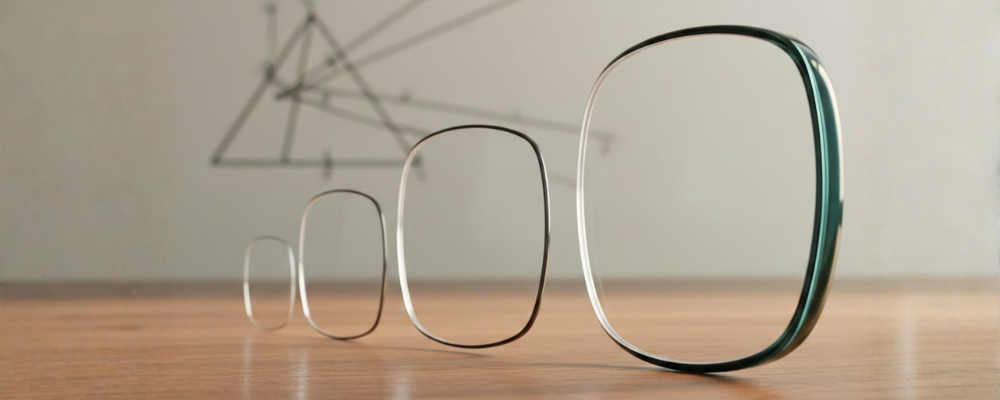
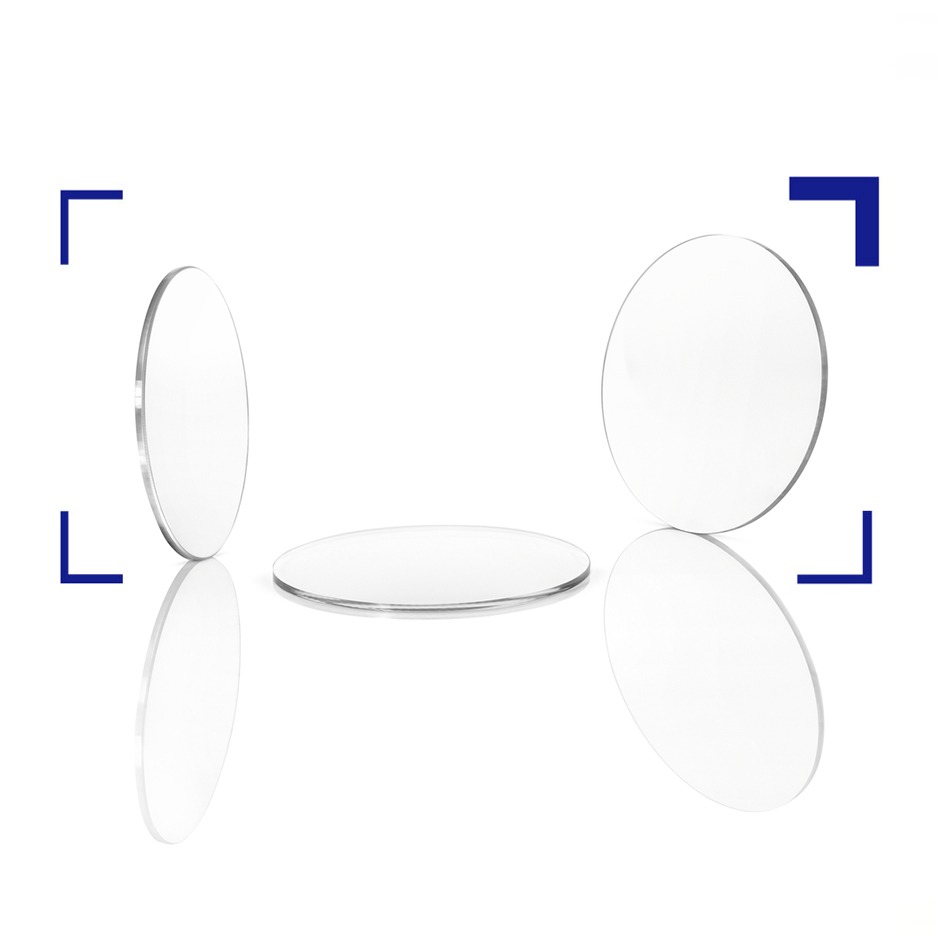
“High index” lenses are eyeglass lenses made from special materials that bend light more efficiently than standard plastic. This allows the lens to be thinner and lighter, especially for people with higher power prescriptions. If your glasses feel thick, heavy, or look bulky at the edges, high index lenses may help. However, they are not necessary for everyone. Whether you need high index lenses depends mainly on your prescription strength, frame choice, comfort needs, and budget.
What Does “High Index” Really Mean — And When Do You Need It?
If you wear glasses, you may have heard your optician or eye doctor mention “high index lenses.” For many patients, this term sounds technical and confusing. Some assume it automatically means “better,” while others worry it is just an unnecessary upgrade.
As an ophthalmologist, I often explain this concept to patients who want clearer answers before choosing new glasses. The truth is simple: high index lenses are very useful for some people, and completely unnecessary for others. Understanding what “high index” really means can help you make a confident, informed decision.
This article will walk you through the basics in plain language, without sales pressure or jargon.
Understanding the Basics: How Glasses Lenses Work
To understand high index lenses, it helps to start with how any eyeglass lens works.
Your eye focuses light onto the retina at the back of the eye. When the eye’s shape causes light to focus in front of or behind the retina, vision becomes blurry. Glasses correct this by bending light so it lands in the correct spot.
The strength of your glasses prescription tells us how much bending is needed. The stronger the prescription, the more bending the lens must do.
Traditionally, stronger prescriptions meant thicker lenses. This is where lens material becomes important.
What Is Refractive Index?
The word “index” in high index lenses refers to refractive index.
Refractive index is a number that tells us how efficiently a lens material bends light.
- A lower index material bends light less efficiently
- A higher index material bends light more efficiently
When a material bends light more efficiently, the lens does not need to be as thick to achieve the same correction.
Think of it like this:
If two people are asked to bend a metal rod, one might need more force and effort, while the other can bend it easily. High index materials “bend light more easily,” so they can do the same job with less bulk.
Standard Lenses vs High Index Lenses
Most standard plastic lenses have a refractive index of around 1.50.
High index lenses come in several levels, such as:
- 1.60
- 1.67
- 1.74
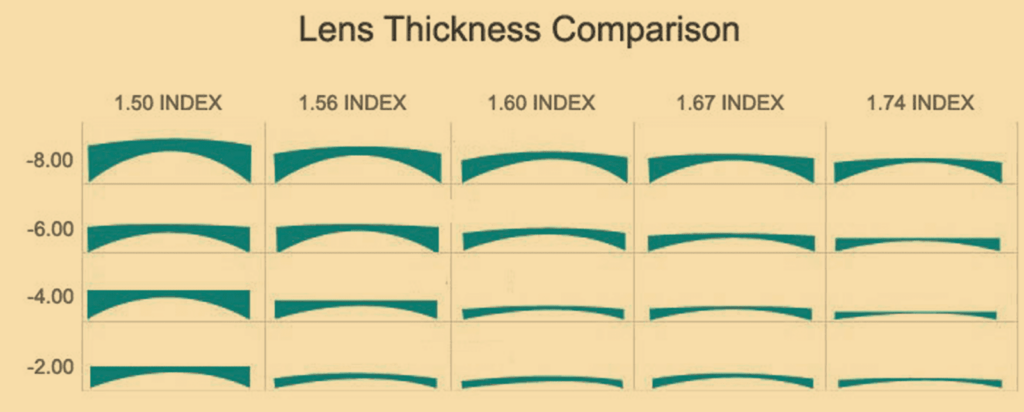
The higher the number, the thinner the lens can be for the same prescription.
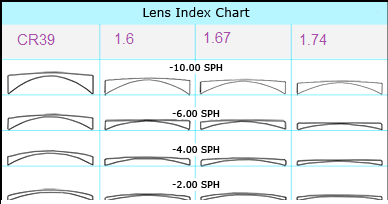
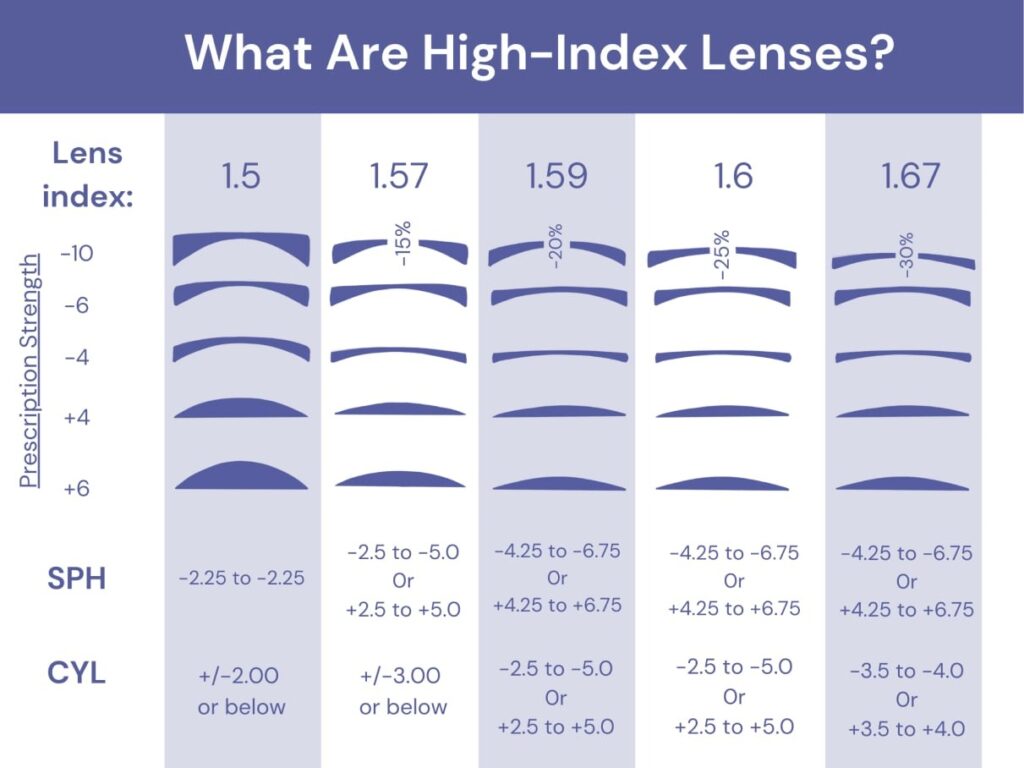
For mild prescriptions, the difference is small. For stronger prescriptions, the difference can be dramatic.
Why Lens Thickness Matters
Some patients ask, “Why does thickness even matter if I can see well?”
Lens thickness affects more than just appearance.
1. Comfort
Thicker lenses are heavier. Heavier glasses can slide down the nose, leave marks, and cause discomfort during long wear.
2. Appearance
For minus (nearsighted) prescriptions, thick edges can be very noticeable. For plus (farsighted) prescriptions, thick centers can distort the eyes behind the lens.
3. Frame Fit
Some fashionable frames—especially rimless, semi-rimless, or thin metal frames—do not work well with thick lenses.
4. Optical Quality
Very thick lenses can cause more distortion around the edges, especially if the material is not optimized.
High index lenses help reduce these issues when thickness becomes a problem.
Who Benefits Most from High Index Lenses?
High index lenses are most useful for people with moderate to high prescriptions.
Nearsighted (Minus) Prescriptions
If your prescription is around -4.00 or higher, high index lenses often make a noticeable difference. The higher the minus power, the thicker the lens edges become with standard plastic.
Farsighted (Plus) Prescriptions
If your prescription is +3.00 or higher, high index lenses help reduce the thick “magnifying glass” effect in the center of the lens.
Astigmatism
Astigmatism adds uneven thickness to lenses. High index materials can help balance and thin these areas.
Strong Prescriptions with Stylish Frames
If you prefer thin, lightweight, or rimless frames, high index lenses are often necessary to make the glasses practical and attractive.
When High Index Lenses May Not Be Necessary
Not everyone needs high index lenses.
If your prescription is mild (for example, between -2.00 and +2.00), standard plastic lenses usually work very well. The thickness difference is minimal, and high index lenses may not offer meaningful benefits.
In such cases, choosing good-quality coatings and a well-fitted frame often matters more than the lens index.
High Index Lenses and Vision Quality
A common concern is whether high index lenses affect vision clarity.
High index lenses can sometimes reflect more light due to their material properties. This is why anti-reflective (AR) coating is strongly recommended with high index lenses.
Without AR coating, some patients notice:
- More glare from headlights at night
- Reflections on the lens surface
- Reduced contrast in bright light
With proper coatings, vision quality is excellent for most patients.
Are High Index Lenses More Fragile?
High index lenses are actually stronger and more impact-resistant than older plastic lenses. However, they can be slightly more prone to surface reflections and scratches if not properly coated.
This is why most eye care professionals recommend:
- Anti-reflective coating
- Scratch-resistant coating
- UV protection (often built-in)
When cared for properly, high index lenses are durable and long-lasting.
High Index Lenses and Children
Parents sometimes ask whether children need high index lenses.
For children with high prescriptions, high index lenses can be very helpful. Lighter lenses mean:
- Better comfort
- Less slipping
- Reduced pressure on the nose and ears
However, for children with mild prescriptions, standard impact-resistant materials are usually sufficient.
Your eye doctor will consider prescription strength, frame choice, and the child’s activity level before recommending high index lenses.
High Index Lenses for Progressive and Bifocal Glasses
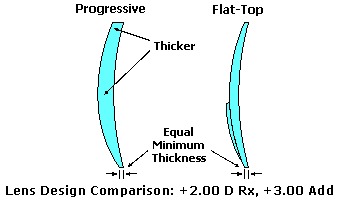
Progressive and bifocal lenses already contain multiple optical zones. When combined with strong prescriptions, lens thickness can increase further.
High index materials are commonly recommended for:
- Progressive lenses with moderate to high prescriptions
- Patients who want thinner profiles and better cosmetic results
They help keep the lens balanced and reduce the “bulky” feel of multifocal glasses.
Cost Considerations: Are High Index Lenses Worth It?
High index lenses cost more than standard plastic lenses. The price increases as the index increases.
Whether they are “worth it” depends on:
- Your prescription strength
- Your comfort needs
- Your cosmetic preferences
- Your frame choice
For strong prescriptions, most patients feel the benefits justify the cost. For mild prescriptions, the added expense may not provide noticeable advantages.
I often advise patients to think of high index lenses as a functional upgrade, not a luxury add-on.
Common Myths About High Index Lenses
“High index lenses are always better”
Not true. They are better only when thickness is a problem.
“High index lenses improve vision sharpness”
They do not improve prescription accuracy. They improve comfort, appearance, and wearability.
“Everyone should choose the highest index available”
Higher is not always better. The goal is the right index for your prescription, not the highest number.
How to Decide: A Practical Approach
When choosing lenses, I recommend asking yourself a few simple questions:
- Is my prescription moderate or high?
- Do my current glasses feel heavy or thick?
- Do I prefer thin or minimalist frames?
- Am I bothered by how my lenses look from the side?
If you answered yes to several of these, high index lenses are likely a good choice.
If not, standard lenses may serve you perfectly well.
When to Talk to Your Eye Doctor
You should discuss high index lenses with your eye doctor or optician if:
- You have been prescribed a stronger prescription than before
- You are switching to thinner or rimless frames
- Your current glasses feel uncomfortable or bulky
- You are considering progressive or bifocal lenses
A personalized recommendation is always better than a one-size-fits-all decision.
Final Thoughts from an Ophthalmologist
High index lenses are one of the most practical advancements in eyewear. They solve real problems for patients with stronger prescriptions by improving comfort, appearance, and daily wear experience.
However, they are not mandatory for everyone. The best lens is the one that fits your eyes, your lifestyle, and your needs—not simply the one with the highest number.
If you are unsure, a proper eye examination and an honest discussion with your eye care provider will guide you to the right choice.
Call to Action
If your glasses feel heavy, thick, or uncomfortable, or if you are considering a new frame style, schedule a comprehensive eye examination. Our eye care team can help you understand your prescription and choose lenses that are right for your vision and comfort.
References
- https://www.aao.org/eye-health/glasses-contacts/what-are-high-index-lenses
- https://www.mayoclinic.org/healthy-lifestyle/adult-health/in-depth/eyeglasses/art-20047363
- https://www.ncbi.nlm.nih.gov/books/NBK470291/
- https://www.allaboutvision.com/lenses/high-index.htm