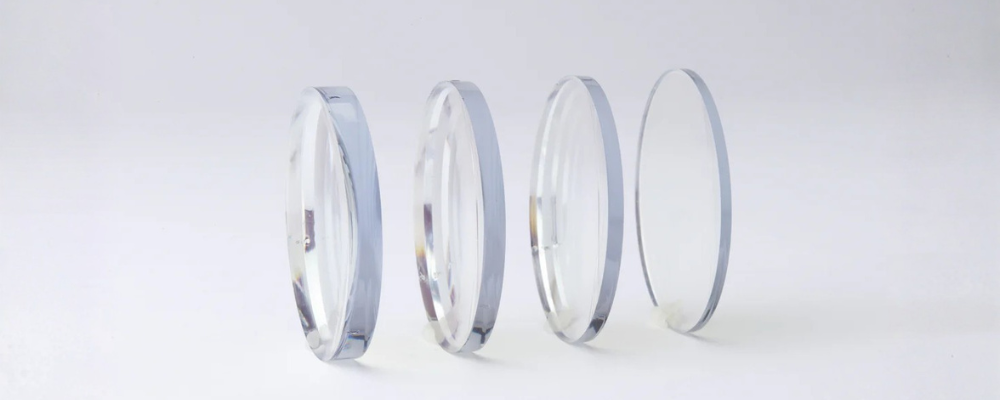
High index lenses are designed to be thinner and lighter for people with stronger glasses prescriptions. A 1.74 index lens is thinner than a 1.67 lens, but the real-world difference is often subtle. For many patients, 1.67 lenses already provide a good balance of comfort, appearance, and cost. A 1.74 lens may be worth considering if you have a very high prescription or want the thinnest look possible, but it is not automatically the best choice for everyone.
High Index 1.67 vs 1.74 Lenses — Is the Thinner Lens Worth It?
As an ophthalmologist, one of the most common conversations I have with patients who wear glasses—especially those with higher prescriptions—is about lens thickness. Many patients come in asking, “Doctor, should I go for the thinnest lens available?” or “Is 1.74 really that much better than 1.67?”
These are very reasonable questions. High index lenses are more expensive, and patients want to know whether the extra cost truly gives them something meaningful in daily life. The answer, as with many things in medicine, is: it depends.
In this article, I will walk you through what 1.67 and 1.74 index lenses actually mean, how much thinner they really are, when the difference matters, and when it does not. My goal is to help you make a confident, informed decision—not to push you toward the most expensive option.
Why Lens Thickness Matters More Than People Realize
Glasses are not just a medical device. They are also something you wear on your face all day. Thickness affects several things patients care about:
Appearance is often the first concern. Thicker lenses can stick out from the frame, especially at the edges, making the glasses look bulky.
Weight is another issue. Thicker lenses weigh more, and over time this can cause pressure on the nose and ears.
Comfort matters too. Heavier lenses may slip down more easily and feel tiring after long hours of use.
Optical performance can also be affected, particularly with very high prescriptions, where thicker lenses can create edge distortions.
This is why high index lenses were developed in the first place—to bend light more efficiently so lenses can be made thinner without changing your prescription.
Understanding Lens Index in Simple Terms
The “index” of a lens refers to how efficiently the lens material bends light. A higher index number means the material bends light more strongly.
What does this mean for you?
If a lens bends light more efficiently, it does not need to be as thick to achieve the same prescription power.
Standard plastic lenses usually have an index of around 1.50. As prescriptions get stronger, lenses made from this material become quite thick. High index materials—like 1.67 and 1.74—were created to solve this problem.
Think of it like this: if you need to turn a steering wheel sharply, a more responsive steering system lets you do it with less movement. High index lenses work in a similar way.
What Is a 1.67 High Index Lens?
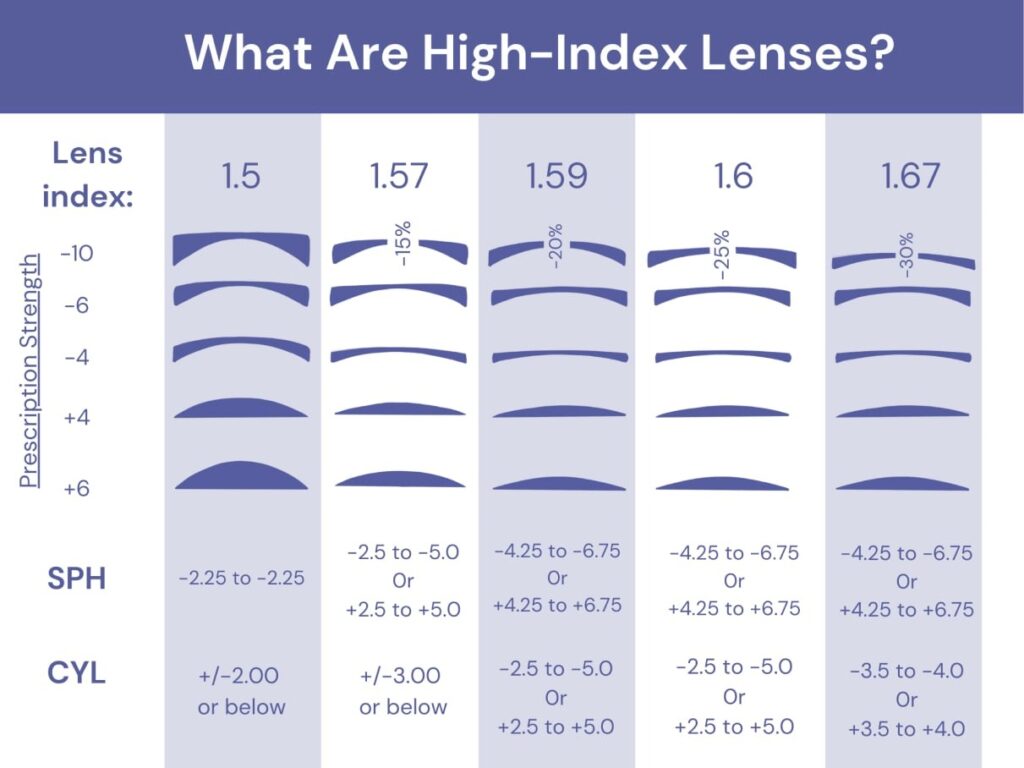
A 1.67 index lens is a popular choice for people with moderate to high prescriptions. It is noticeably thinner and lighter than standard plastic or polycarbonate lenses.
In my practice, I often recommend 1.67 lenses for patients with prescriptions roughly in the range of ±4.00 to ±7.00 diopters, depending on frame choice and personal expectations.
These lenses already offer a significant cosmetic improvement compared to lower index materials. For many people, switching from a standard lens to 1.67 feels like a big upgrade.
Another advantage is balance. 1.67 lenses tend to have good optical clarity and accept anti-reflective coatings well, which improves vision quality and appearance.
What Is a 1.74 High Index Lens?
A 1.74 index lens is currently one of the highest index materials commonly available for everyday eyeglasses. It is designed for people with very strong prescriptions who want the thinnest possible lens.
These lenses can be helpful for prescriptions above ±7.00 or ±8.00 diopters, where even a 1.67 lens may still look thick at the edges.
Because the material bends light extremely efficiently, the lens edges can be made slimmer, especially in minus (nearsighted) prescriptions where edge thickness is the main concern.
However, 1.74 lenses also come with trade-offs, which we will discuss shortly.
How Much Thinner Is 1.74 Compared to 1.67—Really?
This is the heart of the question.
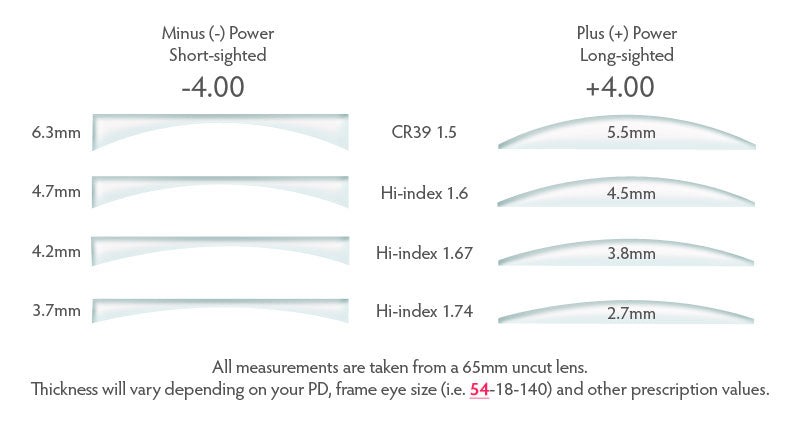
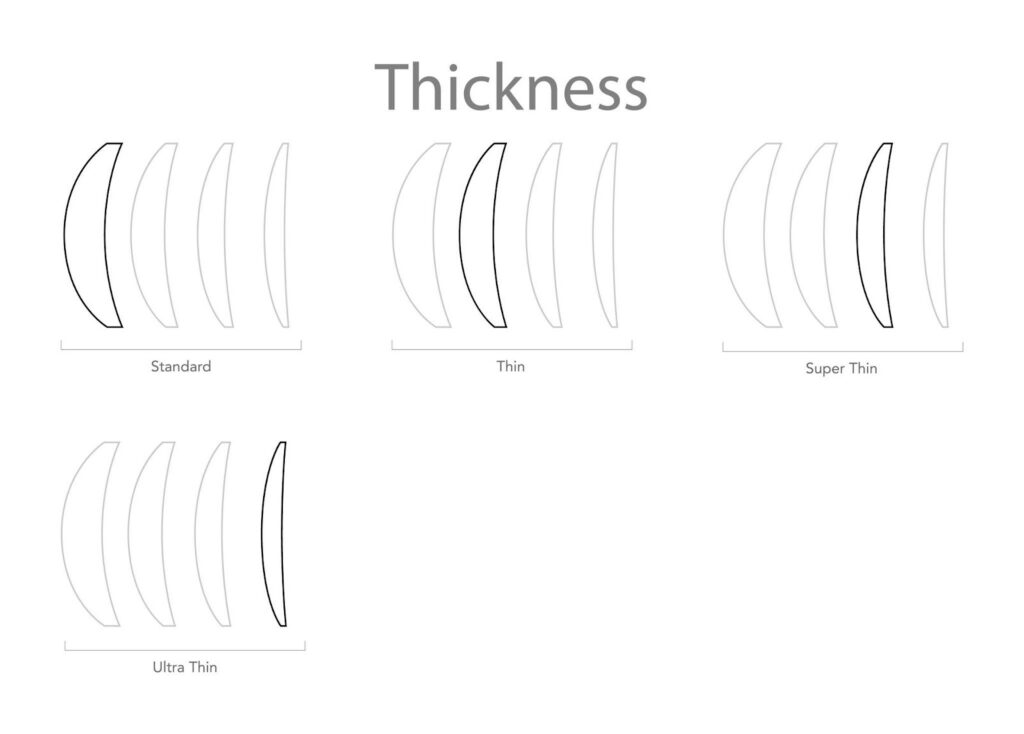
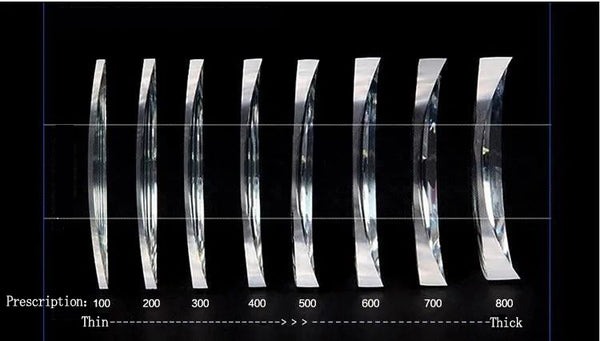
In theory, a 1.74 lens can be about 10–15% thinner than a 1.67 lens for the same prescription. On paper, that sounds impressive. In real life, the difference is often subtle.
For moderate prescriptions, many patients struggle to see a clear difference once the lenses are mounted in a frame. The frame itself hides a portion of the lens edge, especially if it is a full-rim or thicker frame.
For very high prescriptions, the difference becomes more noticeable. In these cases, even a small reduction in thickness can improve both appearance and comfort.
So the key point is this: the benefit of 1.74 increases as your prescription gets stronger.
The Role of Frame Choice (Often Overlooked)
One of the most underestimated factors in lens thickness is the frame you choose.
Smaller frames reduce lens thickness significantly because less lens area is needed. Round or oval frames also help distribute thickness more evenly.
Thick-rimmed frames can hide lens edges very effectively, sometimes making a 1.67 lens look just as good as a 1.74 lens in practice.
On the other hand, large, thin, or rimless frames expose the lens edges. In these frames, the difference between 1.67 and 1.74 may be more visible.
Before upgrading lens material, I always advise patients to think about frame size and style first. A smart frame choice can save you money without sacrificing appearance.
Optical Quality: Is Thinner Always Better?
This is an important medical consideration.
Higher index materials tend to reflect more light. This is why anti-reflective (AR) coating is essential for both 1.67 and 1.74 lenses.
However, very high index lenses can sometimes have slightly reduced optical clarity compared to lower index materials, especially in peripheral vision. Most patients do not notice this in daily use, but sensitive wearers sometimes do.
In my experience, 1.67 lenses often strike a better balance between thinness and optical comfort for many patients.
Weight and Comfort Differences
One might assume that thinner always means lighter. This is not always true.
High index materials are denser than standard plastic. While a 1.74 lens is thinner, the material itself is heavier per unit volume.
In many cases, the weight difference between 1.67 and 1.74 lenses is minimal. Sometimes, patients are surprised to find that the lighter feel they expected is not dramatic.
Comfort depends on overall lens design, frame fit, and nose pad adjustment—not just lens index.

Cost Differences and Value for Money
There is no avoiding this topic. 1.74 lenses are significantly more expensive than 1.67 lenses.
The price difference can be substantial, depending on brand, coatings, and region. From a medical standpoint, the question is whether that extra cost brings a meaningful improvement for you.
For many patients with moderate prescriptions, the answer is no. A well-designed 1.67 lens with proper coatings often looks excellent and performs very well.
For patients with very high prescriptions who are self-conscious about lens thickness, the additional cost of 1.74 may be justified.
This is a personal decision, not a medical necessity in most cases.
Safety and Durability Considerations
High index lenses, particularly 1.74, can be slightly more brittle than lower index materials. This does not mean they are unsafe, but it does mean careful handling and proper mounting are important.
If you are very active or prone to dropping your glasses, discuss this with your eye care professional. In some cases, a slightly thicker but more impact-resistant material may be a better choice.
When I Recommend 1.74 Lenses as a Doctor
Based on years of clinical experience, I usually suggest considering 1.74 lenses if:
Your prescription is very high, typically above ±7.00 diopters
You are choosing a large or rimless frame
Cosmetic thinness is a top priority for you
You understand and accept the higher cost
In other situations, I often find that patients are perfectly happy with 1.67 lenses once they see the final result.
When 1.67 Lenses Are More Than Enough
For a large number of patients, 1.67 lenses are an excellent choice.
They provide a clear improvement over standard lenses, have good optical quality, and are more cost-effective. When paired with the right frame and a good anti-reflective coating, they meet both visual and cosmetic expectations.
Many patients who initially ask for 1.74 lenses later tell me they are glad they chose 1.67 after seeing the finished glasses.
When Should You Discuss This With an Eye Doctor?
If you have a high prescription and are unsure which lens material is right for you, it is worth having a detailed discussion with your ophthalmologist or optometrist.
According to guidance from the American Academy of Ophthalmology, lens choice should always balance vision quality, comfort, and lifestyle needs—not just appearance.
Bring your concerns to your consultation. A good eye care professional will show you lens samples, explain realistic expectations, and help you avoid unnecessary expense.
A Practical Take-Home Message
The thinnest lens is not always the best lens.
For most patients, the jump from standard lenses to 1.67 is far more noticeable than the jump from 1.67 to 1.74. The extra thinness of 1.74 lenses becomes meaningful mainly in very strong prescriptions or specific frame choices.
There is no “one-size-fits-all” answer. The right lens is the one that fits your prescription, your face, your comfort, and your budget.
Call to Action
If you have a high prescription and are considering high index lenses, schedule a comprehensive eye exam and lens consultation with our ophthalmology team. We will help you choose a lens that gives you clear vision, comfort, and confidence—without unnecessary costs.
References
https://www.aao.org/eye-health/glasses-contacts/eyeglasses-lenses
https://www.mayoclinic.org/healthy-lifestyle/adult-health/in-depth/eyeglasses/art-20045501
https://www.ncbi.nlm.nih.gov/books/NBK519045/
https://www.aoa.org/healthy-eyes/vision-and-vision-correction/lenses