
Femtosecond Laser Anterior Lamellar Keratoplasty (FALK) in Hyderabad: Cost, Procedure & Recovery
Femtosecond Laser Anterior Lamellar Keratoplasty (FALK) is an advanced eye surgery designed to restore clear vision by precisely replacing only the diseased front layers of your cornea. This procedure uses a highly accurate femtosecond laser, offering a safer and more targeted approach than traditional corneal transplants, helping you see better and improve your quality of life.
QUICK FACTS
- Procedure Duration: 30-60 minutes
- Anesthesia Type: Local numbing eye drops / Local with sedation
- Recovery Time: Initial visual recovery: 1-2 weeks; Full stabilization: Several months
- Hospital Stay: Daycare / No overnight admission required
UNDERSTANDING THE BASICS
What is Femtosecond Laser Anterior Lamellar Keratoplasty (FALK)?
Imagine your eye’s front window, called the cornea, as a clear, curved pane of glass. For clear vision, this window needs to be perfectly smooth and transparent. Sometimes, only the outer, front layers of this window become cloudy or damaged, while the deeper layers remain healthy. Femtosecond Laser Anterior Lamellar Keratoplasty (FALK) is a specialized surgery that precisely replaces just these damaged front layers of your cornea with healthy donor tissue. It’s like carefully replacing only the scratched outer pane of a window, leaving the strong inner structure untouched, to restore clear vision without needing to replace the entire window. This falls under the broader category of Corneal Transplantation (Keratoplasty) and is a key part of Cornea & Ocular Surface Reconstruction.
CONDITIONS AND SYMPTOMS
Why is Femtosecond Laser Anterior Lamellar Keratoplasty (FALK) performed?
Eye Conditions Treated
- Keratoconus (especially when the disease is primarily in the anterior stroma)
- Corneal scars from infections or injuries (when damage is limited to the front layers)
- Certain corneal dystrophies (genetic conditions causing clouding in the superficial cornea)
- Corneal ectasia (thinning and bulging of the cornea, often post-refractive surgery, affecting anterior layers)
Symptoms You Might Be Experiencing
- Progressive blurring or haziness of vision
- Increased sensitivity to light (photophobia)
- Glares or halos around lights, especially at night
- Distorted or double vision in one eye
- Difficulty with night driving
- Frequent changes in eyeglass prescription that don’t improve vision
SURGICAL JOURNEY STEP-BY-STEP
How is the Femtosecond Laser Anterior Lamellar Keratoplasty (FALK) Procedure Performed?
1. How to Prepare Before the Procedure
- Comprehensive Eye Exam: Your ophthalmologist will perform detailed tests to assess your corneal health and overall eye condition.
- Medical Clearance: You may need a general health check-up to ensure you are fit for surgery. Inform your doctor about all medications, supplements, and allergies.
- Medication Review: You might be asked to stop certain medications, like blood thinners, a few days before surgery.
- Fasting: You will typically need to fast (no food or drink) for a specific period, usually 6-8 hours, before the procedure.
- Arrange for Transport: You won’t be able to drive yourself home after the surgery, so arrange for a friend or family member to pick you up.
- Avoid Makeup: On the day of surgery, avoid wearing eye makeup, lotions, or perfumes.
2. What Happens During the Procedure?
Once you arrive at the hospital, you’ll be prepared for surgery. You’ll receive local anesthesia, often combined with a mild sedative, to ensure you are comfortable and feel no pain during the procedure. Your eye will be gently held open, and the area around it will be sterilized.
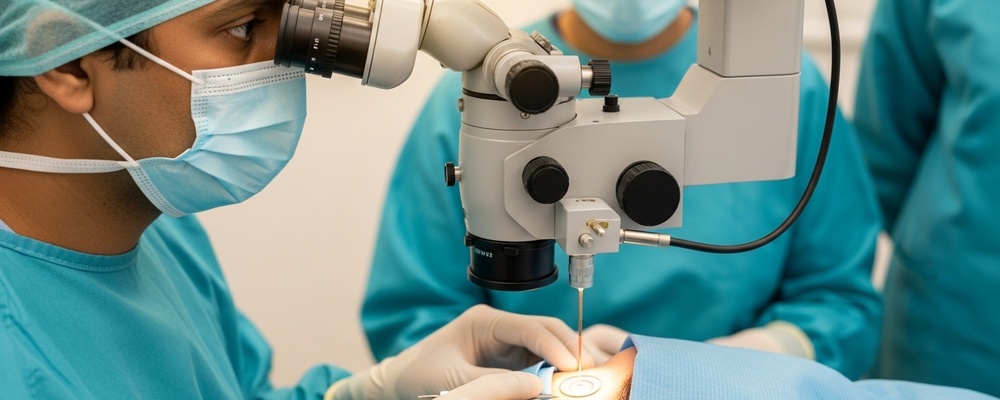
The surgeon then uses a highly precise femtosecond laser to create a perfectly shaped, thin layer in your diseased cornea, carefully separating the unhealthy front layers from the healthy deeper ones. This laser ensures incredible accuracy and a smooth surface.
Next, the surgeon carefully removes the damaged corneal tissue. A healthy, precisely matched donor corneal tissue, also prepared with femtosecond laser accuracy, is then placed onto your eye and secured with very fine sutures. These sutures are often much finer than a human hair and are designed to hold the new tissue firmly in place as it heals. The entire process is meticulously monitored to ensure optimal alignment and fit.
3. What to Expect Immediately After the Procedure
After the surgery, you’ll spend a short time in a recovery area while the anesthesia wears off. You might feel some mild discomfort, irritation, or a gritty sensation in your eye, which can be managed with prescribed pain relief.
Your eye will be covered with a protective shield or patch to prevent accidental rubbing and protect it from dust or injury.
Your vision will likely be blurry immediately after the procedure, and it’s normal to experience some light sensitivity. You will receive detailed instructions on how to care for your eye, including eye drops to prevent infection and reduce inflammation. You’ll be discharged home the same day, but remember not to drive.
POST-OPERATIVE CARE AND TIMELINE
Recovery and Post-Operative Care
Do’s:
- Follow Eye Drop Schedule: Diligently use all prescribed eye drops (antibiotics, anti-inflammatory, lubricating) as instructed by your doctor.
- Wear Protective Shield: Wear the eye shield, especially while sleeping, for the recommended period to prevent accidental rubbing or injury.
- Attend Follow-up Appointments: Crucial for monitoring healing, checking sutures, and adjusting medication.
- Rest Your Eyes: Avoid strenuous activities and give your eyes plenty of rest.
- Maintain Hygiene: Wash your hands thoroughly before touching your eye or applying drops.
Don’ts:
- Don’t Rub Your Eye: This is critical to prevent dislodging the new tissue or causing infection.
- Don’t Get Water in Your Eye: Avoid swimming, hot tubs, and direct shower spray on your eye for several weeks.
- Don’t Wear Eye Makeup: Avoid makeup until your doctor gives clearance.
- Don’t Lift Heavy Objects: Avoid activities that increase eye pressure.
- Don’t Drive: Until your vision stabilizes and your doctor approves.
Recovery Timeline:
- Day 1: Vision will be blurry, and you might experience mild discomfort, redness, or light sensitivity. The protective shield will be in place. You’ll have your first follow-up appointment.
- Week 1: Initial healing begins. Vision may still fluctuate. You’ll continue with eye drops. Some discomfort should subside. You might be able to resume light, non-strenuous activities.
- Month 1: Significant healing has occurred. Vision will start to improve more noticeably, though it may still not be perfectly clear. Sutures may begin to be removed, or adjusted, if necessary. You’ll have regular check-ups to monitor progress and adjust eye drop regimen. Full visual recovery can take several months as the eye completely heals and adapts to the new corneal tissue.
COST AND INSURANCE COVERAGE IN HYDERABAD
Cost of Femtosecond Laser Anterior Lamellar Keratoplasty (FALK) in Hyderabad & Insurance Options
- Estimated Local Investment: ₹100000 – ₹120000
- Cost Determinants:
- Surgeon’s Experience and Hospital Reputation: Highly experienced surgeons and well-equipped hospitals often have higher fees.
- Technology Used: The specific model and generation of the femtosecond laser system can influence cost.
- Donor Tissue Procurement: The cost associated with acquiring and preparing the healthy donor corneal tissue.
- Pre-operative Diagnostics: Extensive diagnostic tests required before surgery.
- Post-operative Care: The number and complexity of follow-up visits and prescribed medications.
- Anesthesia Type: Whether local or general anesthesia is used.
- Insurance Protocol: Femtosecond Laser Anterior Lamellar Keratoplasty (FALK) is generally considered a therapeutic procedure for ‘Medical Necessity’ as it addresses significant vision impairment caused by corneal disease. Therefore, it is typically covered by major Third-Party Administrator (TPA) networks and health insurance schemes in India. However, it is crucial to verify the specifics of your individual insurance policy directly with your provider before the procedure. Coverage can vary based on your plan, deductibles, and co-payments. Our hospital’s billing department can assist you with the necessary documentation and pre-authorization process.
FREQUENTLY ASKED QUESTIONS
Frequently Asked Questions About Femtosecond Laser Anterior Lamellar Keratoplasty (FALK)
- Q1: Is FALK a painful procedure?
- A: No, the procedure is performed under local anesthesia, often with sedation, ensuring you feel no pain during the surgery. You might experience mild discomfort or irritation during recovery.
- Q2: How long does it take to see clearly after FALK?
- A: Initial vision improvement can be noticed within 1-2 weeks, but full visual stabilization and clarity can take several months as your eye completely heals and adapts to the new corneal tissue.
- Q3: What are the risks associated with FALK?
- A: Like any surgery, FALK carries some risks, including infection, rejection of donor tissue, glaucoma, or astigmatism. However, the femtosecond laser technique generally offers a lower risk profile compared to full-thickness transplants. Your surgeon will discuss these in detail.
- Q4: Will I need glasses or contact lenses after FALK?
- A: Many patients experience significant improvement in vision, but some may still require glasses or contact lenses to achieve their best possible vision after the eye has fully healed.
DISCLAIMER
Disclaimer: This content is curated using artificial intelligence and may contain inaccuracies. It is provided for informational and educational purposes only and should not be considered professional medical advice. Please consult your ophthalmologist for personalized clinical care. The prices listed in this article are indicative only and may vary based on the patient’s specific condition, procedural techniques, surgical complexity, and materials used. We strongly advise discussing actual costs directly with your healthcare provider.