
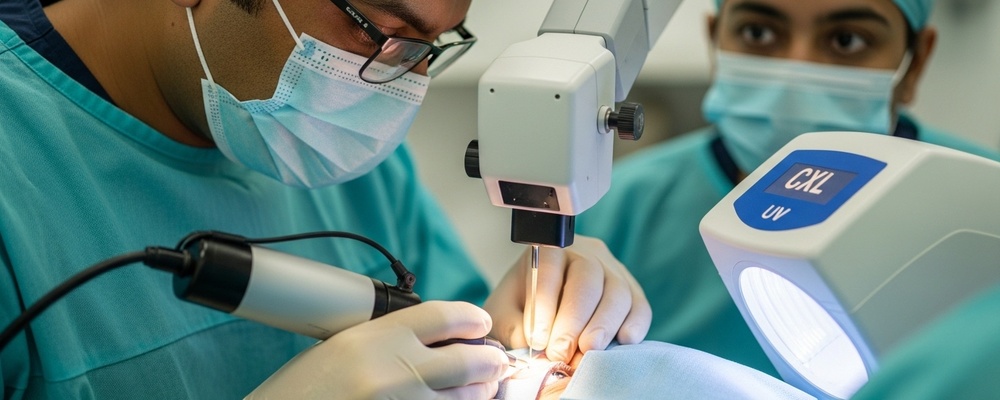
Topography-Guided PRK + CXL (Athens Protocol) in Hyderabad: Cost, Procedure & Recovery
Topography-Guided PRK + CXL (Athens Protocol) is an advanced eye procedure designed to correct vision problems and strengthen the cornea, especially for conditions like keratoconus. It combines two powerful techniques to reshape your eye’s surface and make it more stable, helping you achieve clearer, more reliable vision.
QUICK FACTS
- Procedure Duration: 45-60 minutes
- Anesthesia Type: Topical numbing eye drops
- Recovery Time: Initial 1-2 weeks for functional vision; full stabilization over several months
- Hospital Stay: Daycare / No overnight admission required
UNDERSTANDING THE BASICS
What is Topography-Guided PRK + CXL (Athens Protocol)?
Your eye’s clear front window is called the cornea. For some people, this window can be irregularly shaped or weak, leading to blurry or distorted vision. Topography-Guided PRK + CXL (Athens Protocol) is a specialized treatment that addresses both these issues.
It combines two main parts:
1. Topography-Guided PRK (Photorefractive Keratectomy): Think of your cornea as a unique fingerprint. “Topography-Guided” means we create a detailed, custom map of your eye’s surface. A precise laser then uses this map to gently reshape your cornea, smoothing out irregularities and correcting your vision prescription.
2. CXL (Corneal Cross-Linking): After reshaping, special riboflavin drops are applied to your eye, followed by a controlled UV light. This process creates new “cross-links” or natural bonds within your cornea, making it much stronger and more stable. It’s like reinforcing a weak structure to prevent it from bulging or changing shape in the future.
The “Athens Protocol” specifically refers to performing these two steps together in a particular sequence, offering a comprehensive solution for both vision correction and corneal stabilization.
CONDITIONS AND SYMPTOMS
Why is Topography-Guided PRK + CXL (Athens Protocol) performed?
Eye Conditions Treated
- Keratoconus: A progressive eye disease where the cornea thins and bulges into a cone-like shape, causing distorted vision.
- Post-LASIK Ectasia: A rare complication after LASIK surgery where the cornea weakens and bulges.
- High Myopia with Corneal Instability: Nearsightedness combined with a cornea that shows signs of weakening.
- Irregular Astigmatism: Vision blurriness caused by an unevenly shaped cornea that cannot be fully corrected with standard glasses or contact lenses.
Symptoms You Might Be Experiencing
- Blurry or distorted vision that isn’t fully corrected by glasses or contact lenses.
- Increased sensitivity to light (photophobia), making bright environments uncomfortable.
- Seeing glares, halos, or streaks around lights, especially at night.
- Frequent changes in your eyeglass or contact lens prescription.
- Difficulty with night driving due to poor vision or glare.
SURGICAL JOURNEY STEP-BY-STEP
How is the Topography-Guided PRK + CXL (Athens Protocol) Procedure Performed?
1. How to Prepare Before the Procedure
- Comprehensive Eye Exam: You’ll undergo a thorough eye examination, including detailed corneal mapping (topography) to create your unique eye profile.
- Contact Lens Holiday: You will need to stop wearing soft contact lenses for at least 2 weeks, and rigid gas permeable (RGP) lenses for 3-4 weeks, before your diagnostic tests and the procedure.
- Medication Review: Discuss all your current medications, supplements, and allergies with your doctor.
- Arrange Transportation: You will not be able to drive yourself home after the procedure, so arrange for a friend or family member to pick you up.
- Avoid Eye Makeup: Do not wear eye makeup, lotions, or perfumes on the day of your procedure.
2. What Happens During the Procedure?
The procedure is performed in a sterile environment and is generally painless thanks to numbing eye drops.
- Numbing: Topical anesthetic eye drops are applied to thoroughly numb your eye.
- Epithelium Removal: The outermost, very thin layer of your cornea (the epithelium) is gently removed.
- Laser Reshaping (PRK): You will be asked to focus on a target light. A highly precise excimer laser then reshapes your cornea based on the custom topography map created for your eye. This step corrects your vision.
- Riboflavin Application: Special riboflavin eye drops are applied to your eye for several minutes.
- UV Light Treatment (CXL): A controlled ultraviolet (UV-A) light is then directed at your eye. This light activates the riboflavin, creating new bonds within your corneal tissue to strengthen it.
- Bandage Contact Lens: A soft, protective bandage contact lens is placed on your eye to help it heal comfortably.
3. What to Expect Immediately After the Procedure
- Mild Discomfort: You may experience a gritty sensation, mild pain, or light sensitivity. Your doctor will prescribe pain relief and soothing eye drops.
- Blurry Vision: Your vision will be significantly blurry right after the procedure, similar to looking through fog.
- Eye Protection: You will likely wear a clear eye shield or protective glasses to prevent rubbing your eyes.
- Medicated Eye Drops: You will be given a schedule for various eye drops (antibiotics, anti-inflammatory, lubricating) to aid healing and prevent infection.
- Rest: It’s crucial to go home and rest your eyes. Avoid reading, screen time, or strenuous activities.
- Follow-up: A follow-up appointment will be scheduled for the next day to check your healing progress.
POST-OPERATIVE CARE AND TIMELINE
Recovery and Post-Operative Care
Following your doctor’s instructions carefully is vital for a smooth recovery and optimal results.
Do’s and Don’ts:
- Do: Use all prescribed eye drops exactly as directed, wear your protective eye shield or glasses, rest your eyes frequently, and attend all scheduled follow-up appointments.
- Don’t: Rub or touch your eyes, wear eye makeup for at least 2-4 weeks, swim or use hot tubs, engage in strenuous exercise, or expose your eyes to dust, smoke, or harsh chemicals.
Recovery Milestones:
- Day 1-3: You will experience significant blurriness, discomfort, and light sensitivity. The bandage contact lens remains in place. Focus on rest and using your eye drops.
- Week 1: The bandage contact lens is typically removed by your doctor. Your vision will start to improve, though it may still fluctuate. Discomfort should lessen considerably. You can usually resume light, non-strenuous activities.
- Month 1: Your vision will continue to stabilize and clarify, but full sharpness may still be developing. You can gradually return to most daily activities, but continue to protect your eyes and use drops as advised.
- Months 3-6: Your vision will typically reach its final stable outcome. Regular follow-ups will monitor your corneal strength and vision.
COST AND INSURANCE COVERAGE IN HYDERABAD
Cost of Topography-Guided PRK + CXL (Athens Protocol) in Hyderabad & Insurance Options
- Estimated Local Investment: ₹80000 – ₹110000
- Cost Determinants: The final cost for Topography-Guided PRK + CXL (Athens Protocol) can vary based on several factors:
- Surgeon’s Experience: Highly experienced and renowned ophthalmologists may have higher consultation and procedure fees.
- Hospital Facility: The type of hospital or clinic (e.g., multi-specialty hospital vs. specialized eye clinic) and its infrastructure can influence pricing.
- Technology Used: The specific advanced laser platforms and diagnostic equipment utilized for the topography-guided treatment can impact the overall cost.
- Pre- and Post-Operative Care: The comprehensiveness of the package, including initial diagnostics, follow-up appointments, and prescribed medications, can affect the price.
- Complexity of the Case: More severe or complex corneal conditions may require additional steps or longer procedure times, potentially increasing costs.
- Insurance Protocol: Topography-Guided PRK + CXL (Athens Protocol) is often considered a ‘Medical Necessity’ when performed to treat progressive conditions like keratoconus or post-LASIK ectasia, as its primary goal is to stabilize the cornea and prevent further vision loss. In such cases, it may be covered by major Third-Party Administrator (TPA) networks and health insurance schemes in India. However, if the procedure is primarily for elective refractive correction without an underlying corneal disease, it might be considered ‘Elective/Cosmetic’ and may require out-of-pocket payment or specific corporate policy add-on verifications. Patients are strongly advised to verify their coverage directly with their insurance provider and the hospital’s billing department prior to the procedure.
FREQUENTLY ASKED QUESTIONS
Frequently Asked Questions About Topography-Guided PRK + CXL (Athens Protocol)
- Q: Is Topography-Guided PRK + CXL painful?
A: The procedure itself is not painful due to numbing eye drops. You might experience some discomfort, grittiness, or light sensitivity during the initial recovery period.
- Q: How long does it take to see clearly after the procedure?
A: Initial vision improvement occurs within the first week, but full visual clarity and stability can take 3 to 6 months as the eye heals and reshapes.
- Q: What is the main benefit of the Athens Protocol?
A: The Athens Protocol combines corneal reshaping (PRK) with strengthening (CXL) to not only improve vision but also stabilize the cornea, particularly beneficial for progressive conditions like keratoconus.
- Q: Can I drive immediately after Topography-Guided PRK + CXL?
A: No, your vision will be blurry immediately after the procedure. You must arrange for someone to drive you home and avoid driving until your doctor confirms your vision meets legal requirements.
DISCLAIMER
Disclaimer: This content is curated using artificial intelligence and may contain inaccuracies. It is provided for informational and educational purposes only and should not be considered professional medical advice. Please consult your ophthalmologist for personalized clinical care. The prices listed in this article are indicative only and may vary based on the patient’s specific condition, procedural techniques, surgical complexity, and materials used. We strongly advise discussing actual costs directly with your healthcare provider.