
Dacryocystorhinostomy (DCR) (External or Endoscopic Endonasal) in Hyderabad: Cost, Procedure & Recovery
Dacryocystorhinostomy (DCR) is a specialized eye surgery designed to relieve blocked tear ducts, which can cause constant watering and discomfort. This procedure creates a new pathway for tears to drain normally, restoring comfort and clear vision. It’s a safe and effective solution for those suffering from persistent tear duct issues.
QUICK FACTS
- Procedure Duration: 60-90 minutes
- Anesthesia Type: General or Local with Sedation
- Recovery Time: Initial 1-2 weeks, full healing several weeks
- Hospital Stay: Daycare / No overnight admission required
UNDERSTANDING THE BASICS
What is Dacryocystorhinostomy (DCR) (External or Endoscopic Endonasal)?
Your eyes constantly produce tears to keep them moist and clean. These tears normally drain through tiny openings in the inner corner of your eyelids, flow into small tubes called canaliculi, then collect in a small sac called the lacrimal sac, and finally drain down a tube called the nasolacrimal duct into your nose. When this drainage system, particularly the nasolacrimal duct, becomes blocked, tears can’t drain properly, leading to watery eyes.
Dacryocystorhinostomy (DCR) is a surgical procedure that creates a new drainage pathway for tears. Instead of trying to clear the original blocked duct, DCR bypasses the obstruction by creating a direct connection between your lacrimal sac and your nasal cavity. This allows tears to flow freely into your nose, just as they should. There are two main approaches:
- External DCR: Involves a small incision on the side of the nose.
- Endoscopic Endonasal DCR: Performed through the nose using a tiny camera (endoscope), avoiding an external incision.
CONDITIONS AND SYMPTOMS
Why is Dacryocystorhinostomy (DCR) (External or Endoscopic Endonasal) performed?
DCR surgery is performed to alleviate the symptoms caused by a blocked tear drainage system, primarily the nasolacrimal duct.
Eye Conditions Treated
- Chronic Epiphora: Persistent and excessive watering of the eye due to tear duct obstruction.
- Dacryocystitis: Recurrent or chronic infection of the lacrimal (tear) sac, often accompanied by pain, redness, and swelling.
- Nasolacrimal Duct Obstruction: A blockage in the tear drainage pathway that prevents tears from flowing into the nose.
- Mucus Discharge: Accumulation of sticky discharge in the eye due to stagnant tears.
Symptoms You Might Be Experiencing
- Constant watery eyes: Tears frequently overflow onto your cheek, even when not crying.
- Sticky discharge: Mucus or pus-like discharge from the eye, especially in the morning.
- Redness and irritation: The eye may appear red and feel irritated.
- Pain and swelling: Tenderness or a painful lump near the inner corner of your eye, indicating an infection.
- Blurred vision: Due to the constant film of tears over the eye.
- Recurrent eye infections: Frequent conjunctivitis or other eye infections.
SURGICAL JOURNEY STEP-BY-STEP
How is the Dacryocystorhinostomy (DCR) (External or Endoscopic Endonasal) Procedure Performed?
1. How to Prepare Before the Procedure
- Medical Clearance: You will undergo a thorough medical evaluation, including blood tests and an ECG, to ensure you are fit for surgery.
- Diagnostic Checks: Your ophthalmologist will perform specific eye exams to confirm the tear duct blockage and determine the best surgical approach (external or endoscopic).
- Medication Review: Inform your doctor about all medications, supplements, and herbal remedies you are taking. You may need to stop blood-thinning medications (like aspirin or ibuprofen) a week before surgery.
- Fasting: You will be instructed to fast (no food or drink) for a specific period, usually 6-8 hours, before the procedure if general anesthesia is planned.
- Arrange Transportation: Plan for someone to drive you home after the surgery, as you will not be able to drive yourself.
2. What Happens During the Procedure?
Upon arrival at the hospital, you will be prepared for surgery. Anesthesia will be administered – either general anesthesia, where you are completely asleep, or local anesthesia with sedation, where the area is numbed, and you are relaxed.
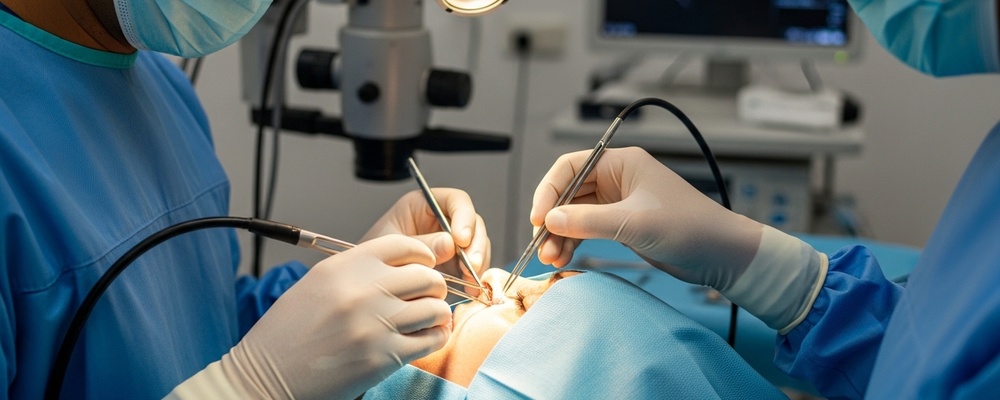
- External DCR: A small incision (about 1-2 cm) is made on the side of your nose, near the inner corner of your eye. A tiny opening is created in the bone between the lacrimal sac and the nasal cavity. The lacrimal sac is then opened, and its lining is connected to the lining of the nasal cavity, creating a new tear drainage channel. A small silicone tube (stent) may be temporarily placed to keep the new pathway open during healing. The incision is then closed with fine sutures.
- Endoscopic Endonasal DCR: The surgeon works entirely through your nostril using an endoscope (a thin tube with a light and camera) to visualize the area. Instruments are passed through the nostril to create an opening in the bone and connect the lacrimal sac to the nasal cavity from the inside. A silicone stent may also be placed. This method avoids an external skin incision.
Throughout the procedure, your comfort is prioritized, and pain minimization is ensured through effective anesthesia.
3. What to Expect Immediately After the Procedure
After the surgery, you will be moved to a recovery lounge where medical staff will monitor you as you wake up from anesthesia.
- Immediate Protection: Your eye may be covered with a patch or shield for a short period. You might experience some mild discomfort, swelling, or bruising around the eye and nose.
- Discharge: Once you are stable and the effects of anesthesia have worn off, you will be discharged with specific instructions for post-operative care, including medications and follow-up appointments.
- Visual Expectations: Your vision may be slightly blurry immediately after surgery due to swelling or eye drops, but this should improve quickly. You might notice some blood-tinged tears or nasal discharge for a few days.
POST-OPERATIVE CARE AND TIMELINE
Recovery and Post-Operative Care
Following your DCR surgery, careful adherence to post-operative instructions is crucial for optimal healing and success.
Do’s:
- Use Prescribed Medications: Take all eye drops, nasal sprays, and oral medications (antibiotics, pain relievers) exactly as directed by your surgeon.
- Keep the Area Clean: Gently clean any discharge around your eye with a clean, damp cloth.
- Rest: Get plenty of rest and avoid strenuous activities for at least a week.
- Follow-up Appointments: Attend all scheduled follow-up appointments to allow your surgeon to monitor your healing and remove any temporary stents.
- Stay Hydrated: Drink plenty of fluids.
Don’ts:
- Avoid Blowing Your Nose Forcefully: Do not blow your nose vigorously for at least 2-3 weeks to prevent dislodging the stent or causing bleeding.
- Avoid Rubbing Your Eyes: Refrain from rubbing or pressing on the surgical area.
- No Strenuous Activity: Avoid heavy lifting, bending, or activities that increase pressure in your head for several weeks.
- Avoid Swimming: Do not swim or submerge your head in water until cleared by your doctor.
- Do Not Remove Stents Yourself: If a silicone stent was placed, do not attempt to remove it; your surgeon will do this at the appropriate time.
Recovery Timeline:
- Day 1: You may experience mild discomfort, swelling, and some blood-tinged tears or nasal discharge. Keep your head elevated while sleeping.
- Week 1: Swelling and bruising should start to subside. You should notice a significant reduction in watery eyes. Continue with prescribed medications. The surgeon may remove external sutures (if applicable).
- Month 1: Most of the initial healing is complete. Any temporary stents are usually removed around this time (typically 4-6 weeks post-op). You can gradually resume most normal activities, but avoid contact sports. Full benefits of the surgery, such as completely dry eyes, become more apparent.
COST AND INSURANCE COVERAGE IN HYDERABAD
Cost of Dacryocystorhinostomy (DCR) (External or Endoscopic Endonasal) in Hyderabad & Insurance Options
- Estimated Local Investment: ₹30000 – ₹65000
- Cost Determinants: The final cost of Dacryocystorhinostomy (DCR) in Hyderabad can vary based on several factors:
- Type of Procedure: Endoscopic Endonasal DCR may sometimes be slightly different in cost compared to External DCR due to specialized equipment.
- Surgeon’s Fees: The experience and reputation of the ophthalmologist or oculoplastic surgeon.
- Hospital Facility: Costs can differ significantly between government hospitals, private clinics, and large corporate hospitals.
- Anesthesia Type: General anesthesia typically adds to the overall cost compared to local anesthesia with sedation.
- Use of Stents: The inclusion of temporary silicone stents to maintain the new drainage pathway.
- Pre-operative Tests & Post-operative Medications: The cost of diagnostic tests and prescribed medications.
- Complications: Any unforeseen complications requiring additional treatment.
- Insurance Protocol: Dacryocystorhinostomy (DCR) is generally considered a therapeutic ‘Medical Necessity’ as it treats a functional blockage causing discomfort, infection, and vision impairment. Therefore, it is typically covered by major Third-Party Administrator (TPA) networks and health insurance schemes. However, it is crucial to verify your specific policy details with your insurance provider or the hospital’s insurance desk beforehand to understand the extent of coverage, cashless facilities, and any co-payment requirements.
FREQUENTLY ASKED QUESTIONS
Frequently Asked Questions About Dacryocystorhinostomy (DCR) (External or Endoscopic Endonasal)
Q1: Is Dacryocystorhinostomy (DCR) a painful procedure?
A1: DCR is performed under anesthesia (general or local with sedation), so you won’t feel pain during the surgery. Afterward, you might experience mild discomfort, swelling, or bruising, which can be managed with prescribed pain medication.
Q2: What is the success rate of DCR surgery?
A2: DCR surgery has a high success rate, typically ranging from 85% to 95%, in relieving symptoms of blocked tear ducts and restoring normal tear drainage.
Q3: How long does it take to recover fully from DCR?
A3: Initial recovery, where swelling and discomfort subside, usually takes 1-2 weeks. However, complete healing and stabilization of the new tear drainage pathway can take several weeks to a few months.
Q4: Are there any risks associated with DCR surgery?
A4: As with any surgery, DCR carries some risks, including bleeding, infection, scarring (for external DCR), failure of the new tear duct to remain open, or a need for revision surgery. Your surgeon will discuss these risks with you.
DISCLAIMER
Disclaimer: This content is curated using artificial intelligence and may contain inaccuracies. It is provided for informational and educational purposes only and should not be considered professional medical advice. Please consult your ophthalmologist for personalized clinical care. The prices listed in this article are indicative only and may vary based on the patient’s specific condition, procedural techniques, surgical complexity, and materials used. We strongly advise discussing actual costs directly with your healthcare provider.