
Conjunctival Limbal Autograft (CLAU) / Keratolimbal Allograft (KLAL) in Hyderabad: Cost, Procedure & Recovery
Conjunctival Limbal Autograft (CLAU) and Keratolimbal Allograft (KLAL) are advanced eye surgeries designed to restore the surface of your eye, especially when it’s damaged and unable to heal itself. These procedures involve transplanting special “stem cells” from a healthy part of your eye or a donor to repair and regenerate your eye’s protective outer layer, bringing back comfort and clearer vision.
QUICK FACTS
- Procedure Duration: 1-2 hours
- Anesthesia Type: Local numbing eye drops with sedation
- Recovery Time: Initial visual recovery within weeks, full stabilization over several months
- Hospital Stay: Daycare / Overnight observation if required
UNDERSTANDING THE BASICS
What is Conjunctival Limbal Autograft (CLAU) / Keratolimbal Allograft (KLAL)?
Your eye has a clear front window called the cornea, which is vital for clear vision. At the edge of this window, where it meets the white part of your eye (the sclera), there’s a special area called the “limbus.” The limbus contains unique stem cells that constantly work to repair and maintain the cornea’s surface.
When these limbal stem cells are damaged or lost, the cornea can’t heal properly, leading to pain, poor vision, and scarring. CLAU and KLAL are surgical solutions to replace these missing stem cells.
- Conjunctival Limbal Autograft (CLAU): In this procedure, your surgeon takes a small, healthy piece of limbal tissue (containing stem cells) from your other, healthy eye and transplants it to the damaged eye. Since it’s from your own body, there’s no risk of rejection.
- Keratolimbal Allograft (KLAL): If both of your eyes are affected, or if one eye doesn’t have enough healthy tissue, your surgeon will use limbal tissue from a donor eye. This is called an allograft. For KLAL, special medications are often needed afterward to prevent your body from rejecting the donor tissue.
Both procedures aim to provide a fresh supply of stem cells to the damaged eye, allowing it to regenerate a healthy, clear surface.
CONDITIONS AND SYMPTOMS
Why is Conjunctival Limbal Autograft (CLAU) / Keratolimbal Allograft (KLAL) performed?
These procedures are performed to treat severe damage to the eye’s surface, specifically when the natural healing ability of the cornea is compromised due to a lack of healthy limbal stem cells.
Eye Conditions Treated
- Limbal Stem Cell Deficiency (LSCD): This is the main reason, often caused by:
- Chemical or Thermal Burns: Injuries from strong chemicals or heat to the eye.
- Severe Eye Infections: Past infections that have damaged the limbus.
- Autoimmune Diseases: Conditions like Stevens-Johnson Syndrome that affect the body’s tissues, including the eye.
- Aniridia: A rare genetic condition where the iris (colored part of the eye) is partially or completely missing.
- Multiple Eye Surgeries: Repeated surgeries can sometimes damage the limbus.
- Persistent Corneal Defects: Wounds on the cornea that won’t heal.
- Corneal Scarring and Blood Vessel Growth: When blood vessels grow onto the clear cornea, causing cloudiness and vision loss.
Symptoms You Might Be Experiencing
If you have limbal stem cell deficiency, you might notice:
- Chronic Eye Pain and Redness: Persistent discomfort and irritation in the eye.
- Persistent Foreign Body Sensation: Feeling like there’s always something in your eye.
- Progressive Vision Loss: Your vision becoming increasingly blurry or hazy over time.
- Light Sensitivity (Photophobia): Discomfort or pain when exposed to bright light.
- Cloudy or Opaque Cornea: The clear front of your eye appearing cloudy or white, sometimes with visible blood vessels.
- Frequent Eye Infections: The damaged surface making your eye more prone to infections.
SURGICAL JOURNEY STEP-BY-STEP
How is the Conjunctival Limbal Autograft (CLAU) / Keratolimbal Allograft (KLAL) Procedure Performed?
Your surgical journey for CLAU or KLAL involves careful preparation, the precise surgical procedure, and immediate post-operative care.
1. How to Prepare Before the Procedure
- Comprehensive Eye Exam: Your ophthalmologist will conduct a thorough examination of both your eyes to assess the extent of damage and determine the best treatment plan (CLAU or KLAL).
- Medical Clearance: You’ll undergo general health checks, including blood tests and possibly an ECG, to ensure you are fit for surgery.
- Medication Review: Discuss all your current medications with your doctor. You may need to stop certain drugs, like blood thinners, for a few days before surgery.
- Lifestyle Adjustments: You will be advised to stop smoking and avoid alcohol for a period before the surgery to promote better healing.
- Fasting: You will be instructed not to eat or drink anything for several hours before your scheduled procedure.
- Arrangement for Support: Arrange for someone to drive you home after the surgery and assist you during the initial recovery period.
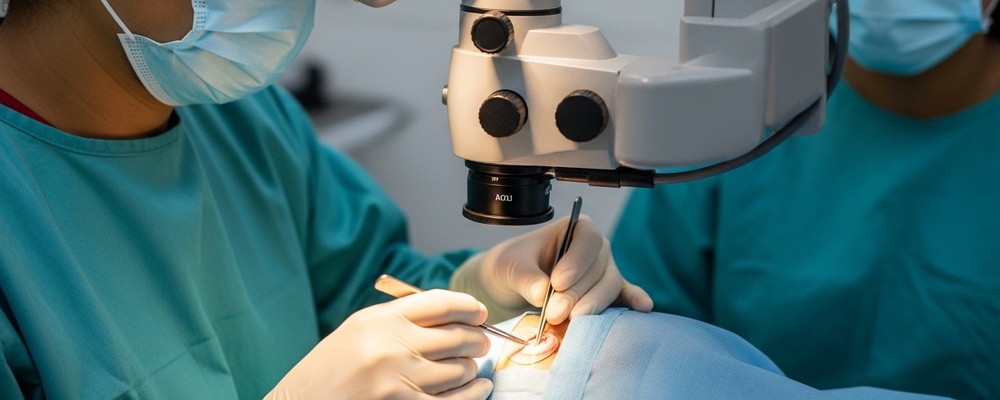
2. What Happens During the Procedure?
- Anesthesia: You will receive local numbing eye drops, and often a mild sedative to help you relax. This ensures you feel no pain during the surgery.
- Eye Preparation: Your eye area will be thoroughly cleaned, and sterile drapes will be placed around your face, leaving only the eye exposed. A small device will gently hold your eyelids open.
- Damaged Tissue Removal: The surgeon will carefully remove the unhealthy, scarred tissue from the surface of your damaged cornea.
- Graft Harvest (CLAU): If you are having CLAU, a small, healthy piece of limbal tissue will be meticulously harvested from your other eye. This area is chosen carefully to ensure no harm to your healthy eye’s vision.
- Graft Preparation (KLAL): If you are having KLAL, the donor limbal tissue will be carefully prepared for transplantation.
- Graft Placement: The harvested or donor limbal tissue is then precisely placed onto the prepared surface of your damaged eye.
- Securing the Graft: The graft is secured in place with very fine sutures, which are often thinner than a human hair.
- Protective Measures: A special bandage contact lens may be placed on your eye, and a protective eye shield will be applied.
3. What to Expect Immediately After the Procedure
- Recovery Lounge: You will be moved to a recovery area where nurses will monitor you as the sedation wears off.
- Eye Protection: Your eye will be covered with a protective shield or patch, which you must keep on as instructed.
- Initial Sensations: You might experience mild discomfort, a gritty feeling, tearing, or some light sensitivity. This is normal.
- Blurred Vision: Your vision will likely be blurry immediately after the procedure due to the surgery and protective measures.
- Instructions: You will receive detailed instructions on how to care for your eye, including when and how to use prescribed eye drops.
- Discharge: Once you are stable and your doctor gives the go-ahead, you will be discharged, but you must have someone accompany you home.
POST-OPERATIVE CARE AND TIMELINE
Recovery and Post-Operative Care
Proper post-operative care is crucial for the success of your CLAU/KLAL procedure. Following your doctor’s instructions diligently will help ensure optimal healing and vision recovery.
Do’s:
- Use Eye Drops: Administer all prescribed eye drops (antibiotics, anti-inflammatory, and for KLAL, immunosuppressants) exactly as directed by your doctor.
- Wear Eye Protection: Keep the protective eye shield on, especially while sleeping, for the recommended period to prevent accidental rubbing or injury.
- Rest: Get plenty of rest and avoid strenuous activities.
- Attend Follow-ups: Keep all your scheduled follow-up appointments with your ophthalmologist. These are vital for monitoring your healing and adjusting medications.
- Maintain Hygiene: Keep your hands clean before touching your eye drops or eye area.
Don’ts:
- Rub Your Eyes: Absolutely avoid rubbing or pressing on your operated eye.
- Lift Heavy Objects: Refrain from heavy lifting or bending over, which can increase eye pressure.
- Swim or Use Hot Tubs: Avoid swimming, saunas, or hot tubs to prevent infection.
- Wear Eye Makeup: Do not apply eye makeup until your doctor gives permission.
- Expose Eyes to Dust/Dirt: Avoid dusty or dirty environments.
- Drive: Do not drive until your vision has stabilized and your doctor approves.
Recovery Timeline:
- Day 1: Your eye will be patched or shielded. You may experience mild discomfort, tearing, and blurred vision. You will start your prescribed eye drops.
- Week 1: Your doctor will examine your eye during a follow-up. Vision will likely still be blurry but may start to show slight improvement. Continue all eye drops. Avoid any strenuous activities. Sutures may be present and will either dissolve or be removed by your doctor at a later stage.
- Month 1: Vision will continue to stabilize, though full clarity may take longer. You can gradually return to most light daily activities, but continue to avoid anything that could strain or injure your eye. For KLAL patients, immunosuppressant eye drops or oral medications will be a critical part of your long-term care. Full healing and final visual outcome can take several months as the new stem cells work to regenerate the corneal surface.
COST AND INSURANCE COVERAGE IN HYDERABAD
Cost of Conjunctival Limbal Autograft (CLAU) / Keratolimbal Allograft (KLAL) in Hyderabad & Insurance Options
The estimated cost for Conjunctival Limbal Autograft (CLAU) or Keratolimbal Allograft (KLAL) in Hyderabad typically ranges from:
- Estimated Local Investment: ₹65000 – ₹95000
Cost Determinants:
The final cost of your CLAU or KLAL procedure can vary based on several factors:
- Type of Graft: Whether it’s an autograft (from your own eye) or an allograft (from a donor eye). Allografts may incur additional costs related to donor tissue procurement and processing.
- Complexity of the Case: The extent of damage to your eye and whether any additional procedures are required during the surgery can affect the overall cost.
- Surgeon’s Fees: The experience and reputation of your ophthalmologist.
- Hospital Facility Charges: The specific hospital or clinic where the procedure is performed, including operating room fees and post-operative care.
- Anesthesia Type: The specific type of anesthesia used and the duration.
- Post-Operative Medications: The cost of prescribed eye drops, especially long-term immunosuppressants for KLAL, which are crucial for preventing graft rejection.
- Duration of Hospital Stay: While often a daycare procedure, if an overnight stay is recommended for monitoring, it will add to the cost.
Insurance Protocol:
CLAU and KLAL procedures are generally considered therapeutic and medically necessary interventions for treating severe limbal stem cell deficiency and restoring eye health. As such, they are typically covered by most major health insurance providers and Third-Party Administrator (TPA) networks in India.
We strongly advise you to:
- Contact your insurance provider directly to understand the specifics of your policy, including coverage limits, deductibles, co-pays, and any pre-authorization requirements.
- Discuss with the hospital’s billing department to confirm if they have a cashless facility with your insurance provider or to understand the reimbursement process.
- Obtain a pre-authorization from your insurance company before the procedure to ensure smooth processing of your claim.
FREQUENTLY ASKED QUESTIONS
Frequently Asked Questions About Conjunctival Limbal Autograft (CLAU) / Keratolimbal Allograft (KLAL)
Q1: Is the CLAU/KLAL procedure painful?
A: No, the procedure is performed under local anesthesia with sedation, so you will not feel any pain during the surgery. You might experience mild discomfort or a gritty sensation in the eye during the initial recovery period, which can be managed with prescribed pain relief.
Q2: How long does it take to see results after CLAU/KLAL?
A: Initial improvements in comfort and vision may be noticed within a few weeks, but the full benefits and stabilization of vision typically take several months as the new stem cells work to regenerate a healthy corneal surface.
Q3: What are the potential risks of CLAU/KLAL?
A: As with any surgery, there are risks, including infection, bleeding, graft failure, or rejection (especially with KLAL). Your surgeon will discuss all potential risks and benefits with you in detail before the procedure.
Q4: Can CLAU be performed if both my eyes are affected?
A: If both eyes are significantly affected, CLAU (using your own tissue) may not be possible as there wouldn’t be a healthy donor eye. In such cases, Keratolimbal Allograft (KLAL) using donor tissue would be the recommended option.
DISCLAIMER
Disclaimer: This content is curated using artificial intelligence and may contain inaccuracies. It is provided for informational and educational purposes only and should not be considered professional medical advice. Please consult your ophthalmologist for personalized clinical care. The prices listed in this article are indicative only and may vary based on the patient’s specific condition, procedural techniques, surgical complexity, and materials used. We strongly advise discussing actual costs directly with your healthcare provider.