
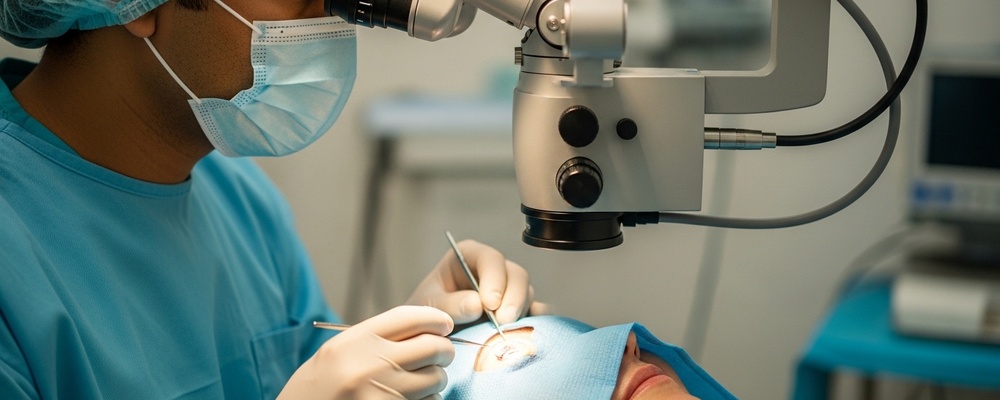
Scleral Buckling Surgery in Hyderabad: Cost, Procedure & Recovery
Scleral Buckling Surgery is a vital procedure designed to repair a detached retina, a serious eye condition that can lead to permanent vision loss if not treated promptly. This surgery involves placing a small, flexible band around the outside of your eye to gently push the wall of the eye inward, helping the retina reattach. It aims to restore your vision and protect your eye health.
QUICK FACTS
- Procedure Duration: 60-120 minutes
- Anesthesia Type: Local with sedation or General Anesthesia
- Recovery Time: Several weeks for full visual recovery
- Hospital Stay: Daycare with observation or overnight stay
UNDERSTANDING THE BASICS
What is Scleral Buckling Surgery?
Imagine your eye as a tiny camera. Inside, at the very back, is a light-sensitive layer called the retina, which is like the film or sensor. It captures images and sends them to your brain. The retina normally lies smoothly against the back wall of your eye. Sometimes, it can pull away from this wall, much like wallpaper peeling off a wall. This is called a retinal detachment.
Scleral Buckling Surgery is an Incisional Vitreoretinal Surgery that fixes this problem. The “sclera” is the tough, white outer wall of your eyeball. During the procedure, a tiny, flexible silicone band (the “buckle”) is carefully placed around the outside of your sclera, like a belt. This band gently pushes the sclera inward, bringing the eye wall closer to the detached retina. This helps the retina settle back into its proper position, allowing it to heal and regain its function.
CONDITIONS AND SYMPTOMS
Why is Scleral Buckling Surgery performed?
Scleral Buckling Surgery is primarily performed to treat retinal detachment, a serious condition where the retina separates from its underlying support tissue. This separation prevents the retina from receiving oxygen and nutrients, which can lead to permanent vision loss if not addressed.
Eye Conditions Treated
- Rhegmatogenous Retinal Detachment: This is the most common type, caused by a tear or break in the retina, allowing fluid to pass through and collect underneath, separating the retina.
- Traumatic Retinal Detachment: Detachment resulting from an injury to the eye.
- Complex Retinal Detachments: In some cases, it may be used in conjunction with other procedures for more complicated detachments.
Symptoms You Might Be Experiencing
If you have a retinal detachment, you might notice one or more of these symptoms:
- Sudden increase in floaters: These are tiny specks, cobwebs, or rings that drift across your vision.
- Flashes of light: Seeing sudden flashes or streaks of light, especially in your side (peripheral) vision.
- A curtain or shadow over your vision: This can appear as a gray or black curtain moving across your field of vision, starting from the side and gradually expanding.
- Blurred or distorted vision: Your central vision might become blurry or wavy.
- Loss of peripheral vision: You might lose vision in parts of your side vision.
SURGICAL JOURNEY STEP-BY-STEP
How is the Scleral Buckling Surgery Procedure Performed?
1. How to Prepare Before the Procedure
Your doctor will provide detailed instructions, but generally, preparation involves:
- Medical Clearance: You’ll undergo a thorough eye examination and general health check-up to ensure you’re fit for surgery. This may include blood tests and an ECG.
- Medication Review: Discuss all medications, supplements, and herbal remedies you are taking with your doctor. You may need to stop certain blood-thinning medications a few days before surgery.
- Fasting: You will typically be asked not to eat or drink anything for at least 6-8 hours before your surgery, especially if general anesthesia is planned.
- Arranging Transport: You will not be able to drive yourself home after the procedure, so arrange for someone to pick you up.
2. What Happens During the Procedure?
On the day of surgery, you’ll be made comfortable in the operating room.
- Anesthesia: You will receive either local anesthesia with sedation (meaning your eye is numbed, and you’re relaxed but awake) or general anesthesia (you’ll be completely asleep). Your comfort and pain minimization are top priorities.
- Eye Preparation: Your eye area will be cleaned, and a sterile drape will be placed around your eye. A small device will gently keep your eyelids open.
- Accessing the Eye: The surgeon makes a small incision in the conjunctiva (the clear membrane covering the white part of your eye) to access the sclera.
- Locating Tears: The surgeon carefully locates the retinal tears or holes responsible for the detachment.
- Reattaching the Retina: To seal the tears, the surgeon may use cryopexy (a freezing probe) or laser photocoagulation (a laser) to create tiny scars that help “weld” the retina back into place.
- Draining Fluid: Any fluid that has collected under the retina may be drained.
- Placing the Buckle: A silicone band (the scleral buckle) is then carefully positioned around the outside of the eyeball, under the eye muscles. It’s tightened just enough to gently indent the sclera, pushing the eye wall inward to support the reattached retina.
- Closing: The conjunctiva is closed with fine stitches, which usually dissolve on their own.
3. What to Expect Immediately After the Procedure
- Recovery Lounge: After the surgery, you’ll be moved to a recovery area where nurses will monitor you as the anesthesia wears off.
- Eye Protection: Your eye will likely be covered with a patch and a protective shield to prevent accidental rubbing or injury.
- Discomfort: You might experience some mild discomfort, soreness, or a gritty sensation in your eye. Pain medication will be provided if needed.
- Initial Vision: Your vision will be blurry due to the patch, dilating drops, and the healing process. It’s normal for vision to be significantly reduced immediately after surgery.
- Discharge: Once stable, you’ll receive detailed post-operative instructions, including how to use eye drops, and then you’ll be discharged to go home with your escort.
POST-OPERATIVE CARE AND TIMELINE
Recovery and Post-Operative Care
Following your Scleral Buckling Surgery, careful post-operative care is crucial for successful healing and optimal vision recovery. Your doctor will provide specific instructions, but here’s a general guide:
Do’s:
- Use Eye Drops: Administer prescribed eye drops (antibiotics and anti-inflammatory) exactly as directed to prevent infection and reduce swelling.
- Wear Eye Shield: Wear the protective eye shield, especially at night or during naps, for the recommended period to prevent accidental rubbing or pressure on the eye.
- Rest: Get plenty of rest and avoid strenuous activities.
- Follow-up Appointments: Attend all scheduled follow-up appointments with your ophthalmologist to monitor your healing progress.
- Gentle Cleaning: Gently clean around your eye with a clean, damp cloth if instructed.
Don’ts:
- Rub Your Eye: Absolutely avoid rubbing or pressing on your operated eye.
- Heavy Lifting/Strenuous Activity: Do not lift heavy objects, bend over excessively, or engage in vigorous exercise for several weeks.
- Swimming/Hot Tubs: Avoid swimming, hot tubs, or exposing your eye to dirty water to prevent infection.
- Eye Makeup: Refrain from using eye makeup until your doctor gives you permission.
- Driving: Do not drive until your vision has stabilized and your doctor approves it.
Recovery Timeline:
- Day 1: Your eye will likely be patched. You might feel some discomfort, mild pain, or a gritty sensation. Vision will be very blurry. You’ll start your eye drops.
- Week 1: The patch may be removed, but you’ll continue using the eye shield at night. Swelling and redness will start to subside. Vision will gradually begin to improve, though it will still be blurry and may fluctuate. You should avoid strenuous activities.
- Month 1: Most of the initial discomfort should be gone. Vision will continue to improve, but full recovery can take several months. You can gradually resume light activities, but always follow your doctor’s specific advice regarding exercise and work. Regular follow-up visits are essential to monitor the retina’s reattachment and overall eye health.
COST AND INSURANCE COVERAGE IN HYDERABAD
Cost of Scleral Buckling Surgery in Hyderabad & Insurance Options
- Estimated Local Investment: ₹70000 – ₹150000
- Cost Determinants: The final cost of Scleral Buckling Surgery in Hyderabad can vary based on several factors:
- Hospital Choice: The type of hospital (e.g., government, private, corporate chain) and its facilities.
- Surgeon’s Experience: The fees charged by highly experienced or renowned retinal surgeons.
- Complexity of Detachment: More complex or long-standing retinal detachments may require longer surgical time or additional procedures, impacting the cost.
- Anesthesia Type: The specific type of anesthesia used (local with sedation vs. general) and the anesthesiologist’s fees.
- Materials Used: The cost of the silicone buckle and other surgical materials.
- Pre- and Post-Operative Care: Diagnostic tests, consultations, and follow-up visits.
- Insurance Protocol: Scleral Buckling Surgery is considered a therapeutic “Medical Necessity” as it treats a sight-threatening condition. Therefore, it is typically covered by major Third-Party Administrator (TPA) networks and health insurance schemes in India. It is crucial to check with your specific insurance provider regarding your policy’s terms, coverage limits, and the pre-authorization process to ensure a smooth claim experience.
FREQUENTLY ASKED QUESTIONS
Frequently Asked Questions About Scleral Buckling Surgery
Q1: Is Scleral Buckling Surgery painful?
A1: The surgery itself is not painful as you will receive anesthesia (local with sedation or general). You may experience mild discomfort, soreness, or a gritty sensation in your eye during the initial recovery period, which can be managed with prescribed pain medication.
Q2: How long does it take to recover full vision after Scleral Buckling?
A2: While initial vision improvement may be noticed within a few weeks, full visual recovery can take several months. The final outcome depends on the severity of the detachment and how long it was present before surgery.
Q3: What are the success rates of Scleral Buckling Surgery?
A3: Scleral Buckling Surgery has a high success rate, typically reattaching the retina in about 85-90% of cases with a single procedure. In some instances, a second surgery might be needed.
Q4: Can I drive after Scleral Buckling Surgery?
A4: No, you cannot drive immediately after Scleral Buckling Surgery. Your vision will be blurry, and your eye will be sensitive. Your doctor will advise you when it is safe to resume driving, which is usually several weeks post-surgery.
DISCLAIMER
Disclaimer: This content is curated using artificial intelligence and may contain inaccuracies. It is provided for informational and educational purposes only and should not be considered professional medical advice. Please consult your ophthalmologist for personalized clinical care. The prices listed in this article are indicative only and may vary based on the patient’s specific condition, procedural techniques, surgical complexity, and materials used. We strongly advise discussing actual costs directly with your healthcare provider.