
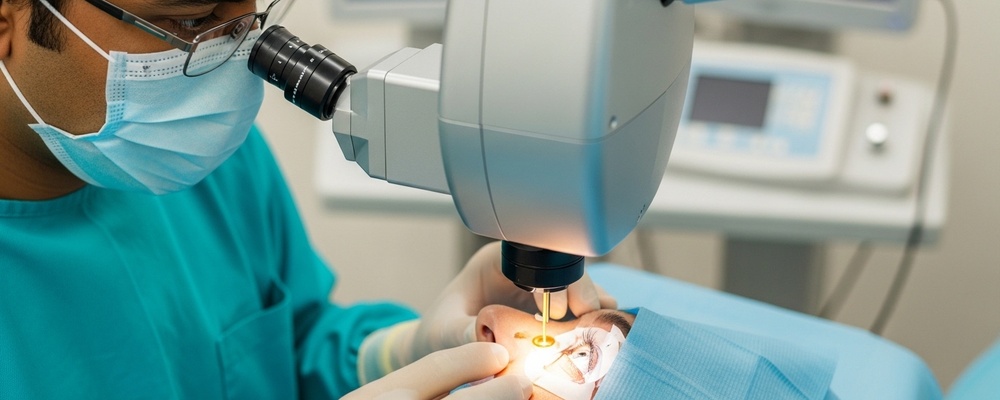
PRK (Photorefractive Keratectomy) & TransPRK (No-Touch) in Hyderabad: Cost, Procedure & Recovery
PRK and TransPRK are advanced laser eye surgeries designed to correct common vision problems like nearsightedness, farsightedness, and astigmatism. These procedures reshape the front surface of your eye, the cornea, to help light focus properly on your retina, reducing or eliminating your need for glasses or contact lenses.
QUICK FACTS
- Procedure Duration: 15-30 minutes
- Anesthesia Type: Topical numbing eye drops
- Recovery Time: Initial vision recovery 3-7 days, full stabilization weeks to months
- Hospital Stay: Daycare / No overnight admission required
UNDERSTANDING THE BASICS
What is PRK (Photorefractive Keratectomy) & TransPRK (No-Touch)?
Your eye works much like a camera, with the cornea acting as the clear front “window” that helps focus light onto the retina at the back. When the cornea isn’t perfectly shaped, light doesn’t focus correctly, leading to blurry vision. PRK (Photorefractive Keratectomy) and TransPRK (No-Touch) are laser vision correction procedures that precisely reshape this corneal surface.
In PRK, the surgeon first gently removes the outermost protective layer of the cornea, called the epithelium. Then, a cool excimer laser is used to reshape the underlying corneal tissue, correcting the vision error. The epithelium naturally grows back over a few days. TransPRK is an even more advanced “no-touch” method where the excimer laser itself removes the epithelial layer and then reshapes the cornea in a single, automated step, without any surgical instrument touching the eye. Both procedures aim to create a smoother, more optimally curved corneal surface, allowing light to focus sharply and giving you clearer vision.
CONDITIONS AND SYMPTOMS
Why is PRK (Photorefractive Keratectomy) & TransPRK (No-Touch) performed?
PRK and TransPRK are performed to correct refractive errors, which are common vision problems caused by the eye’s inability to focus light properly.
Eye Conditions Treated
- Myopia (Nearsightedness): Difficulty seeing distant objects clearly, while close-up vision remains sharp.
- Hyperopia (Farsightedness): Difficulty seeing near objects clearly, though distant vision might be acceptable.
- Astigmatism: Blurred or distorted vision at all distances due to an irregularly shaped cornea, causing light to focus at multiple points.
Symptoms You Might Be Experiencing
- Blurry or hazy vision, especially at certain distances.
- Difficulty seeing road signs, whiteboards, or computer screens clearly.
- Frequent squinting to try and improve focus.
- Headaches or eye strain, particularly after reading or using digital devices.
- Seeing glares or halos around lights at night.
- A strong dependence on glasses or contact lenses for daily activities.
SURGICAL JOURNEY STEP-BY-STEP
How is the PRK (Photorefractive Keratectomy) & TransPRK (No-Touch) Procedure Performed?
Your journey to clearer vision with PRK or TransPRK involves careful preparation, the precise laser procedure, and immediate post-operative care.
1. How to Prepare Before the Procedure
Preparation is key for a successful outcome.
- Comprehensive Eye Exam: You’ll undergo a thorough eye examination to assess your overall eye health, measure your refractive error, and determine if you are a suitable candidate for PRK/TransPRK.
- Contact Lens Holiday: You will be advised to stop wearing contact lenses for a specified period (typically 1-4 weeks) before your consultation and surgery to allow your cornea to return to its natural shape.
- Medication Review: Discuss all medications you are currently taking with your doctor.
- Arrange Transportation: You will not be able to drive yourself home after the procedure, so arrange for a friend or family member to pick you up.
- Avoid Eye Makeup: On the day of your surgery, avoid wearing any eye makeup, lotions, or perfumes.
2. What Happens During the Procedure?
The procedure itself is quick and comfortable.
- Numbing Eye Drops: Your surgeon will administer numbing eye drops to ensure you feel no pain during the procedure. You might feel a slight pressure, but no sharp pain.
- Eye Positioner: A gentle eyelid holder will be placed to keep your eye open and prevent blinking.
- Laser Application: For PRK, the surgeon will manually remove the thin outer layer of your cornea (epithelium). For TransPRK, the laser will perform this step automatically.
- Corneal Reshaping: You will be asked to focus on a target light. The excimer laser will then precisely reshape the underlying corneal tissue, correcting your vision. You will hear clicking sounds and may smell a faint odor, but this is normal.
- Protective Lens: After the laser treatment, a special bandage contact lens will be placed on your eye to protect it and aid in healing.
3. What to Expect Immediately After the Procedure
After your procedure, you’ll be guided through the initial recovery phase.
- Temporary Blurry Vision: Your vision will be blurry immediately after the procedure, similar to looking through fog. This is normal and will gradually improve.
- Mild Discomfort: You may experience mild discomfort, a gritty sensation, or watering eyes, which can be managed with prescribed eye drops and pain medication.
- Eye Protection: You will be given protective sunglasses to wear immediately after the procedure and advised to keep them on to shield your eyes from bright light and dust.
- Rest: It’s crucial to go home and rest your eyes immediately after the surgery. Avoid any strenuous activities.
- Discharge Instructions: You will receive detailed instructions on how to care for your eyes, including when and how to use your prescribed eye drops, and information about your follow-up appointments.
POST-OPERATIVE CARE AND TIMELINE
Recovery and Post-Operative Care
Proper post-operative care is vital for optimal healing and the best visual outcome after PRK or TransPRK.
Do’s and Don’ts:
- DO: Use all prescribed eye drops exactly as instructed by your doctor.
- DO: Wear protective sunglasses outdoors for several weeks to shield your eyes from UV light and glare.
- DO: Get plenty of rest and allow your eyes to heal.
- DO: Attend all scheduled follow-up appointments to monitor your healing progress.
- DON’T: Rub or touch your eyes, especially during the initial healing phase.
- DON’T: Swim, use hot tubs, or expose your eyes to dirty water for at least 2-4 weeks.
- DON’T: Use eye makeup for at least 1-2 weeks.
- DON’T: Engage in strenuous activities or heavy lifting for a few weeks.
- DON’T: Expose your eyes to dust, smoke, or harsh chemicals.
Recovery Timeline:
- Day 1-3: Your vision will be quite blurry, and you may experience moderate discomfort, light sensitivity, and tearing. The protective bandage contact lens remains in place.
- Day 4-7: The epithelial layer of your cornea will typically have healed, and the bandage contact lens will be removed by your doctor. Your vision will start to improve significantly, though it may still fluctuate. Discomfort should lessen considerably.
- Week 2-4: Vision continues to improve and stabilize. You can gradually resume most normal activities, but avoid anything that could impact your eyes. You’ll continue using prescribed eye drops.
- Month 1-6: Your vision will continue to refine and stabilize over several months. Minor fluctuations are normal. Regular follow-up appointments will monitor your long-term progress. Full visual acuity may take longer to achieve compared to other laser procedures.
COST AND INSURANCE COVERAGE IN HYDERABAD
Cost of PRK (Photorefractive Keratectomy) & TransPRK (No-Touch) in Hyderabad & Insurance Options
- Estimated Local Investment: ₹30000 – ₹70000
- Cost Determinants: The final cost of PRK or TransPRK in Hyderabad can vary based on several factors:
- Technology Used: The type of laser technology (e.g., standard vs. advanced wavefront-guided or topography-guided lasers) can influence the price. More sophisticated, customized treatments often cost more.
- Surgeon’s Experience and Reputation: Highly experienced and renowned surgeons may charge higher fees.
- Clinic/Hospital Facilities: The standard of the medical facility, including its infrastructure and post-operative care services, can affect the overall cost.
- Pre-operative Diagnostics: The number and complexity of diagnostic tests required before the procedure.
- Post-operative Care Package: Some clinics include follow-up appointments and medications in their package price, while others may charge separately.
- Complexity of Your Prescription: Higher or more complex refractive errors might sometimes incur slightly different costs.
- Insurance Protocol: PRK and TransPRK are generally considered “elective” or “cosmetic” procedures because they correct vision that can otherwise be managed with glasses or contact lenses. Therefore, they are typically not covered by standard health insurance policies or major TPA networks in India. Patients usually need to cover the cost out-of-pocket. However, it is always advisable to:
- Check with your specific insurance provider: Some corporate health policies or specialized add-on plans might offer partial coverage or reimbursement for refractive surgeries.
- Inquire about financing options: Many clinics offer installment plans or financing solutions to help manage the cost.
FREQUENTLY ASKED QUESTIONS
Frequently Asked Questions About PRK (Photorefractive Keratectomy) & TransPRK (No-Touch)
Q: Is PRK/TransPRK painful?
A: No, numbing eye drops are used before the procedure, so you won’t feel any pain during the laser treatment itself. You might experience mild discomfort, a gritty sensation, or light sensitivity during the initial recovery period.
Q: How long does PRK/TransPRK recovery take?
A: Initial vision recovery, where the surface of your eye heals and the bandage lens is removed, typically takes about 3-7 days. However, your vision will continue to improve and stabilize over several weeks to a few months.
Q: What’s the difference between PRK and TransPRK?
A: In traditional PRK, the surgeon manually removes the outer layer of the cornea (epithelium) before the laser reshapes the underlying tissue. TransPRK is a “no-touch” procedure where the excimer laser performs both the removal of the epithelium and the reshaping of the cornea in one automated step.
Q: Am I a good candidate for PRK/TransPRK?
A: Ideal candidates are typically over 18 years old, have stable vision for at least a year, and have healthy eyes. PRK/TransPRK is often recommended for individuals with thinner corneas or those with certain lifestyle factors that might make LASIK less suitable. A comprehensive eye examination by an ophthalmologist is essential to determine your eligibility.
DISCLAIMER
Disclaimer: This content is curated using artificial intelligence and may contain inaccuracies. It is provided for informational and educational purposes only and should not be considered professional medical advice. Please consult your ophthalmologist for personalized clinical care. The prices listed in this article are indicative only and may vary based on the patient’s specific condition, procedural techniques, surgical complexity, and materials used. We strongly advise discussing actual costs directly with your healthcare provider.