
Phototherapeutic Keratectomy (PTK) in Hyderabad: Cost, Procedure & Recovery
Phototherapeutic Keratectomy (PTK) is an advanced laser eye procedure designed to gently resurface the cornea, the clear front window of your eye. It helps to smooth out irregularities, remove superficial scars, and treat certain corneal conditions to improve vision and reduce discomfort.
QUICK FACTS
- Procedure Duration: 15-30 minutes per eye
- Anesthesia Type: Topical numbing eye drops
- Recovery Time: 3-7 days for initial healing; full vision stabilization over weeks
- Hospital Stay: Daycare / No overnight admission required
UNDERSTANDING THE BASICS
What is Phototherapeutic Keratectomy (PTK)?
Your eye’s outermost layer, the cornea, is like a perfectly clear, smooth dome that helps focus light onto the retina. Sometimes, this dome can develop tiny bumps, scars, or cloudy patches due to injury, infection, or certain genetic conditions. Phototherapeutic Keratectomy (PTK) is a precise laser treatment that uses an excimer laser, the same type of laser used in LASIK, to carefully remove or smooth these superficial imperfections on the cornea. Think of it as a very fine, microscopic sanding process that restores the cornea’s natural, smooth surface, allowing light to pass through clearly again. This intervention specifically modifies the front layers of the cornea to improve its shape and clarity.
CONDITIONS AND SYMPTOMS
Why is Phototherapeutic Keratectomy (PTK) performed?
PTK is performed to address various conditions that affect the cornea’s surface, leading to vision problems or chronic pain.
Eye Conditions Treated
- Recurrent Corneal Erosions: A condition where the outer layer of the cornea (epithelium) repeatedly peels off, causing severe pain.
- Corneal Scars: Superficial scars resulting from injuries, infections, or previous surgeries that cause blurry vision.
- Corneal Dystrophies: Certain genetic conditions, like Reis-Bücklers dystrophy or granular dystrophy, that cause deposits or irregularities on the corneal surface.
- Band Keratopathy: Calcium deposits on the cornea that can cause irritation and reduce vision.
- Irregular Astigmatism: When the corneal surface is uneven, leading to distorted vision.
Symptoms You Might Be Experiencing
- Blurred or Hazy Vision: Difficulty seeing clearly, as if looking through a foggy window.
- Glare and Light Sensitivity (Photophobia): Intense discomfort or difficulty seeing in bright lights.
- Foreign Body Sensation: A persistent feeling of grit, sand, or something in your eye.
- Eye Pain: Sharp, throbbing, or chronic discomfort, especially with recurrent erosions.
- Distorted Vision: Straight lines appearing wavy or objects looking misshapen.
SURGICAL JOURNEY STEP-BY-STEP
How is the Phototherapeutic Keratectomy (PTK) Procedure Performed?
The PTK procedure is a precise and generally comfortable experience, thanks to modern techniques and anesthesia.
1. How to Prepare Before the Procedure
Before your PTK, your ophthalmologist will conduct a thorough eye examination, including detailed corneal mapping and vision tests, to ensure you are a suitable candidate.
- Medical Clearance: You might need a general health check-up to ensure you’re fit for the procedure.
- Medication Review: Discuss all your current medications with your doctor; you may need to stop certain eye drops or oral medications temporarily.
- Contact Lenses: You will be advised to stop wearing contact lenses for a specified period (usually 1-2 weeks) before the procedure to allow your cornea to return to its natural shape.
- Transportation: Arrange for someone to drive you home after the procedure, as your vision will be blurry.
- Fasting: Generally, no fasting is required as only topical anesthesia is used.
2. What Happens During the Procedure?
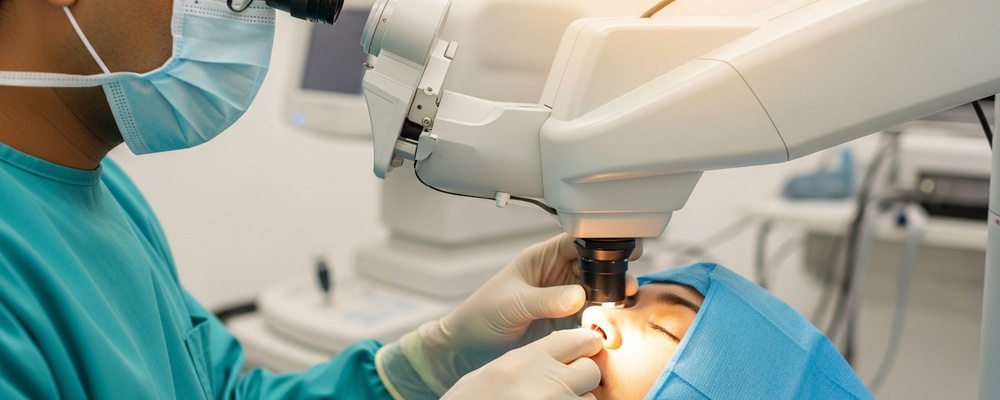
On the day of your PTK, you will be made comfortable in a sterile surgical suite.
- Numbing Drops: Anesthetic eye drops will be applied to completely numb your eye, ensuring you feel no pain during the procedure. You might feel a slight pressure.
- Eyelid Holder: A gentle instrument will be used to keep your eyelids open, preventing blinking.
- Epithelium Removal: The surgeon may carefully remove the very thin outer layer of your cornea (epithelium) to expose the underlying tissue that needs treatment.
- Laser Application: You will be asked to focus on a target light. The excimer laser will then deliver precise pulses of ultraviolet light to reshape and smooth the corneal surface, removing the irregularities or scars. You might hear a clicking sound and smell a faint odor during this process.
- Bandage Contact Lens: A special soft contact lens, called a bandage contact lens, is often placed on your eye at the end of the procedure to protect the healing surface and reduce discomfort.
3. What to Expect Immediately After the Procedure
After your PTK, you will spend a short time in a recovery area before being discharged.
- Initial Discomfort: You may experience some mild to moderate discomfort, a gritty sensation, or tearing, similar to having an eyelash in your eye. This is normal and can be managed with prescribed pain medication.
- Blurry Vision: Your vision will be significantly blurry immediately after the procedure due to the healing process and the bandage contact lens.
- Eye Protection: You will be given protective eye shields or sunglasses to wear to prevent accidental rubbing and protect your eyes from bright light.
- Post-Discharge Instructions: You will receive detailed instructions on how to use prescribed eye drops (antibiotics and anti-inflammatory drops) and how to care for your eye. It’s crucial to follow these instructions diligently.
POST-OPERATIVE CARE AND TIMELINE
Recovery and Post-Operative Care
Proper post-operative care is vital for optimal healing and visual outcomes after PTK.
Do’s:
- Use Eye Drops: Administer all prescribed eye drops exactly as instructed by your doctor.
- Wear Protection: Wear sunglasses outdoors and protective shields at night for the first few days.
- Rest Your Eyes: Avoid strenuous activities, reading, or excessive screen time for the first 24-48 hours.
- Attend Follow-ups: Keep all scheduled follow-up appointments with your ophthalmologist.
- Maintain Hygiene: Wash your hands thoroughly before touching your eyes or applying drops.
Don’ts:
- Rub Your Eyes: Absolutely avoid rubbing or pressing on your treated eye.
- Swim or Use Hot Tubs: Avoid swimming, saunas, or hot tubs for at least 2-4 weeks to prevent infection.
- Wear Eye Makeup: Refrain from using eye makeup for at least 1-2 weeks.
- Drive Immediately: Do not drive until your vision has stabilized and your doctor clears you.
- Lift Heavy Objects: Avoid heavy lifting or bending over for the first few days.
Recovery Timeline:
- Day 1: Significant discomfort, tearing, and blurry vision are common. The bandage contact lens remains in place. You will use prescribed eye drops.
- Week 1: The bandage contact lens is typically removed by your doctor. Discomfort should subside significantly, and vision will start to improve, though it may still fluctuate. You will continue with eye drops.
- Month 1: Vision will continue to stabilize and clarify. Most surface healing is complete. You will likely be tapering off some of your eye drops. Full visual recovery can take several weeks to months as the cornea completely remodels.
COST AND INSURANCE COVERAGE IN HYDERABAD
Cost of Phototherapeutic Keratectomy (PTK) in Hyderabad & Insurance Options
- Estimated Local Investment: ₹20000 – ₹40000
- Cost Determinants: The final cost of Phototherapeutic Keratectomy (PTK) in Hyderabad can vary based on several factors:
- Severity of the Condition: More complex or extensive corneal irregularities may require longer laser time and more intricate planning.
- Surgeon’s Fees: Highly experienced or renowned ophthalmologists may charge higher consultation and procedure fees.
- Hospital Facility: The choice of hospital or eye clinic (e.g., a super-specialty hospital versus a smaller clinic) can influence costs due to differences in infrastructure, technology, and amenities.
- Pre- and Post-Operative Care: The cost may include diagnostic tests, follow-up consultations, and prescribed medications.
- Technology Used: While PTK uses an excimer laser, the specific model or generation of the laser system can sometimes play a minor role in pricing.
- Insurance Protocol: Phototherapeutic Keratectomy (PTK) is generally considered a “Medical Necessity” procedure when performed to treat conditions like recurrent corneal erosions, visually significant corneal scars, or certain corneal dystrophies that cause pain or impair vision. As such, it is often covered by major Third-Party Administrator (TPA) networks and health insurance schemes in India. However, it is crucial to verify the specifics of your individual insurance policy, including coverage limits, deductibles, and pre-authorization requirements, directly with your insurance provider or the hospital’s billing department before the procedure.
FREQUENTLY ASKED QUESTIONS
Frequently Asked Questions About Phototherapeutic Keratectomy (PTK)
Q1: Is PTK a painful procedure?
A1: No, PTK is performed under topical numbing eye drops, so you will not feel pain during the procedure. You might experience some discomfort or a gritty sensation during the initial recovery period.
Q2: How long does it take to see clearly after PTK?
A2: Your vision will be blurry immediately after PTK. Significant improvement typically begins within a week, but full visual clarity and stabilization can take several weeks to a few months as the cornea completely heals.
Q3: Can PTK be performed on both eyes at once?
A3: Generally, PTK is performed on one eye at a time to allow for proper healing and to ensure good vision in the untreated eye during recovery. Your doctor will advise the best approach for your specific case.
Q4: What are the potential risks of PTK?
A4: While generally safe, potential risks include infection, haze, glare, temporary vision fluctuations, and in rare cases, under- or over-correction. Your surgeon will discuss these thoroughly with you.
DISCLAIMER
Disclaimer: This content is curated using artificial intelligence and may contain inaccuracies. It is provided for informational and educational purposes only and should not be considered professional medical advice. Please consult your ophthalmologist for personalized clinical care. The prices listed in this article are indicative only and may vary based on the patient’s specific condition, procedural techniques, surgical complexity, and materials used. We strongly advise discussing actual costs directly with your healthcare provider.