
Microincision Cataract Surgery (MICS) in Hyderabad: Cost, Procedure & Recovery
Microincision Cataract Surgery (MICS) is a modern, gentle procedure to remove cataracts and restore clear vision. It uses tiny incisions to replace your cloudy natural lens with a clear artificial one, helping you see the world sharply again. This advanced technique aims for faster healing and excellent visual outcomes.
QUICK FACTS
- Procedure Duration: 15-30 minutes
- Anesthesia Type: Topical numbing eye drops / Local
- Recovery Time: 24-48 hours
- Hospital Stay: Daycare / No overnight admission required
UNDERSTANDING THE BASICS
What is Microincision Cataract Surgery (MICS)?
Imagine your eye as a camera, and the lens inside is like the camera’s lens. A cataract is when this natural lens becomes cloudy, much like a smudged or foggy camera lens, making your vision blurry and dull. Microincision Cataract Surgery (MICS) is a highly advanced procedure designed to remove this cloudy lens through a tiny incision, typically less than 2.0 mm. After removing the cataract, a new, clear artificial lens (called an Intraocular Lens or IOL) is gently inserted to replace it, restoring your eye’s ability to focus light clearly onto the retina, much like putting a brand new, pristine lens into your camera.
CONDITIONS AND SYMPTOMS
Why is Microincision Cataract Surgery (MICS) performed?
Eye Conditions Treated
- Cataracts (clouding of the eye’s natural lens)
- Presbyopia (age-related difficulty focusing on near objects, when treated with multifocal IOLs)
- Astigmatism (irregular curvature of the cornea or lens, when treated with toric IOLs)
- Myopia (nearsightedness) and Hyperopia (farsightedness) when combined with IOL correction
Symptoms You Might Be Experiencing
- Blurry, cloudy, or dim vision
- Difficulty seeing at night, especially with glare from headlights
- Sensitivity to light and glare
- Fading or yellowing of colors
- Frequent changes in eyeglass or contact lens prescription
- Seeing “halos” around lights
SURGICAL JOURNEY STEP-BY-STEP
How is the Microincision Cataract Surgery (MICS) Procedure Performed?
1. How to Prepare Before the Procedure
- Medical Evaluation: You’ll undergo a thorough eye examination, including measurements of your eye’s size and shape to select the correct artificial lens (IOL). Your general health will also be assessed to ensure you’re fit for surgery.
- Medication Review: Discuss all your current medications with your doctor. You might need to stop certain blood thinners a few days before the surgery.
- Fasting: You will typically be asked to fast (no food or drink) for several hours before the procedure.
- Arrangement for Ride: Arrange for someone to drive you home after the surgery, as your vision will be blurry.
- Hygiene: You may be asked to use special eye drops a few days prior to surgery to minimize infection risk.
2. What Happens During the Procedure?
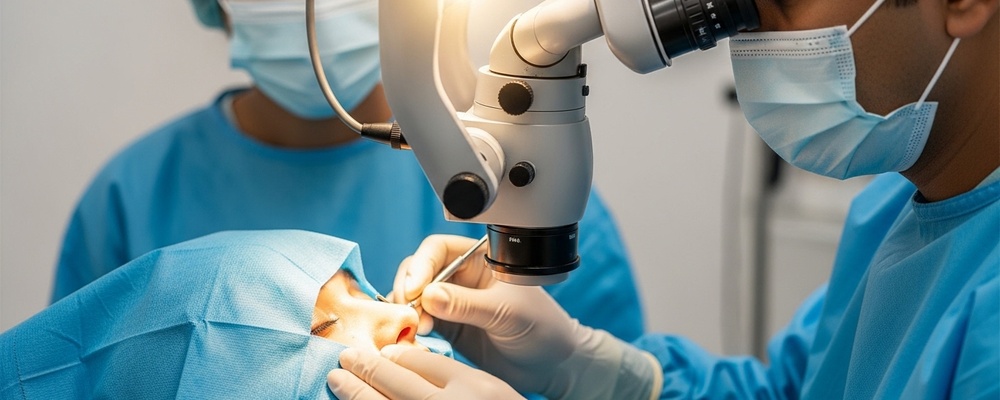
Upon arrival, your eye will be numbed using topical eye drops or a local anesthetic injection, ensuring you feel no pain. You’ll be awake but relaxed. The surgeon will make a tiny incision, usually less than 2.0 mm, at the edge of your cornea. Through this micro-incision, a small probe is inserted that emits ultrasound waves to gently break up the cloudy cataract into tiny fragments. These fragments are then carefully suctioned out. Finally, a new, clear, foldable artificial lens (IOL) is inserted through the same tiny incision and positioned correctly in your eye. The incision is so small that it usually seals itself without stitches.
3. What to Expect Immediately After the Procedure
After the procedure, you’ll rest in a recovery area for a short period. Your eye might be covered with a protective shield or patch. You may experience some mild discomfort, blurriness, or a gritty sensation, which is normal. Your vision will likely be hazy at first, but it will begin to clear within a few hours. You’ll receive instructions on how to use prescribed eye drops and how to protect your eye. It’s crucial to avoid rubbing or pressing on your eye.
POST-OPERATIVE CARE AND TIMELINE
Recovery and Post-Operative Care
- Do’s:
- Use prescribed eye drops exactly as directed to prevent infection and reduce inflammation.
- Wear your protective eye shield, especially while sleeping, for the first few days.
- Rest and avoid strenuous activities, heavy lifting, and bending over.
- Keep your eye clean and dry; avoid getting water directly into your eye while showering.
- Wear sunglasses outdoors to protect your eye from bright light and glare.
- Attend all follow-up appointments with your ophthalmologist.
- Don’ts:
- Do not rub, press, or touch your operated eye.
- Do not swim or use hot tubs for at least a month.
- Avoid eye makeup for several weeks.
- Do not drive until your doctor confirms your vision meets legal requirements.
- Avoid dusty or dirty environments.
- Recovery Timeline:
- Day 1: Initial blurriness starts to clear. You might feel mild irritation. Follow-up appointment with your surgeon.
- Week 1: Vision significantly improves, though minor fluctuations are normal. Most discomfort should subside. You can resume light activities.
- Month 1: Your eye should be largely healed, and vision stabilized. Your doctor will assess your final vision and prescribe new glasses if needed for optimal clarity.
COST AND INSURANCE COVERAGE IN HYDERABAD
Cost of Microincision Cataract Surgery (MICS) in Hyderabad & Insurance Options
- Estimated Local Investment: ₹25000 – ₹100000
- Cost Determinants:
- Type of Intraocular Lens (IOL): Standard monofocal lenses are more affordable. Premium IOLs (e.g., multifocal, toric, extended depth of focus) that correct astigmatism or presbyopia will increase the cost.
- Technology Used: Advanced automated blade-free laser platforms (Femtosecond Laser-Assisted Cataract Surgery or FLACS) can add to the expense compared to traditional phacoemulsification.
- Surgeon’s Experience & Clinic Reputation: Highly experienced surgeons or renowned eye hospitals may have higher fees.
- Pre-operative Tests & Post-operative Care: The extent of diagnostic tests and follow-up care included in the package can vary.
- Hospital Room Choice: Private room options can influence the overall bill.
- Insurance Protocol: Microincision Cataract Surgery (MICS) is generally considered a therapeutic ‘Medical Necessity’ when performed to treat cataracts that impair vision. As such, it is typically covered by major TPA networks, government health schemes, and most private health insurance policies in India. However, the extent of coverage can vary based on your specific policy, the type of IOL chosen (premium lenses might have partial or no coverage), and the hospital network. It is crucial to verify your insurance policy details and obtain pre-authorization from your insurer before the procedure to understand your exact coverage and any out-of-pocket expenses.
FREQUENTLY ASKED QUESTIONS
Frequently Asked Questions About Microincision Cataract Surgery (MICS)
Q: Is Microincision Cataract Surgery (MICS) painful?
A: No, MICS is performed under topical numbing eye drops or local anesthesia, so you will not feel pain during the procedure. You might experience mild pressure or a gritty sensation.
Q: How long does the MICS procedure take?
A: The actual surgery typically takes about 15-30 minutes per eye. You will spend a few hours at the clinic for preparation and post-operative observation.
Q: When can I see clearly after MICS?
A: Many patients notice improved vision within 24-48 hours. Full visual recovery and stabilization usually occur within a month.
Q: Can cataracts return after MICS?
A: No, the cataract itself cannot return because the natural lens is removed. However, a secondary clouding behind the implanted lens (Posterior Capsule Opacification or PCO) can occur, which is easily treated with a quick laser procedure.
DISCLAIMER
Disclaimer: This content is curated using artificial intelligence and may contain inaccuracies. It is provided for informational and educational purposes only and should not be considered professional medical advice. Please consult your ophthalmologist for personalized clinical care. The prices listed in this article are indicative only and may vary based on the patient’s specific condition, procedural techniques, surgical complexity, and materials used. We strongly advise discussing actual costs directly with your healthcare provider.