
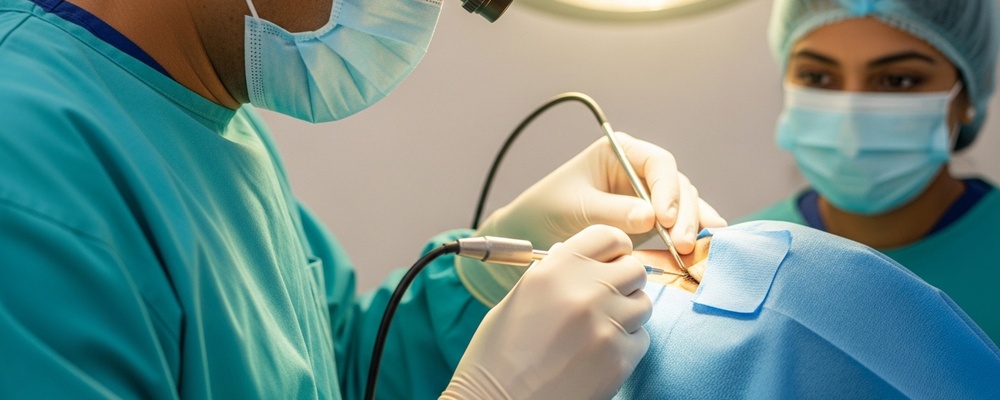
Gas Injection (SF6 or C3F8 endotamponade) in Hyderabad: Cost, Procedure & Recovery
Gas Injection, also known as SF6 or C3F8 endotamponade, is a specialized eye procedure where a tiny gas bubble is carefully placed inside your eye. This bubble acts like an internal bandage, gently pushing a detached retina or closing a macular hole back into its correct position, helping your eye heal and restore vision.
QUICK FACTS
- Procedure Duration: 15-30 minutes
- Anesthesia Type: Local numbing injection or eye drops
- Recovery Time: Functional recovery in 1-2 weeks; gas bubble fully resorbs over several weeks
- Hospital Stay: Daycare / No overnight admission required
UNDERSTANDING THE BASICS
What is Gas Injection (SF6 or C3F8 endotamponade)?
Your eye is filled with a clear, jelly-like substance called vitreous. Behind this vitreous lies the retina, a light-sensitive layer at the back of your eye that works like the film in a camera, sending images to your brain. Sometimes, the retina can detach from its normal position or develop a small hole, severely affecting your vision.
Gas Injection involves carefully introducing a special medical gas (either SF6 or C3F8) into the vitreous cavity of your eye. This gas forms a bubble that floats and presses against the affected area of the retina. Think of it like a tiny, temporary internal splint or bandage that holds the retina in place while it heals and reattaches. Over time, your body naturally absorbs the gas, and the bubble slowly disappears.
CONDITIONS AND SYMPTOMS
Why is Gas Injection (SF6 or C3F8 endotamponade) performed?
This procedure is a crucial treatment for specific conditions affecting the retina, aiming to preserve or restore your sight.
Eye Conditions Treated
- Retinal Detachment: When the retina pulls away from its supporting tissue, leading to blurred vision or vision loss. The gas bubble helps push the retina back into place.
- Macular Hole: A small break in the macula, the central part of the retina responsible for sharp, detailed vision. The gas bubble helps seal the hole.
- Vitreous Hemorrhage: In some cases, after blood is removed from the eye, gas may be used to provide tamponade.
Symptoms You Might Be Experiencing
If you need this procedure, you might notice changes in your vision that include:
- Sudden increase in floaters: Small specks or cobweb-like images drifting across your vision.
- Flashes of light: Seeing sudden bright flashes, especially in your peripheral vision.
- Blurred or distorted vision: Difficulty seeing clearly or straight lines appearing wavy.
- A dark curtain or shadow: A gray or black area appearing in your field of vision, often starting at the side and expanding.
- Central blind spot: A missing area in the center of your vision, particularly with a macular hole.
SURGICAL JOURNEY STEP-BY-STEP
How is the Gas Injection (SF6 or C3F8 endotamponade) Procedure Performed?
Your journey for a Gas Injection procedure is carefully managed to ensure your comfort and the best possible outcome.
1. How to Prepare Before the Procedure
- Medical Evaluation: You will undergo a thorough eye examination and general health check-up to ensure you are fit for the procedure.
- Medication Review: Inform your doctor about all medications you are taking, especially blood thinners, as you might need to stop them a few days before.
- Fasting: You will typically be asked not to eat or drink anything for several hours before the procedure.
- Arranged Transport: Plan for someone to drive you home after the procedure, as your vision will be temporarily affected.
2. What Happens During the Procedure?
The procedure is usually performed in a sterile operating room.
- Numbing: Your eye will be numbed using local anesthetic injections around the eye or strong numbing eye drops, ensuring you feel no pain. You might feel some pressure.
- Preparation: Your eye area will be thoroughly cleaned, and a sterile drape will be placed around your eye. An eyelid holder will gently keep your eye open.
- Gas Injection: The surgeon will make a tiny incision (often self-sealing) in the white part of your eye. A small amount of the special medical gas (SF6 or C3F8) is then carefully injected into the vitreous cavity. Sometimes, a small amount of fluid from the eye is removed at the same time.
- Completion: The tiny incision usually doesn’t require stitches. The entire procedure is quick, typically lasting 15 to 30 minutes.
3. What to Expect Immediately After the Procedure
- Recovery Lounge: After the procedure, you’ll rest in a recovery area for a short period while the anesthesia wears off.
- Eye Protection: Your eye will likely be covered with a patch or shield for protection.
- Vision: Your vision will be very blurry due to the gas bubble. It might look like you are seeing underwater or through a distorted lens. This is normal and will improve as the gas bubble shrinks.
- Discharge: You will receive detailed instructions for post-operative care and can usually go home the same day.
POST-OPERATIVE CARE AND TIMELINE
Recovery and Post-Operative Care
Following your doctor’s instructions precisely is vital for a successful recovery.
Do’s:
- Maintain Head Positioning: You will be given specific instructions on head positioning (e.g., face down, on your side) to ensure the gas bubble presses on the correct part of your retina. This is extremely important.
- Use Eye Drops: Administer prescribed eye drops diligently to prevent infection and reduce inflammation.
- Wear Eye Shield: Protect your eye with the provided shield, especially while sleeping.
- Attend Follow-up Appointments: Keep all scheduled appointments with your ophthalmologist to monitor your healing.
Don’ts:
- Do Not Fly: Avoid air travel or going to high altitudes until the gas bubble is completely gone, as changes in pressure can cause the bubble to expand and damage your eye.
- Do Not Rub Your Eye: Avoid touching or rubbing your treated eye.
- Avoid Strenuous Activities: Refrain from heavy lifting, bending, or vigorous exercise for several weeks.
- Avoid Swimming: Stay out of swimming pools and hot tubs to prevent infection.
Recovery Timeline:
- Day 1: Your vision will be very blurry, and you’ll need to strictly follow head positioning instructions. Mild discomfort is normal.
- Week 1: The gas bubble will start to shrink, and you might notice a distinct line in your vision as the bubble gets smaller. Your vision will gradually improve, but still be blurry. Continue head positioning and eye drops.
- Month 1: The gas bubble typically resorbs completely within 2-8 weeks, depending on the type of gas used. As it disappears, your vision will clear up significantly. Your doctor will assess the reattachment of your retina. Full visual recovery can take several months.
COST AND INSURANCE COVERAGE IN HYDERABAD
Cost of Gas Injection (SF6 or C3F8 endotamponade) in Hyderabad & Insurance Options
- Estimated Local Investment: ₹40000 – ₹60000
- Cost Determinants: The final cost can vary based on several factors:
- Hospital Choice: The facility where the procedure is performed (e.g., private hospital vs. larger institution).
- Surgeon’s Fees: The experience and reputation of the ophthalmologist.
- Type of Gas Used: SF6 and C3F8 gases have different properties and costs.
- Additional Procedures: If other treatments (like laser or cryopexy) are needed alongside the gas injection.
- Pre- and Post-Operative Care: The extent of diagnostic tests and follow-up visits.
- Insurance Protocol: Gas Injection (SF6 or C3F8 endotamponade) is generally considered a therapeutic ‘Medical Necessity’ for conditions like retinal detachment or macular holes. As such, it is typically covered by major TPA (Third-Party Administrator) networks and health insurance schemes in India. However, it is crucial to verify your specific policy details and coverage limits directly with your insurance provider or the hospital’s billing department before the procedure to understand any co-pays, deductibles, or exclusions.
FREQUENTLY ASKED QUESTIONS
Frequently Asked Questions About Gas Injection (SF6 or C3F8 endotamponade)
Q1: How long does the gas bubble stay in my eye?
A1: The gas bubble typically lasts between 2 to 8 weeks, depending on the type of gas (SF6 or C3F8) used. Your body gradually absorbs it over time.
Q2: Can I travel by air after a gas injection?
A2: No, you must avoid air travel and high altitudes until the gas bubble has completely disappeared, as changes in atmospheric pressure can cause the bubble to expand and harm your eye.
Q3: Will my vision be blurry after the procedure?
A3: Yes, your vision will be very blurry immediately after the procedure due to the gas bubble. It will gradually clear as the bubble shrinks and is absorbed by your body.
Q4: Is the gas injection procedure painful?
A4: The procedure is performed under local anesthesia, so you should not feel any pain during the injection. You might experience some mild discomfort or pressure, but significant pain is uncommon.
DISCLAIMER
Disclaimer: This content is curated using artificial intelligence and may contain inaccuracies. It is provided for informational and educational purposes only and should not be considered professional medical advice. Please consult your ophthalmologist for personalized clinical care. The prices listed in this article are indicative only and may vary based on the patient’s specific condition, procedural techniques, surgical complexity, and materials used. We strongly advise discussing actual costs directly with your healthcare provider.