
Deep Sclerectomy (Simple or CO2 Laser Assisted) in Hyderabad: Cost, Procedure & Recovery
Deep Sclerectomy is a gentle, advanced eye surgery designed to treat glaucoma by improving how fluid drains from your eye. This procedure helps lower eye pressure without fully entering the eye, offering a safer way to protect your vision. It can be performed using traditional methods or with the added precision of a CO2 laser.
QUICK FACTS
- Procedure Duration: 15-30 minutes
- Anesthesia Type: Topical numbing eye drops / Local
- Recovery Time: 24-48 hours
- Hospital Stay: Daycare / No overnight admission required
UNDERSTANDING THE BASICS
What is Deep Sclerectomy (Simple or CO2 Laser Assisted)?
Think of your eye as a tiny balloon filled with fluid. For healthy vision, this fluid needs to drain out at a steady rate, like water leaving a sink. In glaucoma, this drainage system gets clogged, causing pressure to build up inside your eye, which can harm your optic nerve.
Deep Sclerectomy is a special surgery that creates a new, very tiny “drainage channel” in the white outer wall of your eye (the sclera). Unlike some other surgeries, it doesn’t create a full-thickness hole into the eye. Instead, it thins the sclera and creates a small pocket or “filter” just under the surface, allowing fluid to seep out more easily and gently. This helps to reduce the pressure inside your eye. When assisted by a CO2 laser, this process can be even more precise, using light energy to carefully create this new drainage pathway.
CONDITIONS AND SYMPTOMS
Why is Deep Sclerectomy (Simple or CO2 Laser Assisted) performed?
Eye Conditions Treated
- Primary Open-Angle Glaucoma (when eye drops or laser treatments aren’t enough)
- Ocular Hypertension (high eye pressure that needs to be lowered to prevent glaucoma)
- Certain types of Secondary Glaucoma
Symptoms You Might Be Experiencing
Glaucoma is often called the “silent thief of sight” because it usually doesn’t cause noticeable symptoms in its early stages. However, if your glaucoma has progressed or if your eye pressure is very high, you might experience:
- Gradual loss of peripheral (side) vision, often unnoticed until significant damage occurs.
- Tunnel vision in advanced stages.
- Rarely, severe eye pain, headache, blurred vision, or halos around lights (more common in acute angle-closure glaucoma, but high pressure from open-angle can sometimes cause discomfort).
- The need for Deep Sclerectomy is typically identified during routine eye exams due to elevated eye pressure or signs of optic nerve damage, rather than by symptoms you feel.
SURGICAL JOURNEY STEP-BY-STEP
How is the Deep Sclerectomy (Simple or CO2 Laser Assisted) Procedure Performed?
1. How to Prepare Before the Procedure
- Undergo a comprehensive eye examination and review of your medical history.
- Discuss all medications you are taking with your doctor; you may need to stop certain blood thinners as advised.
- Arrange for someone to drive you home after the procedure.
- You might be asked to fast for a few hours before surgery, depending on the type of anesthesia.
- Avoid wearing eye makeup, lotions, or perfumes on the day of your surgery.
- Follow all specific pre-operative instructions provided by your surgeon.
2. What Happens During the Procedure?
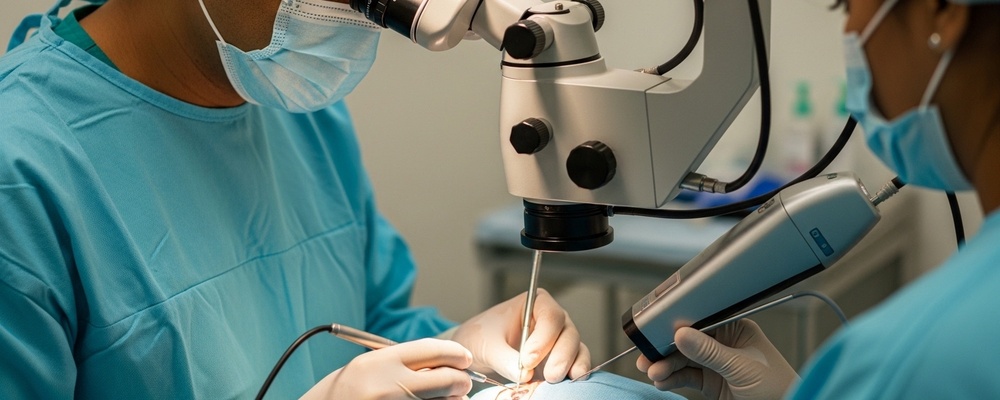
You will be made comfortable in the operating room. Numbing eye drops or a local anesthetic injection will be administered to ensure you feel no pain. A mild sedative may also be given to help you relax. Your eye area will be gently cleaned, and a sterile drape will be placed around your eye. A small eyelid holder will keep your eye open during the surgery.
Using a specialized microscope, the surgeon will make a very precise, partial-thickness incision in the white part of your eye (the sclera). A small, thin flap is created, and a tiny window is made underneath it. This allows the fluid inside your eye to filter out into a small space just beneath the conjunctiva (the clear membrane covering the white of your eye), reducing pressure. If CO2 laser-assisted, the laser will be used to precisely create or refine this drainage pathway, enhancing accuracy. The scleral flap is then carefully closed with very fine stitches, or sometimes left partially open, to regulate fluid flow. Antibiotic and anti-inflammatory eye drops are applied at the end. The entire procedure is designed to be gentle and minimize disruption to the internal structures of your eye.
3. What to Expect Immediately After the Procedure
After the procedure, you will rest in a recovery area for a short period. Your eye will likely be covered with a protective shield or patch. It’s normal to experience some mild discomfort, blurriness, or a gritty sensation in your eye. You will receive detailed instructions on how to use your prescribed eye drops, activity restrictions, and when to attend your follow-up appointments. It is crucial not to rub or press on your treated eye. You will be discharged the same day, but it is essential to have someone drive you home.
POST-OPERATIVE CARE AND TIMELINE
Recovery and Post-Operative Care
Following your Deep Sclerectomy, careful post-operative care is vital for successful healing and optimal results.
Do’s:
- Use all prescribed eye drops exactly as directed by your surgeon.
- Wear your protective eye shield, especially at night and during naps, for the recommended period.
- Attend all scheduled follow-up appointments to monitor your healing and eye pressure.
- Rest and avoid strenuous activities, heavy lifting, or bending over.
- Keep your eye clean and dry, gently dabbing around it if needed.
Don’ts:
- Do not rub, press, or touch your treated eye.
- Do not engage in activities that could cause impact to your eye.
- Do not swim, use hot tubs, or expose your eye to dirty water.
- Do not wear eye makeup for several weeks, as advised by your doctor.
- Do not allow water directly into your eye when showering or bathing.
Recovery Timeline:
- Day 1: Your vision will likely be blurry, and you may experience mild discomfort. You will have your first follow-up appointment to check your eye pressure and assess initial healing.
- Week 1: Vision will gradually start to improve, though some blurriness may persist. Continue using your eye drops diligently. Avoid activities that increase eye pressure.
- Month 1: Most initial healing will have occurred, and your eye pressure should be stabilizing. Your doctor will assess the success of the surgery and adjust your eye drop regimen if necessary. Full visual recovery can take longer, and regular follow-ups are essential to monitor long-term success and maintain eye health.
COST AND INSURANCE COVERAGE IN HYDERABAD
Cost of Deep Sclerectomy (Simple or CO2 Laser Assisted) in Hyderabad & Insurance Options
- Estimated Local Investment: ₹40000 – ₹60000
- Cost Determinants: The final cost of Deep Sclerectomy can vary based on several factors:
- Whether the procedure is performed as a simple Deep Sclerectomy or with CO2 laser assistance.
- The experience and reputation of your chosen ophthalmologist.
- The hospital facility, its technology, and the level of amenities provided.
- The extent of pre-operative diagnostic tests required.
- The specific post-operative medications and the number of follow-up visits included.
- Any additional medical conditions or complexities that may arise during the procedure.
- Insurance Protocol: Deep Sclerectomy is a therapeutic ‘Medical Necessity’ performed to manage glaucoma, a serious medical condition that can lead to irreversible vision loss. As such, it is typically covered by most major Third-Party Administrator (TPA) networks and health insurance schemes in India. It is crucial to contact your insurance provider or the hospital’s insurance desk well in advance to understand your specific policy terms, coverage limits, any applicable waiting periods, and the availability of cashless facilities. Pre-authorization from your insurance company is often required before the procedure.
FREQUENTLY ASKED QUESTIONS
Frequently Asked Questions About Deep Sclerectomy (Simple or CO2 Laser Assisted)
Q1: Is Deep Sclerectomy painful?
A1: No, the procedure is performed under local anesthesia or numbing eye drops, so you will not feel any pain during the surgery. Mild discomfort or a gritty sensation may be present during recovery.
Q2: How long does it take to recover full vision after Deep Sclerectomy?
A2: While initial recovery is quick (days to a week), your vision may be blurry for several weeks as your eye heals and adjusts to the new fluid drainage. Full stabilization can take a month or more.
Q3: Is Deep Sclerectomy a permanent solution for glaucoma?
A3: Deep Sclerectomy effectively lowers eye pressure and helps manage glaucoma, but it does not cure the condition. Regular follow-ups are essential to monitor eye pressure and overall eye health long-term.
Q4: What are the risks associated with Deep Sclerectomy?
A4: Deep Sclerectomy is generally considered safer than penetrating surgeries. Potential risks are low but can include temporary blurriness, mild inflammation, infection (rare), or the need for further intervention if eye pressure isn’t adequately controlled. Your surgeon will discuss all potential risks.
DISCLAIMER
Disclaimer: This content is curated using artificial intelligence and may contain inaccuracies. It is provided for informational and educational purposes only and should not be considered professional medical advice. Please consult your ophthalmologist for personalized clinical care. The prices listed in this article are indicative only and may vary based on the patient’s specific condition, procedural techniques, surgical complexity, and materials used. We strongly advise discussing actual costs directly with your healthcare provider.