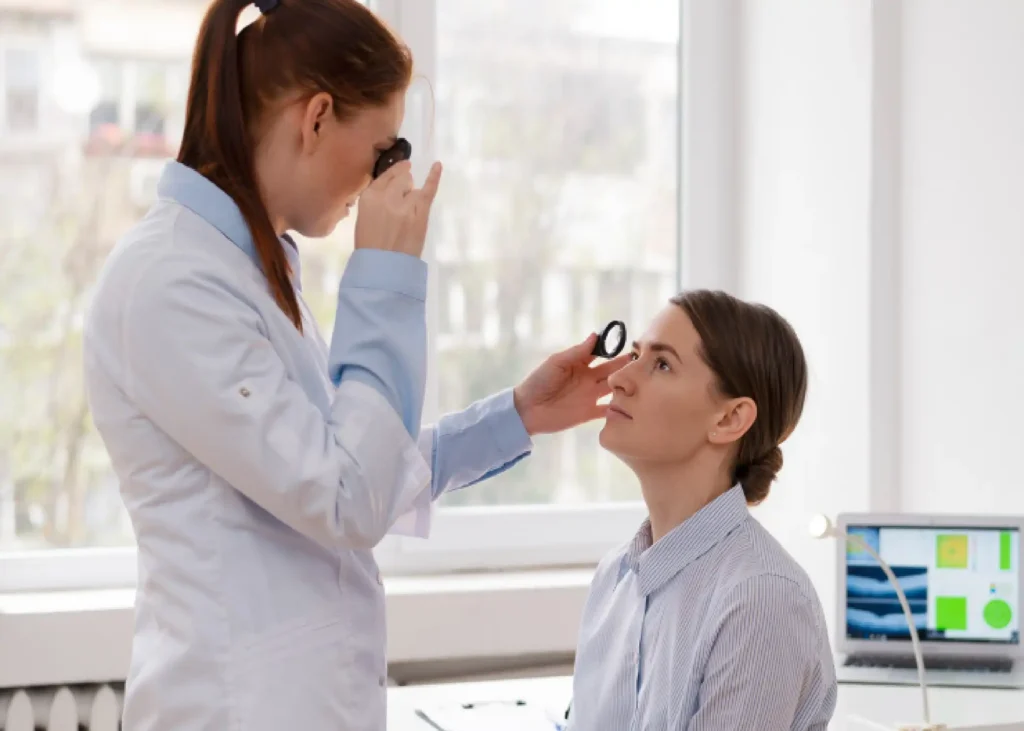
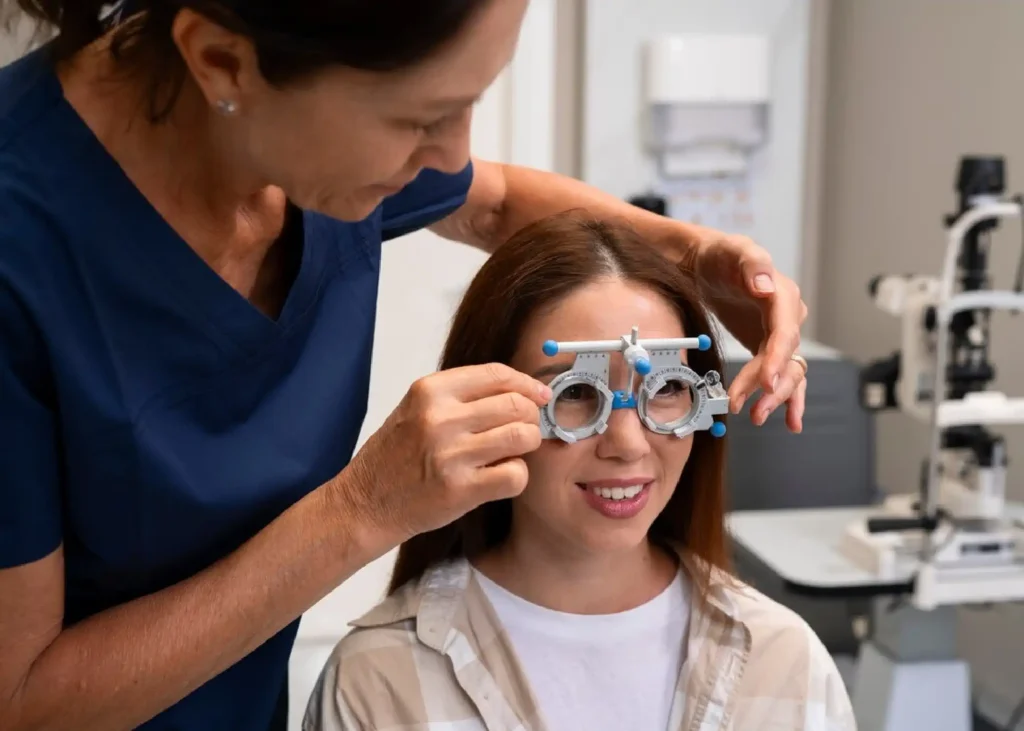
A LASIK consultation is a detailed eye and health evaluation to check whether laser vision correction is safe and suitable for you. It usually includes a full eye exam, specialized scans to map and measure your cornea, tests for dry eyes, and a careful discussion of your lifestyle, expectations, and medical history. Not everyone is a good candidate, and that is exactly what the consultation helps decide. You should go in prepared with questions about safety, alternatives, expected results, side effects, and long-term care.
If you’re thinking about LASIK, the consultation is the most important step. This is where we don’t just check “Can we do LASIK?” but “Should we do LASIK on your eyes?”
As a refractive surgeon, I often tell patients: the quality of your consultation is just as important as the quality of the laser.
In this article, we’ll walk through:
- What actually happens during a LASIK consultation
- The key tests and why they matter
- Who may not be a good candidate
- The most useful questions you should ask your doctor
By the end, you’ll know exactly what to expect and how to walk into your appointment feeling confident and prepared.

Before the Day of Your LASIK Consultation
Your preparation starts before you reach the clinic.
Most LASIK centres will ask you to:
- Stop wearing soft contact lenses for several days to a couple of weeks before the visit (rigid or hard lenses often need a longer break). This allows the cornea to return to its natural shape so measurements are accurate. (visualaidscentre.com)
- Bring your current glasses and older prescriptions, if you have them.
- Carry a list of your medications and eye drops.
- Note any eye symptoms (dryness, burning, glare at night, fluctuating vision) so you don’t forget to mention them.
If you might have your pupils dilated, arrange for someone to drive you home or plan for public transport, because things may look blurry and lights will seem brighter for a few hours.
Step 1: Conversation About You, Your Health, and Your Lifestyle
A good LASIK consultation always starts with a detailed history. This is not “just paperwork”; it guides every decision we make.
Your doctor or optometrist will ask about:
- Your vision history
- How long you’ve worn glasses or lenses
- Whether your power has been stable in the last 1–2 years
- Any previous eye injuries or surgeries
- Your general health
- Diabetes, thyroid problems, autoimmune diseases (like rheumatoid arthritis, lupus)
- Skin conditions like severe eczema or rosacea
- Medications such as isotretinoin (for acne), steroids, or immunosuppressants
Some conditions can affect healing or increase dryness, making LASIK riskier. (NCBI)
- Your lifestyle and work
- Do you work long hours on screens?
- Do you play contact sports or have a job with high risk of eye trauma?
- Do you often drive at night?
- Are you in a profession where even a small visual issue could be a big problem (pilots, professional drivers, certain military roles)?
- For women
- Current pregnancy or breastfeeding
- Plans for pregnancy in the near future
Pregnancy and breastfeeding can temporarily change your prescription and affect dryness, so LASIK is usually postponed in these situations. (NCBI)
This part of the consultation can feel like a long Q&A, but it’s crucial. Honest, detailed answers help your doctor protect your eyes and choose the safest path.
Step 2: Basic Eye Examination

Next comes a full eye exam, similar to a detailed check-up you’d have in a regular eye clinic, but more focused on surgery planning.
This usually includes:
- Visual acuity test (reading letters on a chart) with and without glasses
- Refraction – measuring your exact power, including any astigmatism, using both a machine and the traditional “Which is clearer, 1 or 2?” method
- Slit-lamp examination – a microscope exam of your eyelids, tear film, cornea, lens, and front part of the eye
- Eye pressure measurement – to rule out glaucoma or other pressure-related issues
- Retinal examination – often done after dilating your pupils with drops, to check the back of the eye for any retinal tears, thinning, or other problems (American Academy of Ophthalmology)
Dilation drops can cause temporary light sensitivity and blurred near vision, but they allow us to see your retina clearly and check that there is no silent disease that could affect your vision later.
Step 3: Special LASIK Tests – Looking Deeper at Your Cornea
This is what makes a LASIK consultation different from a routine eye exam. We do a set of specialized tests to study the shape, strength, and surface of your cornea (the clear front window of the eye).
1. Corneal Topography and Tomography
This is a detailed map of your cornea. Think of it like a 3D contour map showing hills and valleys.
- It tells us how curved or irregular your cornea is
- It helps detect hidden conditions like early keratoconus (a disease where the cornea thins and bulges)
- It guides us in planning where and how to reshape the cornea with the laser (EyeWiki)
If your topography shows suspicious patterns, LASIK may be unsafe, and your doctor might suggest an alternative like PRK or may advise against surgery altogether.
2. Pachymetry – Measuring Corneal Thickness
LASIK works by removing a small amount of corneal tissue to reshape it. If your cornea is too thin, removing tissue can weaken it and increase the risk of complications like corneal ectasia (progressive forward bulging). (Dr Agarwals Eye Hospital)
Pachymetry is a painless test that measures corneal thickness in microns (µm). Many modern scanners combine topography + pachymetry in one device.
We use this measurement to:
- Calculate how much tissue can safely be removed
- Decide whether you are better suited for LASIK, surface procedures like PRK, or other options
3. Pupil Size Measurement
Your pupil size in low light is important because large pupils can increase the risk of night vision symptoms like halos and glare after LASIK, especially in certain prescriptions. (NCBI)
A simple machine measures your pupil diameter in millimetres under dim lighting.
4. Tear Film and Dry Eye Assessment
Dry eye is one of the most common complaints after LASIK, and some people already have dryness before surgery without realizing it. (EyeWiki)
Your doctor may:
- Ask about dryness symptoms (burning, grittiness, fluctuating vision)
- Examine your tear film at the slit lamp
- Perform simple tests like tear break-up time or Schirmer’s test (checking how quickly your tears evaporate or how much you produce)
If your eyes are significantly dry, we usually treat the dryness first or recommend a different procedure.
5. Wavefront or Aberrometry (In Some Centres)

Some clinics perform wavefront analysis, which measures subtle optical imperfections in the eye called “aberrations.” This can help plan customized treatments in selected patients. (NCBI)
Not every centre uses this technology, but if yours does, they will explain how it might benefit you.
Step 4: Are You a Good LASIK Candidate?
After these tests, your ophthalmologist will bring all the information together and discuss whether LASIK is appropriate for you.
You’re more likely to be a good candidate if:
- You are an adult (usually over 18) and your power has been stable for at least 1–2 years
- Your cornea is healthy and thick enough
- Your prescription is within safe treatable limits
- You do not have significant eye disease (like advanced dry eye, keratoconus, uncontrolled glaucoma)
- You are not pregnant or breastfeeding
- You have realistic expectations – understanding that no surgery is 100% risk-free and you may still need glasses in some situations (American Academy of Ophthalmology)
LASIK may not be recommended if:
- Your corneas are too thin or irregular
- You have keratoconus or other corneal diseases
- Your prescription is still changing
- You have severe dry eye that is not responding to treatment
- You have certain autoimmune diseases or uncontrolled diabetes
- You have unrealistic expectations (for example, expecting “superhuman” vision without any chance of halos, dryness, or future glasses) (U.S. Food and Drug Administration)
This can sometimes be disappointing to hear, but it’s ultimately about keeping your eyes healthy for the long term.
Step 5: Discussing Benefits, Risks, and Alternatives
A responsible LASIK consultation will always include a clear, honest risk–benefit discussion.
Benefits
Your doctor will explain how LASIK can:
- Reduce or eliminate dependence on glasses or contact lenses
- Provide quick visual recovery (often within 24–48 hours for many people)
- Offer stable, long-term correction for many prescriptions
Most patients are satisfied with their results when they are properly selected and counselled. (U.S. Food and Drug Administration)
Risks and Possible Side Effects
Like any surgery, LASIK has risks. Common potential issues discussed include:
- Dry eye symptoms, especially in the first few months
- Night vision symptoms such as halos, glare, or starbursts around lights
- Under-correction or over-correction (needing a fine-tuning enhancement later)
- Flap-related issues (rare with modern techniques)
- Infection or inflammation (rare but serious)
- Corneal ectasia in a small number of eyes that were biomechanically vulnerable (U.S. Food and Drug Administration)
In recent years, there has also been more public discussion about long-term LASIK safety and the importance of truly informed consent. Some experts have called for stronger patient information and checklists so people clearly understand possible lasting symptoms before choosing surgery. (U.S. Food and Drug Administration)
Alternatives to LASIK
A thorough consultation should not feel like a sales pitch. Your doctor should also talk about alternatives, such as:
- PRK / surface ablation – similar laser reshaping but done on the corneal surface, often used in thinner corneas or certain professions
- SMILE – a different type of laser keyhole procedure in suitable cases
- Phakic IOL / ICL (implantable contact lens) – lens placed inside the eye for very high powers or unsuitable corneas
- Simply continuing with glasses or contact lenses
The right choice depends on your eyes, your prescription, and your priorities.
What Questions Should You Ask at a LASIK Consultation?
Many patients leave their first visit saying, “I wish I had known what to ask.” Bringing a written list (in your phone notes is fine) can really help.
Here are practical questions you may want to ask, grouped by topic. You do not have to ask every single one; pick the ones that fit your concerns.

1. Questions About Your Candidacy and Safety
- Am I a good candidate for LASIK? Why, or why not?
- Are there any findings in my tests (corneal thickness, topography, dryness, retina) that concern you?
- Is there any condition in my eyes that increases my risk of complications?
- Would you personally recommend this surgery for a family member with eyes like mine?
These questions help you understand how carefully your doctor has evaluated your risk profile. (U.S. Food and Drug Administration)
2. Questions About the Surgeon and the Centre
- Who will actually perform my surgery – you or someone else?
- How many LASIK procedures do you perform in a typical month or year?
- What type of laser technology do you use? Is it blade-free (femtosecond) or microkeratome?
- What are your typical success rates and enhancement (touch-up) rates for patients like me?
This is not about interrogating your doctor; it’s about understanding their experience and the systems they have in place.
3. Questions About the Procedure Itself
- What exactly will happen on the day of surgery, step by step?
- Will both eyes be treated on the same day?
- How long will the procedure take?
- Will I feel pain during or after the surgery?
- What kind of anaesthesia do you use (usually numbing drops, sometimes mild tablets)?
The more clearly you understand the process, the less anxious you’ll feel.
4. Questions About Results and Expectations
- What level of vision can I realistically expect after LASIK given my current power?
- Is it likely that I will still need glasses for some activities (like night driving or reading later in life)?
- How soon will I be able to return to work, drive, or exercise?
- What happens if I am not happy with my vision after surgery?
Patients often assume “20/20 or better forever” is guaranteed; your doctor should gently correct any unrealistic expectations. (American Academy of Ophthalmology)
5. Questions About Risks, Complications, and Side Effects
- What side effects are common in the first few weeks (such as dryness or halos), and how are they managed?
- What are the serious but rare risks, and how often do they happen in your practice?
- What will you do if I develop a complication?
- What is your policy if I need an enhancement or extra treatment later?
Don’t be shy about asking your doctor to slow down or repeat information until it is clear.
6. Questions About Aftercare, Long-Term Follow-Up, and Costs
- How many follow-up visits will I need, and when?
- Who will see me at these visits (you or another doctor/optometrist)?
- What restrictions will I have after surgery (swimming, makeup, sports, screen time)? For how long?
- What does the quoted price include – all follow-ups, medicines, possible enhancements?
- Are there extra charges if I need additional treatments later?
Transparency about cost and follow-up helps you avoid unpleasant surprises.
How to Get the Most Out of Your LASIK Consultation
To make your consultation truly useful:
- Go in with a learning mindset, not a shopping mindset. You’re there to find out if LASIK is right for you, not to “buy” a procedure that day.
- Bring your questions in writing. It’s easy to forget them when you’re nervous.
- Be honest about your symptoms. Don’t hide dryness or fluctuating vision just because you’re eager for surgery – these details help us protect your eyes.
- Share your lifestyle needs. For example, if you drive at night, play professional sports, or work long hours at a computer, mention it.
- Take your time with the consent form. Ask to read it slowly and clarify anything that worries you.
If something doesn’t feel right – if you feel rushed, pressured, or your questions are brushed aside – it’s reasonable to seek a second opinion. The FDA and professional bodies encourage patients to have adequate time and information before deciding on LASIK. (U.S. Food and Drug Administration)
When Should You See an Eye Doctor Urgently?
This article is mainly about elective LASIK consultations, but it’s important to remember: some eye symptoms should never wait.
Seek urgent eye care (emergency room or eye hospital) if you notice:
- Sudden loss or dark curtain over your vision
- A shower of new floaters or flashes of light
- Severe eye pain with redness and blurred vision
- Eye injury or chemical splash
These are emergencies, whether or not you are considering LASIK.
Final Thoughts – Your Consultation Is Not a Commitment

A LASIK consultation is a fact-finding mission for both you and your doctor.
By the end of it, you should have:
- A clear answer on whether you are a suitable candidate
- An honest explanation of the benefits and real-world risks for your eyes
- An understanding of alternatives like PRK, SMILE, or simply continuing with glasses or contact lenses
- Enough information to make a calm, informed decision in your own time
Many patients do choose LASIK and are very happy. Others discover they’re better suited for a different procedure—or decide to wait. All of these are valid outcomes.
If you’re considering LASIK or simply want to know your options, schedule a comprehensive eye examination with an ophthalmologist who takes the time to talk through your questions. Bring this list along, and don’t hesitate to say, “I need you to explain that again.”
Your eyes are healthy now; any elective surgery must keep them that way for the long term.
References
- American Academy of Ophthalmology – LASIK: Laser Eye Surgery (patient information). (American Academy of Ophthalmology)
- U.S. Food and Drug Administration – LASIK Surgery Checklist & Patient Information. (U.S. Food and Drug Administration)
- EyeWiki (American Academy of Ophthalmology) – Preoperative Evaluation for LASIK Surgery. (EyeWiki)
- StatPearls – Laser In Situ Keratomileusis (LASIK): indications, preoperative screening, and complications. (NCBI)
- American Academy of Ophthalmology – Questions to Ask When Considering LASIK. (American Academy of Ophthalmology)