When you choose a LASIK clinic in Hyderabad (or anywhere in India), don’t focus only on price or “latest laser” claims. Look at how carefully they check your suitability, who your surgeon is, what technology and safety systems they use, whether they have their own dedicated LASIK suite or depend on shared equipment, how honestly they discuss risks, and how clearly they explain costs and follow-up. Comparing 2–3 centres on these points will help you choose a place that is safe, transparent, and truly patient-centred.
As a refractive surgeon, I often tell patients: LASIK is optional, but its effects are permanent.
The decision is not just “Should I do LASIK?” but also “Where, and with which surgeon?”
Hyderabad, like many major Indian cities, has a large number of centres advertising LASIK with attractive offers: heavy discounts, “same-day LASIK,” EMI schemes, and promises of “throwing away your glasses forever.” It is easy to feel rushed or confused.
But LASIK is not a gadget purchase. You are making a medical decision about your only pair of eyes.
In this article, I’ll walk you through what to inspect and compare when choosing a LASIK clinic in Hyderabad (or anywhere in India), with a focus on real-world, local decision-making rather than just technical jargon.
Image suggestion: Wide shot of Hyderabad skyline with an eye hospital building in the foreground.
First, a quick refresher: what LASIK actually does

LASIK (Laser-Assisted In Situ Keratomileusis) is a type of refractive surgery in which a laser reshapes the clear front surface of your eye, the cornea, so that light focuses more accurately on the retina. This can reduce or sometimes remove your dependence on glasses or contact lenses.(AAO)
In most LASIK procedures:
- A thin flap is created in the cornea (using a blade or a femtosecond laser).
- An excimer laser reshapes the underlying corneal tissue.
- The flap is placed back and the cornea heals over time.
Important realities:
- LASIK can reduce dependence on glasses, but it does not guarantee “perfect” vision in every situation.
- It does not stop natural ageing of the eye, such as needing reading glasses after around 40–45 (presbyopia).(Mayo Clinic)
- Not everyone is a safe candidate; suitability depends on corneal thickness and shape, stability of spectacle power, eye health, and general health.(EyeWiki)
A good clinic will be ready to say “No, LASIK isn’t the best option for your eyes” and discuss alternatives (PRK, SMILE, phakic IOLs, or simply continuing with glasses or lenses) when needed.
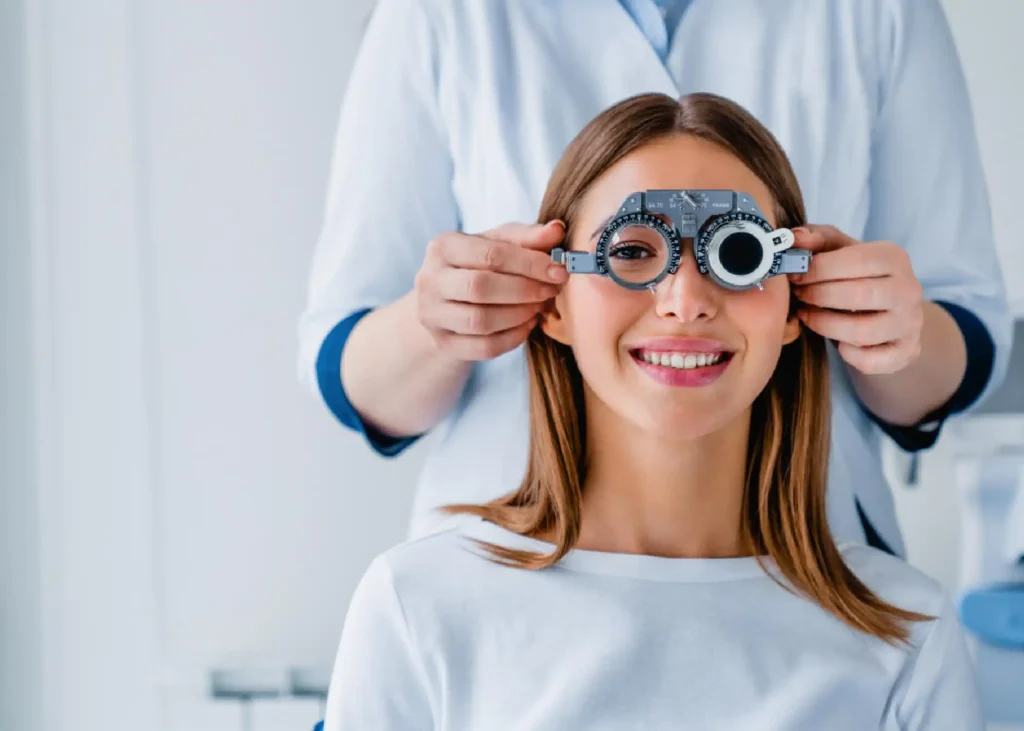
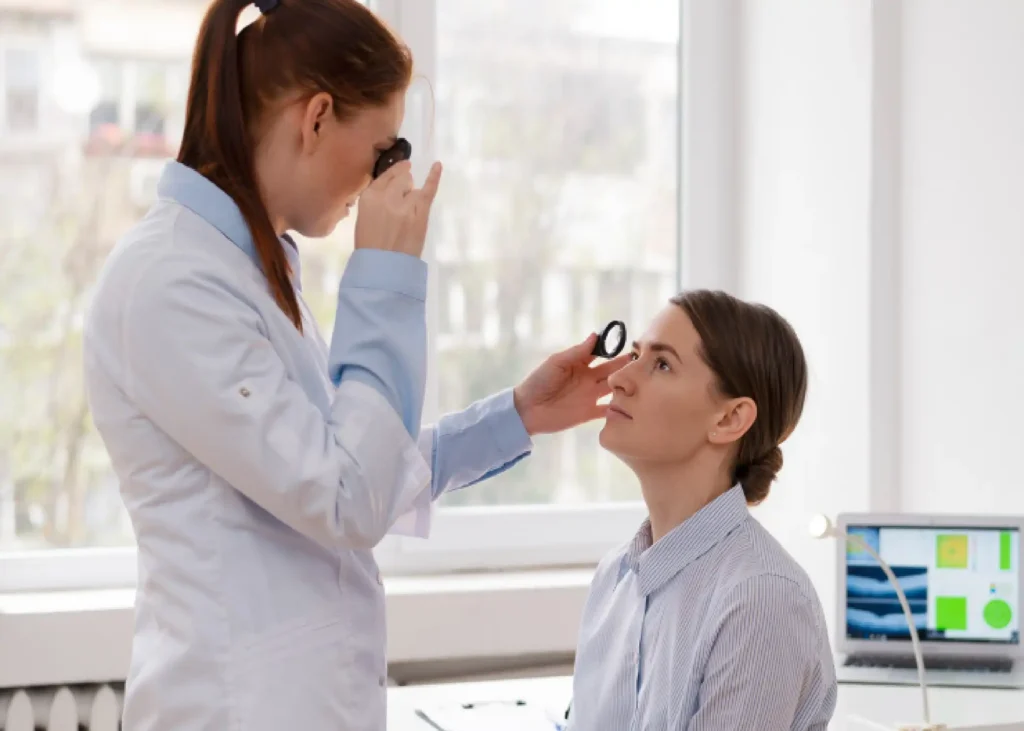
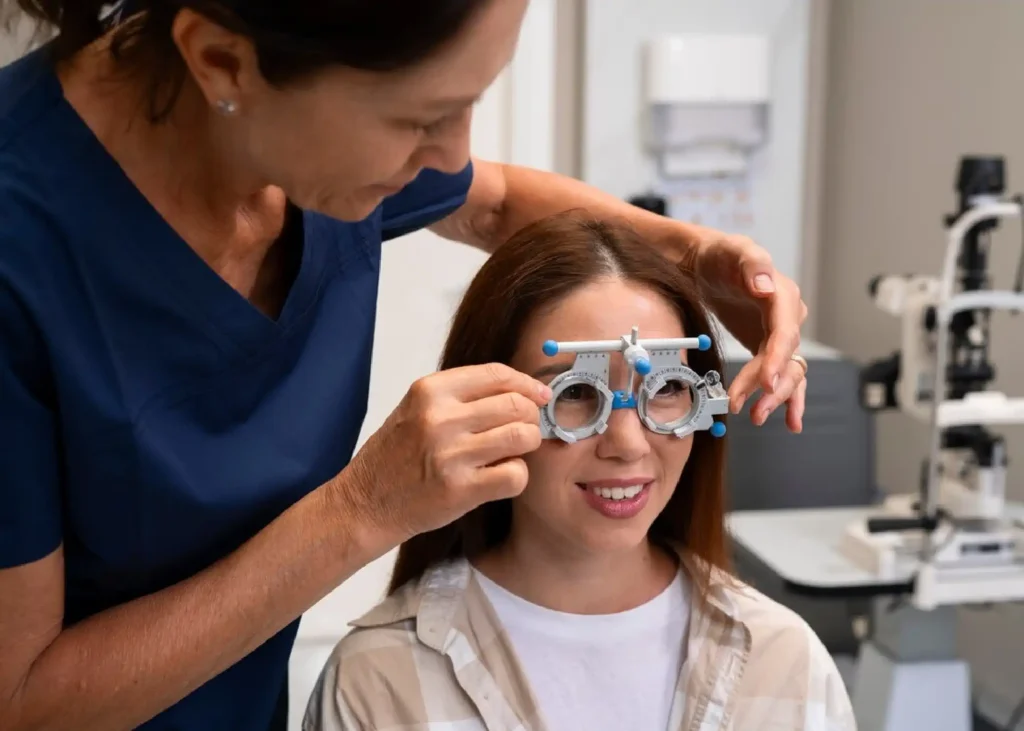
How seriously does the clinic take the pre-LASIK evaluation?

The single most important step in LASIK is not the laser shot – it is the pre-operative evaluation. Eye-care guidelines describe the LASIK work-up as one of the most comprehensive eye exams we do.(EyeWiki)
When you visit a clinic, observe:
a) Time and attention you receive
A serious LASIK centre will:
- Take a detailed history (general health, medications, allergies, any history of eye rubbing, previous eye surgery).
- Ask about your work (screens, night shifts, field work), hobbies (sports, swimming), and driving needs.
- Repeat key tests if anything looks borderline or inconsistent.
If your “LASIK eligibility check” feels like a quick screening with almost no conversation, that is a warning sign.
b) Essential tests that should appear in your work-up
You do not need to memorise all names, but you should at least hear about:
- Refraction (your glasses power) – ideally checked more than once.
- Corneal topography / tomography – detailed maps of corneal shape and thickness to detect irregularities, early keratoconus, or asymmetry.(EyeWiki)
- Pachymetry – corneal thickness measurement, crucial to ensure enough tissue remains after laser ablation.(EyeWiki)
- Tear film and dry-eye assessment – LASIK can worsen dryness, so pre-existing dry eye needs attention.
- Dilated retinal examination – especially important in higher myopia to look for weak areas, holes, or tears.
- Pupil size (in low light) – very large pupils may increase the chance of night glare or halos.
A good, simple question to ask is:
“What tests are you doing to decide if I am a safe LASIK candidate?”
A confident team will explain your scans and measurements rather than brushing you off with “everything is normal.”
The surgeon: qualifications, experience, and attitude
In India, LASIK must be performed by a qualified ophthalmologist (eye specialist), not by an optometrist or technician.
Check the following:
a) Training and credentials
Look for:
- MBBS + MS/MD/DNB in Ophthalmology.
- Ideally, additional training or fellowship in cornea and refractive surgery (not mandatory, but a positive sign).
- Active membership in professional bodies (e.g., All India Ophthalmological Society and local state societies).
Most clinics display the surgeon’s degrees on their website or at the reception. It is perfectly reasonable to ask:
- “Who will actually perform my LASIK?”
- “How many years have you been doing refractive surgery?”
b) Volume and comfort with different procedures
Numbers are not everything, but experience matters. You can ask:
- “Approximately how many LASIK or laser vision correction procedures do you do per month or per year?”
- “Do you perform only LASIK or also PRK / SMILE / phakic IOLs?”
A surgeon who comfortably offers multiple procedures is more likely to choose what fits your eyes best, rather than forcing everything into one technique.
c) How do they answer your questions?

Pay attention to:
- Whether you are allowed enough time to ask questions.
- Whether risks and side effects are discussed honestly.
- Whether you feel pressured to sign up immediately.
Be extra cautious if you hear phrases like “100% safe,” “zero complications,” or “guaranteed perfect vision.” No honest surgeon should make such promises.(AAO)
Clinic standards: hygiene, systems, and accreditation
LASIK is done on the surface of the eye, so cleanliness and infection control are critical.
Some practical things to look for:
- Is the OT (operation theatre) area clean and restricted, or do people walk in and out casually?
- Do staff follow visible hand-hygiene and mask protocols?
- Are instruments sterilised properly and stored correctly?
- Is there backup power for the laser and OT equipment?
In India, a useful quality marker is NABH (National Accreditation Board for Hospitals & Healthcare Providers). NABH has a specific Eye Care Organisations (ECO) accreditation programme with standards on patient safety, infection control, and clinical quality.(Nabh)
Not every good clinic is NABH-accredited, but accreditation is a reassuring sign that systems are audited and standardised. You can simply ask:
- “Is your centre NABH-accredited or applying for it?”
- “What infection-control protocols do you follow in the LASIK OT?”
Even if you don’t understand all the details, their willingness and ability to explain will tell you a lot.
Technology and set-up: more than just “latest laser”
Technology is important, but it is only one part of the story. Here’s how to think about it in a practical way.
a) Type of laser and procedure options
Most modern LASIK systems use:
- An excimer laser to reshape the cornea.
- Either a microkeratome (blade) or femtosecond laser to create the corneal flap.(AAO)
Femtosecond (“bladeless”) LASIK offers highly precise flap creation and is widely used, but well-performed microkeratome LASIK can also be effective and safe in properly selected eyes. The key is matching the right procedure to the right cornea, not simply choosing whatever is being marketed most aggressively.
Ask:
- “Which laser platform do you use?”
- “Do you offer custom / wavefront-guided or topography-guided treatments when indicated?”
- “Why are you recommending this specific procedure for my eyes?”
b) Dedicated LASIK suite vs shared equipment
This is an important point that many patients never think to ask.
In a city like Hyderabad, it is common for some surgeons to use a shared laser platform located at a separate centre. They bring their patients there on fixed days and operate on the same machine used by many other doctors.
Others have a dedicated in-house LASIK suite inside their own hospital or clinic.
From a patient’s perspective:
- A dedicated in-house LASIK suite means the surgeon’s team has day-to-day control over calibration, room conditions (temperature and humidity), hygiene protocols, and maintenance schedules. They know exactly how that particular laser behaves, because they work with it every day and can fine-tune processes over time.
- This often translates into greater consistency and confidence, both for the surgeon and the patient.
Shared equipment can still be safe and effective, provided:
- The laser is properly calibrated and maintained.
- There are strict cleaning and infection-control protocols.
- Someone is clearly responsible for quality and servicing.
So when you are comparing clinics, ask:
- “Do you have your own dedicated LASIK suite, or do you operate on a shared laser at another centre?”
- “If it is a shared laser, who looks after calibration, servicing, and hygiene protocols?”
Having an in-house LASIK suite is often an advantage, because it suggests the surgeon has invested in long-term infrastructure and has full confidence in the set-up. If they are using shared equipment, you simply need more clarity about how that shared platform is managed.
c) Maintenance, calibration, and back-up

LASIK lasers are sophisticated machines that require:
- Regular servicing by company engineers.
- Routine calibration checks.
- Stable temperature, humidity, and clean air in the laser room.
You do not have to see these logs, but you can ask:
- “How often is the laser serviced?”
- “Do you run test shots or calibration checks on the day of surgery?”
- “What backup systems do you have if there is a power cut?”
The answers should be specific, not vague.
Counselling: are risks and expectations explained honestly?
Worldwide, LASIK has high satisfaction rates – many reviews and meta-analyses suggest around 90–95% of patients are satisfied with their outcome.(PMC)
However, that still means a minority of patients have ongoing symptoms or dissatisfaction, and complications, while uncommon, do exist.(AAO)
A good clinic will explain:
- Common temporary effects: dryness, mild discomfort, light sensitivity, temporary glare or halos, slight fluctuation in vision in the early weeks.
- Less common but important risks: infection, significant glare or halos, irregular healing, ectasia (progressive corneal weakening), need for enhancement (re-treatment), under- or over-correction.
- The possibility that you may still need thin glasses for some activities (e.g., night driving) or reading glasses later in life.
- Alternatives such as PRK, SMILE, phakic IOLs, or continuing with glasses/contact lenses, if LASIK is not ideal for your eyes.
Notice whether the counselling feels like a balanced medical discussion, or like a sales pitch. You should come out of counselling feeling informed, not pressured.
Before, during, and after surgery: what is the actual process?
Ask each clinic to describe your journey step by step. You should have clarity on:
a) Before surgery
- How long do you need to stay off contact lenses before final measurements? (Typically days to weeks, depending on lens type.)(EyeWiki)
- How many pre-op visits are needed?
- Are you given clear written instructions about eye drops, hygiene, and what to do on the day of surgery?
b) Day of LASIK
- How long will you be in the hospital?
- Will both eyes be treated on the same day (usually yes, in standard cases)?
- Who will be in the OT with you?
- How do they help patients who are anxious (gentle sedation, counselling, etc.)?
c) Follow-up after surgery
Standard practice is to see you within 24–48 hours after LASIK, and then at regular intervals over the next weeks to months.(modernod.com)
Check:
- How many follow-up visits are included in the package?
- Who reviews you – the main surgeon or only junior staff?
- Is there an emergency contact number if you develop pain, sudden blurring, or redness at odd hours?
Also consider practical Hyderabad issues: How far is the clinic from your home or office? What is traffic like for morning or evening appointments? Will you realistically be able to attend all follow-ups?
Fees and packages: how to compare sensibly
In Hyderabad and across India, LASIK prices can vary a lot, depending on:
- Type of procedure (standard LASIK, bladeless / femto LASIK, topography-guided, SMILE, etc.).
- Technology generation and brand.
- Hospital type (corporate chain, standalone clinic, tertiary eye hospital).
Instead of looking only at the final number, ask each centre for a clear written breakup of:
- Pre-LASIK tests – are they included or billed separately?
- Surgeon’s fees and OT charges.
- Technology-related charges (e.g., femtosecond laser, custom ablation).
- Post-operative medicines – included or to be purchased separately?
- Number of follow-up visits included, and for how many months.
- Policy and cost for enhancement / touch-up surgery if needed later.
Be cautious of offers that sound too good to be true. Very low prices can sometimes mean:
- Less time per patient,
- Minimal counselling,
- Limited follow-up, or
- Older technology with minimal support.
At the same time, the most expensive package isn’t automatically the best. You are looking for value plus safety: appropriate technology, experienced hands, strong systems, and honest communication.
Reviews, word-of-mouth, and social media
Online reviews (Google, Practo, etc.) can give a rough sense of:
- How the clinic treats patients,
- How staff behave, and
- Whether any certain complaints keep repeating.
They are useful, but:
- Some glowing reviews are marketing-driven.
- Some angry reviews are written in the heat of the moment.
- Every surgeon will have a few unhappy patients over a long career, even with good practice.
So:
- Give more weight to word-of-mouth from people you personally know who had LASIK at that centre.
- Don’t rely only on influencers or sponsored posts on Instagram or YouTube.
If you are travelling to Hyderabad for LASIK
Many patients travel from smaller towns in Telangana, Andhra Pradesh, or other states to Hyderabad for LASIK.
If you are doing this, ask:
- How many days you should stay in the city after surgery before travelling back.
- Whether the centre can coordinate with a local ophthalmologist near your hometown for later check-ups.
- How follow-up questions will be handled – phone calls, WhatsApp, or video visits.
A responsible centre will help you plan realistically, not simply say “you can go the next day, no problem” without context.
Red flags: when to be cautious or walk away
Consider changing clinics or seeking a second opinion if:
- Your pre-LASIK evaluation does not include corneal topography/tomography.
- No one checks for dry eye, and no dilated retinal exam is done.
- You do not meet the surgeon until the day of surgery or after payment.
- Staff push LASIK strongly despite you mentioning medical issues.
- Complications are dismissed with “nothing will happen, don’t worry.”
- Answers to all questions are along the lines of “100% safe” or “nobody has problems here.”
- There is no clarity on where the LASIK is actually done (own suite vs shared laser) or who maintains the equipment.
In such situations, it is wise to pause and get an independent second opinion.
When LASIK may not be right for you (at least for now)
Even in an excellent centre, LASIK may be unsuitable if:
- You are under 18, or your spectacle number has changed significantly in the last year.(EyeWiki)
- You are pregnant or breastfeeding (hormonal changes affect refraction and tear film).
- You have uncontrolled diabetes, active autoimmune disease, or are on certain medications known to affect healing.
- Your corneas are very thin, irregular, or show signs of early keratoconus.
- You have severe dry eye or chronic allergy with constant eye rubbing.
- Your expectations are unrealistic – for example, absolutely perfect vision at all distances with zero risk and zero chance of needing glasses again.
In these situations, a good ophthalmologist will advise waiting, treating underlying issues, or choosing alternative options.
What to do next: using this article as your personal checklist

If you are seriously considering LASIK:
- Shortlist 2–3 centres in Hyderabad based on location, word-of-mouth, and preliminary online research.
- Book a full eye examination (not just a quick “free LASIK screening”) at each centre, if possible.
- Take your old spectacle prescriptions, medication list, and any prior eye reports.
- Use the questions from this article during your consultation:
- How detailed is the pre-LASIK evaluation?
- Who is the surgeon and where do they operate?
- Does the centre have its own LASIK suite?
- What technology is used and why is it right for your eyes?
- How are risks, follow-up, and costs explained?
Then choose the place where:
- The evaluation feels thorough,
- The surgeon communicates clearly and honestly,
- Systems and hygiene look strong,
- Costs are transparent,
- And, importantly, you feel safe and respected.
Call to action:
If you are planning LASIK, schedule a comprehensive eye check-up with a qualified ophthalmologist in Hyderabad. Carry all your old prescriptions and be open about your work, habits, and expectations. Don’t hesitate to compare 2–3 centres using the points in this article – taking a little extra time now can protect your vision for decades.
References
- American Academy of Ophthalmology – LASIK information for patients.(AAO)
- EyeWiki (American Academy of Ophthalmology). Preoperative Evaluation for LASIK Surgery; LASIK for Myopia and Astigmatism: Safety and Efficacy.(EyeWiki)
- MedlinePlus, U.S. National Library of Medicine – LASIK eye surgery overview and risks.(MedlinePlus)
- Mayo Clinic – LASIK surgery: Is it right for you?(Mayo Clinic)
- National Accreditation Board for Hospitals & Healthcare Providers (NABH) – Eye Care Organisations Accreditation Programme.(Nabh)
- Bamashmus MA et al. and subsequent literature – global LASIK satisfaction data (summarised in AAO and other reviews).(PMC)