What Exactly Is Dry Eye Syndrome? A Simple Guide to Symptoms and Causes
Dry Eye Syndrome (also called dry eye disease) happens when your tears don’t lubricate your eyes properly—either you don’t make enough tears, or they evaporate too fast. It often feels like burning, stinging, grittiness, redness, blurry vision, or even watery eyes. Screens, air-conditioning, contact lenses, eyelid inflammation, hormones, some medicines, and autoimmune conditions can all contribute. Because allergies and infections can feel similar, notice patterns, triggers, and warning signs—then get an eye exam if symptoms persist.
Why this topic matters (and why people get confused online)
I see this every day in clinic: someone comes in saying, “Doctor, my eyes feel dry,” and then quickly adds, “But they also water… so is it really dry eye?” Or someone has burning and redness and assumes it must be an infection. Another person tries three different “redness relief” drops and feels worse.
Dry eye is extremely common, but it is also easy to misunderstand—because the symptoms overlap with allergies, eyelid inflammation, contact lens irritation, and even simple fatigue from screens. The goal of this guide is to help you understand what dry eye actually is, why it happens, what it feels like, and when you should stop guessing and get checked.

What “dry eye” really means (in plain language)
Your eye is meant to stay smoothly coated by a thin layer of tears, called the tear film. This is not just “water.” Healthy tears are a balanced mixture of:
- an oily layer (reduces evaporation),
- a watery layer (provides moisture, oxygen, nutrients),
- and a mucus layer (helps tears spread evenly).
Dry eye happens when this tear film doesn’t do its job consistently. You may:
- produce too few tears, or
- produce tears that are poor quality, so they break up quickly and evaporate.
Modern definitions describe dry eye as a condition where the tear film loses its normal stability, often involving inflammation and surface irritation. (tfosdewsreport.org)
A key point: dry eye is not always about “not enough tears.” Many people produce tears, but the tears are unstable—especially when the oily layer is weak.
If my eyes are watering, can it still be dry eye?
Yes—very commonly.
When the surface of the eye is irritated (because the tear film is unstable), the eye can “panic” and trigger reflex tearing. These reflex tears are often more watery and don’t fix the underlying problem. So you can feel “dry” and watery at the same time.
This is one of the biggest reasons people online get confused.
Common symptoms: what dry eye feels like in real life
Dry eye symptoms vary from person to person. Many patients don’t say “dry.” They say:

- “My eyes burn or sting, especially later in the day.”
- “It feels like sand or grit is stuck in my eye.”
- “My eyes look red and feel tired.”
- “My vision goes blurry, then clears when I blink.”
- “Wind, smoke, or air-conditioning bothers me.”
- “I can’t tolerate contact lenses like I used to.”
- “My eyes water when I’m outside.”
These are all classic dry eye patterns. NHS patient guidance also lists symptoms like sore/gritty/red eyes, blurry vision, light sensitivity, and watering. (nhs.uk)
The American Academy of Ophthalmology (AAO) similarly describes dry eye as coming from not enough tears, poor tear quality, or tears drying out too fast. (AAO)
Two big “types” of dry eye (and why most people have a mix)
Clinically, we often group dry eye into two major buckets:
1) Evaporative dry eye (tears evaporate too quickly)
This is extremely common and is often linked to meibomian gland dysfunction (MGD)—a condition where the oil glands in your eyelids don’t release enough healthy oil into the tears.
When the oil layer is weak, tears evaporate faster—especially in dry environments, under fans/AC, or while staring at screens.
2) Aqueous-deficient dry eye (not enough watery tears)
Here, the lacrimal glands don’t produce enough of the watery part of tears. This can be related to age, medications, or autoimmune conditions (for example, Sjögren’s syndrome). Medical reviews describe aqueous-deficient dry eye as reduced tear production from the lacrimal gland. (PMC)
In real life, many people have both—a bit of poor tear production and faster evaporation.
Why dry eye happens: the most common causes (made simple)
Dry eye is usually not one single cause. Think of it as a “load” on the system: a few factors pile up until the tear film can’t keep up.
Screen time and reduced blinking
When you focus on a screen, you blink less and often blink incompletely. Less blinking means:
- tears don’t spread evenly,
- the oil glands aren’t “pumped” properly,
- evaporation increases.
This is a huge driver in students, office workers, gamers, and anyone scrolling for long periods.
Air-conditioning, heaters, fans, wind, smoke, pollution
These environments increase evaporation and surface irritation. Many patients notice symptoms worsen in:
- cars with the AC on,
- airplanes,
- winter heating,
- windy outdoor conditions.
Contact lenses
Contacts can disrupt the tear film and increase dryness, especially if you already have mild dry eye.
Eyelid inflammation (blepharitis) and oil gland blockage (MGD)
If your eyelids are inflamed, crusty, itchy, or you get recurrent styes, dry eye risk goes up—because the oil layer becomes abnormal.
Hormonal factors
Hormonal changes (including pregnancy, menopause, thyroid imbalance) can influence tear stability. This is one reason dry eye can become more noticeable at certain life stages.
Medications that can dry the eyes
Some medications reduce tear production or worsen dryness, such as:
- certain antihistamines,
- antidepressants,
- acne medication like isotretinoin,
- some blood pressure medicines,
- decongestants.
(If you suspect a medicine is involved, don’t stop it suddenly—discuss alternatives with your prescribing doctor and your eye doctor.)
Medical conditions
Dry eye is more common with:
- autoimmune diseases (especially Sjögren’s),
- diabetes,
- thyroid disease,
- skin conditions like rosacea,
- vitamin A deficiency (less common, but important in specific settings).
Mayo Clinic summarizes dry eye as happening when tears can’t lubricate properly due to inadequate tear production or poor-quality/unstable tears, which can lead to inflammation and surface damage. (Mayo Clinic)
A quick self-check: does this sound like dry eye or something else?
People online often ask: “Is this dry eye or an infection?” Here’s a practical way to think about it.
Dry eye often has a pattern:
- worse with screens, reading, driving, AC/fans
- worse later in the day
- improves temporarily after blinking, resting eyes, or lubricating drops
- fluctuating blur (clears after blinking)
Other conditions can mimic dry eye:
Allergies
More itching, sneezing/runny nose, seasonal pattern, stringy discharge. Both eyes often involved.
Viral conjunctivitis (“pink eye”)
Watery discharge, redness, gritty feeling, often after a cold; may be contagious.
Bacterial conjunctivitis
Thicker yellow/green discharge and eyelids stuck on waking.
A foreign body or scratch
Usually one eye, sudden onset, sharp sensation, significant watering and light sensitivity.
Eyelid problems
Styes, blepharitis, eyelid not closing fully during sleep can create persistent surface irritation that feels like dry eye.
Because overlap is common, the safest approach is: if symptoms are persistent, recurrent, or affecting vision, get examined rather than trying to “diagnose yourself” through forums.
What happens during an eye exam for dry eye?

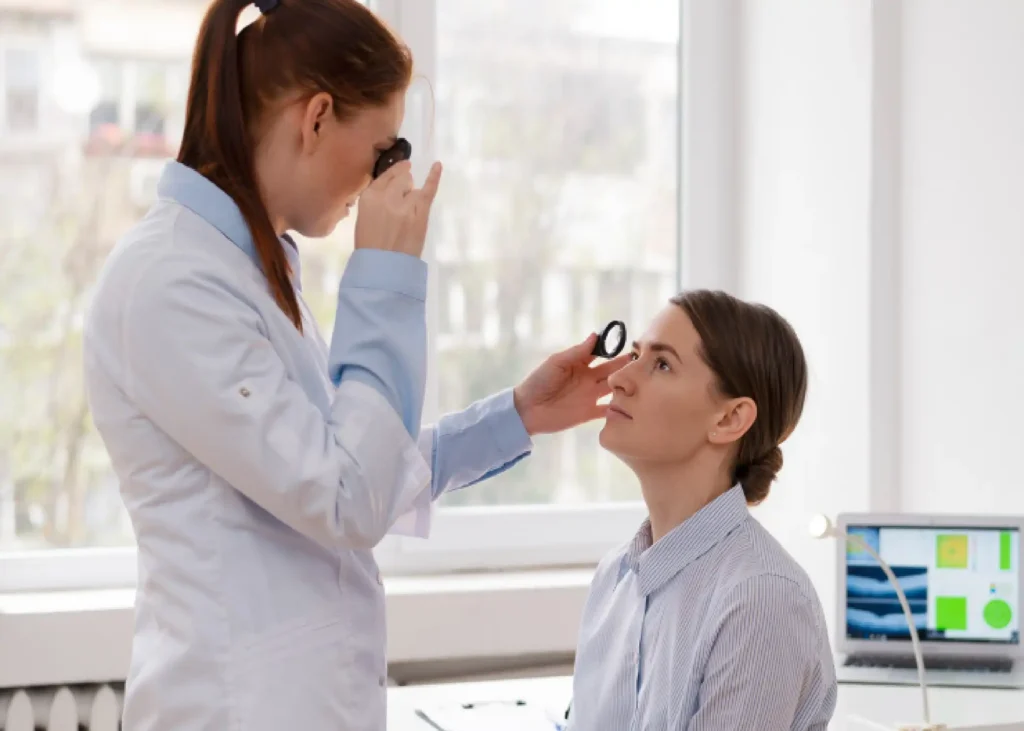
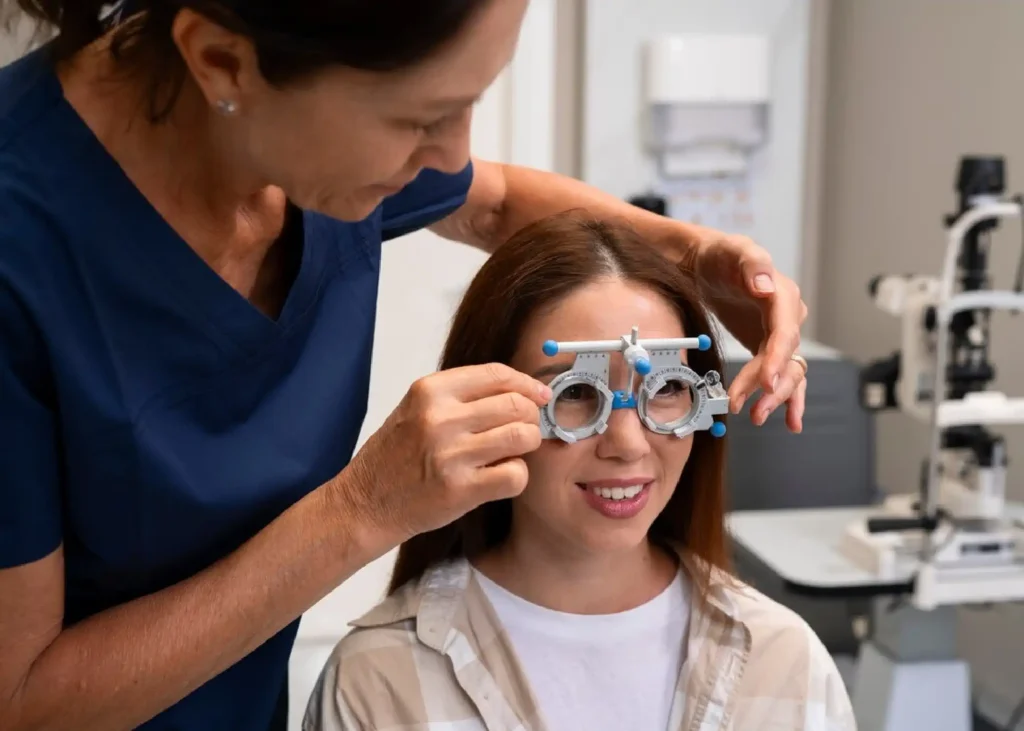
A dry eye evaluation is usually straightforward and not scary. Depending on your symptoms, an ophthalmologist may:
- look at your eyelids and oil glands
- assess tear film stability (how quickly tears “break up”)
- check the surface with special dyes
- measure tear quantity in certain cases
- look for contributing problems like blepharitis, allergies, or medication-related dryness
Sometimes, if we suspect autoimmune dry eye (especially with dry mouth, joint pain, fatigue, or long-standing symptoms), we coordinate with your physician for further evaluation.
Treatment basics (without overwhelming you)
Dry eye treatment works best when it matches the cause. A few important principles:
1) Lubrication (artificial tears)
These replace moisture temporarily. They’re helpful, but they are not the whole solution if evaporation or eyelid inflammation is the main driver.
A practical tip: if you need drops very frequently, preservative-free options are often gentler.
2) Fix the eyelids (especially if MGD is present)
Warm compresses and eyelid hygiene can improve oil flow. This matters because the oil layer slows evaporation.
3) Reduce triggers
Small changes can make a big difference:
- position screens slightly below eye level
- take blink breaks (especially during long screen sessions)
- reduce direct fan/AC airflow to the face
- consider a humidifier in dry rooms
4) Prescription options when needed
If inflammation is significant or symptoms are persistent, your doctor may recommend prescription anti-inflammatory drops or other therapies. (These are individualized—your eye surface health, tear stability, and risk factors matter.)
5) Procedures for selected cases
In some patients, options like punctal plugs (to slow tear drainage) or in-office eyelid therapies may be considered—usually after a proper evaluation and trial of basic measures.
What not to do (common online mistakes)
Many people worsen symptoms unintentionally. The most common mistakes I see:
- Using “redness relief” drops daily. These can sometimes irritate or cause rebound redness.
- Ignoring eyelid hygiene when there’s clear lid inflammation.
- Assuming watery eyes means “not dry.”
- Switching drops too often without giving any plan time to work.
- Wearing contact lenses through irritation and hoping it settles.
If you’ve been self-treating for weeks without improvement, that’s a sign you need a targeted diagnosis.
When to see a doctor urgently (don’t wait on these)
Dry eye is usually not an emergency—but some symptoms should not be brushed off as “just dryness.”
Seek urgent eye care if you have:
- moderate to severe eye pain
- sudden vision drop
- marked light sensitivity (photophobia)
- significant discharge (especially thick yellow/green)
- a new contact lens–related red painful eye
- injury/chemichttps://pristineeyehospitals.com/severe-eye-trauma-causes-first-aid-emergency-treatment/al exposure
- symptoms mainly in one eye with a strong foreign body sensation that doesn’t settle
These can signal infections, corneal problems, uveitis, or other conditions that need prompt treatment.
Living with dry eye: realistic expectations
Dry eye is often manageable, but it’s not always a one-week fix—especially if it has been building for months or years.
The best outcomes come from:
- identifying the main driver (evaporation vs low tear production vs eyelid disease vs allergies)
- building a simple daily routine that you can stick with
- reviewing progress after a few weeks and adjusting treatment
If your symptoms are mainly screen-related, you may be surprised how much improvement you get from better blinking habits and eyelid care—without anything complicated.
Call to action
If you’re unsure whether your irritation is dry eye or something else—or if you’ve tried over-the-counter drops without lasting relief—book a comprehensive eye exam. A targeted dry eye evaluation can identify whether the issue is tear quantity, tear quality, eyelid oil glands, allergy, or another surface problem, and that’s what leads to real improvement.
References
- American Academy of Ophthalmology (AAO) – What Is Dry Eye? https://www.aao.org/eye-health/diseases/what-is-dry-eye
- Mayo Clinic – Dry eyes: Symptoms & causes https://www.mayoclinic.org/diseases-conditions/dry-eyes/symptoms-causes/syc-20371863
- NHS – Dry eyes (symptoms overview) https://www.nhs.uk/symptoms/dry-eyes/
- TFOS DEWS II – Definition & Classification (PubMed) https://pubmed.ncbi.nlm.nih.gov/28736335/
- TFOS DEWS II Report site (definition page) https://www.tfosdewsreport.org/report-tfos_dews_ii_report/36_36/en/