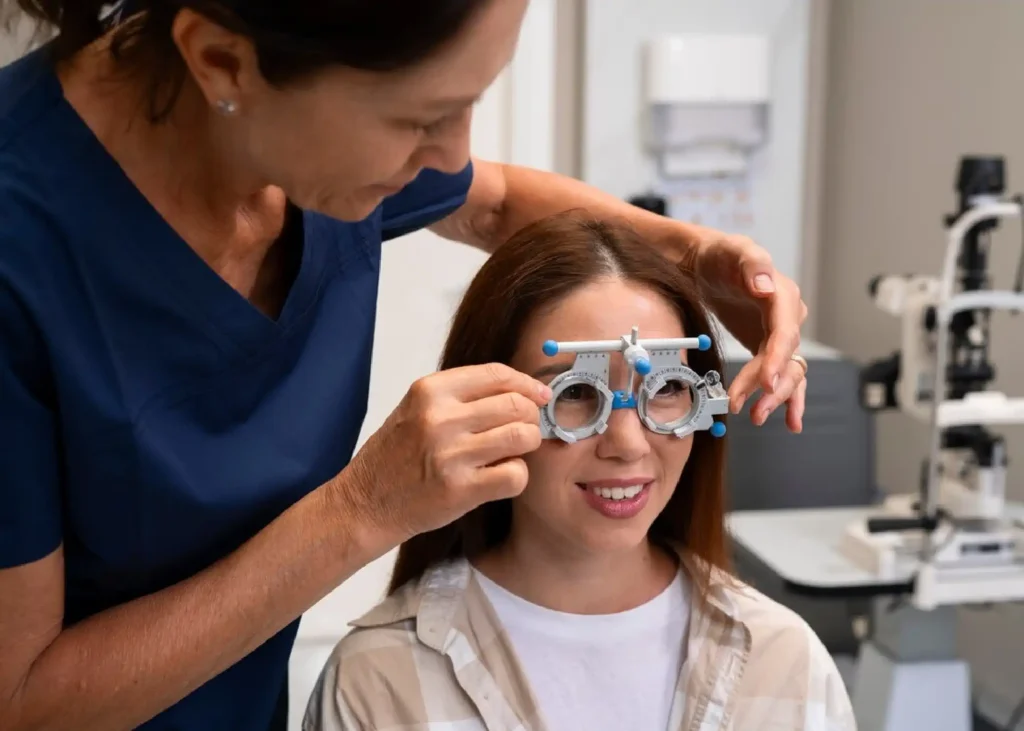
Top 5 Mistakes to Avoid When Buying Your Next Pair of Glasses
Buying new glasses should improve your vision and comfort, but many people regret their choice later. The most common mistakes include choosing the wrong lens thickness, paying for unnecessary blue-light filters, ignoring proper measurements, selecting the wrong coatings, and prioritizing looks over comfort. These errors can lead to headaches, eye strain, poor vision, or wasted money. This article explains the top five mistakes patients often make when buying glasses and offers practical, doctor-approved advice to help you choose eyewear that truly works for your eyes and daily life.
As an ophthalmologist, I often meet patients who come back weeks after buying new glasses, frustrated and disappointed. They tell me their vision still feels off, their eyes ache, or the glasses simply don’t feel right. Most of the time, the problem isn’t their eyes. It’s the choices made while buying the glasses.
Eyeglasses are not just fashion accessories. They are medical devices meant to correct vision precisely. When even one detail is overlooked, the entire experience can suffer. The good news is that most regrets are avoidable with the right guidance.
In this article, I’ll walk you through the top five mistakes people commonly make when buying glasses, why these mistakes matter, and how you can make smarter decisions next time. If you’re planning to buy new glasses soon, this guide can save you money, discomfort, and unnecessary stress.
Mistake 1: Choosing the Wrong Lens Index (Thickness Matters More Than You Think)
One of the most frequent regrets I hear is, “My glasses feel too thick and heavy.” This usually comes down to choosing the wrong lens index.
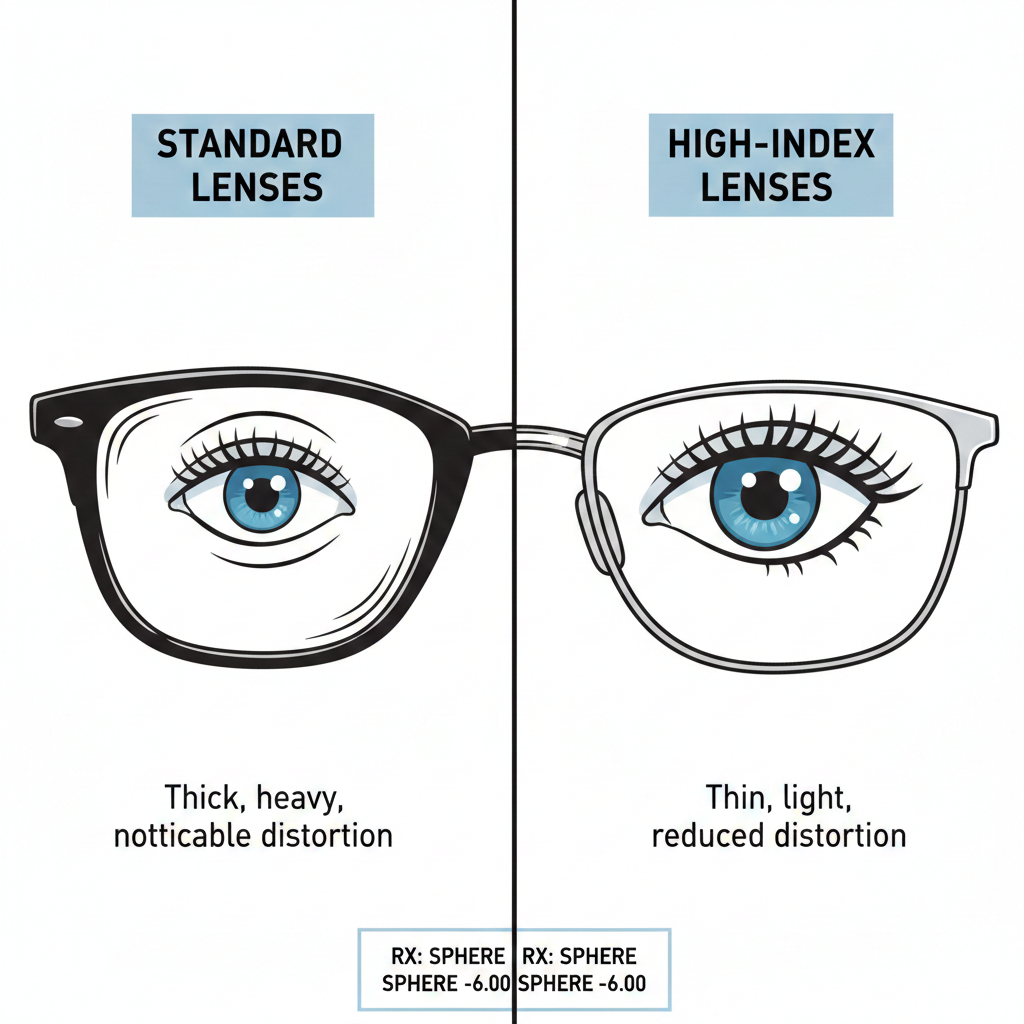
The lens index refers to how thin a lens can be made for a given prescription. The higher the index, the thinner and lighter the lens. Many patients are either over-sold or under-informed about this.
If you have a mild prescription, very high-index lenses are usually unnecessary. They cost more without providing noticeable benefit. On the other hand, if you have a moderate to high prescription and choose standard lenses, your glasses may end up thick, heavy, and visually unappealing.
Thicker lenses are not just a cosmetic issue. They can cause imbalance on the nose, pressure marks, and discomfort around the ears. Over time, this can discourage regular wear, which defeats the purpose of having glasses.
A good rule is to match lens index to both your prescription strength and frame choice. Smaller frames often reduce thickness naturally. Larger frames may need a higher index to keep lenses comfortable.
Before finalizing your lenses, ask your eye care provider to explain why a particular index is recommended for you. A few minutes of discussion can prevent months of discomfort.
Mistake 2: Paying for Unnecessary Blue Light Filtering Lenses
Blue light lenses have become one of the most aggressively marketed add-ons in recent years. Many patients are told they are essential, especially if they use phones, laptops, or computers daily. This has led to confusion and, often, regret.
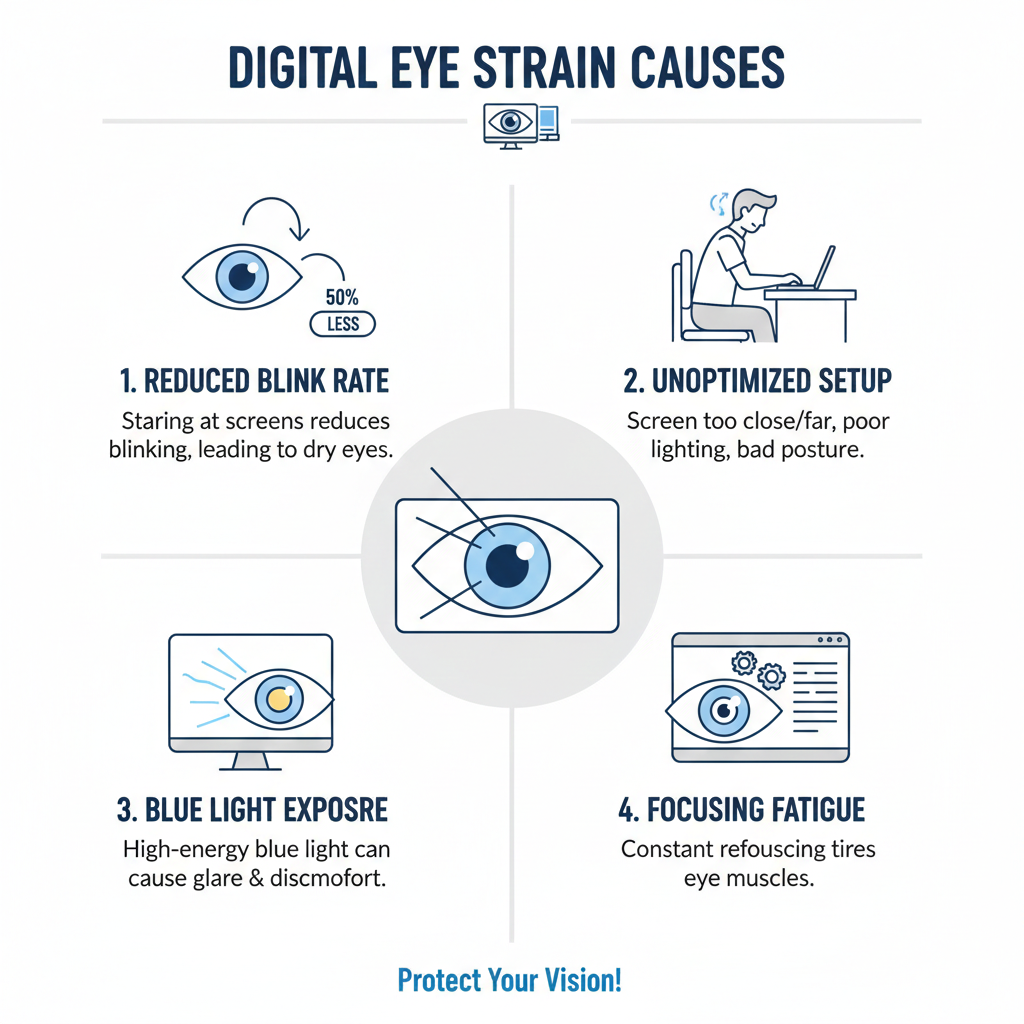
Blue light from screens is real, but its impact is often misunderstood. For most people, digital eye strain is not caused by blue light itself. It is usually due to prolonged screen use, reduced blinking, poor lighting, and incorrect prescriptions.
There is currently limited scientific evidence that blue light lenses prevent eye disease or significantly reduce digital eye strain in the general population. Yet, they often come at a higher cost and may slightly alter color perception.
Some patients also report that these lenses make indoor lighting feel unnatural or that night driving feels uncomfortable due to reflections.
This does not mean blue light lenses are never useful. In certain individuals with specific sensitivity or sleep-wake issues, they may offer subjective comfort. However, they are not universally necessary.
Instead of automatically choosing blue light lenses, focus on proven habits. Take regular breaks, follow the 20-20-20 rule, blink consciously, and ensure your prescription is accurate.
If a blue light coating is suggested, ask why it’s recommended for you personally. A tailored explanation is far more valuable than a generic sales pitch.
Mistake 3: Ignoring Accurate Measurements and Proper Fitting
Another major source of regret is poor visual clarity despite having the “correct” prescription. Often, the issue lies not in the prescription itself but in how the glasses were measured and fitted.
Eyeglasses must align precisely with your eyes. Measurements like pupillary distance (the distance between your pupils) and optical center height are critical. Even small errors can cause eye strain, headaches, dizziness, or blurred vision.
This problem is especially common when glasses are purchased without professional fitting or when measurements are estimated rather than properly taken.
Ill-fitting frames can also slide down the nose, tilt incorrectly, or press against the temples. This affects both comfort and vision. Over time, patients may stop wearing their glasses altogether because they “don’t feel right.”
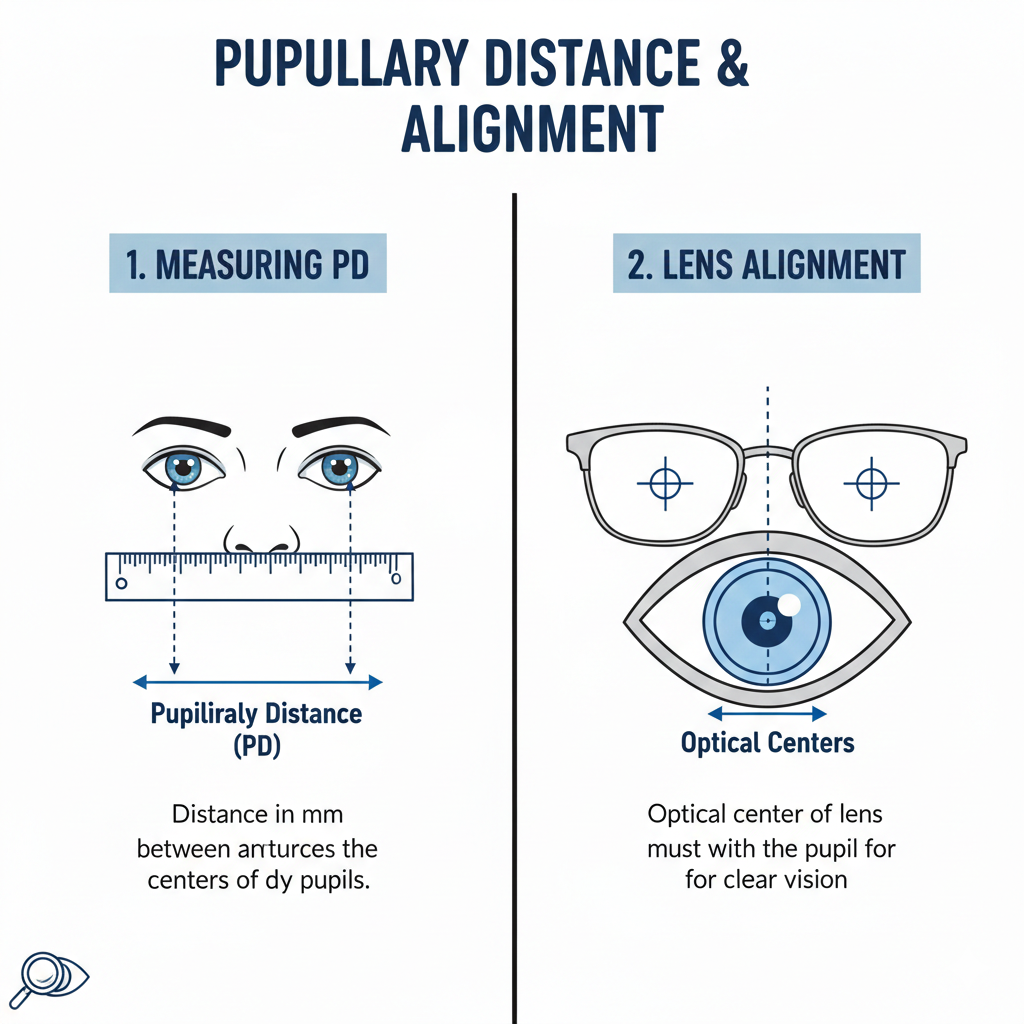
Always ensure that measurements are taken by trained staff using proper tools. After receiving your glasses, wear them for a short period and return for adjustments if needed. Small tweaks can make a big difference.
Good vision is not just about seeing clearly. It’s about seeing comfortably.
Mistake 4: Choosing the Wrong Lens Coatings (Too Many or Too Few)
Lens coatings can enhance comfort and durability, but choosing the wrong ones is another common regret.
Anti-reflection coating is one of the most useful options. It reduces glare from lights and screens and improves visual clarity, especially for night driving. Patients who skip this often return asking why their glasses reflect so much light.
On the other hand, some coatings are added without clear benefit. Scratch resistance and UV protection are often already built into modern lenses, yet patients may unknowingly pay extra for them again.
Another issue arises when low-quality coatings are used. Poor coatings can peel, smudge easily, or create halos around lights. This leads to frustration and reduced satisfaction with otherwise good glasses.
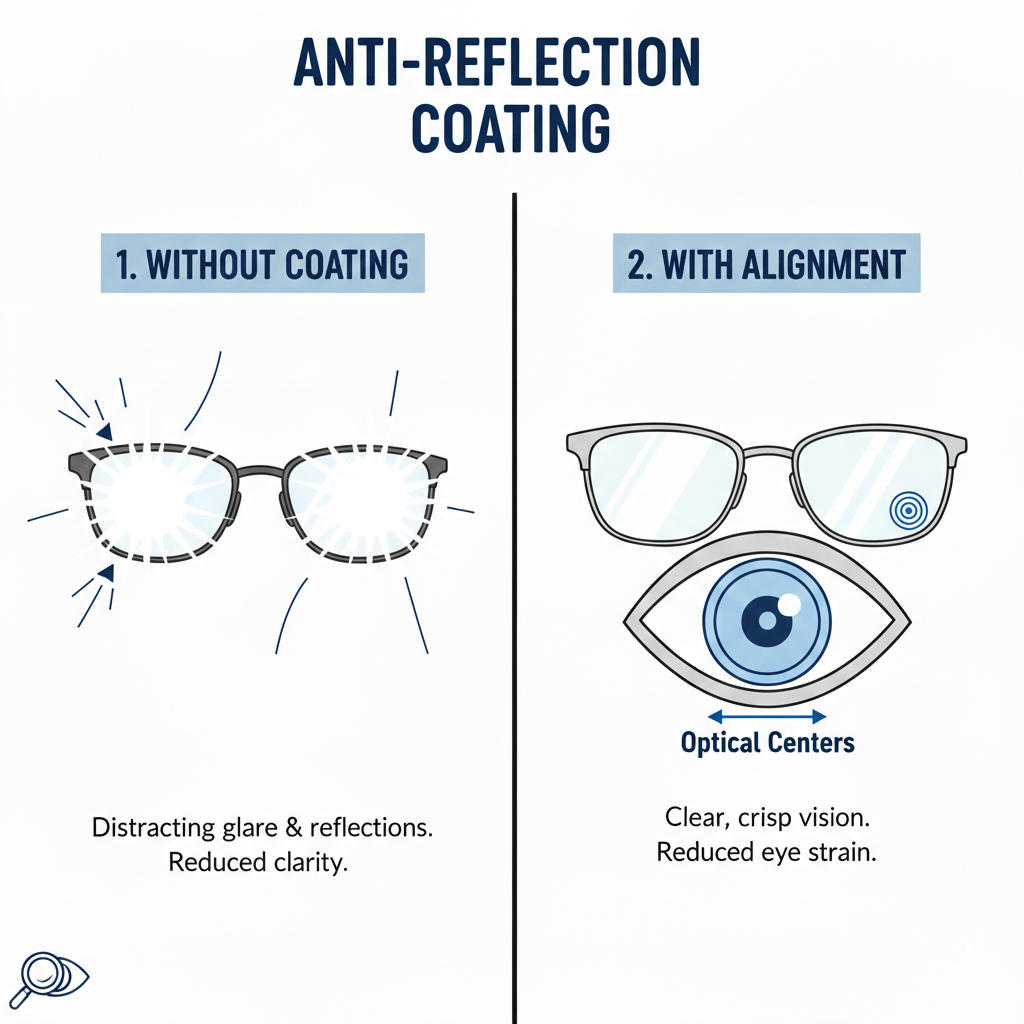
The key is balance. Choose coatings that match your lifestyle. If you drive at night or work under bright lights, anti-reflection is worthwhile. If you spend time outdoors, proper UV protection matters.
Ask what each coating does and whether it is included by default. Transparency builds trust and helps you make informed decisions.
Mistake 5: Prioritizing Style Over Comfort and Function
It’s natural to want glasses that look good. After all, they are part of your appearance. But when style takes priority over comfort and function, regret often follows.
Frames that are too tight can cause headaches. Frames that are too loose can constantly slip. Heavy frames may look stylish but can strain the nose and ears.
Some fashionable frames may also not suit certain prescriptions. Very thin or rimless designs may not support stronger lenses well, affecting durability and appearance.
Comfort is especially important because glasses are worn for long hours. Even minor discomfort becomes significant over time.
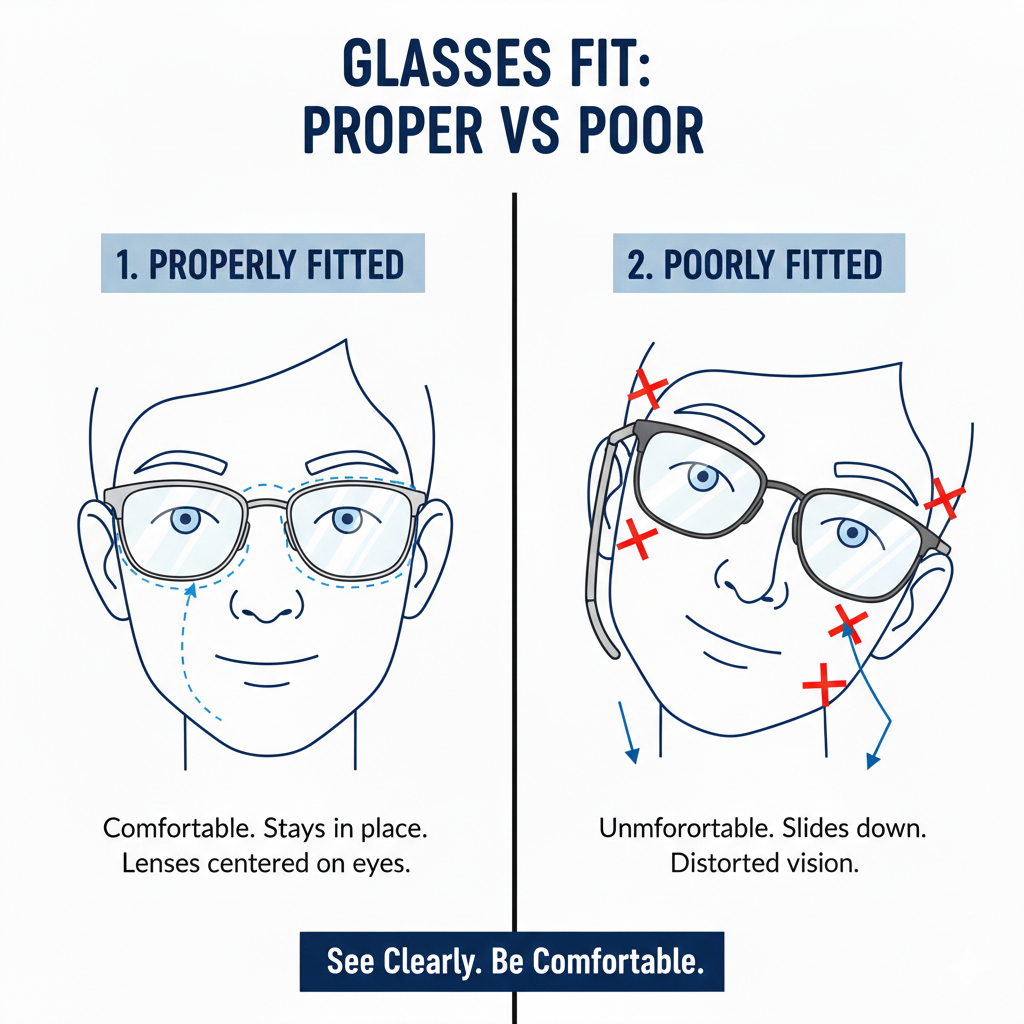
A well-chosen frame balances appearance, weight, size, and stability. Try wearing frames for several minutes in the store. Move your head, look down, and simulate daily activities.
Remember, the best glasses are the ones you enjoy wearing every day.
How to Make a Smarter Glasses Purchase
Avoiding these mistakes doesn’t require expert knowledge. It requires asking the right questions and understanding that glasses are a personalized medical device.
Take time during your selection. Don’t rush decisions based on promotions or trends. A good eye care professional will explain options clearly and respect your concerns.
If something feels unclear, ask for clarification. There are no silly questions when it comes to your vision.
When to See an Eye Doctor Again
If you experience headaches, eye strain, blurred vision, or discomfort after getting new glasses, don’t ignore it. These symptoms are not something you should “get used to.”
Early review can identify fitting issues, measurement errors, or lens problems that are easily corrected. Waiting too long may lead to unnecessary discomfort and frustration.
A Final Word From Your Ophthalmologist
Your glasses should make life easier, not harder. Most regrets I see in my clinic are preventable with better understanding and honest guidance.
The next time you buy glasses, remember that comfort, accuracy, and suitability matter just as much as appearance. Investing a little more time upfront can save you months or even years of dissatisfaction.
If you’re unsure about your current glasses or planning to buy a new pair, consider booking a comprehensive eye examination. Clear, comfortable vision is always worth it.
References
https://www.aao.org/eye-health/glasses-contacts
https://www.mayoclinic.org/healthy-lifestyle/adult-health/in-depth/eye-strain/art-20047945
https://www.ncbi.nlm.nih.gov/pmc/articles/PMC6288536/
https://www.nhs.uk/conditions/eye-tests/