
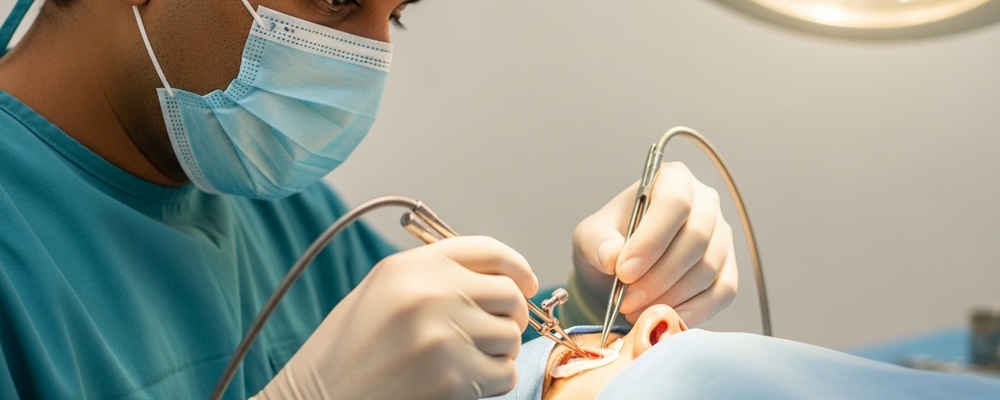
Salivary Gland / Minor Salivary Gland Transplantation (for severe xerophthalmia) in Hyderabad: Cost, Procedure & Recovery
This procedure offers a specialized solution for people suffering from extremely severe dry eyes, a condition called xerophthalmia, when other treatments haven’t worked. It involves carefully moving a tiny saliva-producing gland from another part of your body to your eye area to help restore natural moisture. The goal is to provide lasting relief from discomfort and protect your eye health.
QUICK FACTS
- Procedure Duration: 1-2 hours
- Anesthesia Type: Local with Sedation
- Recovery Time: Several weeks for full integration, initial discomfort 3-5 days
- Hospital Stay: 1-2 days
UNDERSTANDING THE BASICS
What is Salivary Gland / Minor Salivary Gland Transplantation (for severe xerophthalmia)?
Our eyes naturally produce tears to keep them moist, comfortable, and protected. When your eyes don’t make enough tears, or the tears aren’t of good quality, you experience dry eye. In severe cases, known as xerophthalmia, this dryness can become debilitating and even damage the eye’s surface. Salivary Gland / Minor Salivary Gland Transplantation is a specialized surgical procedure designed to address this by providing a new, continuous source of moisture. It involves carefully taking a small, healthy saliva-producing gland, often from your lower lip or inside your cheek, and transplanting it to the area around your eye. Once integrated, this tiny gland can begin to produce a fluid similar to tears, helping to lubricate the eye and relieve the severe dryness, much like your mouth’s salivary glands keep your mouth moist.
CONDITIONS AND SYMPTOMS
Why is Salivary Gland / Minor Salivary Gland Transplantation (for severe xerophthalmia) performed?
Eye Conditions Treated
- Severe Xerophthalmia (extreme chronic dry eye)
- Sjögren’s Syndrome (severe ocular manifestations)
- Corneal damage due to chronic dryness
- Failure of conventional dry eye treatments (e.g., artificial tears, punctal plugs, prescription medications)
- Neurotrophic keratitis with severe dryness
Symptoms You Might Be Experiencing
- Constant burning, stinging, or a gritty sensation in the eyes
- Blurred vision that doesn’t improve with blinking
- Extreme sensitivity to light (photophobia)
- Persistent redness and irritation that won’t go away
- Difficulty wearing contact lenses
- Feeling like something is always in your eye
- Pain or discomfort that significantly impacts daily life
SURGICAL JOURNEY STEP-BY-STEP
How is the Salivary Gland / Minor Salivary Gland Transplantation (for severe xerophthalmia) Procedure Performed?
1. How to Prepare Before the Procedure
- You will undergo a comprehensive eye examination and a thorough review of your medical history.
- Blood tests and other diagnostic checks will be performed to ensure you are in good overall health for surgery.
- It’s crucial to discuss all medications, supplements, and allergies with your doctor. You may need to stop certain medications, like blood thinners, for a period before surgery.
- Arrange for someone to drive you home after the procedure and assist you during the initial recovery period.
- You will be instructed to fast (avoid food and drink) for several hours before surgery, as advised by your medical team.
2. What Happens During the Procedure?
- You will receive anesthesia, typically local anesthesia with sedation, or sometimes general anesthesia, to ensure you are completely comfortable and pain-free throughout the procedure.
- The surgeon will carefully identify and remove a small, healthy minor salivary gland, often from your lower lip or inside your cheek, ensuring minimal impact on the donor site.
- This tiny gland is then meticulously transplanted to the eye area, usually beneath the conjunctiva (the clear membrane covering the white part of your eye).
- The delicate blood vessels of the transplanted gland are carefully connected to local blood vessels to ensure it receives nourishment and can begin producing moisture.
- Fine sutures are used to secure the gland in place, and the donor site (e.g., lip) is also carefully closed.
3. What to Expect Immediately After the Procedure
- After the surgery, you will be monitored in a recovery area as the anesthesia wears off.
- You might experience some mild discomfort, swelling, or bruising around the eye and at the donor site (e.g., lip).
- Your eye may be patched or shielded to protect it from accidental rubbing or injury.
- You will receive detailed instructions on how to use prescribed eye drops, pain medication, and any activity restrictions.
- Your vision might be temporarily blurry or hazy due to swelling or protective ointments applied to the eye.
- You will be discharged with a follow-up appointment scheduled to monitor your healing and progress.
POST-OPERATIVE CARE AND TIMELINE
Recovery and Post-Operative Care
Following your surgeon’s instructions precisely is key to a successful recovery.
- Do’s:
- Use all prescribed eye drops and oral medications diligently.
- Keep the surgical area clean and dry.
- Wear protective eyewear (like sunglasses or an eye shield) as advised.
- Attend all scheduled follow-up appointments.
- Rest your eyes and avoid eye strain.
- Maintain good oral hygiene if the donor site was in your mouth.
- Don’ts:
- Rub or touch your eyes, especially the surgical site.
- Engage in strenuous activities, heavy lifting, or bending over.
- Wear eye makeup or use contact lenses until cleared by your doctor.
- Swim or use hot tubs, which can introduce infection.
- Drive until your vision has stabilized and your doctor gives approval.
Timeline:
- Day 1: You may experience mild discomfort, swelling, and possibly blurry vision. Keep your eye protected with a shield. Follow your medication schedule strictly.
- Week 1: Swelling and bruising around the eye and donor site should start to subside. You might begin to notice some initial improvement in eye moisture. Continue all prescribed drops and avoid irritants.
- Month 1: The transplanted gland should be integrating well and gradually increasing moisture production. Most initial discomfort should be gone. Your doctor will assess the gland’s function and your overall progress. Full benefits and stable moisture production may take several months to become fully apparent.
COST AND INSURANCE COVERAGE IN HYDERABAD
Cost of Salivary Gland / Minor Salivary Gland Transplantation (for severe xerophthalmia) in Hyderabad & Insurance Options
- Estimated Local Investment: ₹60000 – ₹110000
- Cost Determinants:
- The specific type and size of the minor salivary gland transplanted and the complexity of its harvesting.
- The surgical technique used and the overall complexity of the transplantation procedure.
- The surgeon’s experience and fees, as well as the hospital facility charges.
- The type of anesthesia administered (local with sedation vs. general) and its duration.
- The extent of pre-operative diagnostic tests and the cost of post-operative medications.
- The duration of your hospital stay and any specialized care required.
- Insurance Protocol:
- This procedure is generally considered a therapeutic ‘Medical Necessity’ for patients suffering from severe xerophthalmia that has not responded to conventional treatments.
- It is often covered by major Third-Party Administrator (TPA) networks and health insurance schemes in India.
- However, coverage can vary significantly based on your specific insurance policy, the documented severity of your condition, and the requirement for pre-authorization.
- It is crucial to verify your insurance coverage details and obtain pre-approval from your provider before the procedure to understand your financial responsibilities and any out-of-pocket expenses.
FREQUENTLY ASKED QUESTIONS
Frequently Asked Questions About Salivary Gland / Minor Salivary Gland Transplantation (for severe xerophthalmia)
Q: Is Salivary Gland Transplantation a permanent solution for dry eyes?
A: While it offers long-term relief by providing a continuous source of moisture, the degree of improvement can vary. It aims to significantly reduce severe dry eye symptoms and improve quality of life.
Q: What are the risks associated with this procedure?
A: As with any surgery, potential risks include infection, bleeding, swelling, scarring, or issues at the donor site. Your surgeon will discuss these thoroughly during your consultation.
Q: How soon will I feel relief after the transplant?
A: Initial healing takes a few weeks, but the gland needs time to integrate and start producing moisture effectively. Noticeable improvement in dryness often begins within a few weeks to months after the procedure.
Q: Will I still need to use eye drops after the surgery?
A: The primary goal is to reduce or eliminate the need for artificial tears. However, some patients may still use drops occasionally, especially in challenging environments, depending on the gland’s output.
DISCLAIMER
Disclaimer: This content is curated using artificial intelligence and may contain inaccuracies. It is provided for informational and educational purposes only and should not be considered professional medical advice. Please consult your ophthalmologist for personalized clinical care. The prices listed in this article are indicative only and may vary based on the patient’s specific condition, procedural techniques, surgical complexity, and materials used. We strongly advise discussing actual costs directly with your healthcare provider.