
Repair of Ruptured Extraocular Muscle in Hyderabad: Cost, Procedure & Recovery
Repair of Ruptured Extraocular Muscle is a specialized eye surgery designed to correct problems with the muscles that control eye movement. This procedure helps realign the eyes, improving vision and appearance for those experiencing conditions like strabismus, commonly known as a squint. It aims to restore proper eye coordination and function.
QUICK FACTS
- Procedure Duration: 30-60 minutes
- Anesthesia Type: General Anesthesia
- Recovery Time: Few days for initial recovery, weeks for full healing
- Hospital Stay: Daycare / No overnight admission required
UNDERSTANDING THE BASICS
What is Repair of Ruptured Extraocular Muscle?
Your eyes move thanks to six small muscles, called extraocular muscles, that are attached to the outside of each eyeball. Think of them like tiny, precise ropes that pull your eye in different directions, allowing you to look up, down, and side to side. When one of these muscles ruptures, it means it has torn or detached from its normal position, disrupting its ability to move the eye correctly. The Repair of Ruptured Extraocular Muscle procedure involves carefully reattaching or repairing this damaged muscle to its proper place on the eyeball. This surgical intervention restores the muscle’s function, allowing your eye to move in sync with the other eye and correcting any misalignment.
CONDITIONS AND SYMPTOMS
Why is Repair of Ruptured Extraocular Muscle performed?
Eye Conditions Treated
- Strabismus (Squint): A condition where the eyes do not properly align with each other, often due to muscle imbalance or damage.
- Diplopia (Double Vision): When a ruptured muscle causes the eyes to point in different directions, leading to seeing two images of a single object.
- Eye Movement Disorders: Conditions where the eyes cannot move together smoothly or accurately.
- Traumatic Eye Injury: In cases where a direct injury has caused the muscle to rupture or detach.
Symptoms You Might Be Experiencing
- Seeing double images (diplopia)
- Eyes that appear to be looking in different directions
- Difficulty focusing or maintaining a clear image
- Eye strain or fatigue, especially after reading or close work
- Tilting your head or turning your face to see more clearly
- Loss of depth perception
SURGICAL JOURNEY STEP-BY-STEP
How is the Repair of Ruptured Extraocular Muscle Procedure Performed?
1. How to Prepare Before the Procedure
Before your surgery, you’ll have a thorough eye examination and medical evaluation to ensure you’re a good candidate.
- Medical Clearance: You may undergo blood tests and other diagnostic checks to assess your overall health.
- Medication Review: Discuss all medications, supplements, and herbal remedies you are taking with your doctor. You may need to stop certain blood-thinning medications a week or so before surgery.
- Fasting Instructions: You will be instructed not to eat or drink anything for several hours before the procedure, especially if general anesthesia is used.
- Arrange Transport: Since you will receive anesthesia, you must arrange for someone to drive you home after the surgery.
- Personal Hygiene: You may be asked to wash your face and hair with a special antiseptic soap the night before or morning of surgery.
2. What Happens During the Procedure?
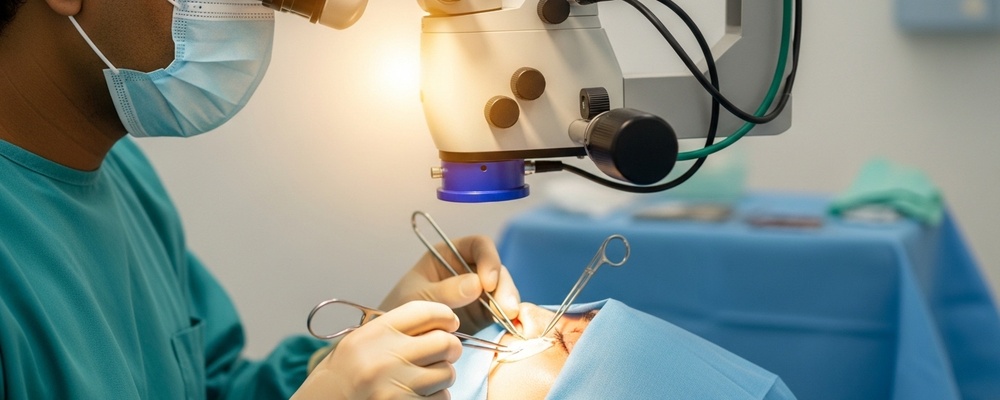
The surgery is performed in a sterile operating room, focusing on precision and your comfort.
- Anesthesia: You will receive general anesthesia, meaning you will be completely asleep and feel no pain during the procedure.
- Eye Preparation: Your eye area will be carefully cleaned, and sterile drapes will be placed around your eye, leaving only the surgical site exposed.
- Muscle Access: The surgeon will make a small incision in the conjunctiva (the clear membrane covering the white part of your eye) to access the ruptured extraocular muscle.
- Muscle Repair: Using fine instruments, the surgeon will carefully locate the ruptured muscle and reattach it to its correct position on the eyeball using very fine, dissolvable sutures. The goal is to restore proper tension and alignment.
- Closure: Once the muscle is repaired, the conjunctival incision is closed with tiny, self-dissolving stitches.
3. What to Expect Immediately After the Procedure
After the surgery, you will be monitored closely as you recover from the anesthesia.
- Recovery Lounge: You will be taken to a recovery area where nurses will monitor your vital signs and ensure you are comfortable.
- Mild Discomfort: It’s normal to experience some mild discomfort, soreness, or a gritty sensation in your eye. Pain medication can be provided if needed.
- Eye Protection: A protective eye patch or shield may be placed over your eye to prevent accidental rubbing and protect it during the initial healing phase.
- Vision: Your vision may be blurry or double immediately after surgery due to the effects of anesthesia and the eye’s adjustment. This usually improves over time.
- Discharge: Once you are fully awake and stable, you will receive detailed post-operative instructions and can be discharged to go home with your arranged escort.
POST-OPERATIVE CARE AND TIMELINE
Recovery and Post-Operative Care
Following your surgeon’s instructions is crucial for a smooth recovery and the best possible outcome.
Do’s:
- Use all prescribed eye drops (antibiotic and anti-inflammatory) exactly as directed.
- Wear your protective eye shield, especially while sleeping, for the first few days.
- Rest adequately and avoid strenuous activities.
- Attend all scheduled follow-up appointments with your ophthalmologist.
- Gently clean around your eye with a clean, damp cloth if advised.
Don’ts:
- Do not rub or press on your operated eye.
- Avoid swimming, hot tubs, or exposing your eye to dirty water for several weeks.
- Do not wear eye makeup for at least 2-4 weeks.
- Avoid heavy lifting, bending, or activities that significantly increase eye pressure.
- Do not drive until your vision has stabilized and your doctor approves.
Recovery Timeline:
- Day 1: You may experience mild pain, redness, swelling, and some blurry or double vision. The eye patch will likely be in place. You will start your eye drops.
- Week 1: Redness and swelling will begin to subside. Vision should start to improve, though some blurriness or occasional double vision might persist. You can usually resume light, non-strenuous activities.
- Month 1: Most of the initial discomfort and redness should be gone. Your eye alignment and vision will continue to stabilize. Your doctor will assess your progress and advise when you can return to all normal activities, including sports. Full healing and final visual outcome can take several months.
COST AND INSURANCE COVERAGE IN HYDERABAD
Cost of Repair of Ruptured Extraocular Muscle in Hyderabad & Insurance Options
- Estimated Local Investment: ₹40000 – ₹80000
- Cost Determinants: The final cost for Repair of Ruptured Extraocular Muscle can vary based on several factors:
- Complexity of the Rupture: More severe or multiple muscle ruptures may require longer or more intricate surgery.
- Number of Muscles Involved: Repairing more than one extraocular muscle will increase the cost.
- Surgeon’s Experience and Fees: Highly experienced surgeons may have higher consultation and surgical fees.
- Hospital Facility Charges: The choice of hospital (e.g., private hospital vs. multi-specialty hospital) and its amenities will impact the overall cost.
- Type of Anesthesia: General anesthesia costs can vary based on duration and the anesthesiologist’s fees.
- Pre- and Post-Operative Care: This includes diagnostic tests, consultations, and follow-up visits.
- Insurance Protocol: Repair of Ruptured Extraocular Muscle is generally considered a ‘Medical Necessity’ as it corrects a functional vision problem (like strabismus or double vision) rather than being purely cosmetic. Therefore, it is typically covered by major Third-Party Administrator (TPA) networks and health insurance schemes in India. Patients are strongly advised to contact their insurance provider directly to understand their specific policy coverage, cashless facility availability, and any required pre-authorization processes before the procedure.
FREQUENTLY ASKED QUESTIONS
Frequently Asked Questions About Repair of Ruptured Extraocular Muscle
Q1: Is the Repair of Ruptured Extraocular Muscle surgery painful?
No, the surgery is performed under general anesthesia, so you will not feel any pain during the procedure. You may experience mild discomfort, soreness, or a gritty sensation in your eye during the initial recovery period, which can be managed with prescribed pain medication.
Q2: How long does it take to recover from this surgery?
Initial recovery, with reduced redness and discomfort, typically takes a few days to a week. However, full healing and stabilization of eye alignment and vision can take several weeks to a few months. Your doctor will guide you on when you can resume normal activities.
Q3: Will my eyes look normal after the surgery?
The primary goal is to restore proper eye alignment and function. While some redness and swelling are normal immediately after surgery, these will subside. Most patients experience a significant improvement in eye alignment, leading to a more natural appearance.
Q4: What are the potential risks of this procedure?
Like any surgery, there are minor risks, including infection, bleeding, persistent double vision, or under/over-correction of the muscle. Serious complications are rare. Your surgeon will discuss all potential risks and benefits with you.
DISCLAIMER
Disclaimer: This content is curated using artificial intelligence and may contain inaccuracies. It is provided for informational and educational purposes only and should not be considered professional medical advice. Please consult your ophthalmologist for personalized clinical care. The prices listed in this article are indicative only and may vary based on the patient’s specific condition, procedural techniques, surgical complexity, and materials used. We strongly advise discussing actual costs directly with your healthcare provider.