
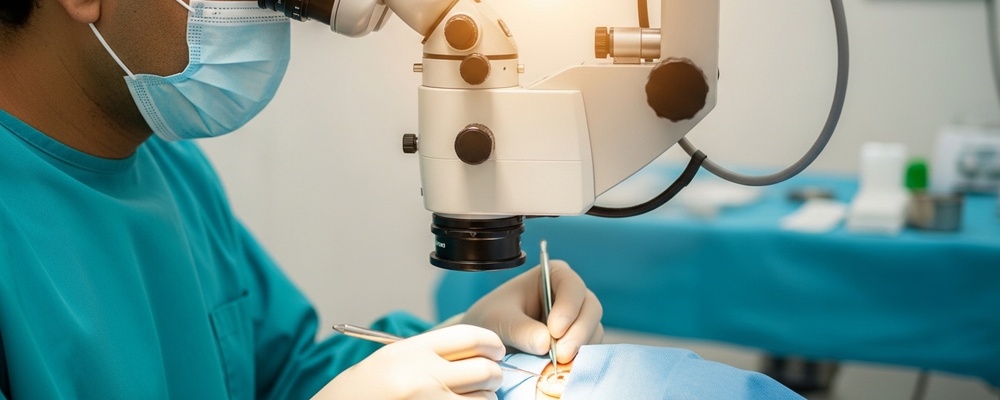
Pediatric / Infant Cataract Surgery with Anterior Vitrectomy and Posterior Capsulorhexis in Hyderabad: Cost, Procedure & Recovery
Pediatric / Infant Cataract Surgery is a specialized procedure designed to restore clear vision in children born with or who develop cataracts. This delicate surgery removes the cloudy lens from your child’s eye, often including additional steps like anterior vitrectomy and posterior capsulorhexis to prevent future complications and ensure long-term visual health.
QUICK FACTS
- Procedure Duration: 15-30 minutes
- Anesthesia Type: General Anesthesia
- Recovery Time: Initial visual recovery within 24-48 hours; full healing over several weeks
- Hospital Stay: Daycare / No overnight admission required
UNDERSTANDING THE BASICS
What is Pediatric / Infant Cataract Surgery with Anterior Vitrectomy and Posterior Capsulorhexis?
Imagine your child’s eye like a camera, and the lens inside is like the camera’s focusing glass. A cataract is when this natural lens becomes cloudy, much like a foggy window, making it hard for light to pass through and for your child to see clearly. Pediatric / Infant Cataract Surgery involves carefully removing this cloudy lens.
In this specific procedure, ‘Anterior Vitrectomy’ means removing a small amount of the jelly-like substance (vitreous) from the front part of the eye, which helps prevent scar tissue formation. ‘Posterior Capsulorhexis’ involves creating a small, precise opening in the back part of the lens capsule (the bag that holds the lens) to further reduce the risk of the cataract returning or causing other vision problems. Together, these steps aim to provide your child with the clearest possible vision.
CONDITIONS AND SYMPTOMS
Why is Pediatric / Infant Cataract Surgery with Anterior Vitrectomy and Posterior Capsulorhexis performed?
Eye Conditions Treated
- Congenital Cataracts: Clouding of the eye’s natural lens present at birth.
- Developmental Cataracts: Cataracts that develop during childhood.
- Traumatic Cataracts: Cataracts resulting from an eye injury.
- Secondary Cataracts: Cataracts that form due to other eye conditions or medical treatments.
- Persistent Fetal Vasculature (PFV) related cataracts.
Symptoms You Might Be Experiencing
- A white or grayish spot visible in the pupil (the black center of the eye).
- Poor vision or difficulty tracking objects.
- Nystagmus (involuntary, rapid eye movements).
- Strabismus (eyes that do not look in the same direction, or “squint”).
- Difficulty seeing in bright light or glare.
- Lack of visual attention or delayed visual development.
SURGICAL JOURNEY STEP-BY-STEP
How is the Pediatric / Infant Cataract Surgery with Anterior Vitrectomy and Posterior Capsulorhexis Procedure Performed?
1. How to Prepare Before the Procedure
1. Comprehensive Eye Exam: Your child will undergo a thorough eye examination, including measurements of the eye to determine the appropriate lens implant (if applicable).
2. Medical Clearance: A pediatrician will assess your child’s overall health to ensure they are fit for general anesthesia and surgery.
3. Medication Review: Inform your doctor about all medications your child is taking. Certain medications might need to be stopped temporarily.
4. Fasting Instructions: You will receive specific instructions regarding when your child needs to stop eating and drinking before the surgery to ensure safety under anesthesia.
5. Arrange Support: Plan for transportation and post-operative care, as your child will need constant supervision after discharge.
2. What Happens During the Procedure?
1. Anesthesia: Your child will be given general anesthesia to ensure they are completely asleep and feel no pain throughout the surgery.
2. Preparation: The area around your child’s eye will be cleaned, and sterile drapes will be placed to maintain a sterile surgical field.
3. Micro-Incision: The surgeon will make tiny, precise incisions in the eye, often less than 3mm, using advanced microsurgical instruments.
4. Cataract Removal: The cloudy natural lens is carefully broken up and removed using a technique called phacoemulsification (using ultrasound waves) or aspiration.
5. Posterior Capsulorhexis: A small, circular opening is created in the back of the lens capsule to prevent future clouding.
6. Anterior Vitrectomy: A small amount of the vitreous gel from the front of the eye is removed to reduce the risk of complications.
7. Lens Implantation (if applicable): In many cases, an artificial intraocular lens (IOL) is implanted to replace the natural lens. For infants, this may be done at a later stage or contact lenses/glasses used.
8. Closure: The tiny incisions are usually self-sealing and may not require stitches. An eye shield or patch will be placed over the eye for protection.
3. What to Expect Immediately After the Procedure
1. Recovery Room: Your child will be monitored in a recovery area as they wake up from general anesthesia.
2. Eye Protection: An eye shield or patch will be placed over the operated eye to protect it from accidental rubbing or injury.
3. Mild Discomfort: Your child might experience mild discomfort, irritation, or a gritty sensation in the eye, which can be managed with prescribed pain relief.
4. Blurred Vision: Vision will likely be blurry immediately after surgery due to swelling and the effects of the procedure. This will gradually improve.
5. Discharge Instructions: You will receive detailed instructions on eye drop administration, activity restrictions, and follow-up appointments before being discharged.
POST-OPERATIVE CARE AND TIMELINE
Recovery and Post-Operative Care
Do’s:
- Administer prescribed eye drops exactly as instructed to prevent infection and reduce inflammation.
- Ensure your child wears the eye shield, especially during sleep and naps, for the first few days to weeks.
- Keep follow-up appointments diligently for monitoring healing and visual development.
- Encourage quiet activities and rest.
- Gently clean around the eye with a clean, damp cloth if there’s any discharge.
Don’ts:
- Do not allow your child to rub or press on the operated eye.
- Avoid getting water directly into the eye (e.g., during baths or showers) for at least a week.
- Restrict strenuous activities, rough play, or anything that could cause eye injury for several weeks.
- Do not allow swimming for at least a month.
- Avoid dusty or smoky environments.
Day 1: Your child will have their first post-operative check-up. The eye patch may be removed, and vision will likely be blurry. You’ll continue with prescribed eye drops.
Week 1: Vision will start to clear, and discomfort should subside. Continue eye drops and eye shield as advised. Your child may gradually resume light activities, avoiding anything that could impact the eye.
Month 1: Most of the initial healing will be complete. Your child’s vision will have significantly improved, and they will likely be fitted for glasses or contact lenses to optimize their vision. Regular follow-up appointments will continue to monitor visual development and eye health.
COST AND INSURANCE COVERAGE IN HYDERABAD
Cost of Pediatric / Infant Cataract Surgery with Anterior Vitrectomy and Posterior Capsulorhexis in Hyderabad & Insurance Options
- Estimated Local Investment: ₹80000 – ₹130000
- Cost Determinants:
- Type of Intraocular Lens (IOL): While IOLs may not always be implanted in infants immediately, if chosen, premium or specialized IOLs can increase costs.
- Surgeon’s Experience and Reputation: Highly experienced pediatric ophthalmologists may have higher consultation and surgical fees.
- Hospital Facility: The choice of hospital (e.g., multi-specialty vs. specialized eye hospital, private vs. government-aided) significantly impacts the overall cost.
- Anesthesia Charges: The cost of general anesthesia and the anesthesiologist’s fees.
- Pre-operative Tests and Post-operative Care: Extensive diagnostic tests and the duration/complexity of follow-up care can influence the total expense.
- Complexity of the Case: More complex cataracts or additional eye conditions requiring extra surgical steps can increase the price.
- Insurance Protocol: Pediatric / Infant Cataract Surgery is generally considered a therapeutic ‘Medical Necessity’ as it addresses a serious vision-impairing condition crucial for a child’s visual development. As such, it is typically covered by major Third-Party Administrator (TPA) networks and most health insurance schemes in India. However, it is essential to verify the specifics of your policy, including co-pays, deductibles, and any waiting periods, directly with your insurance provider or the hospital’s billing department. Corporate policies or government schemes like Aarogyasri may also offer coverage, but pre-authorization is usually required.
FREQUENTLY ASKED QUESTIONS
Frequently Asked Questions About Pediatric / Infant Cataract Surgery with Anterior Vitrectomy and Posterior Capsulorhexis
1. Q: Is Pediatric / Infant Cataract Surgery painful for my child?
- A: No, your child will be under general anesthesia during the entire procedure, ensuring they feel no pain. Post-surgery discomfort is usually mild and manageable with prescribed medication.
2. Q: How long does it take for my child’s vision to improve after surgery?
- A: Initial vision improvement is often noticed within days, but full visual recovery and adaptation can take several weeks to months, requiring consistent follow-up and visual rehabilitation.
3. Q: Will my child need glasses after Pediatric / Infant Cataract Surgery?
- A: Yes, most children will require glasses or contact lenses after cataract surgery to achieve the best possible vision, especially if an intraocular lens (IOL) was not implanted or if there’s residual refractive error.
4. Q: What are the risks associated with this surgery?
- A: While generally safe, potential risks include infection, inflammation, glaucoma, retinal detachment, or the need for further surgery. Your surgeon will discuss these thoroughly.
DISCLAIMER
Disclaimer: This content is curated using artificial intelligence and may contain inaccuracies. It is provided for informational and educational purposes only and should not be considered professional medical advice. Please consult your ophthalmologist for personalized clinical care. The prices listed in this article are indicative only and may vary based on the patient’s specific condition, procedural techniques, surgical complexity, and materials used. We strongly advise discussing actual costs directly with your healthcare provider.