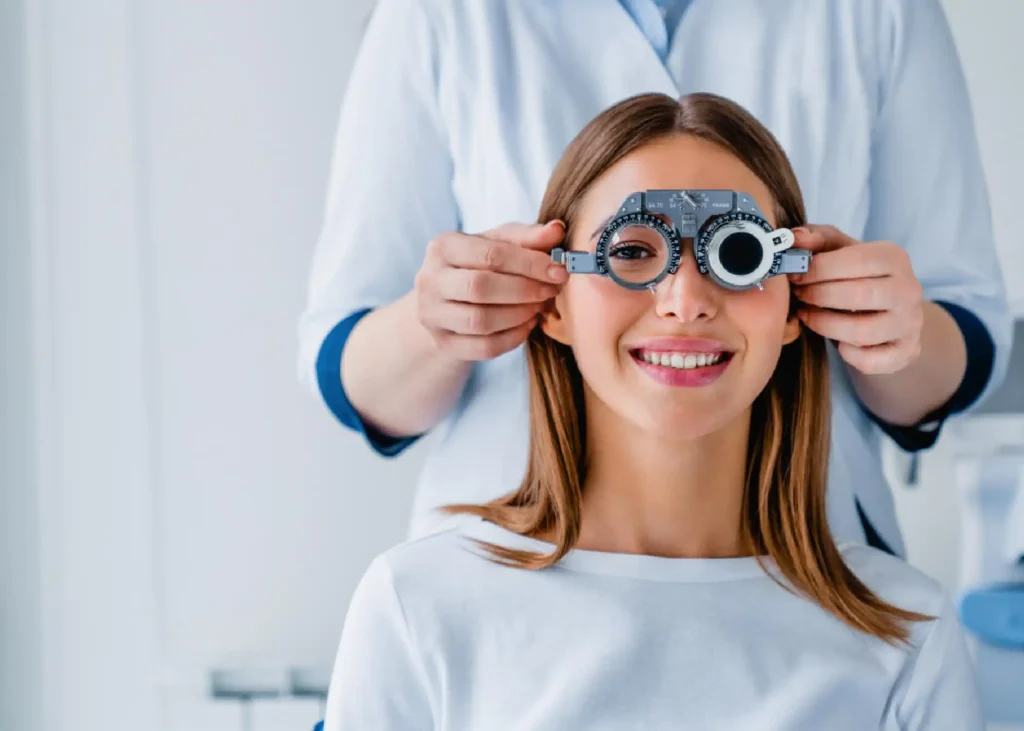
If you spend many hours on computers or phones, the right lens coating combination can make a real difference to comfort and clarity. The most useful mix for heavy screen users is anti-reflective (AR) coating + anti-smudge coating, with blue light filtering added selectively. AR coating reduces glare and eye fatigue, anti-smudge keeps lenses clear and easy to clean, and blue light filters may help with comfort for some users—especially at night. No coating “cures” digital eye strain, but the right combination can significantly reduce daily discomfort.
Best Lens Coating Combos for Heavy Screen Users
A senior ophthalmologist’s guide for patients who live on digital devices
Introduction: Why lens coatings matter in the digital age
Over the past decade, the way we use our eyes has changed dramatically. Many of my patients—students, IT professionals, designers, gamers, office workers, and even schoolchildren—spend 8 to 12 hours a day looking at screens. Laptops, smartphones, tablets, and large monitors are now part of daily life.
With this shift, I hear the same complaints repeatedly: eye strain, headaches, burning eyes, blurred vision by evening, and difficulty focusing. Collectively, we call this digital eye strain or computer vision syndrome.
While good screen habits and regular eye exams are essential, lens coatings play an important supporting role. Patients often ask me:
“Doctor, which coating is best for computer use?”
The honest answer is not one single coating—but the right combination.
This article will walk you through the most common lens coatings, explain what they actually do (and what they don’t), and help you choose the best coating combinations for heavy screen use.
Understanding digital eye strain in simple terms
Before we talk about coatings, it helps to understand why screens are tiring for the eyes.
When you look at a screen for long periods:
- You blink less than normal, leading to dryness
- Your eyes constantly refocus due to small pixel contrasts
- Bright screens and reflections increase glare
- Long hours of near work fatigue eye muscles
Lens coatings do not fix all of these problems. But they can reduce glare, improve clarity, and make lenses more comfortable to use, especially in artificial lighting.
The core lens coatings explained (without jargon)
Anti-Reflective (AR) coating – the foundation for screen users
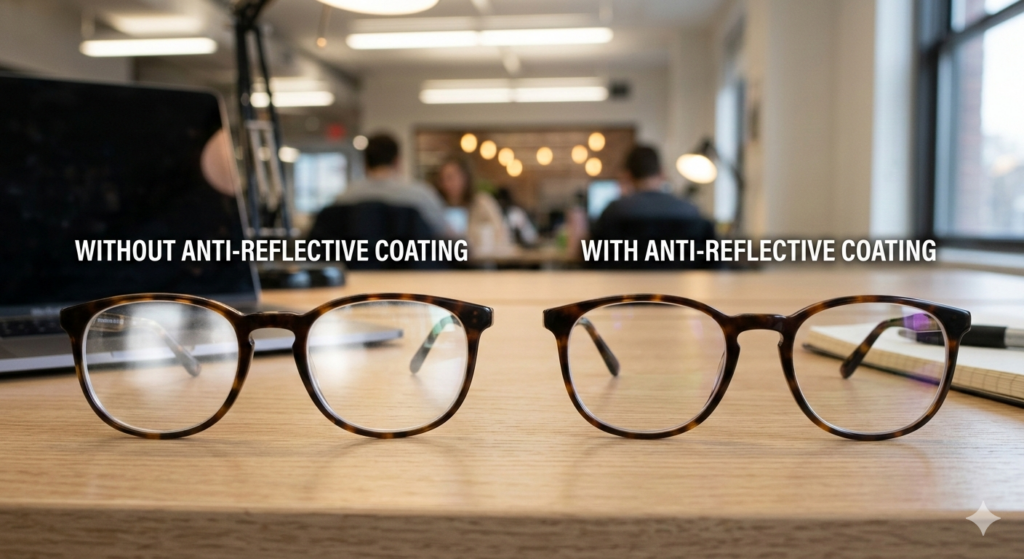
If I had to choose one coating that every heavy screen user must have, it would be anti-reflective coating.
AR coating reduces reflections from both the front and back surfaces of your lenses. Without it, light from screens, ceiling lights, and windows bounces off your lenses and enters your eyes as glare.
For screen users, AR coating helps by:
- Reducing glare from monitors and overhead lighting
- Improving contrast and sharpness
- Reducing eye fatigue by the end of the day
- Making lenses look clearer to others (important for video calls)
Most patients notice an immediate improvement when they switch to AR-coated lenses.
Blue light filtering – useful, but often misunderstood
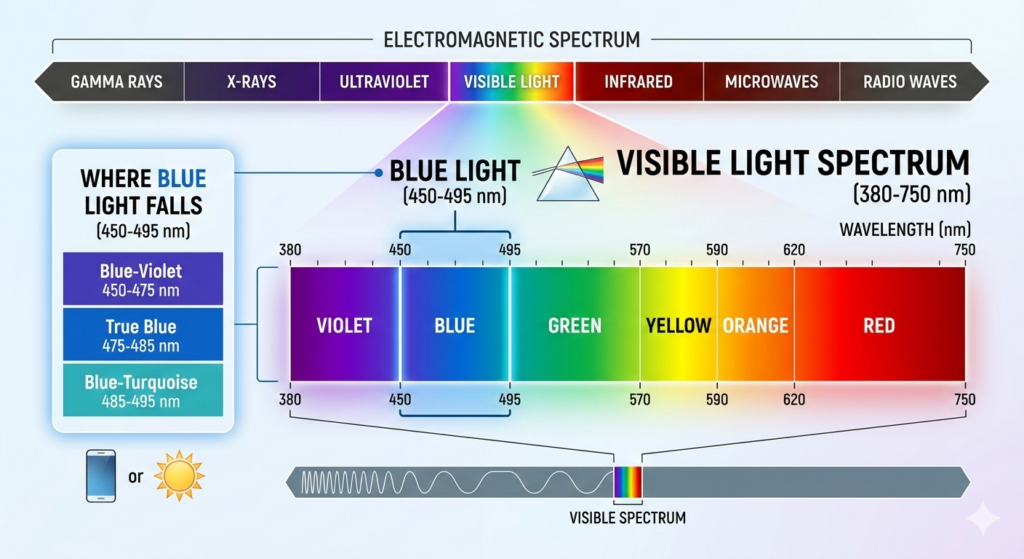
Blue light filtering coatings are widely discussed—and often oversold.
Screens emit blue-violet light, which is part of the visible light spectrum. This light scatters more than other wavelengths and may contribute to visual discomfort in some people, especially in low-light or nighttime use.
Blue light filter lenses work by:
- Reducing a portion of blue-violet light
- Slightly warming the color tone of what you see
- Potentially improving comfort for long screen sessions
However, it is important to be clear and honest:
- Blue light from screens is not proven to cause eye disease
- These coatings do not prevent retinal damage
- Benefits vary from person to person
Some patients love blue light filters. Others feel no difference. A few dislike the mild color shift.
As ophthalmologists, we often refer patients to guidance from organizations like the American Academy of Ophthalmology, which emphasizes that comfort—not protection—is the main reason to consider blue filters.
Anti-smudge and oleophobic coatings – underestimated but essential
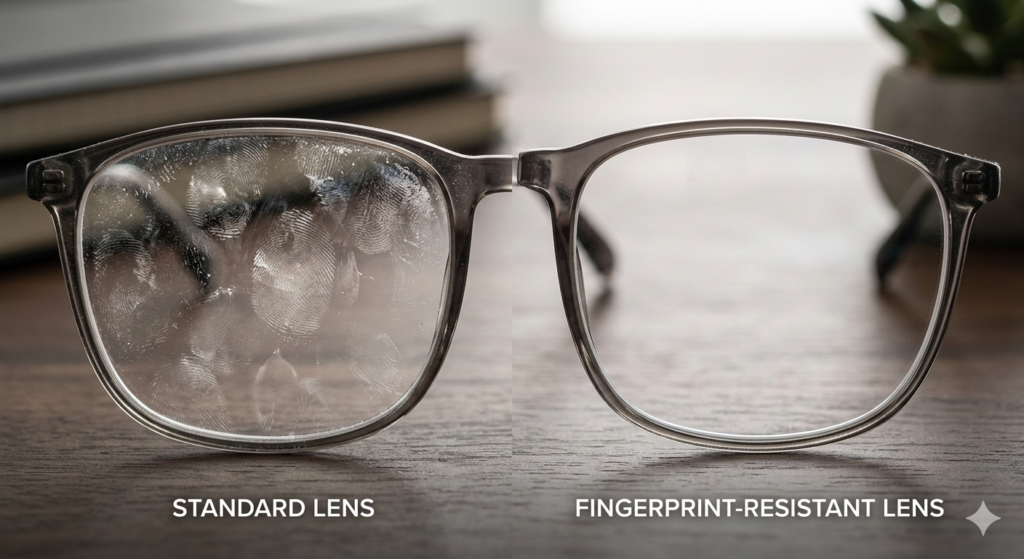
Many patients overlook anti-smudge coatings until they experience them.
These coatings:
- Repel oil, dust, and fingerprints
- Make lenses easier to clean
- Keep vision clearer throughout the day
For screen users, this matters more than you might think. Smudges increase light scatter and glare, which adds to eye strain. Constantly cleaning lenses also becomes annoying during work.
In my experience, patients who upgrade to anti-smudge coatings rarely want to go back.
Best lens coating combinations for heavy screen users
Now let’s put everything together. Instead of choosing coatings individually, think in terms of combinations that match your lifestyle.
Combination 1: AR + Anti-Smudge (best overall for most users)

This is the gold standard I recommend to most heavy screen users.
Why this combination works:
- AR coating reduces glare from screens and lights
- Anti-smudge keeps lenses clean and optically clear
- No color distortion
- Suitable for all-day wear
This combination is ideal if:
- You work long hours on a computer
- You attend frequent video calls
- You want clear, natural vision
- You dislike tinted lenses
For many patients, this combination alone significantly reduces end-of-day eye fatigue.
Combination 2: AR + Anti-Smudge + Blue Light Filter (for selected users)
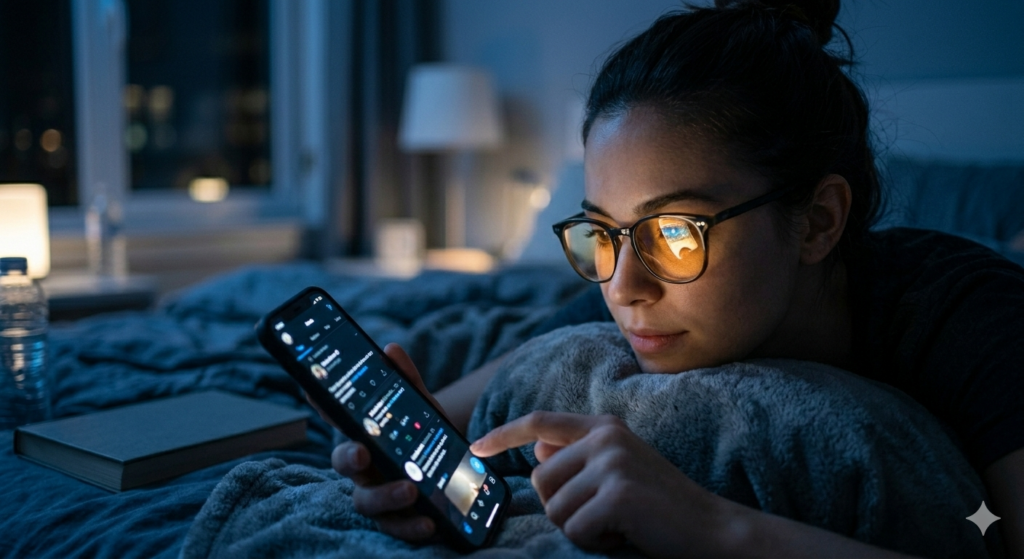
This is the most commonly marketed combination today—and it does help some people.
This combination may be useful if:
- You work late into the night
- You feel screen discomfort worsens after sunset
- You use multiple screens for extended periods
- You are sensitive to bright light
Important caveat:
Blue light filtering is optional, not mandatory. If you try it and feel no benefit, there is no harm in switching back to standard AR lenses.
Combination 3: AR + Anti-Smudge + Light Photochromic (for mixed use)
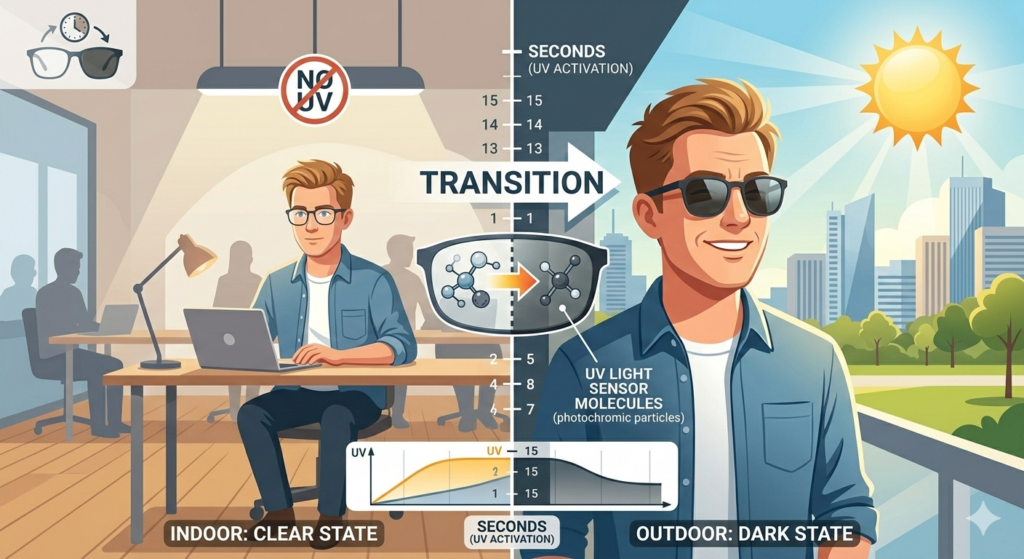
Some patients move frequently between indoor screens and outdoor environments.
A light photochromic lens that darkens slightly outdoors—combined with AR and anti-smudge—can be helpful if:
- You work near windows with bright sunlight
- You commute frequently between meetings
- You want one pair of glasses for indoor and outdoor use
However, note that photochromic lenses do not replace sunglasses and are not essential for pure indoor screen work.
What lens coatings cannot do (important reality check)
As a doctor, I believe in setting realistic expectations.
Lens coatings:
- Do not cure digital eye strain on their own
- Do not replace proper screen habits
- Do not eliminate the need for breaks
- Do not fix incorrect prescriptions
If your glasses power is inaccurate, no coating will help. This is why regular eye examinations are critical for heavy screen users.
Supporting habits that make coatings work better
Even the best lens coating works best when combined with good visual habits.
I advise my patients to:
- Follow the 20-20-20 rule (every 20 minutes, look 20 feet away for 20 seconds)
- Blink consciously during screen use
- Adjust screen height slightly below eye level
- Use adequate ambient lighting
- Keep screens clean and reduce brightness at night
Lens coatings reduce stress on the eyes—but lifestyle habits complete the picture.
When to see an ophthalmologist
You should not assume all discomfort is “normal screen strain.”
Please consult an eye doctor if you experience:
- Persistent headaches
- Burning or gritty sensation
- Blurred vision that does not clear with blinking
- Double vision
- Difficulty focusing even with glasses
Sometimes dry eye disease, uncorrected refractive error, or binocular vision problems are the real cause—and coatings alone will not solve them.
Call to action: Get personalized advice, not generic marketing
Every pair of eyes is different. The best lens coating combination depends on:
- Your prescription
- Your daily screen hours
- Lighting conditions
- Work schedule
- Eye health
I strongly encourage you to book a comprehensive eye examination and discuss your screen habits honestly with your ophthalmologist. Together, you can choose a lens coating combination that genuinely improves comfort—not just one that sounds impressive.
References
- American Academy of Ophthalmology – Digital Eye Strain
https://www.aao.org/eye-health/tips-prevention/digital-devices-your-eyes - Mayo Clinic – Eyestrain
https://www.mayoclinic.org/symptoms/eyestrain - National Institutes of Health – Computer Vision Syndrome
https://www.ncbi.nlm.nih.gov - NHS – Screen use and eye health
https://www.nhs.uk