7 Surprising Signs You Might Have Dry Eye (Even With Watery Eyes)

Dry eye doesn’t always feel “dry.” In fact, one of the most confusing signs is watery eyes—because irritation from an unstable tear film can trigger reflex tearing (your eye’s emergency overflow). Other sneaky clues include burning, gritty “sand-in-the-eye” sensation, blurry vision that improves after blinking, redness, stringy mucus, contact lens discomfort, and worse symptoms during screens or air-conditioned rooms. Dry eye is treatable, but the right treatment depends on the cause—so a proper eye exam matters.
As an ophthalmologist, one of the most common sentences I hear is:
“Doctor, my eyes can’t be dry… they keep watering.”
It’s a completely understandable assumption. Tears equal moisture, right?
But the tear system is more like a smart irrigation setup than a simple water tap. You can have plenty of tears and still have a “dry” ocular surface if the tears are poor quality, evaporate too quickly, or don’t spread evenly.
That’s why dry eye disease is often missed—especially in younger adults who spend long hours on screens, wear contact lenses, commute in polluted air, or sit in air-conditioned environments.
Let’s break this down clearly: what dry eye really is, why watery eyes can happen, and the 7 surprising signs that should make you consider dry eye even if you’re tearing.
Why This Topic Matters
Dry eye is not just “mild irritation.” For some people it becomes a daily quality-of-life issue—affecting reading, driving, work productivity, screen tolerance, and even mood and sleep.
And importantly: untreated dry eye can create a cycle of inflammation and surface damage that makes symptoms harder to control later. Modern treatments work well, but only if we identify the pattern early and treat the right mechanism.
The Basics: What “Dry Eye” Actually Means
Dry eye disease happens when your eyes don’t have a stable, healthy tear film. That can happen because:
- You don’t make enough watery tears (less common in young people), or
- Your tears evaporate too fast (very common), or
- The tear film is imbalanced—so it breaks up quickly and leaves dry patches.
The tear film has three main functional parts:
- Oil layer (from meibomian glands in your eyelids) – slows evaporation
- Watery layer (from lacrimal glands) – provides hydration and nutrients
- Mucin layer (from surface cells) – helps tears “stick” evenly to the eye
If the oil layer is weak (often due to meibomian gland dysfunction), tears evaporate fast and the eye surface gets irritated—even if watery tears are being produced.
The American Academy of Ophthalmology explains dry eye as a problem of not enough tears or the wrong kind of tears (poor quality/too fast evaporation). (AAO)
The Big Confusion: How Can Dry Eye Cause Watery Eyes?

Here’s the key idea:
Watery eyes can be a reflex response to dryness and irritation.
When the surface of the eye becomes irritated, your nerves send an “alarm signal.” The lacrimal gland responds by producing a quick rush of watery tears—almost like an emergency sprinkler system. This can overflow onto your cheeks.
But these reflex tears are often:
- too watery,
- not well mixed with oil,
- and don’t stay on the eye long enough to lubricate properly.
That’s why people can have watering + burning + gritty discomfort all at the same time.
Mayo Clinic lists watery eyes as a symptom of dry eye, describing it as the body’s response to irritation. (Mayo Clinic)
NHS guidance also notes that eyes can be “more watery than normal” in dry eye. (nhs.uk)
7 Surprising Signs You Might Have Dry Eye (Even With Watery Eyes)
1) Your Eyes Water Most in Wind, AC, Fans, or While Riding a Bike

If your eyes water when you’re outdoors, in air-conditioning, under a ceiling fan, or during a two-wheeler commute, dry eye should be on the shortlist.
Why? These environments increase evaporation. The eye surface dries faster, becomes irritated, and triggers reflex tearing.
This pattern is so common that many people label it “sensitive eyes” or “allergy,” but it can be classic evaporative dry eye.
2) Burning or Stinging (Even If You Don’t Feel “Dry”)
Many patients expect dryness to feel like… dryness. But the most common description I hear is:
“It burns.”
“It stings.”
“It feels hot.”
That’s because an unstable tear film exposes the surface cells, increasing inflammation and sensitivity.
Both NEI and Mayo Clinic list burning/stinging as common dry eye symptoms. (National Eye Institute)
3) A Gritty “Sand-in-the-Eye” Feeling (Especially Later in the Day)
That gritty sensation—like there’s dust, an eyelash, or sand—is one of the most classic dry eye symptoms.
It often worsens:
- late afternoon/evening,
- after long screen sessions,
- after driving,
- after being in polluted air.
NHS descriptions of dry eye frequently include “gritty” or “sore” eyes. (nhs.uk)
4) Blurry Vision That Improves After Blinking
This one surprises people the most, especially younger adults who think blurred vision must mean a glasses number change.
With dry eye, the tear film breaks up unevenly. That irregular surface can blur vision temporarily. When you blink, you spread the tear film again and vision clears—until it breaks up again.
If your vision:
- fluctuates,
- is worse after screens,
- improves with blinking or drops,
dry eye is a strong possibility.
NEI lists blurry vision as a symptom of dry eye. (National Eye Institute)
Image suggestion: Simple animation-style frames showing tear film breakup causing fluctuating blur
5) Redness That Comes and Goes (Especially With “Tired-Looking” Eyes)
Redness doesn’t always mean infection. In dry eye, redness often:
- fluctuates,
- feels worse with strain,
- comes with a “tired eye” look,
- improves temporarily with rest or lubricants.
If redness is paired with burning, grittiness, or watering, dry eye should be considered before repeatedly using “redness relief” drops (many of those can worsen dryness if overused).
Mayo Clinic includes eye redness among typical dry eye symptoms. (Mayo Clinic)
6) Stringy Mucus or “Sticky” Discharge (Not the Thick Yellow Kind)
Dry eye can cause a stringy mucus or sticky feeling—especially on waking up or after long hours.
This is different from the thick yellow-green discharge seen in bacterial infection. The stringiness happens because the tear film is unstable and the surface becomes inflamed.
Mayo Clinic and NHS-based hospital guidance describe stringy mucus as a symptom. (Mayo Clinic)
7) You Suddenly Can’t Tolerate Contact Lenses or Screens Like You Used To

Two modern triggers make dry eye show up earlier than most people expect:
Screens: We blink less and more incompletely while focusing. That increases evaporation and destabilizes the tear film.
Contact lenses: They alter tear film dynamics and can worsen evaporation and surface irritation.
If you notice:
- contact lenses feel uncomfortable faster than before,
- you need to remove them earlier,
- your eyes feel strained after video calls,
- your symptoms spike after gaming or scrolling,
dry eye is a likely contributor.
Mayo Clinic lists contact lens discomfort and difficulty with nighttime driving among symptoms that can accompany dry eye. (Mayo Clinic)
Common Causes and Risk Factors (In Plain Language)
Dry eye is usually multifactorial—meaning more than one factor contributes.
Common contributors include:
- Long screen time and reduced blinking
- Air-conditioning, heaters, fans, low humidity
- Smoke, pollution, dust exposure
- Contact lens use
- Eyelid gland blockage (meibomian gland dysfunction)
- Allergy eye rubbing (often overlaps with dry eye)
- Certain medications (for example, some antihistamines or antidepressants)
- Autoimmune conditions (like Sjögren’s syndrome—less common in young adults but important to consider if there is severe dryness elsewhere)
Dry eye is common and well-recognized by major eye health organizations. (National Eye Institute)
How We Diagnose Dry Eye in Clinic
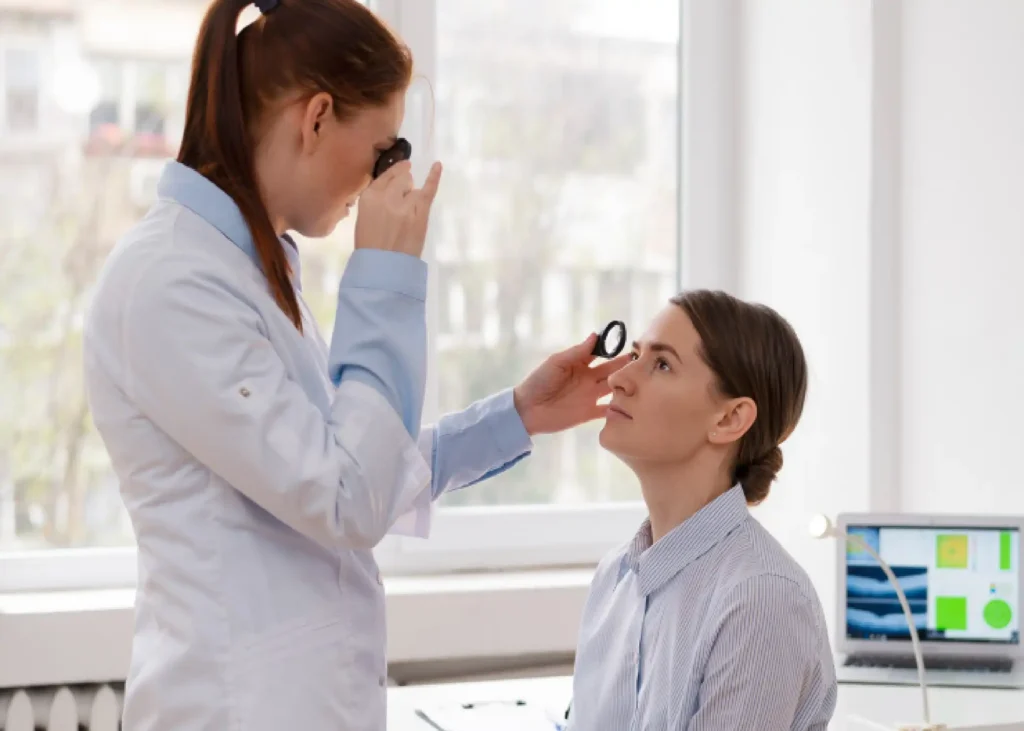
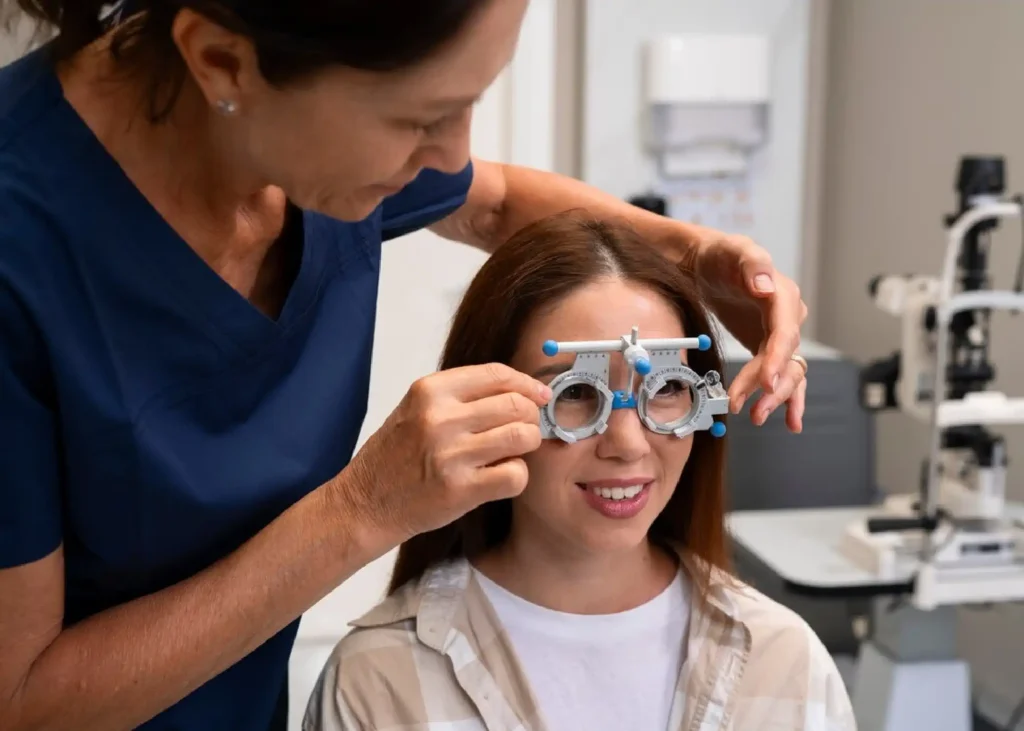
A proper dry eye evaluation is more than a quick look.
In clinic, we typically assess:
- Your symptom pattern (when it worsens, triggers, screen use, contact lens habits)
- Eyelids and meibomian glands (oil quality and blockage)
- Tear film stability (how quickly it breaks up)
- Surface staining (special dye to see dry spots or damage)
- Tear production (sometimes using tests like Schirmer’s)
The National Eye Institute notes that diagnosis can include an eye exam and measuring the amount/thickness of tears. (National Eye Institute)
Treatment Options That Actually Help (And Why They Work)
Treatment depends on the cause. Many people try random eye drops without addressing the underlying issue—especially eyelid gland dysfunction.
Daily habits that make a real difference
If you do nothing else, start here:
- Take screen breaks and blink fully (many people blink halfway without realizing)
- Adjust your environment (avoid direct fan/AC toward your face)
- Consider a humidifier in very dry rooms
- Wear wraparound glasses outdoors if wind triggers watering
- Stay consistent with sleep (dry eye often flares with poor sleep)
Lubricating drops: choosing wisely
Artificial tears can be very effective, but match them to your situation:
- Preservative-free drops are safer if you need them frequently.
- Some drops target evaporation by supporting the lipid (oil) layer.
If you’re using drops many times a day and still struggling, it’s a sign you need a proper evaluation—not just “stronger drops.”
Warm compress and lid hygiene (especially if you have oily gland blockage)
If you have:
- watering + burning,
- eyelid margin redness,
- crusting,
- frequent styes,
you may have meibomian gland dysfunction. Warm compresses can improve oil flow and reduce evaporation in many patients.
Prescription treatments (when basic steps aren’t enough)
For moderate to severe dry eye, ophthalmologists may consider:
- Anti-inflammatory prescription drops (to calm the cycle of irritation)
- Tear conservation methods like punctal plugs (in selected cases)
- Newer options such as varenicline nasal spray to stimulate tear production (not for everyone)
Mayo Clinic’s treatment overview includes punctal plugs and varenicline nasal spray among options used in appropriate patients. (Mayo Clinic)
Advanced options for severe disease
For people with significant surface disease, we may consider:
- Special contact lenses (like scleral lenses) that protect the surface
- Autologous serum drops (made from the patient’s blood, in select severe cases)
- Treating associated eyelid or autoimmune conditions
The key message: dry eye is highly treatable, but it’s not “one-size-fits-all.”
When to See an Eye Doctor (Don’t Ignore These)
Please get an eye evaluation soon if you have:
- Symptoms lasting more than 2–3 weeks despite basic care
- Significant light sensitivity
- Eye pain (not just mild discomfort)
- Sudden vision changes
- One eye much worse than the other
- Thick discharge, fever, or swelling around the eye
- History of autoimmune disease or very dry mouth/skin along with eye symptoms
Watery eyes can have causes other than dry eye (blocked tear drainage, eyelid position issues, allergies, infection). AAO guidance on tearing emphasizes that excessive tearing can come from either overproduction or impaired drainage—so persistent tearing deserves evaluation. (AAO)
A Practical Takeaway You Can Use Today
If you remember just one concept, make it this:
Watery eyes don’t rule out dry eye. They can be a clue.
If your eyes water and you also have burning, grittiness, fluctuating blur, redness, or screen intolerance, it’s worth treating the surface properly rather than assuming “more tears = more moisture.”
Call to Action

If you’re dealing with watering, irritation, or screen-related eye discomfort, book a comprehensive eye exam with an ophthalmologist. In most cases, we can identify the pattern quickly and build a treatment plan that fits your lifestyle—whether you’re a student, a working professional, or a contact lens user.
References
- American Academy of Ophthalmology — Dry eye overview and symptoms. (AAO)
- National Eye Institute (NIH) — Dry eye symptoms, diagnosis, treatment. (National Eye Institute)
- Mayo Clinic — Dry eye symptoms (includes watery eyes) and causes. (Mayo Clinic)
- NHS — Dry eyes symptoms (including watery eyes). (nhs.uk)
- AAO EyeNet — Approach to tearing (epiphora) and evaluation. (AAO)