
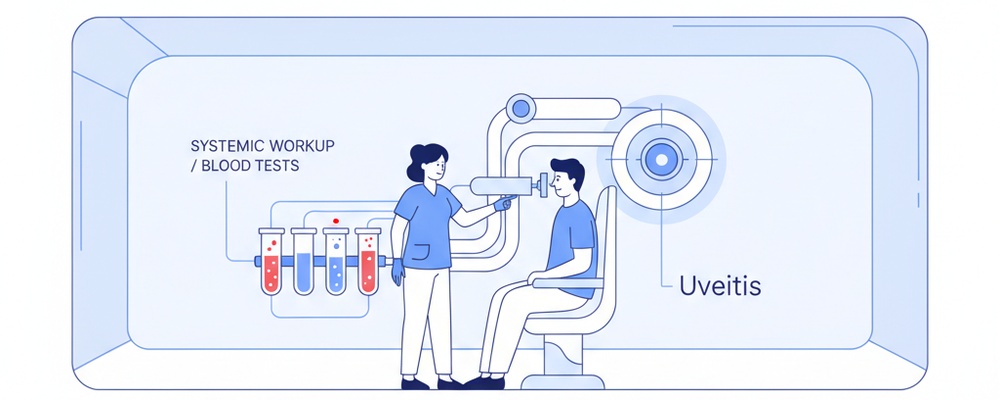
Uveitis, or inflammation inside the eye, is often a sign of a condition affecting your entire body. A systemic workup, primarily through specialized blood tests, is a crucial diagnostic step to uncover the root cause of your eye inflammation. This helps our specialists at Pristine Eye Hospitals create a targeted and effective treatment plan.
What is a Systemic Workup / Blood Tests (Uveitis)?
A systemic workup is not a single test but a comprehensive panel of laboratory investigations designed to detect underlying systemic diseases. For uveitis patients, this involves analysing blood samples for specific inflammatory markers, antibodies, and evidence of infectious agents. By examining these factors, our ophthalmologists can identify or rule out autoimmune conditions (like ankylosing spondylitis or sarcoidosis) or infections (like tuberculosis or syphilis) that are known to cause uveitis.
Why is this test performed?
This comprehensive testing is essential for several key reasons:
To Identify the Root Cause: It helps pinpoint the specific autoimmune disease or infection responsible for the eye inflammation.
To Guide Treatment: Knowing the underlying cause allows for targeted therapy that treats not just the eye but the entire body, leading to better outcomes.
To Rule Out Serious Conditions: The workup helps eliminate other potential systemic diseases that may present with uveitis, ensuring an accurate diagnosis.
To Prevent Recurrence: By managing the systemic condition, we can significantly reduce the frequency and severity of future uveitis flare-ups.
How to Prepare for Your Systemic Workup / Blood Tests (Uveitis)
Preparation is generally straightforward, but it is important to follow your doctor’s specific instructions to ensure accurate results. You will be given detailed guidance by our team at Pristine Eye Hospitals before your appointment.
Fasting: Some tests may require you to fast (not eat or drink anything except water) for 8-12 hours beforehand.
Medications: Inform your doctor about all medications, vitamins, and supplements you are currently taking, as some may need to be temporarily stopped.
Hydration: It is generally a good idea to drink plenty of water before a blood test unless instructed otherwise, as it can make it easier to draw blood.
The Procedure: What to Expect Step-by-Step
The process is quick and performed by a trained phlebotomist.
1. Preparation: A technician will clean an area of skin on your arm, usually on the inside of your elbow, with an antiseptic wipe.
2. Blood Draw: A sterile needle is gently inserted into a vein. You may feel a brief, sharp prick.
3. Collection: Blood is collected into one or more special vials. The number of vials depends on how many different tests have been ordered.
4. Completion: Once the required amount of blood is collected, the needle is removed. A cotton ball and bandage are applied to the site to stop any bleeding.
Understanding Your Results
The results of your systemic workup are not a simple “positive” or “negative.” They form a complex set of data that your uveitis specialist at Pristine Eye Hospitals will carefully interpret in conjunction with your clinical eye examination, symptoms, and medical history. This complete picture is essential for an accurate diagnosis.
These results can reveal markers for specific conditions, such as the HLA-B27 antigen (associated with ankylosing spondylitis), elevated ACE levels (suggesting sarcoidosis), or antibodies indicating an infection. A definitive diagnosis allows us to initiate a highly targeted treatment plan, which may involve collaboration with other specialists like a rheumatologist, to manage both your eye health and overall well-being effectively.
Frequently Asked Questions
Is the blood test for uveitis painful?
You will likely feel a quick, sharp prick as the needle is inserted, but the discomfort is minimal and lasts only a few seconds. The site may be slightly sore for a short time afterward.
How long will it take to get my results?
The turnaround time varies depending on the specific tests ordered. Some results may be available within a day, while more specialized tests can take a week or longer to process.
What if my blood tests all come back normal?
In many cases of uveitis, a specific systemic cause is never found; this is known as “idiopathic uveitis.” Even with normal results, the workup is crucial for ruling out serious underlying conditions that require specific treatment.