
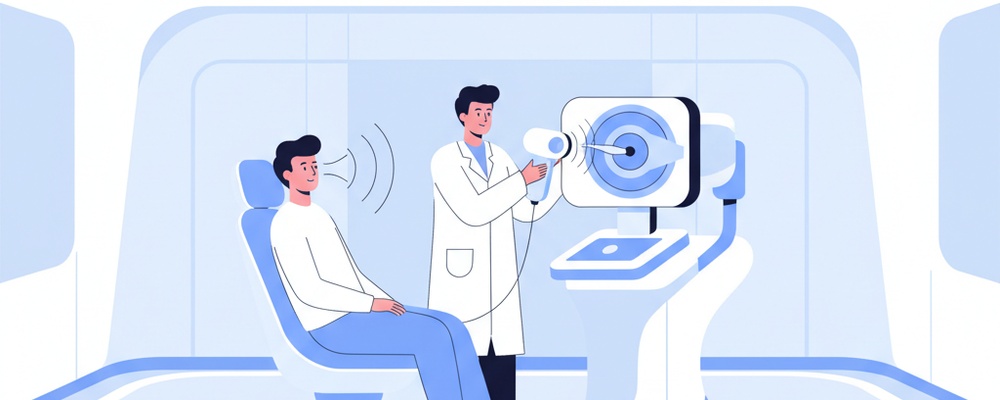
A B-Scan Ultrasound is a crucial diagnostic tool that allows our specialists to see the structures at the back of your eye, even when the view is blocked. This non-invasive test provides a detailed, two-dimensional cross-section of your eye and its orbit, ensuring an accurate diagnosis. It is essential for managing a wide range of retinal and uveal conditions.
What is a B-Scan Ultrasound?
A B-Scan, or Brightness Scan, is a type of ophthalmic ultrasound that uses high-frequency sound waves to create detailed images of the inside of your eye. The sound waves travel through the eye, bounce off internal structures like the retina and optic nerve, and return to a small probe. A computer then converts these returning echoes into a black-and-white, 2D image, allowing your ophthalmologist to visualize and measure structures that cannot be seen directly.
Why is this test performed?
Your doctor may recommend a B-Scan to evaluate the back of your eye when a direct view is obstructed. Common reasons include:
Dense Cataracts: When a cataract is too cloudy, it prevents the doctor from seeing the retina to check its health before surgery.
Vitreous Hemorrhage: In cases of bleeding inside the eye (often due to diabetes or injury), the B-Scan helps detect underlying issues like retinal detachment.
Suspected Tumors or Lesions: It helps in identifying, measuring, and monitoring intraocular tumors or other abnormal growths.
Retinal Detachment: The scan can confirm if the retina has detached from its normal position, which is a medical emergency.
How to Prepare for Your B-Scan Ultrasound
There is generally no special preparation required for a B-Scan Ultrasound. You can eat and drink normally and take your regular medications before the appointment. However, it’s helpful to keep a few things in mind for a smooth experience:
Inform your doctor about any eye drops you are currently using or any allergies you have.
It is best to not wear eye makeup to the appointment.
If you wear contact lenses, you may be asked to remove them before the test begins.
The Procedure: What to Expect Step-by-Step
The B-Scan is a quick, safe, and painless procedure performed in our clinic. Here is what you can typically expect:
1. You will be seated comfortably in a reclining chair. Your eye doctor or a trained technician will apply numbing eye drops to ensure you feel no discomfort.
2. You will be asked to close your eyes. A small amount of water-based gel will be applied to your eyelids.
3. A small, pen-like probe (transducer) will be gently placed against your closed eyelid. You will be asked to move your eyes in different directions (up, down, left, right) so the technician can capture images from various angles.
4. The entire process for both eyes usually takes only 5 to 10 minutes to complete. The gel will be wiped away, and you can resume your normal activities immediately.
Understanding Your Results
The images from your B-Scan are available instantly. Your retinal specialist at Pristine Eye Hospitals will review the ultrasound images right after the test is completed. The scan provides critical information about the health of your retina, vitreous (the gel-like substance in the eye), and other internal structures.
Based on the findings, your doctor will discuss the diagnosis with you in detail. They will explain whether any abnormalities were found, what they mean for your vision, and what the next steps for treatment might be. This immediate feedback allows for the prompt creation of a personalized treatment plan tailored to your specific condition.
Frequently Asked Questions
Is a B-Scan ultrasound painful?
No, the test is not painful. Anesthetic eye drops are used to completely numb the eye’s surface, so you will only feel the light pressure of the probe on your eyelid.
How long does the B-Scan procedure take?
The entire appointment is very brief. The scan itself typically takes less than 10 minutes to complete for both eyes, making it a very efficient diagnostic test.
Will my vision be blurry after the B-Scan?
No, your vision should not be affected by the B-Scan itself. Unlike tests that require dilating drops, you will be able to see clearly and can safely drive home or return to work immediately after the procedure.