
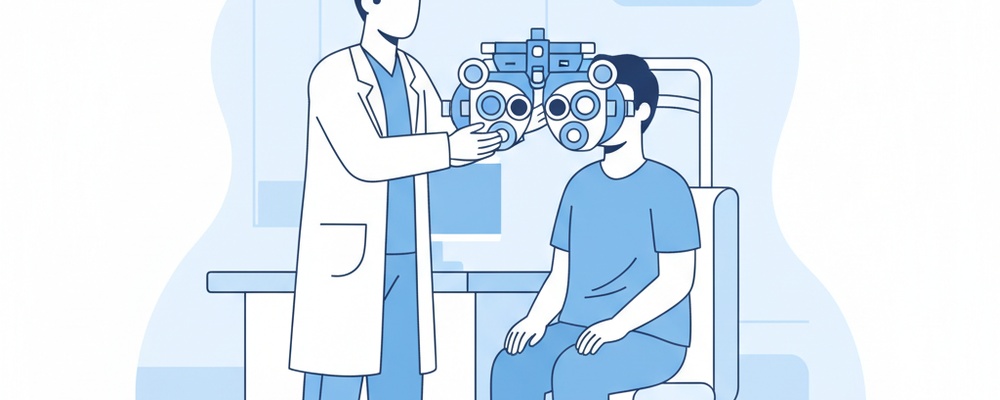
Achieving perfectly clear and comfortable vision begins with a precise prescription. A subjective refraction, often called the phoropter test, is the classic and most accurate method our optometrists use to determine your exact eyewear needs. This is the essential part of an eye exam where we ask you, “Which is better, one or two?” to fine-tune your vision.
What is a Subjective Refraction (Phoropter Test)?
A subjective refraction is a diagnostic test that uses an instrument called a phoropter to measure your refractive error. The phoropter is a large device with multiple lenses that you look through during your eye exam. It allows your eye doctor to efficiently present a variety of lens combinations in front of your eyes. The term “subjective” is used because the test relies on your personal feedback and perception of clarity to pinpoint the lens power that provides you with the sharpest possible vision.
Why is this test performed?
This fundamental test is crucial for several reasons, helping to ensure your vision is at its best. It is performed:
To determine the most accurate and comfortable prescription for eyeglasses or contact lenses.
To diagnose common refractive errors, including myopia (nearsightedness), hyperopia (farsightedness), and astigmatism.
To monitor and track any changes in your vision during routine annual eye examinations.
To refine the initial measurements from an automated refractor, ensuring the final prescription is perfectly tailored to your subjective experience.
How to Prepare for Your Subjective Refraction (Phoropter Test)
Preparation for a subjective refraction test is very simple, but a few small steps can help ensure the most accurate results. It’s best to come to your appointment feeling relaxed and rested.
Bring your current eyeglasses and/or contact lens prescription details with you.
Be ready to discuss any visual problems you are experiencing, such as blurriness, headaches, or eye strain.
If you wear contact lenses, it may be best to wear your glasses to the appointment, or as advised by our team.
The Procedure: What to Expect Step-by-Step
The phoropter test is a straightforward and interactive part of your comprehensive eye exam. Here is what you can typically expect:
1. Positioning: You will be seated in a comfortable examination chair, and the phoropter will be positioned in front of your eyes. You will be asked to look through it at an eye chart placed at a distance.
2. Initial Lens Placement: The optometrist will start by placing lenses in the phoropter based on your previous prescription or results from an initial automated test. One of your eyes will be covered while the other is tested.
3. Refining the Prescription: The optometrist will show you a series of two different lens choices and ask the familiar question, “Which option is clearer, number one or number two?”. Your answers will guide the doctor in refining the sphere (for near/farsightedness), cylinder, and axis (for astigmatism) until your vision is sharpest.
4. Final Verification: The process is repeated for your other eye. Finally, both eyes will be tested together to ensure the prescription is balanced, works well for binocular vision, and feels comfortable.
Understanding Your Results
The outcome of your subjective refraction test is your unique spectacle prescription. This prescription contains specific values like Sphere (SPH), which corrects for nearsightedness or farsightedness, and Cylinder (CYL) and Axis, which correct for astigmatism. A positive (+) SPH value indicates farsightedness, while a negative (-) SPH value indicates nearsightedness.
Your optometrist at Pristine Eye Hospitals will thoroughly explain what these numbers mean for your vision. Based on these results and your lifestyle needs, they will recommend the most suitable type of lenses, whether they are for single-vision, computer use, or progressive lenses for clear vision at all distances.
Frequently Asked Questions
Is the phoropter test painful?
No, the test is completely non-invasive and painless. You simply look through the device and provide feedback to the optometrist about what you see most clearly.
How long does a subjective refraction take?
The test itself is quite quick and efficient, typically taking between 5 to 10 minutes. The results are immediate, allowing for a discussion about your new prescription right away.
What if I choose the “wrong” lens?
There are no wrong answers, so you don’t need to worry about making a mistake. The process includes several cross-checks, and your optometrist is highly skilled at interpreting your responses to find the most accurate prescription.