
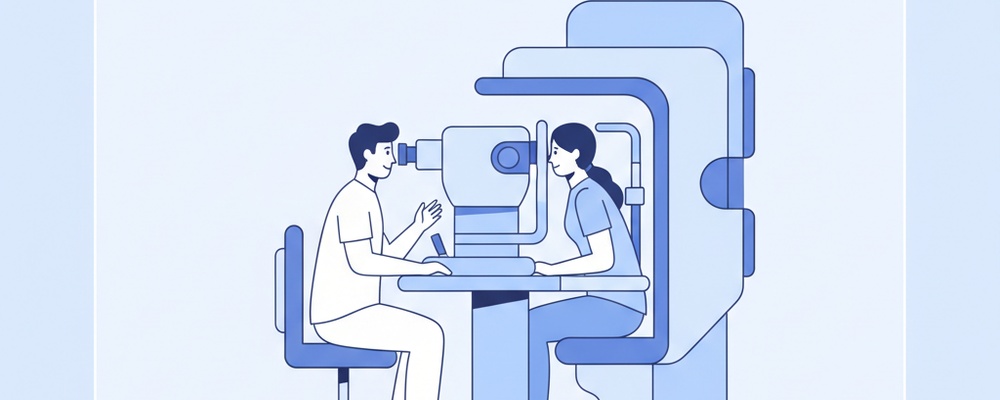
The RNFL thickness test using Optical Coherence Tomography (OCT) is a crucial diagnostic tool for glaucoma management. This advanced, non-invasive scan provides a detailed, cross-sectional image of your retina, allowing our specialists to measure the thickness of the Retinal Nerve Fiber Layer (RNFL). This measurement is key to detecting glaucoma in its earliest stages, often before you notice any symptoms.
What is a RNFL thickness – OCT?
An RNFL OCT is a state-of-the-art imaging test that uses light waves to capture high-resolution images of the back of your eye. Think of it as an ultrasound, but for the eye, using light instead of sound. The machine scans your optic nerve and measures the thickness of the RNFL, which is the layer of nerve fibres that sends visual information from your eye to your brain. In glaucoma, these nerve fibres become damaged and thin over time, and the OCT can detect these microscopic changes with incredible precision.
Why is this test performed?
This test is essential for a complete glaucoma evaluation. Your ophthalmologist at Pristine Eye Hospitals will recommend it for several reasons:
Early Detection: To identify glaucomatous damage before any vision loss occurs, which is critical for preserving sight.
Monitoring Progression: For patients diagnosed with glaucoma, regular RNFL scans help track the rate of nerve fibre loss and determine if the disease is stable or worsening.
Assessing Risk: To evaluate individuals who are at high risk for developing glaucoma due to family history, high eye pressure, or other factors.
Treatment Evaluation: To assess how well your current glaucoma treatment is working to slow down the progression of the disease.
How to Prepare for Your RNFL thickness – OCT
Preparation for an RNFL OCT scan is minimal and straightforward. The test is quick and does not require any special dietary restrictions.
Please bring your current prescription glasses with you to the appointment.
Inform your doctor about any existing eye conditions or medications you are taking.
In some cases, your pupils may be dilated with eye drops to get a clearer view, but this is often not necessary for a standard RNFL scan.
The Procedure: What to Expect Step-by-Step
The entire process is quick, painless, and typically takes only a few minutes to complete.
1. You will be seated comfortably in front of the OCT machine and asked to place your chin on a chin rest and your forehead against a bar to keep your head still.
2. You will be instructed to look at a small target light inside the machine. You may see harmless lines of light or patterns during the scan.
3. The machine will scan your eyes one at a time without touching them. It’s important to remain still and blink normally during the brief scan.
Understanding Your Results
After the scan, the OCT machine generates a detailed report, often including a colour-coded map of your RNFL thickness. This map typically uses green to indicate normal thickness, yellow for borderline areas, and red for areas that are thinner than normal for your age. This data is compared against a database of healthy eyes to identify any significant deviations.
Your glaucoma specialist at Pristine Eye Hospitals will not rely on this scan alone. They will carefully interpret the RNFL thickness results in conjunction with other important tests, such as eye pressure measurement, visual field testing, and a physical examination of your optic nerve. This comprehensive approach ensures the most accurate diagnosis and a personalised treatment plan for your specific needs.
Frequently Asked Questions
Is the RNFL OCT test painful?
No, the test is completely painless and non-invasive. The machine never touches your eye, and the light used is perfectly safe.
How long does the test take?
The entire process is very quick. The actual scanning time for both eyes is typically less than a minute, with the full appointment for the test lasting around 5-10 minutes.
Will I need someone to drive me home?
Usually, pupil dilation is not required for an RNFL OCT, so your vision will be unaffected and you can drive home yourself. However, if the doctor decides to dilate your pupils for a more comprehensive exam, your vision will be blurry and sensitive to light, and you will need a driver.