
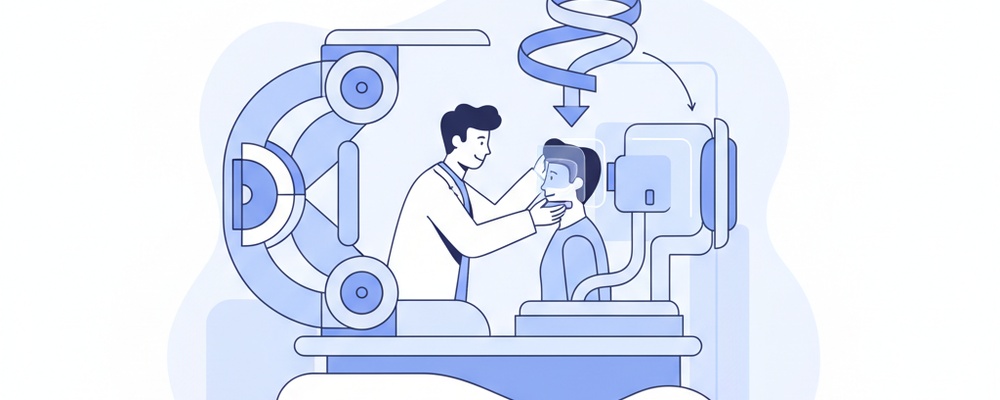
A CCT based Intraocular Pressure (IOP) adjustment is a vital diagnostic step in modern glaucoma management. It involves measuring the thickness of your cornea to correct your eye pressure reading, ensuring a more precise assessment of your glaucoma risk. This simple test provides your ophthalmologist with critical data for an accurate diagnosis and effective treatment plan.
What is a CCT based IOP adjustment?
Your cornea is the clear front window of your eye. Its thickness can influence the standard eye pressure measurement (tonometry). A thicker-than-average cornea can give a falsely high pressure reading, while a thinner cornea can give a falsely low reading. Central Corneal Thickness (CCT) is measured using a quick, non-invasive ultrasound device called a pachymeter. This value is then used in a specific formula to adjust your IOP reading, revealing a more accurate “true” eye pressure that is essential for evaluating your risk of developing or progressing with glaucoma.
Why is this test performed?
This test is a crucial part of a comprehensive glaucoma workup for several key reasons:
To Achieve Accurate IOP Readings: It corrects the potential inaccuracies of standard tonometry caused by variations in corneal thickness.
To Refine Glaucoma Risk Assessment: A thin cornea is an independent risk factor for glaucoma progression. This test helps identify patients who may be at higher risk, even with “normal” pressure readings.
To Personalize Treatment: Knowing the corrected IOP helps your doctor set an appropriate “target pressure” for your glaucoma treatment, making it more effective.
To Diagnose Normal-Tension Glaucoma: It is especially important for patients who show optic nerve damage typical of glaucoma but have consistently normal pressure readings.
How to Prepare for Your CCT based IOP adjustment
There is very little special preparation required for this simple and quick test. It is a painless and routine part of a comprehensive eye exam for glaucoma suspects and patients.
Please inform your doctor about all medications and eye drops you are currently using.
If you wear contact lenses, you will be asked to remove them before the procedure.
You can eat, drink, and take your regular medications as you normally would on the day of the test.
The Procedure: What to Expect Step-by-Step
The process is quick, painless, and performed right here in our clinic.
1. First, anaesthetic (numbing) eye drops will be placed in your eye. This ensures you will not feel any discomfort during the test.
2. You will be asked to sit comfortably and look straight ahead at a target.
3. A trained technician or your ophthalmologist will gently and briefly touch the surface of your central cornea with the small, pen-like tip of a pachymeter.
4. The device instantly records the thickness using ultrasound, and the measurement is complete in seconds. This value is then used to calculate your adjusted IOP.
Understanding Your Results
Your CCT measurement will be compared to the average corneal thickness, which is approximately 540-550 microns. If your cornea is thicker than average, your true eye pressure may be lower than what was initially measured. Conversely, if your cornea is thinner than average, your true eye pressure may be higher than the initial reading, which could indicate a greater risk for glaucoma damage.
It is important to remember that CCT is just one piece of the puzzle. Your ophthalmologist at Pristine Eye Hospitals will analyse this result in conjunction with your IOP, optic nerve health, visual field tests, and other risk factors to create a complete picture of your eye health. This comprehensive approach ensures you receive the most accurate diagnosis and a personalized management plan.
Frequently Asked Questions
Is the CCT measurement painful?
No, the test is completely painless. We use numbing eye drops before the measurement, so you will not feel the instrument’s tip when it gently touches your cornea.
How long does the test take?
The test is extremely fast. The actual measurement for both eyes typically takes less than a minute to complete from start to finish.
Why is CCT important if my eye pressure is already normal?
A “normal” pressure reading can be misleading if you have a thin cornea, as your true pressure may actually be dangerously high. CCT helps us understand the true risk and is critical for diagnosing conditions like normal-tension glaucoma.