
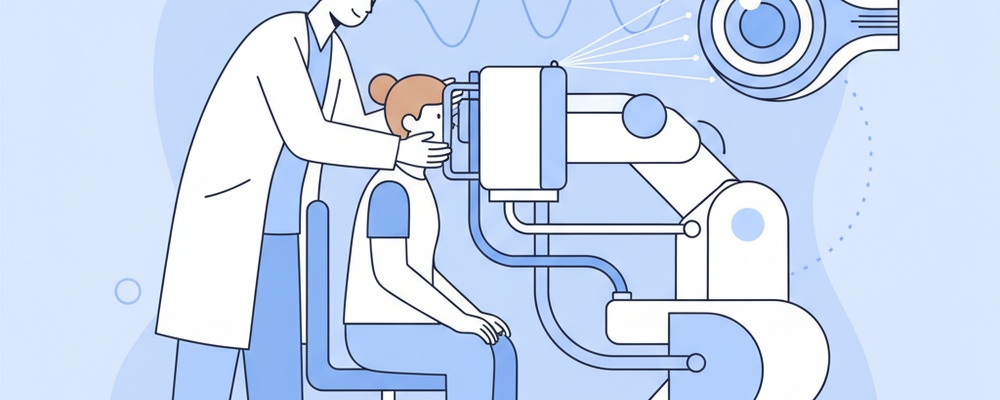
Adaptive Optics (AO) imaging is a revolutionary diagnostic tool that allows our specialists at Pristine Eye Hospitals to view your retina at a microscopic level. This non-invasive technology provides unparalleled detail of individual retinal cells, enabling the earliest possible detection of complex eye diseases. It represents a significant leap forward in proactive and personalized retinal care.
What is an Adaptive Optics Imaging?
Think of Adaptive Optics (AO) as technology borrowed from astronomy, similar to what’s used in powerful telescopes to get clear images of distant stars. When applied to the eye, AO corrects the tiny imperfections in your eye’s optical system that normally blur images. This allows us to capture incredibly high-resolution, real-time images of individual photoreceptors (rods and cones), blood vessels, and other cellular structures in your retina, something not possible with standard imaging.
Why is this test performed?
Early Detection of Retinal Diseases: To identify subtle, cellular-level changes associated with conditions like Diabetic Retinopathy, Age-Related Macular Degeneration (AMD), and inherited retinal dystrophies long before they affect your vision.
Monitoring Disease Progression: To precisely track changes in retinal cells over time, allowing for more effective and timely management of your condition.
Evaluating Treatment Efficacy: To assess how well a specific treatment is working by observing its direct impact on the cellular health of the retina.
Diagnosis of Rare Conditions: To aid in diagnosing complex or rare retinal disorders by providing a detailed view of the underlying cellular pathology.
How to Prepare for Your Adaptive Optics Imaging
Preparing for your Adaptive Optics Imaging test is simple and requires minimal effort on your part. To ensure the best possible images, we may need to dilate your pupils.
Please arrange for someone to drive you home, as your vision may be blurry and sensitive to light for a few hours after dilation.
Bring a pair of sunglasses to wear after the test for comfort.
Inform your doctor about any existing eye conditions or medications you are currently taking.
The Procedure: What to Expect Step-by-Step
1. Pupil Dilation: We will begin by administering eye drops to dilate your pupils. This widens the opening to the back of your eye, allowing for a clearer view of the retina.
2. Positioning: You will be seated comfortably and asked to place your chin and forehead on a support rest on the imaging device. This helps keep your head still during the scan.
3. Image Capture: You will be asked to look at a fixed target light inside the machine. The device will then capture a series of high-resolution images of your retina, a process that is completely painless and takes only a few minutes.
4. Completion: Once the images are captured, the test is complete. Your pupils will remain dilated for a few hours.
Understanding Your Results
The images from your Adaptive Optics scan provide an unprecedented view of your retinal health at the cellular level. Our retinal specialist will meticulously analyze these images, looking for any abnormalities in the size, shape, or density of your photoreceptor cells and other retinal structures. This detailed analysis can reveal the earliest signs of disease or provide crucial information about the progression of an existing condition.
Your doctor will discuss the findings with you in detail during your follow-up consultation. Based on the results, they will explain what they mean for your vision and overall eye health, recommend any necessary next steps, or confirm that your retina is healthy.
Frequently Asked Questions
Is Adaptive Optics Imaging painful?
No, the test is completely non-invasive and painless. You may experience some temporary light sensitivity and blurred vision if your pupils are dilated, but the imaging process itself causes no discomfort.
How long does the test take?
The entire appointment, including pupil dilation, may take about an hour. The actual imaging process itself is very quick, typically lasting only 5-10 minutes.
Is this test covered by insurance?
As an advanced diagnostic test, insurance coverage can vary. Our staff at Pristine Eye Hospitals will be happy to assist you in understanding your coverage and any potential out-of-pocket costs.