
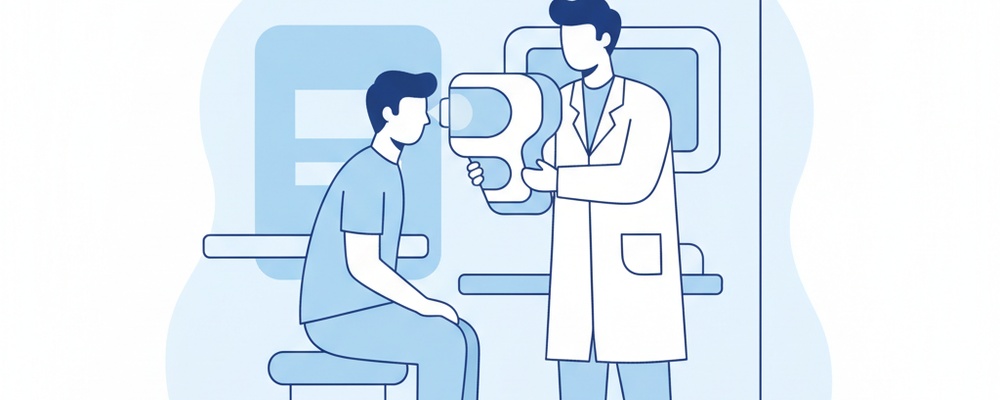
The Tear Meniscus Height (TMH) measurement is a quick, non-invasive diagnostic test crucial for evaluating the health of your tear film. It provides a precise, quantitative assessment of the amount of tears on your eye’s surface. This information is fundamental in diagnosing and managing conditions like Dry Eye Disease.
What is a Tear Meniscus Height Measurement?
Your tear film naturally forms a small reservoir or “pool” of tears along the margin of your lower eyelid, known as the tear meniscus. The Tear Meniscus Height measurement uses advanced imaging technology, such as Optical Coherence Tomography (OCT) or a specialized slit lamp camera, to measure the height of this tear reservoir with incredible precision. This painless, non-contact scan gives your ophthalmologist an objective value for your tear volume, moving beyond subjective symptoms to get a clear picture of your ocular surface health.
Why is this test performed?
Your cornea specialist at Pristine Eye Hospitals may recommend a TMH measurement for several key reasons:
To accurately diagnose Dry Eye Disease: A low TMH is a primary indicator of aqueous deficient dry eye, where the eyes do not produce a sufficient quantity of tears.
To monitor treatment effectiveness: By performing the test over time, we can objectively track your response to dry eye therapies and adjust your treatment plan accordingly.
For pre-surgical evaluation: Before procedures like LASIK, PRK, or premium cataract surgery, assessing tear volume is essential to ensure optimal healing and visual outcomes.
To investigate sources of eye discomfort: The test helps differentiate between issues of tear quantity and tear quality when investigating symptoms like grittiness, burning, or excessive watering.
How to Prepare for Your Tear Meniscus Height Measurement
Preparation for this test is minimal and straightforward, but following these simple guidelines helps ensure the most accurate results. Your comfort and the precision of our diagnostics are our top priorities.
Avoid using any artificial tears, lubricating drops, or medicated eye drops for at least 4 hours before your scheduled appointment.
If you wear contact lenses, please remove them before the test as instructed by our clinical staff.
Refrain from wearing eye makeup, particularly mascara or eyeliner, as it can flake off and interfere with the tear meniscus measurement.
The Procedure: What to Expect Step-by-Step
1. You will be seated comfortably in front of the diagnostic machine, placing your chin and forehead on the designated rests to keep your head steady.
2. Our trained technician will ask you to look straight ahead at a target light and blink normally a few times.
3. The instrument will then capture a high-resolution, cross-sectional image of your lower eyelid margin and tear film. This is a non-contact process and takes only a few seconds.
4. The procedure is completely painless, requires no anaesthetic drops, and is repeated for the other eye.
Understanding Your Results
The test will provide a specific measurement of your tear meniscus height, usually in micrometers (µm) or millimeters (mm). A reading below a certain threshold (typically around 0.2 mm) is generally considered indicative of a low tear volume and is a significant marker for aqueous deficient dry eye.
Your cornea specialist at Pristine Eye Hospitals will analyze this measurement in the context of your overall clinical evaluation, symptoms, and the results of other dry eye tests (such as tear film break-up time or meibomian gland imaging). This comprehensive approach allows us to form a precise diagnosis and develop a personalized treatment plan, which may include lubricating eye drops, lifestyle modifications, or more advanced therapies available at our facility.
Frequently Asked Questions
Is the Tear Meniscus Height test painful?
No, the test is completely non-invasive and painless. There is absolutely no contact with your eye, and no eye drops are needed for the procedure itself.
How long does the test take?
The image capture for each eye takes only a few seconds. The entire process, including positioning you correctly in the machine, is typically completed in less than five minutes.
How is this different from other dry eye tests?
While tests like the Schirmer’s test measure tear production and a TBUT test measures tear quality (evaporation rate), the TMH specifically provides a direct, real-time measurement of the actual tear volume available on the eye’s surface.