
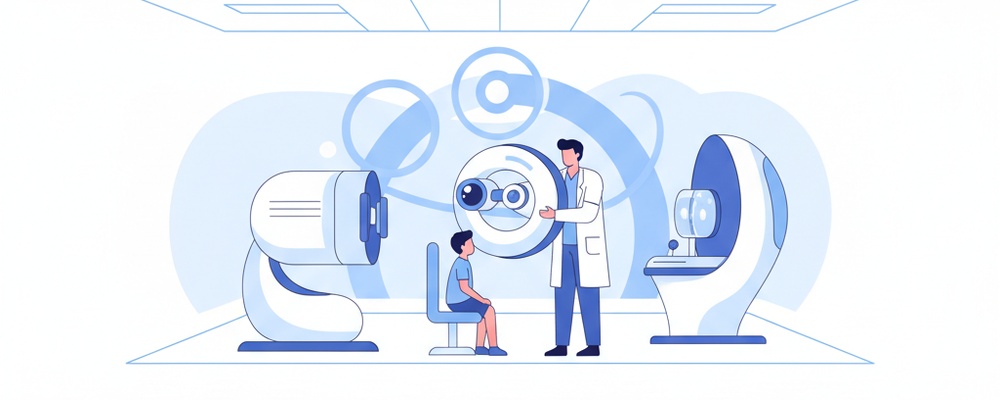
A child’s success in the classroom is deeply connected to their ability to see clearly. The School-Readiness Vision Exam is a crucial check-up designed to ensure your child’s visual skills are fully developed for learning before they start school. This comprehensive evaluation goes far beyond basic sight tests to identify potential issues that could hinder their academic journey.
What is a School-Readiness Vision Exams?
A School-Readiness Vision Exam is a specialized, in-depth eye evaluation for children, typically around the age of five, before they enter formal schooling. Unlike a simple screening that only checks distance vision, this exam assesses the complete visual system. Our pediatric ophthalmologists at Pristine Eye Hospitals use child-friendly techniques to evaluate critical visual skills such as eye alignment (checking for lazy or crossed eyes), tracking (the ability to follow objects smoothly), focusing (shifting focus from near to far), depth perception, and color vision, ensuring your child has the visual foundation needed to read, write, and learn effectively.
Why is this test performed?
To detect and treat “hidden” vision problems: Children often don’t know their vision is abnormal. This exam can identify issues like amblyopia (lazy eye) or focusing problems that can be corrected more easily when caught early.
To ensure visual skills are ready for learning: Reading, writing, and using a computer all require complex visual skills. We check for proper eye tracking, focusing, and teaming to prevent academic struggles.
To rule out vision issues as a cause of learning difficulties: Sometimes, what appears to be a learning or attention problem is actually an undiagnosed vision issue. A comprehensive exam can provide clarity.
To establish a baseline for lifelong eye health: This early, thorough examination creates an important health record for monitoring your child’s visual development over the years.
How to Prepare for Your School-Readiness Vision Exams
Preparing for your child’s vision exam is simple and focused on making them feel comfortable. Talk to them about the visit in a positive way, explaining that the doctor will look at their eyes with special lights and pictures to make sure they are healthy. There are no eye drops or scary procedures involved in this initial evaluation.
Schedule the appointment at a good time: Choose a time when your child is typically well-rested and not hungry, such as after a nap or meal.
Bring any relevant history: Inform the doctor about any family history of eye problems, previous vision screenings, or any concerns you’ve noticed (like squinting or rubbing eyes).
Reassure your child: Let them know it’s a painless and fun check-up with games and pictures.
The Procedure: What to Expect Step-by-Step
1. Initial Discussion & History: Our pediatric ophthalmologist will start by discussing your child’s health history, any family history of eye conditions, and any observations you may have about their vision or behavior.
2. Visual Acuity & Games: Using age-appropriate charts with pictures or letters, we will test your child’s ability to see at different distances. Many tests are presented as fun games to keep your child engaged and cooperative.
3. Assessment of Eye Health and Function: The doctor will use specialized, non-invasive instruments to check eye alignment, tracking, focusing ability, and the overall health of the internal and external structures of the eyes. This includes checks for lazy eye, crossed eyes, and depth perception.
4. Review and Recommendations: After the examination, the ophthalmologist will discuss the findings with you in detail. They will let you know if your child’s vision is developing normally or if any follow-up, glasses, or vision therapy is recommended.
Understanding Your Results
Following the exam, our ophthalmologist will provide a clear summary of your child’s visual health. If the results are normal, it means your child’s eyes are healthy and have the necessary skills for school. You will be advised on a schedule for future routine check-ups.
If a potential issue is identified, we will explain it thoroughly. Common findings include refractive errors like myopia (nearsightedness) or hyperopia (farsightedness), which are easily corrected with glasses. Other conditions like amblyopia (lazy eye) or strabismus (eye misalignment) may require treatments such as patching, special glasses, or vision therapy. Early detection is key, and we will work with you to create the most effective and child-friendly treatment plan.
Frequently Asked Questions
My child passed the school screening, do they still need this exam?
Yes. School screenings are very basic and can miss significant issues with focusing, eye teaming, and alignment that this comprehensive exam is specifically designed to detect.
Will my child need to get eye drops for this exam?
For an initial school-readiness screening, dilating eye drops are not always necessary. They may be recommended for a more in-depth follow-up exam if the doctor suspects an underlying issue.
How long does the school-readiness vision exam take?
The entire appointment typically takes about 30 to 45 minutes. We ensure the process is efficient and engaging to hold your child’s attention.